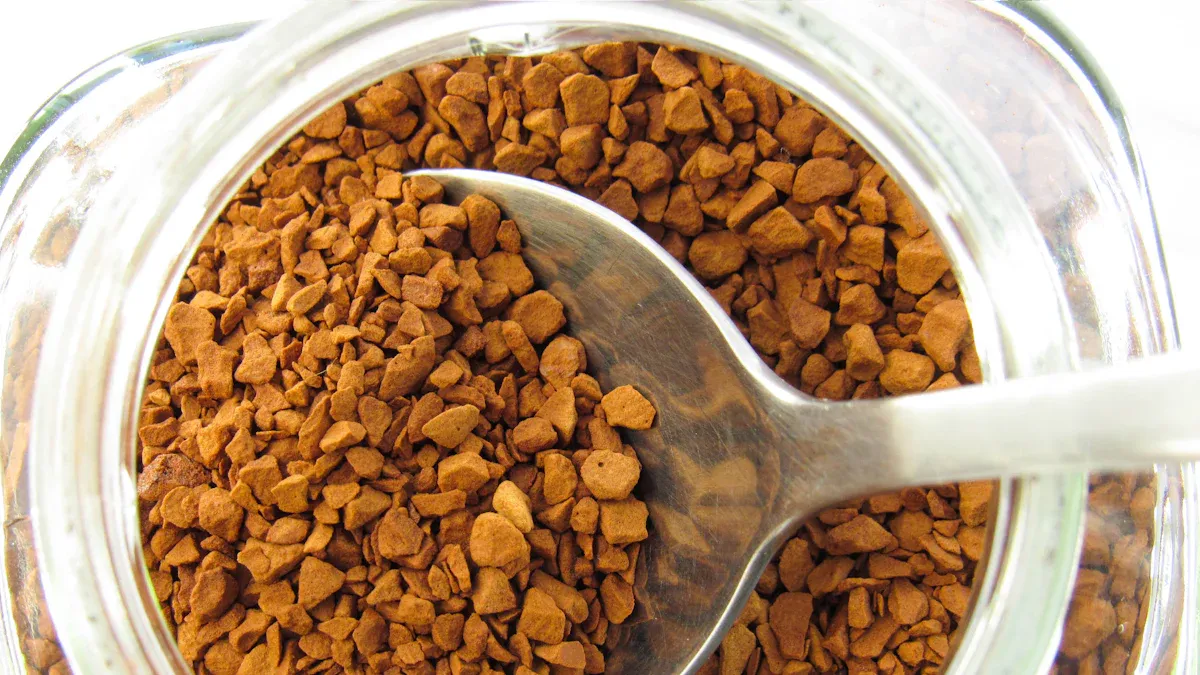
You want your instant coffee powder to stay loose and easy to pour. The best anticaking agents for instant coffee powder are silicon dioxide, calcium silicate, and calcium stearate. These ingredients stop clumping by keeping water away from the coffee. When you use the right anticaking agent, you stop hard lumps from forming. This also helps every cup taste fresh.
Key Takeaways
Pick the best anticaking agent, like silicon dioxide, calcium silicate, or calcium stearate. These help keep instant coffee powder loose and easy to pour.
Keep moisture low to stop clumps from forming. Store instant coffee in a cool and dry place. This helps keep its taste and quality.
Try different amounts of anticaking agents. Start with 1% to see what works best. This keeps coffee powder fresh and does not change the taste.
You can use natural anticaking agents like rice flour for clean-label products. But know that this might change the flavor or make it less stable.
Always look at ingredient labels for anticaking agents. Make sure they are safe and match what customers want.
Anticaking Agent Types for Instant Coffee
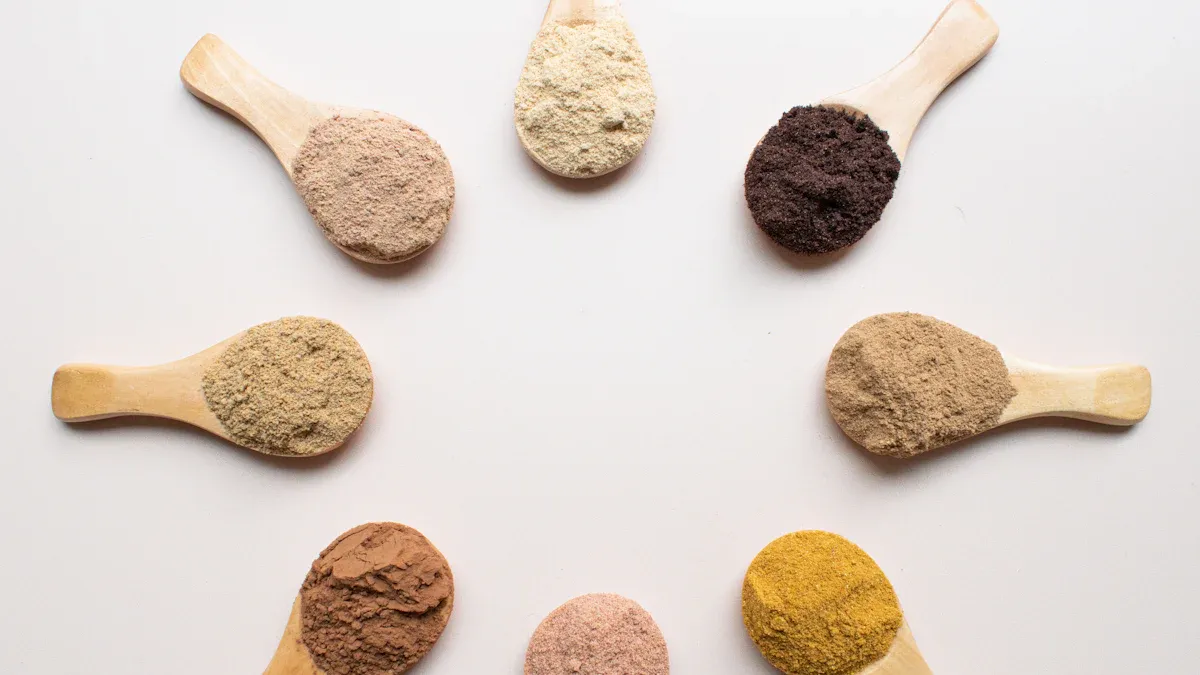
Instant coffee powder can stick together without the right anticaking agent. There are many choices, but three are used most because they work well and are safe. Let’s see what makes each one good for instant coffee.
Did you know?
Many countries let food makers use different anticaking agents. Here is a table that shows the most common ones in instant coffee powder:
E Number | Anticaking Agent |
|---|---|
E551 | Silicon Dioxide |
E552 | Calcium Silicate |
E553a | Magnesium Silicate |
E553b | Talc |
E554 | Sodium Aluminosilicate |
E555 | Potassium Aluminosilicate |
E556 | Calcium Aluminosilicate |
E558 | Bentonite |
E559 | Aluminum Silicate |
E341 | Tricalcium Phosphate |
E170 | Calcium Carbonate |
Silicon Dioxide
You will often find silicon dioxide in instant coffee powder. This anticaking agent soaks up water from the air. It keeps your coffee powder dry and easy to pour. Silicon dioxide grabs water before it can make lumps. Your coffee stays smooth and pours out easily.
Silicon dioxide pulls in water and stops lumps.
It keeps the powder loose and not stuck together.
Silicon dioxide helps your instant coffee stay fresh in storage.
Calcium Silicate
Calcium silicate is also a common choice for instant coffee. You see it in many foods because it stops clumping like sodium aluminium silicate. Calcium silicate puts a barrier between coffee pieces. This barrier keeps them from sticking, even when it is humid.
Agent | Functionality Description | Applications |
|---|---|---|
Calcium Silicate (E552) | Stops particles from clumping, like sodium aluminium silicate and magnesium carbonate | Used in instant coffee powder, chewing gum, meat pies |
Calcium silicate helps keep your coffee powder dry and simple to use. It works in many foods, so you know it is safe and works well.
Calcium Stearate
Calcium stearate is another way to stop caking in instant coffee. This anticaking agent is special because it does not let water in and stays strong in heat. You can use it in products that need to handle heat or water.
Calcium stearate is safe for food and not toxic.
It keeps water away, so the powder does not get wet.
Your coffee powder stays loose, even in tough storage.
But there is not much information about how calcium stearate changes the chemical stability of coffee powder. Still, because it keeps water out, many instant coffee brands use it.
Tip:
When picking an anticaking agent, think about how much water your product will face and how long you want it to last.
Silicon dioxide, calcium silicate, and calcium stearate all have special benefits. They help your instant coffee powder stay loose, easy to pour, and nice to drink.
Mechanisms of Anticaking Agents
Moisture Binding
Instant coffee powder can stick together if it gets wet. The main cause is water in the air. Anticaking agents help by holding extra water. Food-grade silica has tiny holes in its structure. These holes let it soak up water from the air. When the powder stays dry, it does not clump. This keeps your coffee powder loose, even in damp places.
Anticaking agents take in extra water and stop clumps.
They keep the powder dry and simple to use.
Physical Barrier Formation
Anticaking agents do more than just soak up water. They also make a thin layer around each coffee piece. This layer works like a shield. It keeps water away and stops the pieces from sticking. You want your instant coffee to pour out easily. The barrier from these agents helps with that. It also stops tiny bridges from forming, which can make the powder hard.
Note:
The coating from anticaking agents keeps each piece apart, so your coffee powder stays loose and does not get lumpy.
Improving Flow and Texture
You want your instant coffee to pour and mix well. Anticaking agents help by making the powder flow better. They keep the pieces apart, so the powder does not stick. Fine silica pieces help stop sticky coffee from touching. The holes in silica also soak up water, which stops liquid bridges from forming. This means your coffee powder stays smooth and easy to use at home or when packed.
Anticaking agents stop clumps and keep the powder loose.
They help keep a smooth texture, so your coffee is easy to scoop and pour.
Key Properties for Instant Coffee Formulation
Moisture Control
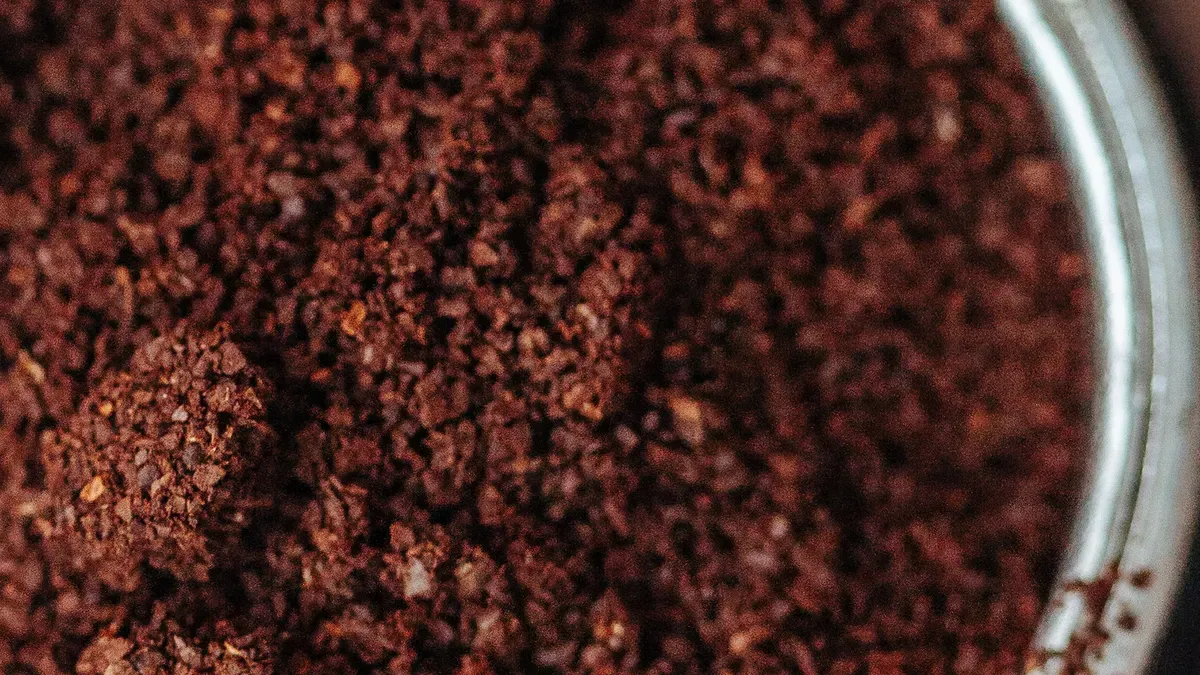
You need to keep instant coffee powder dry to protect its quality. Moisture is the main reason for clumping and spoilage. If your coffee powder absorbs water from the air, it can form lumps and lose flavor. Studies show that instant coffee stays stable when stored at 11% relative humidity. When humidity rises to 32%, the coffee’s pH drops after six months. At 65% humidity, the powder quickly absorbs too much water. This leads to visible changes and poor taste in just three months. You can use an anticaking agent to help control moisture. This keeps your coffee powder fresh and extends its shelf life.
Tip:
Store instant coffee in a cool, dry place to keep it tasting great.
Particle Size and Flowability
The size of each coffee particle affects how well the powder pours. Small, even particles flow better and do not stick together. If you have large or uneven pieces, the powder can clog or form lumps. You want your instant coffee to pour smoothly every time. Anticaking agents help by keeping the particles separate. This makes it easy for you to scoop, measure, and dissolve the powder in water.
Particle Size | Flowability | Risk of Caking |
|---|---|---|
Fine & Even | High | Low |
Large/Uneven | Low | High |
Compatibility with Coffee Powder
You must choose an anticaking agent that works well with your coffee powder. Some agents can change the taste or color of your coffee. Others may not blend well and can leave a gritty feel. You want an agent that keeps the powder loose without changing the flavor or look. Always test the agent with your coffee to make sure it meets your needs. This helps you deliver a product that your customers will enjoy.
Note:
Check the label to see which anticaking agent is in your instant coffee.
Formulation Strategies
Recommended Dosages
You need to add the right amount of anticaking agent to your instant coffee powder. Most food makers use 0.5% to 2% by weight. You can start with 1% and test how well your powder stays loose. If your coffee powder clumps, you can increase the dose. Too much can change the taste or texture. You should always check the results after mixing.
Anticaking Agent | Typical Dosage (%) |
|---|---|
0.5 – 2.0 | |
Calcium Silicate | 0.5 – 1.5 |
Calcium Stearate | 0.5 – 1.0 |
Tip:
Test small batches first. You can see how the powder reacts before making a big batch.
Blending Techniques
You want your anticaking agent to spread evenly in the coffee powder. Dry blending works best for most powders. You can use a ribbon blender or a paddle mixer. Add the anticaking agent slowly while the mixer runs. This helps cover every coffee particle. If you use a liquid form, spray it on the powder and mix right away. You should avoid over-mixing. Too much mixing can break the coffee particles and change the texture.
Mix in small amounts at a time.
Keep the mixing time short.
Check the powder for lumps after blending.
Regulatory Considerations
You must follow food safety rules when you use an anticaking agent. The FDA and other agencies set limits for each type. You need to check the allowed levels in your country. You must list the anticaking agent on your product label. Use the correct name and E number. Some buyers want clean labels. You can look for natural options if you want to meet this demand.
Note:
Always check the latest regulations. Rules can change, and you want your product to stay safe and legal.
Benefits and Drawbacks
Product Quality and Shelf Life
You want your instant coffee powder to stay fresh. Anticaking agents help keep the powder loose and easy to use. They protect your coffee from water, which can cause clumps and spoilage. Using the right amount helps your coffee keep its taste and smell longer. Your coffee will also dissolve fast in water. This means you get a smooth drink every time. But, if you use too much, some anticaking agents can change the texture or leave a small aftertaste.
Consumer Perception
Many people care about what is in their food. Some buyers want simple and natural ingredients. They look for labels they can trust. If you use synthetic anticaking agents, some customers may worry about health or safety. Clean labels help you build trust with buyers. You can use plant-based or natural options to meet this need. Still, you must make sure these choices do not change the taste or quality of your coffee.
Clean Label Alternatives
There are more natural ways to keep your coffee powder loose. The food industry now has several clean label options. These choices are getting more popular as people want natural products.
Rice flour and cellulose derivatives are natural anticaking agents.
These ingredients now make up about 15% of the natural anticaking agent market in 2024.
The organic food market is growing fast, and plant-based anticaking agents are used more often.
You should know that natural agents have some downsides. The table below shows what you might face when using plant-based anticaking agents:
Drawback Type | Description |
|---|---|
Flavor and Aroma | Some plant-based ingredients may have strong flavors or smells that affect your coffee. |
Dietary Restrictions | Plant-based agents can add calories to your product. |
Less Stability | Natural agents may break down faster in humid or changing conditions. |
Allergen Concerns | Some natural ingredients can cause allergies for certain people. |
Tip:
Always test new anticaking agents with your coffee powder. This helps you keep the taste and quality your customers expect.
You can keep your instant coffee powder fresh by picking the right anticaking agent. Make sure the agent fits what your product needs. Always test to see if the taste and texture are good. Here are some tips to help you:
Choose agents that work well for your coffee.
Check how much water the agent can hold to keep flavor safe.
Ask expert suppliers for special solutions.
There are new trends that help you give customers what they want:
Innovation/Trend | Description |
|---|---|
Clean-label mineral sourcing | Use natural ingredients people know for better trust. |
Automated seasoning lines | Use new machines to make work faster and more exact. |
Surface-modified precipitated silica | Get better moisture control and mixing in high-quality products. |
If you balance quality, safety, and what customers like, you can make great instant coffee powder.
FAQ
What is an anticaking agent?
An anticaking agent is added to food powders. It helps keep instant coffee from sticking together. This stops clumps from forming when the powder gets wet.
Are anticaking agents safe to eat?
Yes, approved anticaking agents are safe to eat. Food safety groups check these ingredients. You can find them in many foods you eat every day.
Can anticaking agents change the taste of my coffee?
Most anticaking agents do not change how your coffee tastes or smells. You should test new agents to make sure your coffee still tastes good.
How do I know which anticaking agent is in my coffee?
You can look at the ingredient list on your coffee package. Look for names like silicon dioxide or calcium silicate. Some packages also show the E number.
Are there natural alternatives to synthetic anticaking agents?
Yes! You can use natural choices like rice flour or cellulose. These work well for people who want clean-label products.