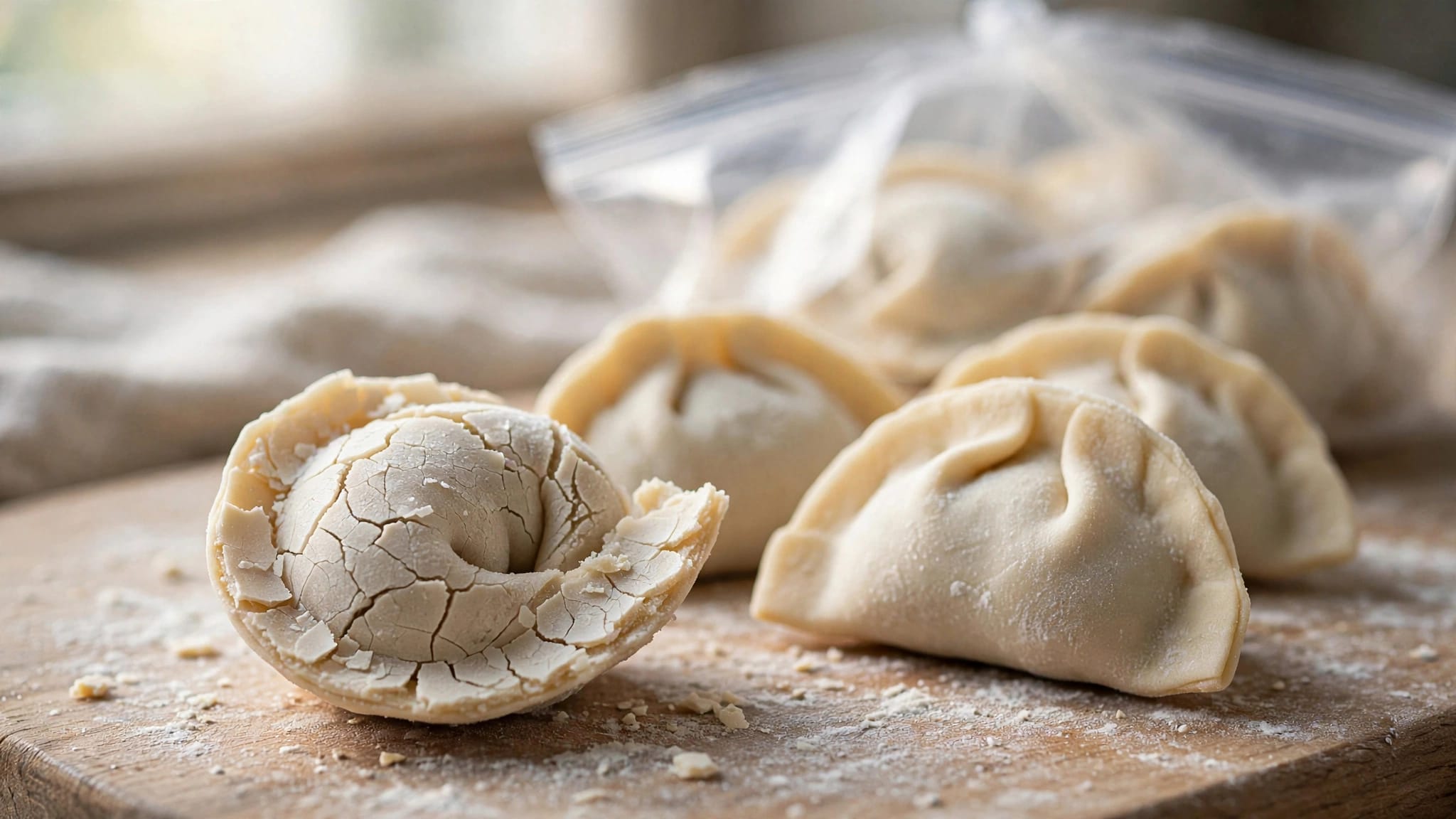
Frozen dumpling wrappers crack when moisture loss, ice damage, or limited dough strength reduces their ability to stretch. Dry edges usually point to air exposure; splits across the wrapper can indicate uneven hydration, thin spots, or freeze-thaw damage.
Prevention starts with moisture control, but formulation and handling also matter. Identify when the damage appears before changing your recipe, packaging, or freezing process.
Key Takeaways
- Protect wrappers from air during storage and folding, then thaw sealed packs overnight in the refrigerator.
- Match wrapper thickness to the cooking method, and reduce filling when the seam needs stretching.
- For commercial production, compare formulation changes under the same forming, freezing, storage, and cooking conditions.
Why Frozen Dumpling Wrappers Crack
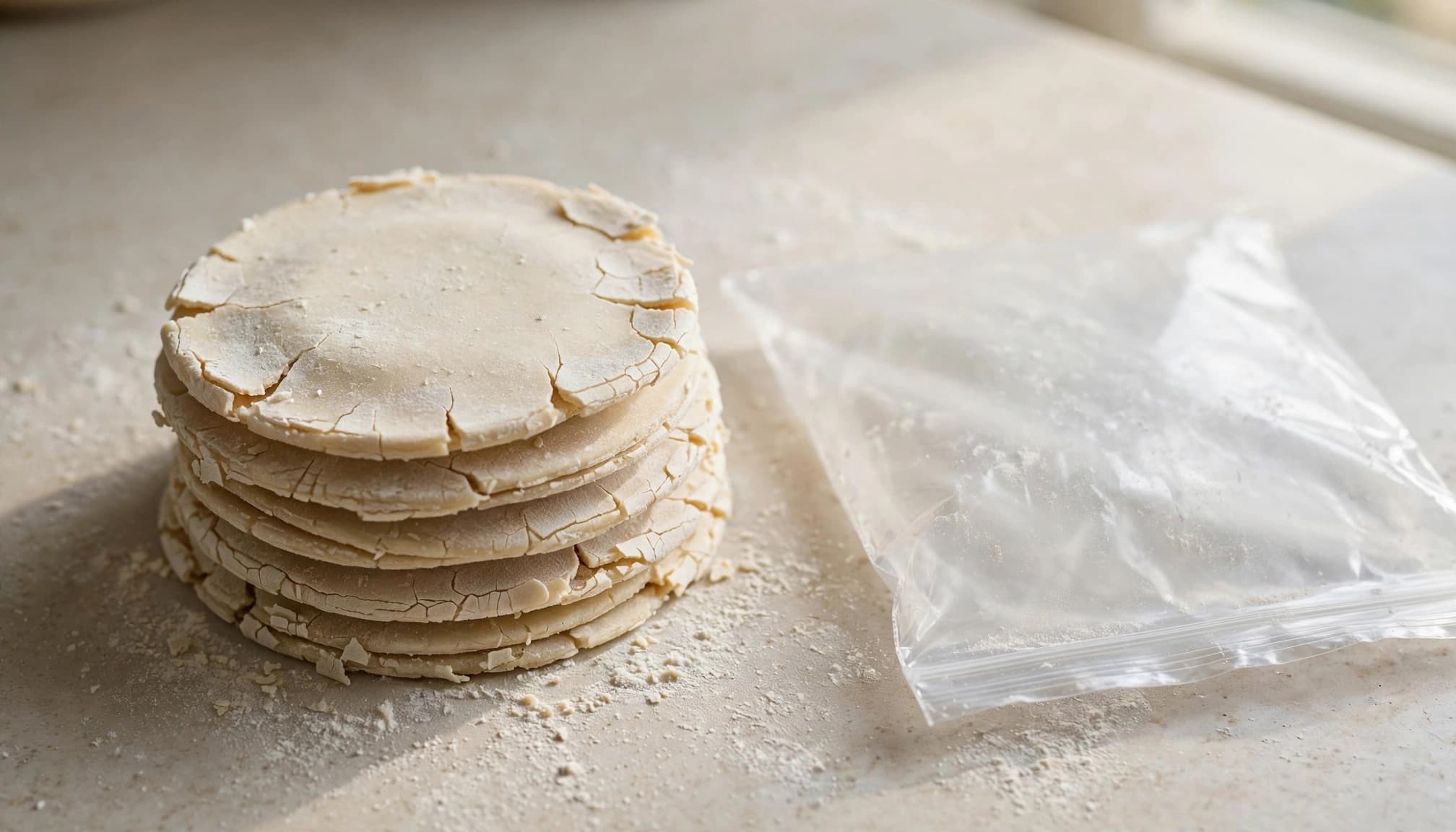
Dry Edges Indicate Moisture Loss
Wrapper edges dry faster than the center because they are thin and exposed. Loose packaging, extended folding time, and uncovered freezer storage remove flexibility where pleating places the most stress.
Freezer burn is surface dehydration during frozen storage. Pale, leathery patches and brittle edges suggest moisture loss, although cracks alone do not establish the cause.
Reddit users report both successful frozen storage and brittleness after two to four weeks. These are household observations, not a validated wrapper shelf life.
Wider Splits Suggest Dough or Freezing Problems
Water distribution, gluten development, and wrapper thickness affect resistance to stretching. Insufficient hydration or resting can leave weak areas; excessive dusting flour can dry the surface and interfere with sealing.
Slow freezing allows larger ice crystals to develop. Temperature fluctuations promote further crystal growth and place additional stress on the dough structure.
A study on gluten characteristics and wrapper cracking found that freeze-thaw cycles increased water loss and cracking. If damage appears only after frozen storage, compare temperature history and packaging before assuming flour strength is the only problem.
Thaw and Fold Without Drying the Edges
Frozen wrappers need to become flexible before separation. Pulling sheets from a partly frozen stack can create tears that open during pleating or cooking.
- Defrost the sealed package overnight in the refrigerator. Leave it closed until the sheets separate without force, then remove only a small working stack.
- Keep opened wrappers under plastic wrap or a barely damp paper towel. Avoid a wet towel, which can make the surface sticky.
- Fill and seal without stretching the edge. Apply a light film of water, press out trapped air, and close the seam firmly.
Just One Cookbook gives about 60 minutes on the counter as a wrapper-specific thawing option and advises against microwaving. However, USDA freezing and thawing guidance advises against counter thawing. Refrigerator thawing is our recommendation.
Microwave defrosting can heat thin edges unevenly and partly cook them before the stack loosens.
About 1-2 tablespoons of dumpling filling suits larger wrappers; small gyoza wrappers need less. Reduce the amount whenever closing requires pulling the dough tightly around the filling.
Keep meat-filled dumplings chilled between batches. The FDA’s room-temperature storage limits are two hours for perishable food, or one hour above 90°F.
Freeze and Package for Less Moisture Loss
Protect Unused Wrapper Sheets
Divide wrappers into usable portions before freezing. Wrap each stack closely, place it inside a freezer-grade bag, and remove excess air without crushing the edges.
A loosely folded retail bag offers less protection than a properly closed freezer package. Keep flour and dough fragments away from the closure so it seals completely.
Store at 0°F (-18°C) or colder, away from locations with frequent temperature changes. Avoid repeatedly warming the full package to remove a few sheets.
Freeze Assembled Dumplings Separately
Place uncooked dumplings in a single layer on a lined tray, without touching. Once firm, transfer them promptly to a sealed freezer bag or container.
Choo Choo Cachew recommends about one month for frozen assembled dumplings and cooking them directly from frozen. Treat this as a quality reference for formed dumplings, not a universal storage limit for wrapper sheets.
Cook filled dumplings from frozen rather than defrost them; thawing can soften the wrapper and encourage sticking.
Choose Wrappers That Match the Cooking Method
Thicker wrappers generally tolerate boiling better. Thin gyoza wrappers suit pan-fried dumplings such as potstickers, where a delicate skin and crisp base are preferred.
Look for round wrappers. At an Asian grocery store, store-bought dumpling wrappers are often labeled dumpling, jiaozi, gyoza, potsticker, or SueGow. Square wonton wrappers are usually thinner and are not a direct substitute for most pleated dumplings. Egg roll wrappers are another product.
Choo Choo Cachew’s comparison provides these brand-specific starting points.
| Wrapper | Reported Strength | Practical Use |
|---|---|---|
| Twin Marquis Spinach Wrapper | Highest overall rating; closest to homemade | Consider when stretch and folding matter |
| Wei-Chuan | Classic Taiwanese-style wrapper | A reference for traditional dumplings |
| Myojo | Preferred for gyoza | Consider for Japanese-style pan-fried dumplings |
These are results from one published comparison, not guarantees for every package or storage condition. Intact packaging and flexible edges still matter.
Homemade wrappers can be made with only flour, salt, and water. Freshly prepared dough offers control over hydration and thickness, and often better stretch and flavor than stored commercial sheets.
Control Cracking in Commercial Production
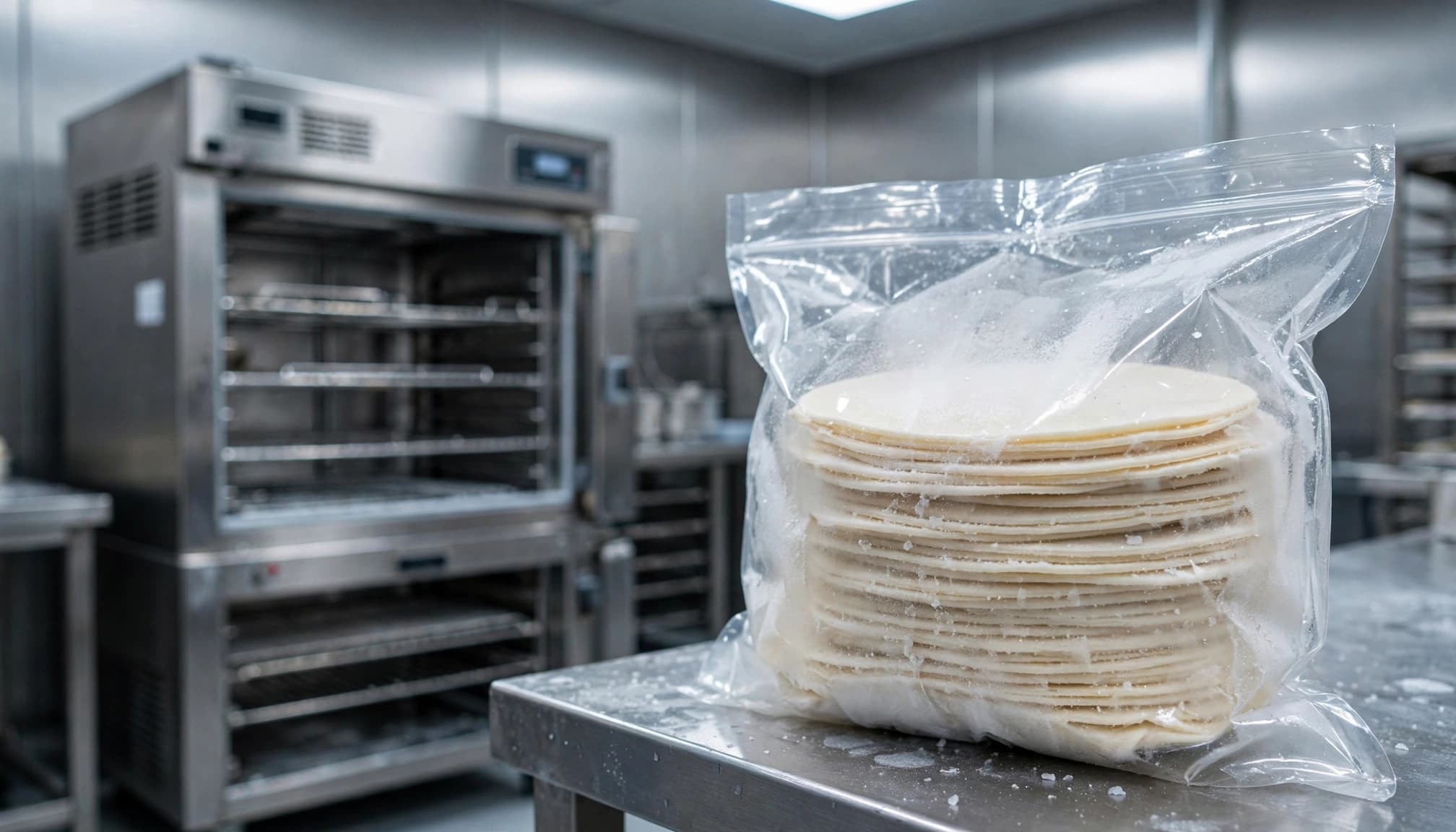
Stabilize the Dough Before Changing Additives
Record flour specification, water addition, dough temperature, mixing time, resting time, and sheet thickness. Compare cracks immediately after forming with cracks after freezing.
Early damage points toward dough development, sheeting, filling weight, or forming pressure. Damage that increases during storage directs attention toward packaging, temperature variation, and freeze-related deterioration.
Flour behavior also matters. Research on flour particle size and frozen wrappers examines differences in water absorption, gluten strength, and quality under freeze-thaw treatment.
Evaluate incoming flour against the same hydration and processing reference. A protein percentage alone does not describe every aspect of wrapper performance.
Evaluate Formulation and Cold-Chain Controls Together
Our SP02193 frozen dumpling wrapper improver combines emulsifiers, guar gum, dough-conditioning ingredients, and xylanase. It is designed to support wrapper strength and help reduce freeze-related cracking.
The trial dosage depends on flour, hydration, thickness, and processing conditions. Compare it with your existing recipe in a controlled trial; no single ingredient guarantees crack-free wrappers.
Control freezer loading, airflow, product spacing, and exposure before packaging. Use moisture-barrier packaging and evaluate seal integrity.
Track visible cracks, cooking rupture, forming behavior, and cooked texture through the intended storage period. Faster freezing still needs to be evaluated alongside surface drying and mechanical damage.
Cook Frozen Dumplings Without Rupturing the Wrapper
Cooking cannot restore a damaged wrapper. Gentle handling and an appropriate method can prevent small defects from becoming larger splits.
Boil Without Aggressive Agitation
For boiled dumplings, Choo Choo Cachew’s method is to boil until they float, add 1/2 cup of water, and cook about two more minutes. The wrappers should look slightly translucent.
Separate dumplings gently rather than stirring forcefully. Floating is a wrapper-cooking cue, not proof that raw filling has reached a safe temperature.
Pan-Fry, Steam, Then Crisp
A pot sticker should sit flat-side down in the pan. Add water carefully to about 1/2 inch above the pan bottom, cover to steam, then uncover and let the remaining water evaporate.
Allow the bases to crisp before lifting. Pulling at a wrapper stuck to the pan can tear an otherwise sound dumpling.
Steam With Space Around Each Dumpling
For steamed dumplings, line the steamer with parchment or cabbage leaves and place dumplings apart. Choo Choo Cachew gives about eight minutes over rapidly boiling water as a reference.
Frozen dumplings, larger portions, and thicker wrappers can require longer. Confirm filling doneness independently; ground meat should reach 160°F, and poultry filling should reach 165°F.
Frequently Asked Questions
Can Thawed Wrappers Be Refrozen?
Wrappers thawed in the refrigerator and kept cold can generally be refrozen, but another cycle can reduce flexibility. Refreezing does not restore moisture already lost.
Portioning before the first freeze reduces repeated thawing. Freezing does not create gluten; wheat dough develops its gluten network during hydration and mixing.
Can Dry Wrappers Be Repaired?
Slightly dry edges may soften under a barely damp towel during a short covered rest. Apply water only to the sealing edge rather than soaking the whole sheet.
Deeply cracked or leathery wrappers rarely recover enough strength for reliable folding. Use an intact wrapper instead of forcing a damaged one around filling.
Why Do Dumplings Open During Boiling?
Common causes include incomplete sealing, excessive filling, dry edges, trapped air, and cracks created during folding. Vigorous boiling can then enlarge those defects.
Examine an uncooked dumpling first. If the seam already lifts or the dough is stretched thin, correct forming before changing cooking time.
Prevent Cracks at the Point They Begin
Dry edges call for better coverage and packaging. Cracks that develop after freezing call for closer control of dough structure, freezing conditions, and temperature stability.
Change one factor at a time and compare the result under the same cooking conditions. For home cooks and producers, wrapper integrity depends on the full process, not one ingredient or storage rule.