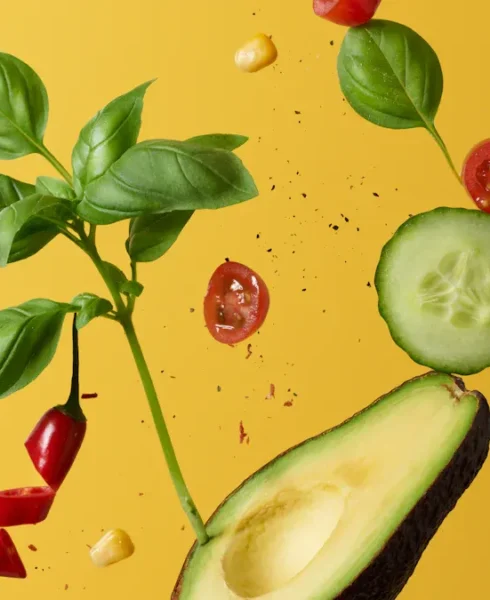
You might ask if a plant-based diet gives you all the Essential Amino Acids your body needs. Many people think plant proteins are not as good as animal proteins, but this is not correct. Some plant foods, like soybeans and quinoa, have all nine essential amino acids. You can also eat foods like beans and rice together to get a complete amino acid profile. Eating different plant proteins helps you get the nutrition you need and lets you enjoy many flavors.
Single plant proteins may not have some amino acids, but mixing different sources can give you all the essential amino acids.
Some plant foods, like pistachios and potatoes, are complete proteins.
Key Takeaways
A plant-based diet gives you all nine essential amino acids. Eat many foods like soy, quinoa, and legumes to get what you need. Mixing plant proteins, like beans and rice, makes complete proteins. You do not have to eat them together at every meal. Complete proteins are in foods like soy products, quinoa, and pistachios. These foods have all the essential amino acids your body needs. Eating many kinds of plant foods helps your nutrition. Add grains, legumes, nuts, and seeds to your meals for balanced amino acids. Planning your meals well stops nutrition problems. Make sure you eat many plant foods to help your muscles and health.
Getting Essential Amino Acids from Plants
Can Plants Provide All Essential Amino Acids?
You might wonder if you can get all Essential Amino Acids from plants. The answer is yes. You do not need to eat animal products to meet your body’s needs. You can get all Essential Amino Acids by eating a variety of plant foods. Each plant food has its own amino acid profile. Some, like soybeans, quinoa, amaranth, potatoes, and pistachios, contain all nine Essential Amino Acids. Others may lack one or two, but you can combine different foods to cover all your needs.
Tip: Eating beans with rice or lentils with whole wheat bread helps you get a complete protein. Your body uses the amino acids from all the foods you eat during the day.
Here are some ways plant-based diets supply all Essential Amino Acids:
You can eat a mix of grains, legumes, nuts, and seeds to get a full range of amino acids.
Your gut bacteria help break down plant foods and can even make some amino acids for your body.
Pairing foods, like beans and rice, helps fill in any missing amino acids.
Scientists have shown that even plant-based dog foods can provide all the necessary amino acids when they use a smart mix of ingredients like potato, pea, and chickpeas. This proves that plants can meet all protein needs when you plan your meals well.
Common Myths About Plant Protein
Many people believe myths about plant protein. Let’s look at some of the most common ones and see what science says:
Myth: Plant foods do not have enough protein.
Fact: Foods like chickpeas, black beans, and edamame are packed with protein and easy to add to your meals.Myth: Plant protein does not have all the Essential Amino Acids.
Fact: Soy, quinoa, and buckwheat are complete proteins. If you eat a variety of plant foods, you will get all the amino acids you need.Myth: You must combine different plant proteins at every meal.
Fact: Your body keeps an amino acid pool. You do not need to worry about combining foods at each meal. Eating a mix of foods throughout the day is enough.Myth: Plant protein cannot help build muscle.
Fact: Eating enough plant protein supports muscle health and repair just like animal protein.
You may also wonder how plant proteins compare to animal proteins in digestibility. Here is a simple table:
Protein Source | Digestibility (%) |
|---|---|
Plant-based foods | 70-90 |
Animal proteins | 85-100 |
Plant proteins are slightly less digestible, but you can still meet your needs by eating enough and choosing a variety of foods.
Note: You do not need to eat animal products to get strong, healthy muscles. Many athletes thrive on plant-based diets.
By learning the facts, you can feel confident that a plant-based diet gives you all the Essential Amino Acids your body needs.
Understanding Essential Amino Acids
What Are Essential Amino Acids?
You might know about amino acids, but not all are alike. Your body uses amino acids to build proteins. There are twenty amino acids in total. Nine of them are called essential. Your body cannot make these nine on its own. You must get them from the food you eat. Each essential amino acid has a special job in your body.
Here are the nine essential amino acids and what they do:
Histidine: Makes histamine, which helps your immune system, digestion, sleep, and sexual health.
Isoleucine: Supports muscle metabolism, immune function, and energy.
Leucine: Helps with muscle repair, growth hormone, and blood sugar control.
Lysine: Needed for hormone production, energy, calcium absorption, and immune support.
Methionine: Aids tissue growth, metabolism, detox, and mineral absorption.
Phenylalanine: Needed for brain chemicals and other amino acids.
Threonine: Builds collagen and elastin, helps with fat metabolism, and supports immunity.
Tryptophan: Keeps nitrogen balance and helps make serotonin for mood and sleep.
Valine: Supports muscle growth, tissue repair, and energy.
Why Are They Important?
Essential amino acids are needed for many things. Your body uses them to make proteins and fix tissues. They help your body grow and stay healthy. These amino acids also help make hormones. They keep your immune system strong. If you do not get enough, your body cannot work right.
Some important jobs of essential amino acids are:
Helping your body build and fix muscles and tissues.
Supporting hormone production and balance.
Boosting your immune system and energy levels.
Keeping your skin, hair, and nails healthy.
You can get essential amino acids from animal and plant foods. Eating different foods helps you get what you need. Most people get enough by eating a balanced diet.
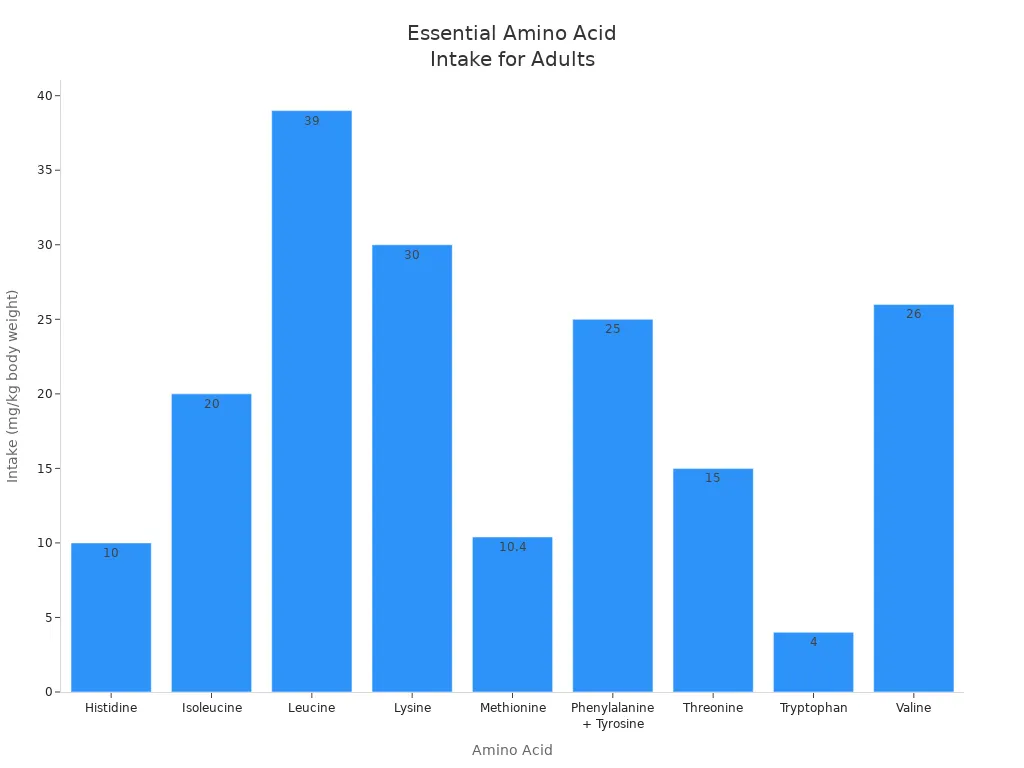
The table below shows how much of each essential amino acid adults need each day:
Essential Amino Acid | Recommended Intake (mg per kg body weight) |
|---|---|
Histidine | 10 |
Isoleucine | 20 |
Leucine | 39 |
Lysine | 30 |
Methionine | 10.4 |
Phenylalanine + Tyrosine | 25 |
Threonine | 15 |
Tryptophan | 4 |
Valine | 26 |
Tip: Eating many kinds of plant foods each day helps you get all the essential amino acids your body needs.
Complete vs. Incomplete Plant Proteins
Definition of Complete Protein
You might hear “complete protein” when learning about food. In science, a complete protein gives your body all nine Essential Amino Acids. Your body cannot make these amino acids. You must get them from what you eat. Complete proteins have enough of each amino acid your body needs. They help your body build and fix tissues.
Tip: Not all proteins are equal. Some foods have all the amino acids you need. Others may miss one or have too little.
If you eat foods that are not complete proteins, you still get amino acids. But you may not get them in the right balance. Incomplete proteins can have all nine amino acids. Some are just in smaller amounts.
Examples of Complete and Incomplete Plant Proteins
You can find both complete and incomplete proteins in plant foods. Some plant foods give you all the amino acids your body needs. Others are healthy but do not have enough of one or more amino acids.
Here is a table to show the difference:
Type of Protein | Examples of Complete Proteins | Examples of Incomplete Proteins |
|---|---|---|
Plant-based | Soy products, Quinoa, Pistachios, Chia, Hemp seeds | Legumes, Nuts (except Pistachios), Whole grains, Vegetables |
You can eat tofu, tempeh, quinoa, and chia seeds for complete proteins. Most other plant foods, like beans, lentils, and whole grains, are incomplete proteins. They may not have enough lysine, methionine, or histidine.
Plant-based meat alternatives can have similar or higher levels of some amino acids than animal meats. But some amino acids, like lysine and methionine, are lower in plant foods. The amount of each amino acid can change between different plant foods. Eating many kinds of foods helps you get what you need.
Note: You do not need to eat only complete proteins. Mixing different plant foods during the day helps your body get all the amino acids it needs.
Plant-Based Sources of Essential Amino Acids
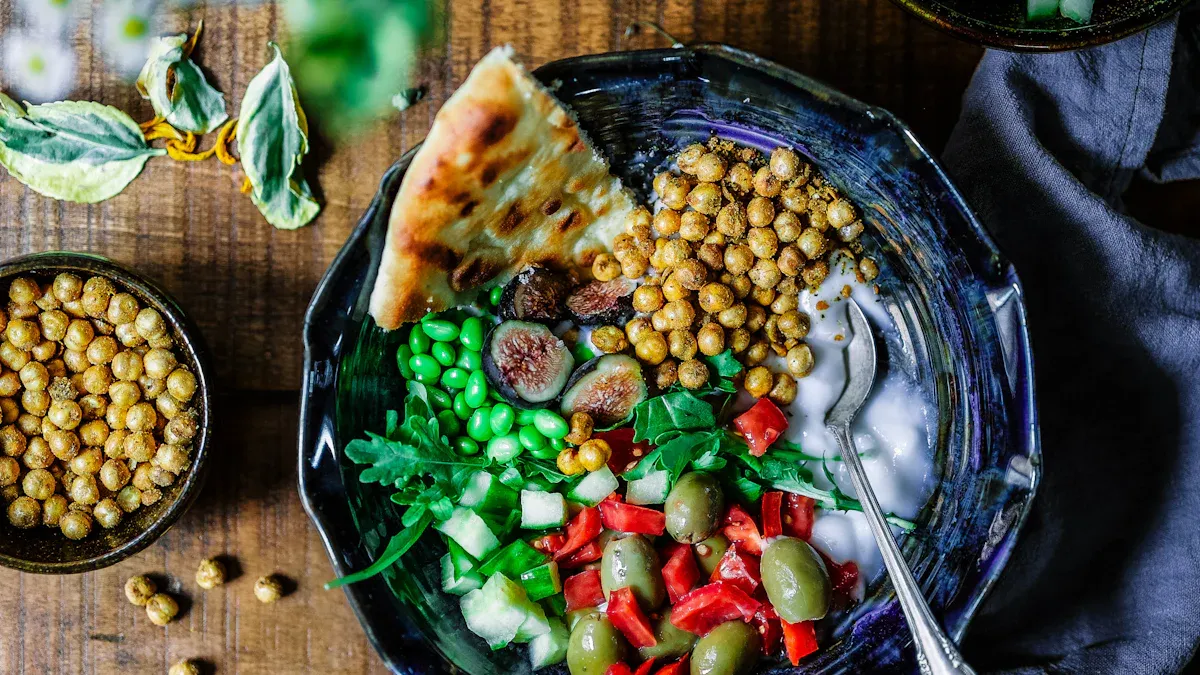
There are many plant foods that give you Essential Amino Acids. Each group of these foods helps your body in different ways. Eating lots of different plant foods helps your body stay strong and healthy.
Soy Foods and Legumes
Soy foods are some of the best plant proteins. You can eat tofu, tempeh, edamame, or drink soy milk. These foods are complete proteins. This means they have all nine Essential Amino Acids. Soy protein is easy for your body to use, just like animal protein.
Most other legumes, like lentils, chickpeas, black beans, and peas, have a lot of protein. But they might not have one or two Essential Amino Acids, like methionine. You can still get a complete protein if you eat legumes with grains. For example, eat beans with rice or lentils with whole wheat bread.
Soy foods: Complete proteins, all nine Essential Amino Acids
Legumes: High in protein, sometimes missing one or two Essential Amino Acids
Best practice: Eat legumes with grains for a full amino acid profile
Tip: Put tofu in stir-fries or add chickpeas to salads for more protein.
Grains and Pseudograins
Grains and pseudograins give you energy and protein. Quinoa and amaranth are special because they are complete proteins. They have all nine Essential Amino Acids. You can cook quinoa as a side or put amaranth in breakfast porridge.
Other grains, like brown rice, millet, teff, and wild rice, are not complete proteins. They may not have enough lysine or other amino acids. You can still eat them to get more protein. When you eat grains with legumes, you get a complete protein.
Quinoa: Complete protein, all nine Essential Amino Acids
Amaranth: Nearly complete protein, easy to digest
Brown rice, millet, teff, wild rice: Good protein sources, not complete
Note: Mix grains and beans in meals like rice and beans or quinoa and black bean bowls.
Nuts and Seeds
Nuts and seeds have a lot of protein, healthy fats, and minerals. Pistachios and hemp seeds are complete proteins. They give you all nine Essential Amino Acids. Hemp seeds have about 35% protein and are easy to put in smoothies or oatmeal.
Other nuts and seeds, like almonds, walnuts, peanuts, pumpkin seeds, sunflower seeds, flax seeds, and chia seeds, are not always complete proteins. They still give you many amino acids and nutrients. You can snack on them or put them on salads and yogurt.
Pistachios: Complete protein, 7.9 g Essential Amino Acids per 100 g
Hemp seeds: Complete protein, high in protein
Almonds, walnuts, peanuts, pumpkin seeds, sunflower seeds, flax seeds, chia seeds: High in protein, not always complete
Try making trail mix with different nuts and seeds for a tasty, protein-rich snack.
Other Notable Sources
You can also get Essential Amino Acids from other plant foods. Buckwheat and nutritional yeast are good choices. Buckwheat is a pseudograin you can cook like rice or use in pancakes. Nutritional yeast tastes cheesy on popcorn or pasta and gives you extra protein.
Spirulina is a blue-green algae that has a lot of protein and all Essential Amino Acids. Bananas do not have much protein, but they have small amounts of amino acids and are good in smoothies.
Buckwheat: Nearly complete protein, easy to use in baking
Nutritional yeast: High in protein, has all Essential Amino Acids
Spirulina: Very high in protein, all Essential Amino Acids
Bananas: Small amounts of amino acids, good for variety
Add nutritional yeast to pasta or popcorn for a cheesy taste and more protein.
Quick Reference Table: Top Plant-Based Protein Sources
Food | Protein Completeness | Notable Features |
|---|---|---|
Soy foods | Complete | All nine Essential Amino Acids, versatile |
Legumes | Incomplete | High protein, combine with grains |
Quinoa | Complete | All nine Essential Amino Acids, gluten-free |
Amaranth | Nearly complete | High protein, easy to digest |
Buckwheat | Nearly complete | Good for pancakes, gluten-free |
Pistachios | Complete | High in Essential Amino Acids |
Hemp seeds | Complete | High protein, easy to add to foods |
Chia seeds | Incomplete | High in fiber and omega-3s |
Pumpkin seeds | Incomplete | Good for snacks, rich in minerals |
Sunflower seeds | Incomplete | Good for salads, high in vitamin E |
Flax seeds | Incomplete | High in omega-3s, good for baking |
Almonds, Walnuts | Incomplete | Good for snacks, heart-healthy fats |
Peanuts | Incomplete | High protein, easy to find |
Nutritional yeast | Complete | Cheesy flavor, high in B vitamins |
Spirulina | Complete | Very high protein, all Essential Amino Acids |
Bananas | Incomplete | Small amounts of amino acids |
Eating many of these foods every day helps you get all the Essential Amino Acids your body needs.
Combining Plant Foods for Complete Protein
Complementary Proteins
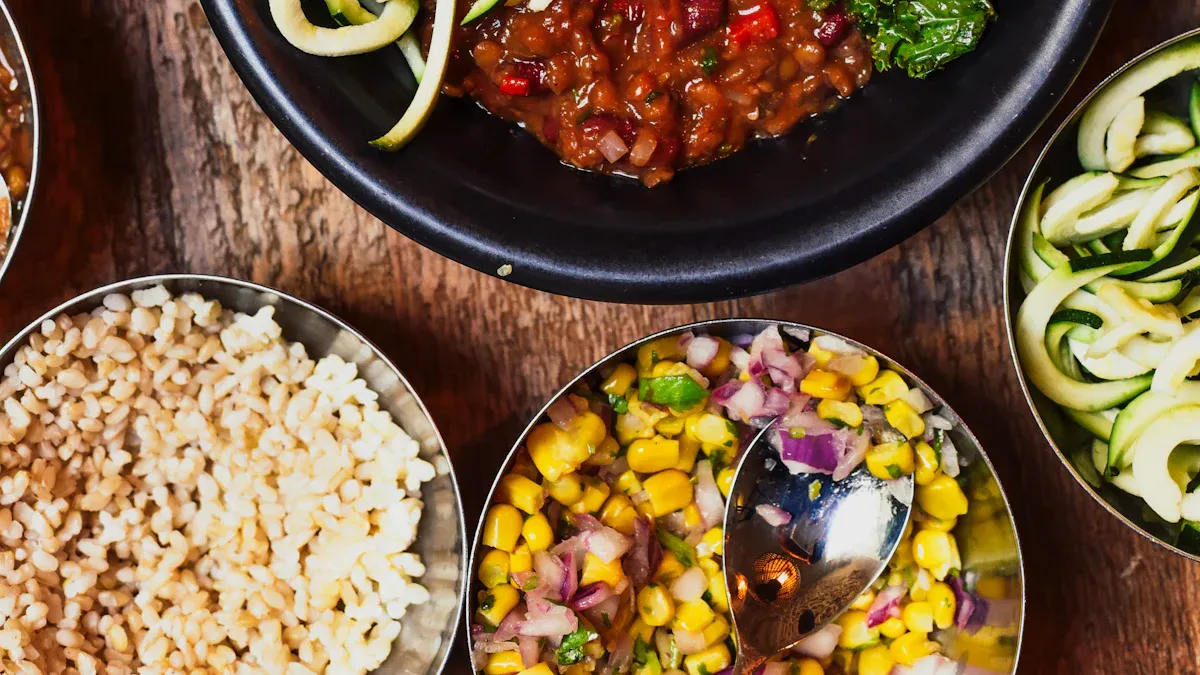
You can get all essential amino acids from plants. Some plant foods do not have every amino acid. You can eat other foods to fill in the missing ones. This is called complementary proteins. You do not have to eat these foods together at one meal. Your body saves amino acids, so you can eat them at different times.
Nutrition science says you do not need to mix proteins at every meal. Your body uses amino acids from meals you eat all day.
A good plant-based diet gives you all essential amino acids. If you eat enough whole plant foods, you will not miss any amino acids. Only eating fruit might not give you all amino acids.
Here is a table that shows plant protein sources, which amino acids they miss, and what foods to pair them with:
Plant Protein Source | Missing Amino Acids | Complementary Pairing |
|---|---|---|
Beans (except soy) | Methionine | Rice |
Grains | Lysine | Legumes |
Pea Protein | Cysteine | Rice |
Pairing beans with rice or grains with legumes helps you get complete protein.
Practical Food Pairings
You can make meals that give you all essential amino acids. Try mixing different plant foods for a complete protein. Here are some examples:
Food Pairing | Description |
|---|---|
Legumes and Grains | Rice and beans or lentil curry with rice give you complete protein. |
Nuts/Seeds with Legumes | Peanut butter on whole-grain bread or chickpeas with tahini in hummus are complete proteins. |
Grains and Dairy | Cheese on whole-grain bread or yogurt with granola make complete protein meals. |
Corn and Legumes | Black beans with corn tortillas help each other’s amino acid profiles. |
Soy-based Foods | Tofu with whole-grain noodles or edamame with rice are complete proteins by themselves. |
Whole Grains with Vegetables | Quinoa salad with vegetables or barley with mushrooms and peas boost protein intake. |
Some people think you must mix plant proteins at every meal. This idea came from old animal studies. Experts now say this is not true. Eating many plant foods each day gives you all essential amino acids.
Try new food combinations to keep meals fun and healthy. You can enjoy many tastes and still get enough protein.
Meeting Amino Acid Needs
Variety and Meal Planning
You can meet your amino acid needs by eating a wide range of plant foods. Each plant food offers a unique mix of nutrients. When you plan your meals, you should include different types of grains, beans, lentils, nuts, and seeds. This helps you cover all essential amino acids and keeps your meals interesting.
Add whole grains like quinoa, brown rice, and oats to your meals.
Include beans and lentils for protein and fiber.
Snack on nuts and seeds such as almonds, pumpkin seeds, and chia seeds.
Use soy-based foods like tofu and tempeh for complete proteins.
Try protein-rich snacks like edamame or nut butter between meals.
Batch cook lentils, quinoa, or tofu to save time during the week.
Rotate your menu each week to enjoy new flavors and nutrients.
Tip: You do not need to get all amino acids from one meal. Your body uses amino acids from foods you eat throughout the day.
A table can help you plan meals with different plant proteins:
Food Group | Examples | Protein Quality |
|---|---|---|
Grains | Quinoa, brown rice | Good, not always complete |
Legumes | Lentils, chickpeas | Good, combine with grains |
Nuts & Seeds | Almonds, hemp seeds | High, some are complete |
Soy Foods | Tofu, tempeh | Complete |
Common Pitfalls to Avoid
Some people miss key amino acids when they eat only a few plant foods. You need to eat a variety to avoid gaps in your nutrition. Many plant proteins are less digestible and may lack lysine or leucine. These amino acids help your muscles and energy levels.
Eating only one type of plant protein can lead to missing essential amino acids.
Not planning meals may cause low intake of lysine and leucine.
Meeting daily protein needs does not always mean you get enough of every amino acid.
Plant-based diets can also lack calcium, iodine, choline, and vitamins B2, B12, and D.
Note: Careful meal planning prevents nutritional gaps and keeps you healthy.
You can boost your amino acid intake by mixing beans, grains, nuts, and seeds. Try new recipes and snacks to make your diet balanced and fun. 🍲
You can get all your essential amino acids from eating many plant foods. If you eat soy foods, whole grains, beans, and lentils, your body gets complete protein and other nutrients it needs.
Plant-based proteins give you fiber, antioxidants, and vitamins.
They can help lower your chance of heart disease, high blood pressure, and type 2 diabetes.
Try different foods and mix them to make meals fun. Here is a look at how some plant proteins are different:
Plant Protein Source | Key Characteristics | Amino Acid Profile |
|---|---|---|
Potato Protein | Easy to digest, has a lot of methionine | More essential amino acids than eggs or milk casein |
Pea Protein | Easy to digest, has a lot of lysine | Great amino acid bioavailability |
Chickpeas | Lots of protein, easy to digest | Has a lot of lysine, helps balance amino acids |
Brewers Yeast | Gives protein and B vitamins | Adds more amino acids to foods |
Eating plant foods is good for your health and helps you feel great every day. 🌱
FAQ
Can you get all essential amino acids from plants?
Yes, you can. Eating a variety of plant foods gives you all nine essential amino acids. You do not need animal products to meet your protein needs.
Do you need to combine plant proteins at every meal?
No, you do not. Your body stores amino acids from different foods. Eating a mix of plant proteins throughout the day covers your needs.
Tip: Try beans with rice or lentils with whole wheat bread for a complete protein.
Which plant foods are complete proteins?
You find complete proteins in soy foods, quinoa, pistachios, hemp seeds, and spirulina. These foods contain all nine essential amino acids.
Food | Complete Protein |
|---|---|
Soy | Yes |
Quinoa | Yes |
Pistachios | Yes |
Hemp Seeds | Yes |
Spirulina | Yes |
Can plant protein help you build muscle?
Yes, plant protein supports muscle growth and repair. You need to eat enough protein and include a variety of plant foods in your meals.
What are common mistakes in plant-based diets?
You may miss key amino acids if you eat only one type of plant food. Plan your meals with grains, legumes, nuts, and seeds to avoid gaps.
Note: Variety keeps your diet balanced and healthy.