
You see clean label ingredients as natural raw items. They are barely changed by processing. They swap out old chemical additives. Yet, they keep the same texture. Food makers use plant items to fix recipes:
Core Functional Ingredients:
Guar Gum
Pectin
Citrus Fiber
Functional Native Starches
Lecithin
Spirulina
Rosemary Extract
Acerola Powder
You can use these natural choices now. They solve tough food making problems easily. They stop water loss very well. They mix oil and water cleanly. They replace fat smoothly today. They keep bright colors stable. They also stop food from spoiling fast.
Key Takeaways
Real plant items swap out lab chemicals in foods.
Guar gum and pectin create thick, smooth drinks.
Citrus fiber holds water. It cuts fat with ease.
Sunflower lecithin mixes oil and water safely for allergies.
Rosemary extract and acerola powder keep food fresh.
Primary Clean Label Ingredients for Texturization
Plant-based hydrocolloids build solid food structures. They look very appealing. You pick these natural items. You find them in seeds. You get them from fruits. You find them in plants too. These functional polymers trap water easily. They steady your liquid mixtures.
Guar Gum and Locust Bean Gum
You take guar gum out of seeds. You get locust bean gum from trees. Both items have long chain carbs. They are galactomannan carbohydrates.
These carb chains soak up liquid fast. They work in cold liquid. They work in warm liquid. They build tight bonds inside liquid. This creates thick, smooth textures. You do not need to cook it.
Formulation Tip: You can mix two gums together. Combine locust bean gum with xanthan gum. You can also mix it with pectin. This blend forms a firm gel. It stops water from separating. It helps frozen desserts.
You keep thick liquids steady during temperature changes. Use these seed gums. They grab extra water tightly. They stop ice crystals from growing. Your frozen foods stay smooth.
Pectin for Low-pH Systems
You get pectin from citrus peels. You also get it from apples. High-methoxyl pectin works very well. Use it in sour foods. Put it in fruit juice. Use it in yogurt drinks. Put it in gummy candy.
Sour spaces make milk proteins clump. Pectin has a negative charge. Milk proteins have a positive charge. Pectin sticks to them in sour liquids. This bond makes a shield. It covers the protein bits. The shield stops clumping. It stops water loss. This loss is called syneresis.
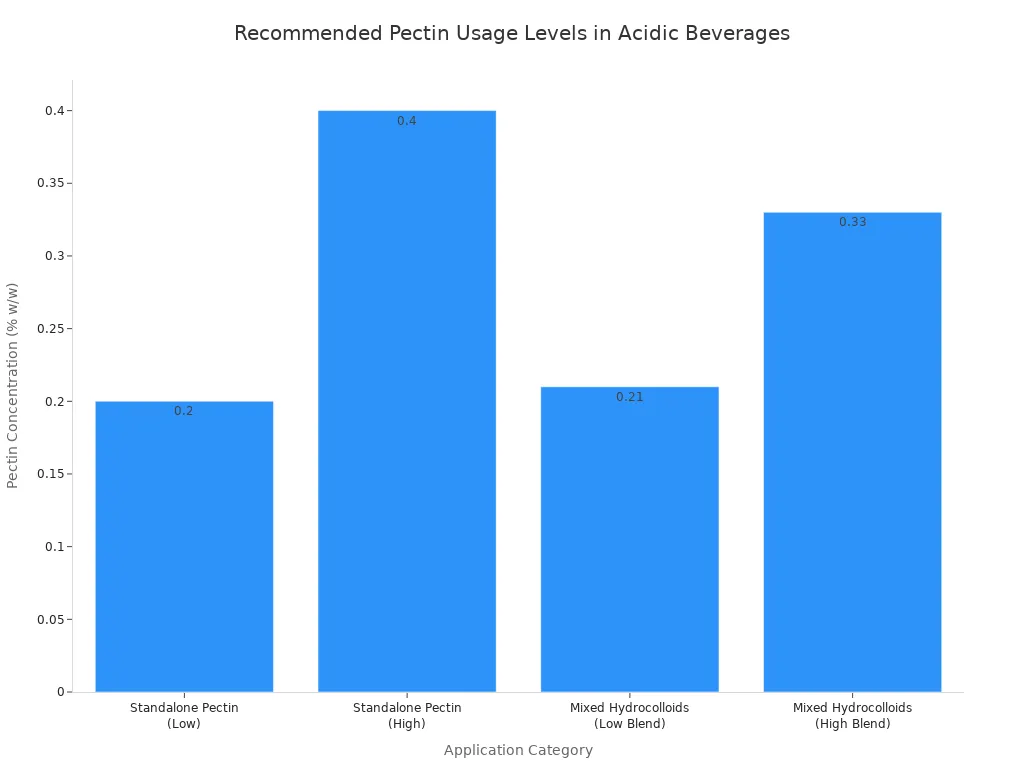
You pick exact pectin amounts. Base them on your recipe:
Application Category | Pectin Formulation | Pectin Concentration (% w/w) |
|---|---|---|
Standalone Pectin (Low) | Pectin | 0.20% |
Standalone Pectin (High) | Pectin | 0.40% |
Mixed Hydrocolloids (Low Blend) | Pectin combined with Guar Gum or Locust Bean Gum | 0.21% |
Mixed Hydrocolloids (High Blend) | Pectin combined with Guar Gum or Locust Bean Gum | 0.33% |
Pectin makes a firm gel matrix. Use it in sweet treats. It holds fruit bits in place. It keeps them spread out. It does not change the flavor.
Viscosity and Emulsification Performance
Plant hydrocolloids taste great in your mouth. They replace chemical additives easily. These ingredients hold fruit bits evenly. They float minerals inside your drinks.
Hydrocolloid webs trap small oil drops. They hold them inside liquids. They keep oil down in sauce. Oil will not float up. Your sauces stay mixed longer. Clean Label Ingredients give you total control. You guide thickness and texture easily. You keep oil mixtures steady.
Functional Starches and Citrus Fibers
Pick smart starches and citrus fiber. Upgrade your products today. These plant items build firm shapes. No fake chemicals are needed. They give smooth textures. They keep labels simple.
Native and Clean-Label Starches
Swap out modified starches. Use functional native starches instead. Harvest them from corn. Get them from tapioca. Use rice and potato crops. Processors use real physical heat. They treat raw starch granules.
Key Takeaway: Heat physical processing improves native starches. Get heat stability easily. Resist low pH values. Withstand hard shear forces. No chemicals are added.
These starches swell in warm liquids. They thicken soups and gravies. They improve ready meals. Your items stay thick. Cold storage will not ruin them.
Citrus Fiber for Moisture Retention
Get citrus fiber from fruit peels. This upcycled item has big cell walls. It offers a large surface area. Porous fibers trap water inside food.
Syneresis Prevention: Stop liquid separation in dips. Keep sauces mixed well.
Bakery Freshness: Hold water in bread. Delay stale bread crumbs.
Meat Processing: Keep juices inside meats. Increase your final yields.
Citrus fiber holds weight during cooking. Baked items stay soft. They look good on shelves.
Fat Reduction in Formulations
Cut total fat easily. Keep a rich mouthfeel. Citrus fiber forms a gel web. It feels just like oil.
Formulation Goal | Traditional Additive | Clean-Label Alternative |
|---|---|---|
Thickening & Fat Replacement | Modified Food Starch | Native Tapioca / Potato Starch |
Water Binding & Emulsification | Chemical Stabilizers | Natural Citrus Fiber |
Mix citrus fiber with skim milk. Put it in alfredo sauce. Cut fat by twenty percent. Use much less butter. Cut back on parmesan cheese. Reduce heavy cream use by half. Keep a creamy liquid texture. Match the original sauce mouthfeel. Serve cold or hot. Offer healthy food that tastes good.
Natural Emulsifiers, Colorants, and Preservatives

You can swap fake items for real plants. Plants protect your food. Natural emulsifiers mix oil and water smoothly. Plant colors make bright shades. Botanical items shield fats from spoiling. You need no fake chemicals.
Seed and Egg Yolk Lecithin
Good emulsifiers stop oil separation. Use them in salad dressings. Put them in sweet chocolate. Add them to baked treats. Lecithin forms a natural bridge. It links water and fat easily. You take lecithin from egg yolks. You extract it from seed oils. Soy and sunflower seeds work great. Lecithin has smart dual molecules. One side grabs water tightly. The other side holds fat. This simple step keeps mixtures steady.
Makers now switch from soy to sunflower:
Market Share Dynamics: Soy lecithin stays most popular. Yet, sunflower lecithin grows very fast.
Clean-Label & Allergen Drivers: Laws require clear soy warnings. Sunflower lecithin needs no allergen label. It offers non-GMO perks too.
Functional Performance: Sunflower lecithin works just like soy. It causes no food allergy risks.
Swap out fake glycerides for sunflower lecithin. Your food stays well mixed. Your label stays short.
Spirulina and Botanical Colorants
People check food using their eyes. Swap fake blue dye like Blue No. 1. Use spirulina extract instead. Spirulina holds a natural blue pigment. It is called phycocyanin protein. It creates bright blue colors. Put it in sweet candy. Use it in cake frostings. Add it to sports drinks.
Watch heat and acid levels carefully:
Thermal Thresholds: Blue color stays fine at 60°C. High heat breaks it down fast. Avoid temperatures over 70°C.
pH Stability Profile: Best stability happens near pH 6. Acidic spaces cause protein clumping.
Stabilization in Beverages:
Sugars: Add extra sugar like sucrose. It protects color during heating.
Salts: Table salt helps in normal liquid. It fails in sour liquid.
Proteins & Modifications: Mix color with whey protein. This step stops protein precipitation.
Formulation Tip: Mix spirulina with yellow turmeric extract. You make stable green shades easily. No synthetic dyes are needed.
Plant-Based Antioxidants and Antimicrobials
Fat breakdown creates bad food smells. Rancid fat ruins rich foods. Shield fats with natural plant extracts. Do not use synthetic BHA. Avoid fake BHT additives. Rosemary extract contains strong carnosic acid. It holds helpful carnosol too. These plant bits stop chain reactions. Acerola cherry powder brings natural ascorbic acid. It protects bright food colors. It keeps taste fresh.
Compare natural plant extracts to synthetic options:
Antioxidant Type | Concentration Tested | Relative Efficacy vs. Control | Relative Efficacy vs. BHA |
|---|---|---|---|
Rosemary Essential Oil | 0.25% and 0.50% | Higher antioxidant effect | Less effective |
Synthetic BHA | 0.02% | Higher antioxidant effect | Baseline standard (Most effective) |
Natural extracts bring bonus functional perks. Cultured dextrose stops bad germs. Fermented celery powder fights bacteria. Protect cured meats without fake nitrites. These clean items extend shelf life. They satisfy smart shoppers.
Clean Label Ingredients Replacement Matrix
Swapping fake ingredients takes time. Changing chemical additives affects food stability. Production costs can change too. Processing methods need adjustments. You balance simple labels with performance. Overall, fixing recipes raises ingredient costs. Costs jump eight to twenty-two percent.
Replacing Chemical Emulsifiers
Mixing tools are hard to replace. You can choose natural plant fats. Pick sunflower or egg yolk lecithin. These items keep oil and water mixed. Yet, you must adjust machine settings. Extra testing keeps liquids from splitting apart.
Replacing Modified Food Starches
Swap altered food starches with real plant starches. Add citrus fiber to your mix. Heat transforms tapioca, potato, and corn starches. They become strong thickeners. Citrus fiber traps water inside sauces. It stops liquid from separating. These natural Clean Label Ingredients stay strong. They handle heat and cold storage well.
Replacing Synthetic Preservatives
Fake preservers yield to rosemary extract. Acerola powder supplies natural ascorbic acid. Without these, foods spoil much faster. Product shelf life gets shorter. You must check these operational costs. Match them against your planned budget.
Clean-Label Alternative Category | Formulation Challenges | Cost Impacts |
|---|---|---|
Preservatives & Antioxidants | Foods spoil much faster without smart fixes. Shelf life becomes shorter. | You balance unit costs with shipping goals. |
Natural Colorants | Colors fade under light, heat, and acid. | This pressure lowers overall profit margins. |
Natural Emulsifiers | Machine settings need extra adjustment time. Testing takes more hours. | It raises total recipe update costs. |
Natural Flavor Concentrates | Keeping steady taste without fake items is hard. | Real flavors cost two to five times more. |
Overall Reformulation | Keeping food solid during shipping is tough. | Ingredient costs jump eight to twenty-two percent. |
Modern Clean Label Ingredients remove fake package numbers. You make pure products with great taste. The texture stays nice and smooth.
Clean Label Ingredients give you total power. They protect your food products well. Natural starches and citrus fiber hold water. They grab it very tightly. Lecithin keeps oil mixed with water. It keeps the mixture stable. Plant extracts shield fresh flavors. They stop bad oxidation fast.
💡 Formulator Tip: Mix natural items together for great results! Pair citrus fiber with native starches. This step makes a perfect mouthfeel. You need no fake additives.
Start your recipe updates right now. Test small batches early. You will master these plant mixes!
FAQ
What makes an ingredient clean label?
Clean ingredients come from plants, seeds, or fruits.
They undergo very little processing.
No synthetic chemicals are used.
Buyers easily recognize them on product labels.
How do native starches replace modified starches?
Makers use physical heat and water on native starches.
This physical treatment helps starches handle tough conditions.
Starches resist high shear and low pH levels.
They withstand hot temperatures very well.
You get strong thickening power and smooth textures.
No chemical additives are ever needed.
Can citrus fiber replace fat in food formulations?
Yes, natural citrus fiber can replace fat easily.
Its porous structure traps water tightly inside.
It forms a smooth gel network.
This gel mimics the creamy feel of butter.
It also matches the rich feel of oil.
Why do food developers prefer sunflower lecithin over soy lecithin?
Sunflower lecithin avoids major allergen warnings on packages.
It offers identical emulsification strength.
You avoid genetic modification risks completely.
You also bypass strict soy allergen rules.