Have you ever wanted your cookies to taste richer or your bread to feel softer? Malt extract for baking can help you do just that. It brings out deep, sweet flavors and gives your treats a golden color. You can use it in everything from crusty loaves to chewy brownies. Whether you love baking sweet desserts or savory snacks, malt extract adds a special touch.
Tip: Try it in your next batch of bread for a boost in flavor and texture!
Key Takeaways
Malt extract makes baked goods taste better. It also helps cookies stay chewy. Bread becomes softer when you use it.
Pick the right type of malt extract for your recipe. You can use liquid, powder, or syrup. Each one gives a different level of sweetness.
Diastatic malt extract helps yeast work better. This makes dough rise more. Non-diastatic malt extract adds flavor and color. It does not change how much the dough rises.
Malt extract helps baked goods keep their moisture. This means they stay fresh and tasty longer.
Try using malt extract in different recipes. You can use it in bread or cookies. It has many uses and gives a special taste.
What is malt extract for baking?
Definition and origins
Malt extract for baking comes from malted barley. You start with barley grains. These grains get soaked in water and allowed to sprout. Then, you dry them and grind them up. This process unlocks natural sugars and enzymes inside the barley. When you mix the ground barley with water and heat it, you get a sweet liquid called wort. If you concentrate this wort, you get malt extract.
People have used malt extract for thousands of years. Here’s a quick look at its history:
Ancient Sumerians and Egyptians used concentrated wort for food and drink.
In the 1600s, people in England made malt extract, sometimes adding herbs for health.
The British Navy used malt extract in the 1700s to help sailors stay healthy on long trips.
Inventors like Henry Pelham and Robert Thornton tried to improve malt extract for better storage and taste.
Today, you can find malt extract for baking in kitchens all over the world.
Forms: liquid, powder, syrup
You can buy malt extract for baking in three main forms: liquid, powder, and syrup. Each one works a little differently in recipes.
Liquid Malt Extract (LME): This form has about 20% water. It adds moisture and a gentle sweetness to your dough or batter.
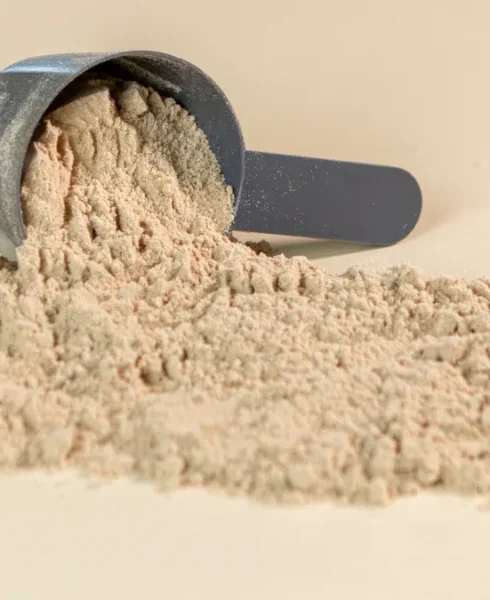
Dried Malt Extract (DME): This powdery form has only 1-2% water. It gives you a stronger, more concentrated sweetness and flavor.
Syrup Malt Extract: Syrup is thick and sticky, with a water content similar to LME. It brings both flavor and moisture to your baked goods.
Here’s a table to help you compare:
Type of Malt Extract | Water Content | Sugar Content | Application in Baking |
|---|---|---|---|
Liquid Malt Extract | ~20% | Lower per pound | Adds moisture and flavor |
Dried Malt Extract | 1-2% | Higher per pound | Gives concentrated sweetness and flavor |
Syrup Malt Extract | ~20% | Similar to LME | Adds flavor and moisture |
Tip: If you want a clean malt flavor without bitterness, try dried malt extract. For a caramel-like sweetness, liquid or syrup works best.
Flavor and color impact
Malt extract for baking does more than just sweeten your recipes. It changes the way your bread, cookies, or cakes look, smell, and taste.
Dried malt extract comes in different colors. You can pick a pale one for a light bread or a darker one for richer flavor.
Syrup and liquid forms add a caramel-like sweetness. They work well in bread, cakes, and biscuits.
Malt extract helps your bread rise better. It also gives the crust a golden color and the inside a soft crumb.
Wholewheat bread tastes sweeter and richer if you add 5g–9g of syrup per 100g of flour. For white bread, just 0.5g to 2g per 100g of flour can make the crust look beautiful.
Scientists say malt extract gives baked goods a malty, caramel, and honey-like aroma. It also provides fermentable sugars, which help yeast grow and make your bread fluffy.
Note: Using malt extract for baking can turn a plain loaf into something special, with a deeper flavor and a lovely color.
Flavor enhancement
Caramelization and sweetness
When you add malt extract for baking to your recipes, you get more than just a sweet taste. This ingredient is packed with natural sugars. These sugars help your dough rise faster and make it easier to work with. As your bread or cookies bake, the sugars kick off the Maillard reaction. This reaction gives your treats a golden crust and a rich flavor. Compared to other sweeteners, malt extract brings a stronger sweetness and helps your baked goods brown beautifully. You will notice a deeper color and a more pronounced sweet taste in every bite.
Tip: If you want a shiny, golden crust on your bread, try brushing a little malt extract on top before baking.
Depth and aroma
Malt extract for baking does more than sweeten your food. It adds layers of flavor that you can’t get from regular sugar. You might taste hints of caramel, honey, or even a little toastiness. The aroma fills your kitchen with a warm, inviting smell. Your bread will smell richer, and your cookies will have a deeper, more complex flavor. This ingredient helps you create baked goods that stand out from the rest.
Texture improvement
You can use malt extract to make your baked goods softer and fresher. Here’s how it helps:
It keeps moisture in your dough, so your bread and cookies stay soft longer.
High-hydration breads turn out tender and fluffy when you add malt extract.
Your bread gets a softer crumb and a crispier crust, making each bite more enjoyable.
If you want your cakes to stay moist or your bread to have a perfect texture, malt extract is a smart choice. You’ll notice the difference in every slice or bite.
Types of malt extract
Diastatic vs. non-diastatic
When you shop for malt extract, you’ll see two main types: diastatic and non-diastatic. The difference comes down to enzymes. Diastatic malt extract has active enzymes that help break down starches into sugars during baking. Non-diastatic malt extract has no active enzymes because it’s heated to stop their action.
Here’s a quick comparison to help you see the difference:
Type of Malt Extract | Enzyme Activity | Effect on Dough | Additional Notes |
|---|---|---|---|
Diastatic | Active | Boosts yeast activity, resulting in faster rise | Adds sweetness and darker color; great for bread |
Non-Diastatic | Inactive | Does not aid in rising | Adds sweetness and color; perfect for flavor |
Tip: If you want your bread to rise higher and have a soft crumb, diastatic malt extract is your friend.
Choosing the right type
Picking the right malt extract for baking depends on what you want from your recipe. Here are some things to think about:
Want a boost in fermentation? Go with diastatic. It helps yeast work faster and gives your bread a better rise.
Looking for more sweetness and a rich, malty flavor? Non-diastatic is the way to go. It brings a caramel-like taste and a golden color.
For a stronger malty flavor and darker color, choose a darker extract.
If you use dried malt extract, mix it with your dry ingredients to avoid clumping.
When to use each
You’ll use diastatic malt extract when you bake bread that needs a good rise and a soft texture. It works best at temperatures between 140°F and 158°F. This type is perfect for artisan loaves, sandwich bread, and rolls.
Non-diastatic malt extract shines in recipes where you want flavor and color, but don’t need extra help with rising. Try it in bagels, pretzels, cookies, or even hot dog buns. It gives a sweet, nutty, and caramel-like taste without changing how your dough rises.
Note: Most home bakers use non-diastatic malt extract for baking when they want to add flavor to sweet treats or golden color to buns.
No matter which type you choose, you’ll find that malt extract for baking can take your recipes to the next level.
Using malt extract for baking
Adding to bread, cookies, cakes
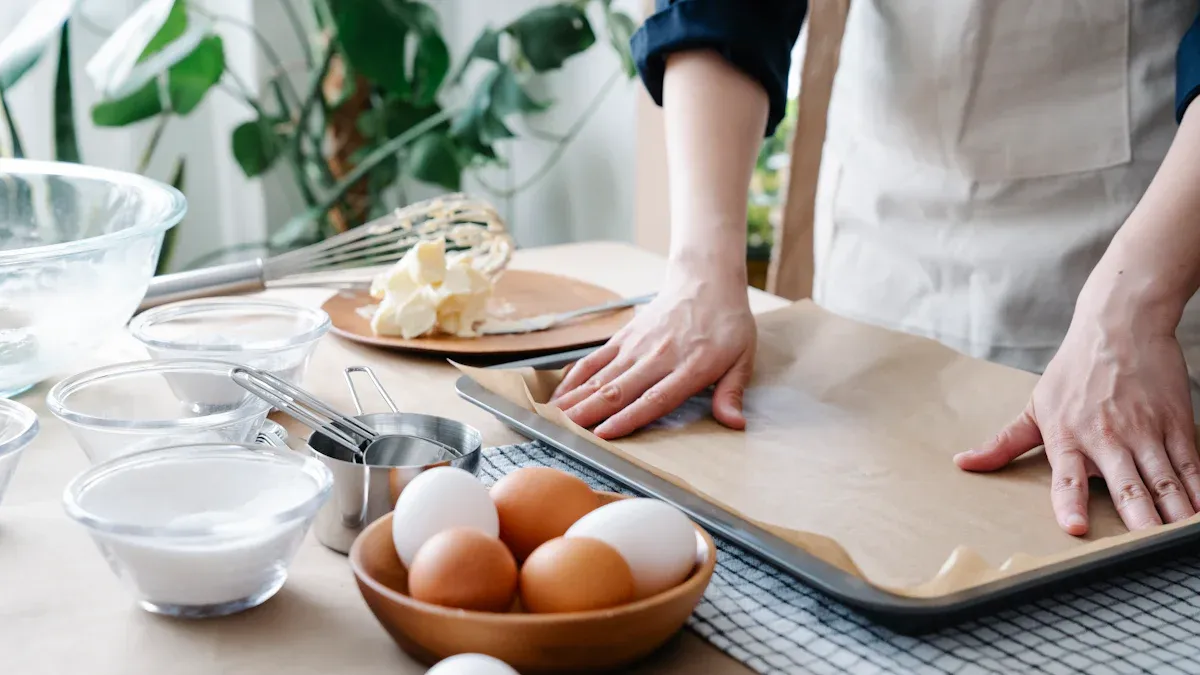
You can add malt extract for baking to almost any recipe. It works well in bread, cookies, cakes, and even waffles. Start by picking the right form—liquid, powder, or syrup. Each one blends a little differently, but the steps are simple.
Measure your malt extract. Use a kitchen scale for accuracy, especially with powder or syrup.
Mix with other ingredients. For bread, add it to your flour before you add water. For cookies and cakes, blend it with your wet ingredients like eggs or butter.
Adjust liquids if needed. If you use liquid or syrup, you might need to reduce other liquids in your recipe just a bit.
Bake as usual. Watch for a golden color and a sweet aroma as your treats bake.
Here are some popular recipes that use malt extract:
Recipe Name | Key Ingredients | Preparation Time | Author |
|---|---|---|---|
Finger-Licking Malt Loaf | malt extract, hot strong tea, wholemeal self-raising flour, raisins, sultanas | 1 hr 20 min | Gary Waite |
Malted Butter Cookies | unsalted butter, powdered sugar, egg, vanilla, malt extract, cake flour | N/A | Janet D. Blair |
Malted Waffles | unbleached all purpose flour, nondiastatic malt powder, eggs, whole milk | 8 servings | Chloë Klein |
Tip: Try adding malt extract to your next batch of waffles or cookies. You’ll notice a richer flavor and a softer texture.
Substitution tips
Sometimes you might want to swap malt extract for another sweetener. You can do this, but keep a few things in mind:
Honey or molasses: These work as substitutes, but they taste stronger and can change the color of your baked goods.
Sugar: You can use sugar, but you’ll miss out on the malty flavor and the extra moisture malt extract brings.
How to swap: If your recipe calls for liquid malt extract, use the same amount of honey or molasses. For powder, use a little less sugar by weight.
If you run out of malt extract, try this quick swap for bread:
For every 1 tablespoon of malt extract, use 1 tablespoon of honey or molasses. Reduce the liquid in your recipe by 1 teaspoon.
Note: Substituting will change the flavor and texture. Malt extract gives a unique taste you can’t get from other sweeteners.
Recommended quantities
Getting the right amount of malt extract makes a big difference. Too much can make your bread sticky or your cookies too sweet. Too little, and you might not notice the flavor at all. Here’s a handy table to guide you:
Product | Percentage of Flour Weight |
|---|---|
White pan bread | 0.5-1.5 |
Sweet goods | 1.5-3.0 |
French/Italian bread | 0.5-2.0 |
Whole wheat bread | 5.0-9.0 |
Pretzels | 1.5-6.0 |
Hard rolls | 3.0-5.5 |
You can also see how the recommended amounts compare for different baked goods:
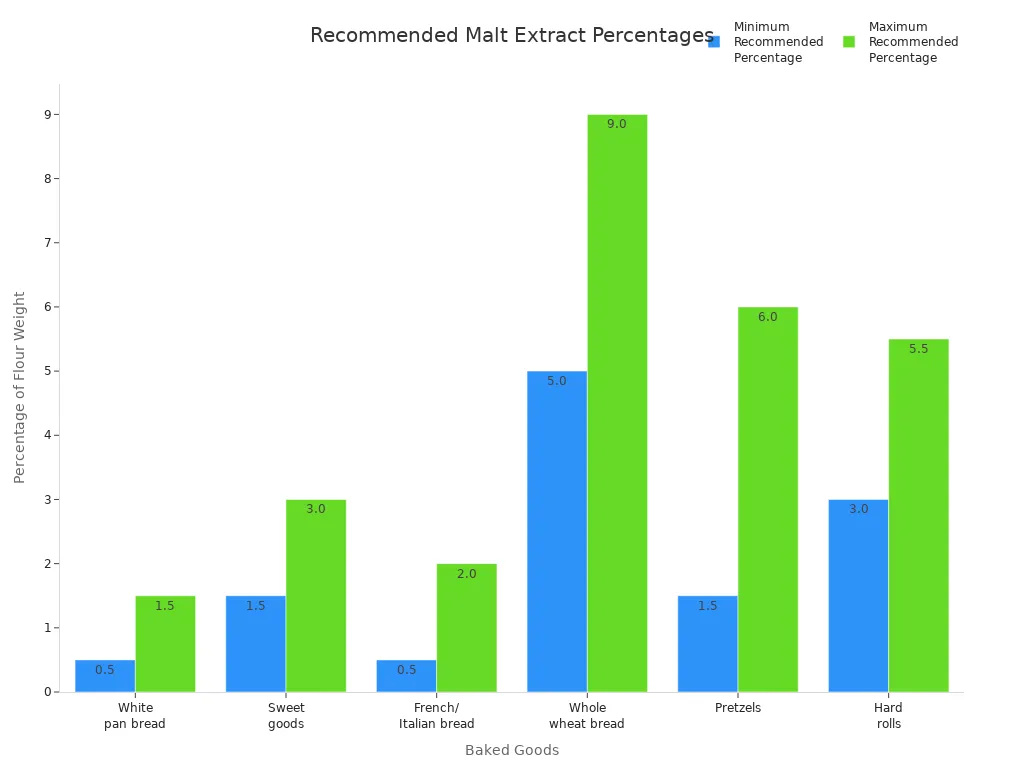
If you’re just starting, use the lower end of the range. You can always add more next time if you want a stronger flavor.
Tip: If your bread turns out too dark or sticky, try using less malt extract next time. If it tastes bland, add a little more.
Malt extract for baking helps you create treats with a golden color, soft crumb, and rich flavor. With a little practice, you’ll find the perfect amount for every recipe.
Benefits and best practices
Browning and moisture retention
Do you want your cookies to look golden and taste fresh? Malt extract for baking helps you get that nice color and keeps your treats moist. It works in a few ways. The Maillard reaction makes your bread and cookies brown on top. Caramelization of sugars adds even more color and flavor. When you bake, heat and movement make your kitchen smell great. If you use malt extract, your bread stays soft longer. Your cookies will not dry out as fast. You will notice better flavor and texture.
Enhanced sweetness
Malt extract gives a natural sweetness that is different from sugar. You get a richer taste and a softer bite. Bakers like it for many reasons. It comes from sprouted barley, which makes your baked goods sweeter and improves how they feel. Malt extract has more nutrition, so it is healthier than regular sugar. Many people now want natural sweeteners, and malt extract is a good choice. It also makes your bread and cakes look darker and more appealing. Using malt extract makes your treats taste better and look nicer.
Nutritional Benefit | Description |
|---|---|
Helps your body use energy and keeps your nerves healthy. | |
High Fiber Content | Makes digestion easier and prevents constipation. |
Antioxidant Properties | Protects your cells from damage and keeps you healthy. |
Promotes Cardiovascular Health | Lowers cholesterol and helps your heart. |
Provides Sustained Energy | Gives you energy that lasts all day. |
Supports Bone Health | Contains minerals that keep your bones strong. |
Storage and measuring tips
You want your malt extract to stay fresh and work well in recipes. Here are some tips. Keep dried malt extract away from water and air. Store it between 50–70°F (10–21°C) for up to 12 months. Liquid malt extract lasts 24 months if unopened. After opening, put it in a container with little air, refrigerate, and use within 3 months. Always measure carefully with a kitchen scale for best results. Do not use old extract. Freshness is important for flavor. Dissolve malt extract all the way before heating so it does not taste burnt. Use specialty grains only a little so you do not cover up other flavors. Both craft bakeries and home bakers use these tips to get the best results from malt extract. You can do this too and enjoy golden, moist, and tasty baked goods every time. 🍞
You have seen how malt extract for baking brings out rich, sweet flavors and makes your baked goods better. Try using it in bread, cookies, or even savory dishes like pizza or burgers. Here are some ways it helps:
Adds subtle sweetness and deep caramel notes.
Improves texture, making cookies chewy and cakes moist.
Helps bread rise and gives pastries a golden crust.
Check out how versatile it is in different recipes:
Recipe Type | What Malt Extract Adds |
|---|---|
Bread | |
Cookies & Cakes | Moisture and caramel sweetness |
Savory Dishes | Richness and improved texture |
Give it a try in your kitchen and see how your baking transforms!
FAQ
What is the difference between diastatic and non-diastatic malt extract?
Diastatic malt extract has active enzymes that help bread rise. Non-diastatic has no enzymes and only adds flavor and color. You use diastatic for better texture and non-diastatic for a richer taste.
Can I use malt extract in gluten-free baking?
Yes, you can! Malt extract adds flavor and color to gluten-free recipes. Just remember, it comes from barley, so it is not safe for people with celiac disease or gluten intolerance.
How do I store malt extract after opening?
Keep liquid malt extract in the fridge after you open it. Use an airtight container. For powder, store it in a cool, dry place. Always keep it away from moisture.
Does malt extract make baked goods sweeter than sugar?
Malt extract gives a gentle, malty sweetness. It does not taste as sweet as regular sugar. You get a richer flavor and a softer texture, not just more sweetness.