
You can find yeast extract in many foods and drinks. Here are the top 5 ways it is used:
It makes ready meals taste better.
It is used in plant-based foods, like meat substitutes.
It is found in drinks like broths and nutrition drinks.
It is added to foods to give more nutrition.
Yeast extract gives foods a rich and savory taste. It helps lower the amount of salt and sugar. It also makes food healthier. You can buy yeast extract as a liquid or powder. It helps make food taste good and fresh.
Key Takeaways
Yeast extract makes food taste better. You can enjoy strong flavors with less salt and sugar.
It gives you nutrition like protein and B-vitamins. This helps meals stay healthy and still taste good.
Yeast extract is used in many foods like soups, sauces, snacks, and plant-based foods. It helps make foods with simple and clear labels.
Yeast Extract in Food Flavoring
Umami Enhancement
Yeast extract makes food taste richer and more savory. When you add it to soups or snacks, the umami flavor gets stronger. This gives your food a deeper and more satisfying taste. Yeast extract has amino acids and 5′-nucleotides. These help create a strong umami effect, especially when heated.
Yeast extract (YE) is known for its umami parts, like amino acids and 5′-nucleotides. Heating YE helps make more umami peptides. The best results happen at 110 °C. This gives food a strong umami taste and high sensory scores.
Yeast extract lets you enjoy tasty food with less salt. It has special peptides that make food taste salty, even with less sodium. You get less salt but still keep the flavor.
Here’s how yeast extract works in processed food:
Yeast extract has salty and umami peptides. These make food taste saltier without adding more salt.
Some salty-enhancing peptides have been found in yeast extract. They help give food a savory flavor.
Salty taste comes from certain receptors. Scientists are still studying how these work at the molecular level.
Yeast Extract Taste
You might wonder what yeast extract tastes like. Food makers say it gives food a rich, savory, and a little salty flavor. It can make curries taste spicier. It can lower the sourness of vinegar. It can add creaminess to dairy foods. Yeast extract helps improve the flavor of many foods.
Food Product Type | Description |
|---|---|
Soups | |
Sauces | It is found in sauces to boost flavor. |
Snacks | It is used in snacks for umami taste. |
Marinades | It is added to marinades for savory flavor. |
Yeast extract matches the clean labeling trend. You get natural ingredients and clear labels. It can replace MSG, so you get umami flavor without extra sodium. This makes yeast extract a popular choice for many foods.
Yeast extract has amino acids and peptides that make food taste better, so you can use less salt.
It fits with the move toward natural and clear labels in food.
It can replace MSG and give umami flavor without more sodium.
You find yeast extract in many foods like soups, sauces, marinades, and snacks. You get better taste and healthier choices when you pick foods with yeast extract.
Yeast Extract in Ready Meals
How to Use Yeast Extract
You see yeast extract in lots of ready meals at the store. It makes your food taste better and gives it a rich, savory flavor. If you want to know how to use yeast extract, you can add it to Italian pasta dishes, American mac and cheese, or Asian stews. You just mix a small amount into your recipe, and the taste improves right away. Yeast extract works well in sauces, bouillons, and meat dishes. You find it in instant noodles, prepared pastas, salads, pizzas, and even wet or dried soups. These food products use yeast extract to boost taste and make meals more enjoyable.
Tip: If you want to make your own ready meal at home, try adding yeast extract for extra umami and taste improvement. You don’t need much—just a spoonful can change the flavor!
Nutritional Value
Yeast extract does more than improve taste. It helps make food healthier. You get less salt, sugar, and fat in your meals because yeast extract adds flavor without needing extra ingredients. You can lower salt by at least 30% and still keep the taste strong. You can also cut sugar and fat by up to 30% in many foods. Yeast extract fits well with plant-based foods, too.
Here’s what you get from yeast extract in a typical serving:
Nutrient | Amount per 6 g serving |
|---|---|
Calories | 11 |
Fat | 0.1 g |
Protein | 1.4 g |
Carbohydrates | 1.2 g |
– Sugar | 0.1 g |
– Dietary Fiber | 0.4 g |
Saturated Fat | 0 g |
Cholesterol | 0 mg |
Vitamin A | 0.00 mcg |
Vitamin C | 0.0 mg |
Vitamin D | 0.00 mcg |
Iron | 0.24 mg |
Calcium | 4.02 mg |
Potassium | 126 mg |
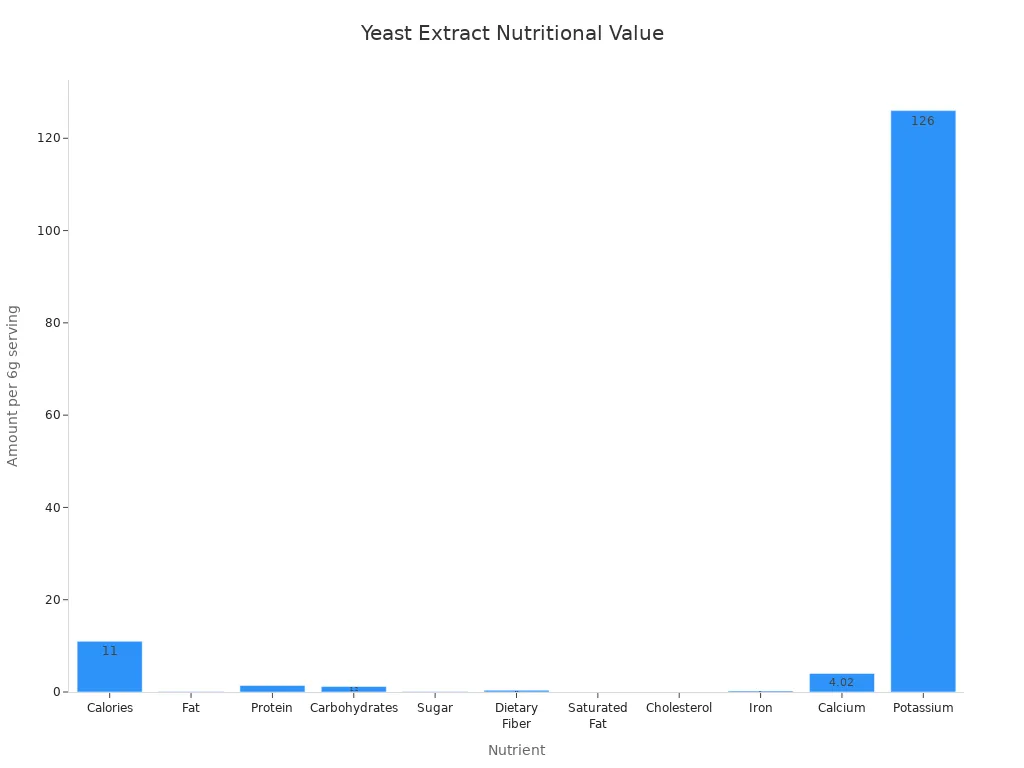
You get protein, fiber, and minerals like iron and potassium. Yeast extract gives you a nutritional boost while making your food taste great. Next time you eat a frozen meal or a prepared dish, check the label. You might spot yeast extract as a key ingredient for flavor and nutrition.
Yeast Extract in Plant-Based Food
Umami in Meat Alternatives
If you like plant-based foods, you want them to taste good. Yeast extract helps give meat alternatives a meaty, umami flavor. When yeast extract gets hot, it releases special compounds. These compounds make food taste rich and savory. They come from proteins, peptides, and amino acids in yeast extract. All these mix together to make a flavor like cooked meat.
Here’s how yeast extract works in meat alternatives:
Component/Process | Description |
|---|---|
Yeast Extract (YE) | A natural seasoning with proteins, peptides, amino acids, and flavor precursors. |
Flavor Profile | Made from different compounds that form when heated. |
Meat Flavor Synthesis | Uses protein breakdown with yeast extract, amino acids, and sugars for a meaty taste. |
Cost-Effective Production | Works without animal protein, so it’s good for vegetarians and saves money. |
Umami Constituents | Has Glu-X peptides that make foods taste more meaty. |
Thermal Treatment | Heating yeast extract brings out stronger meaty and umami flavors. |
You find yeast extract in veggie burgers, vegan sausages, and mushroom broths. These foods use yeast extract to give a meaty taste without animal ingredients.
Texture and Taste
Yeast extract does more than add flavor. It also changes how plant-based foods feel when you eat them. When you bite a veggie burger or vegan sausage, you want it juicy and soft. Yeast extract helps make foods feel juicy and fatty, like real meat. It also hides any strange or bitter tastes from plant proteins.
Many people think yeast extract makes plant-based foods taste better and richer. You get a better meal, and the food feels more like regular meat.
If you check popular brands, you’ll see yeast extract in VITAM-R Yeast Extract and wild-mushroom broths. These foods use yeast extract for taste and nutrition. Studies show texture and mouthfeel are important for people who eat plant-based foods. Yeast extract helps these foods taste good, so they are a top pick for anyone who wants a meat-free meal.
Yeast Extract in Beverages

Flavor in Drinks
Yeast extract is used in many drinks. It helps make beverages taste better. Yeast extract comes from fresh yeast you can eat. It has amino acids, proteins, and nucleotides. These parts make drinks taste richer and give more umami. You get better flavor without fake additives. Yeast extract can hide bad tastes, so your drink is smooth.
Yeast extract is a clean label ingredient. Drinks can say “no additives” on the package. This matches the trend for simple and natural foods.
Just a little yeast extract, like 0.01% to 0.03%, can make drinks sweeter. It also blocks bad flavors. You notice the better taste right away. Here is how yeast extract is made for drinks:
Step | Description |
|---|---|
Yeast cream preparation | Yeast extract is made by taking out cell parts from yeast grown with sugar and air. |
Autolysis | Yeast cells break down their own proteins with enzymes. |
Insolubles separation | Filtration takes out solid parts, leaving water-soluble yeast extract. |
Concentration & pasteurization | Water is removed, then the extract is dried into powder or granules. |
Yeast extract is found in broth drinks and nutrition beverages. It is also in soups and broths, making them taste full and rich.
Nutritional Benefits
Yeast extract does more than make drinks taste good. It adds nutrition to your drinks. You get proteins, amino acids, nucleotides, and B vitamins. These nutrients help make your drink healthier. Yeast extract can help lower sugar, so drinks taste sweet without extra sugar.
Here are some benefits of yeast extract in drinks:
It boosts flavor and makes drinks taste better.
It helps lower sugar but keeps the taste strong.
You get extra nutrients like glutathione, selenium, and beta-glucan.
Yeast extract is used in nutrition drinks to improve taste and health. You can enjoy a tasty drink and get more nutrition. Next time you buy a broth drink or nutrition beverage, look for yeast extract on the label. You may be surprised how much it helps both taste and nutrition.
Yeast Extract in Functional Foods
Health Benefits
You might notice more functional foods on store shelves these days. Many of these products use yeast extract to boost both taste and nutrition. If you want to eat healthier, yeast extract can help you enjoy your meals without missing out on flavor. It gives you a rich, savory taste and lets you cut back on salt. You get the same great flavor, but with less sodium and no artificial additives.
Here are some reasons why yeast extract is a smart choice for health-focused foods:
It helps you enjoy a plant-based diet by giving a meaty taste without animal ingredients.
You can lower your salt intake because yeast extract makes food taste salty and savory.
It supports a protein-rich diet, with about 65% protein and all essential amino acids.
You can eat less fat since yeast extract adds umami flavor, so you don’t need as much oil or butter.
It has a low risk of allergies, making it safer than many other plant proteins.
You’ll find yeast extract in soups, sauces, snacks, ready-to-eat meals, and plant-based products. Many brands use it to meet the needs of health-conscious shoppers who want both taste and nutrition.
B-Vitamins and Proteins
Yeast extract stands out for its impressive nutrition. It’s packed with B-complex vitamins, which help your body turn food into energy and keep your immune and nervous systems working well. You also get a complete protein source, which is great if you want to eat less meat.
Here’s a quick look at what yeast extract offers:
Nutritional Component | Description |
|---|---|
B-complex vitamins | Essential for cell metabolism and overall health. |
Proteins | Source of organic nitrogen and growth factors. |
You also get highly digestible protein, plus minerals like potassium, phosphorus, zinc, and iron. Just two teaspoons (5g) of yeast extract can give you:
Nutrient | Amount per 2 tsp (5g) | % Daily Value (DV) |
|---|---|---|
Protein | – | |
Riboflavin (Vitamin B2) | – | 246% |
Niacin (Vitamin B3) | – | 109% |
Vitamin B6 | – | 212% |
Folate (Vitamin B9) | – | 59% |
Vitamin B12 | – | 313% |
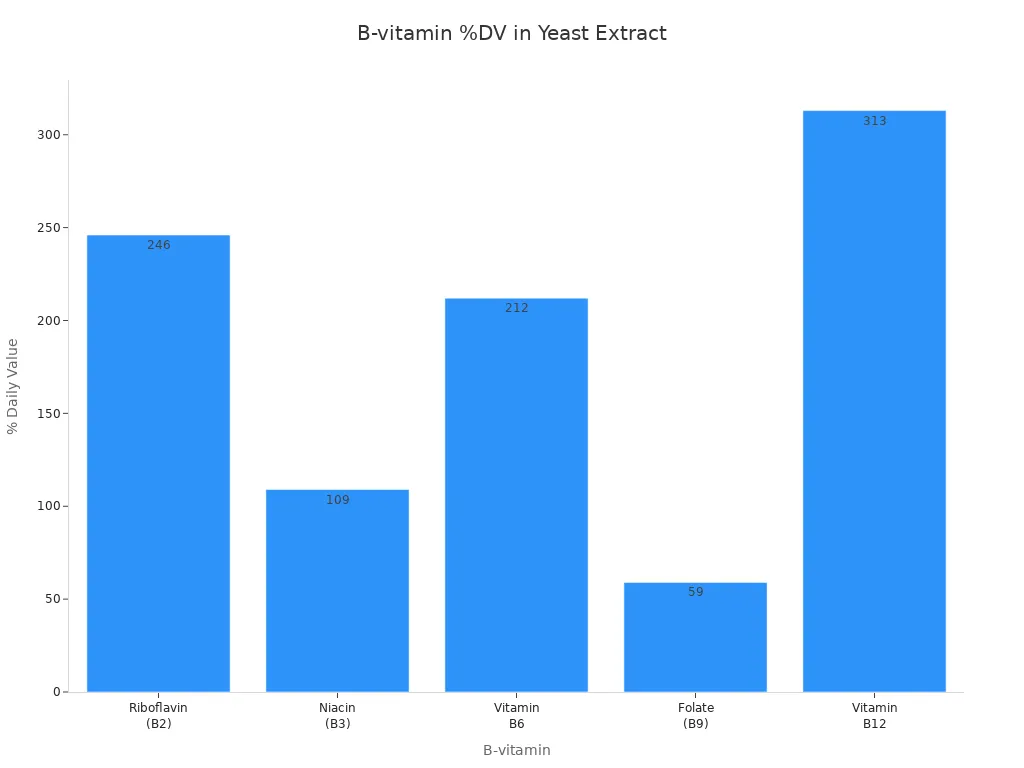
You get a lot of nutrition in a small serving. Yeast extract makes it easy to add B-vitamins and protein to your daily meals. If you want a simple way to boost your health, look for functional foods with yeast extract on the label.
You see yeast extract everywhere—from snacks to drinks. It boosts umami, adds nutrition, and makes food taste better, even with less salt. You get natural ingredients that fit clean-label trends and plant-based diets. Next time you shop, check the label and discover how yeast extract improves your favorite foods.
FAQ
What is yeast extract made from?
Yeast extract comes from natural yeast cells. You get it by breaking down yeast and removing the cell walls. The result is a flavorful, nutrient-rich paste or powder.
Is yeast extract the same as MSG?
No, yeast extract is not MSG. You get umami flavor from yeast extract, but it comes from natural amino acids, not added monosodium glutamate.
Can you eat yeast extract if you have food allergies?
Most people with food allergies can eat yeast extract. It does not contain gluten, dairy, or nuts. Always check the label for extra ingredients.