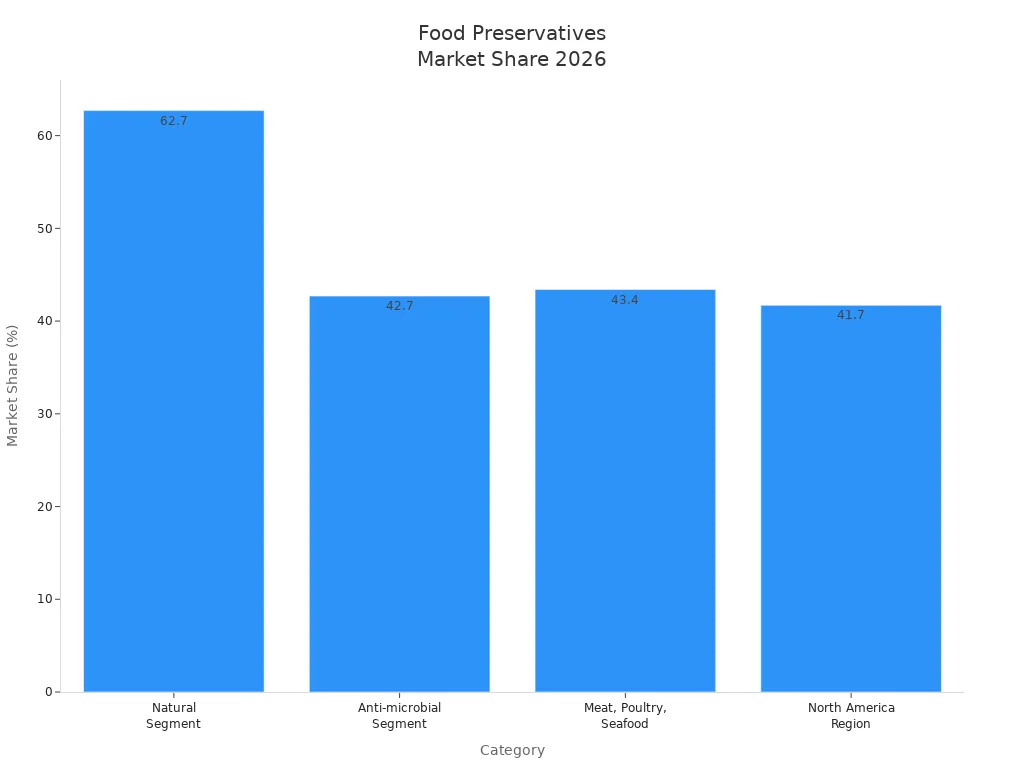
You want a Food Preservative that keeps your food fresh and does not harm your health. A safe preservative will not cause side effects or long-term health issues. An effective one will stop bacteria, mold, or yeast from spoiling your food. Rules and science help you know what works and what does not. Many people now choose natural options. In 2026, natural preservatives lead with a 62.7% market share.
Key Takeaways
Pick preservatives with GRAS status so they are safe to eat.
Choose preservatives that fight many germs to keep food fresh.
Look at the pH levels and storage needs to keep preservatives strong.
Know about health risks from some preservatives and stay away from ones that cause big health problems.
Keep up with rules and new ideas in food preservation to meet what people want and to follow safety rules.
Food Preservative Safety and Regulations

GRAS Status and Scientific Backing
You should know if a Food Preservative is safe before using it. In the United States, experts say a substance is “Generally Recognized As Safe” (GRAS) if it does not hurt people when used the right way. This label comes from science and many years of use in food. Always check if a Food Preservative has GRAS status.
The Joint FAO/WHO Expert Committee on Food Additives (JECFA) gives advice about food additive safety for the world. JECFA looks at science and helps countries decide if a preservative is safe. The FDA also checks new studies. In 2026, the FDA is studying butylated hydroxyanisole (BHA) to see if it is still safe for food and packaging. The FDA asks people for their thoughts and uses new science to make choices.
Note: Some countries have different rules.
In the U.S., some additives like potassium bromate and BHA are allowed, but the European Union does not let people use them. Japan, Australia, New Zealand, and China need approval for any additive not on their legal list. The U.S. uses the GRAS system, but other countries do not.
Regulatory Guidelines in 2026
You must follow the newest rules when you pick a Food Preservative. In 2026, the FDA made some changes:
The FDA started to stop using petroleum-based dyes and now likes natural color additives.
The FDA began a big safety check of BHA.
You can say “no artificial colors” if the color comes from a natural source, even if it is an additive.
Congress is working to fix the GRAS loophole. New laws want the FDA to watch GRAS substances more and share more information with the public.
The FDA will make you send a GRAS notice for any new substance you say is GRAS.
The FDA will do more safety checks after products are sold, especially for chemicals like BHA and phthalates.
The FDA will give advice on using fruit and vegetable juices as color additives.
You should know that the GRAS Oversight and Transparency Act will make a group to check GRAS choices. Other new laws want the FDA to look at and share all GRAS substances.
Labeling and Approval Checks
You need to check if a Food Preservative is allowed before you use it. Here are some steps you can follow:
Look at the FDA’s Food Additive Status List to see if your preservative is okay.
Check the Substances Added to Food Inventory for more facts.
Read the label and approval papers to make sure the preservative follows all rules.
Watch for new advice from the FDA, especially about natural colors and new preservatives.
If you sell food in other countries, you must check their rules too. Some countries have stricter laws than the U.S. Always keep records of your checks and approvals.
Effectiveness and Compatibility
Antimicrobial Spectrum
You want a Food Preservative that fights many germs. Some preservatives, like nisin, stop bad bacteria from growing. Nisin helps keep foods like crab meat and smoked salmon safe. It can make fish sausages last up to 150 days in the fridge. Nisin also lowers the chance of harmful toxins in smoked salmon. Plant-based compounds look promising, but most tests are done in labs, not in real foods. More research will show how well these natural options work in your food.
Tip: You can test how well a preservative fights germs. Use methods like agar diffusion or broth dilution. These tests show if the preservative stops bacteria or yeast from growing.
pH Range and Stability
A preservative works best at certain pH levels. Many preservatives do their job when the pH is between 3.0 and 5.5. Drinks like juice need a pH from 3.0 to 4.0 for the preservative to work well. Store preservatives the right way to keep them strong. If you use the right pH and storage, you can stop food from spoiling and cut down on waste.
Aspect | Details |
|---|---|
Optimal pH Range | 3.0 to 5.5 |
Effective pH Range | 3.0 to 4.0 for beverages |
Stability Conditions | Retains potency when properly stored |
Impact on Microbial | Minimizes spoilage and product returns |
Food Type Compatibility
Not every preservative works in all foods. Nisin is good for dairy, meat, drinks, and canned foods. It stops spoilage bacteria and keeps food safe. Natamycin works best in baked goods because it fights many germs. You need to pick the right preservative for your food to get the best results.
Food Type | Preservative Used | Effectiveness |
|---|---|---|
Dairy | Nisin | Effective against spoilage bacteria |
Meat | Nisin | Extends shelf life and ensures safety |
Beverages | Nisin | Versatile and compatible |
Canned Foods | Nisin | Inhibits bacterial growth |
Baked Goods | Natamycin | Broad-spectrum antimicrobial properties |
Note: The mix of ingredients in food can change how well a preservative works. Some foods make it harder for the preservative to do its job, so you may need to test and adjust.
Health and Toxicity Concerns
Avoiding Controversial Preservatives
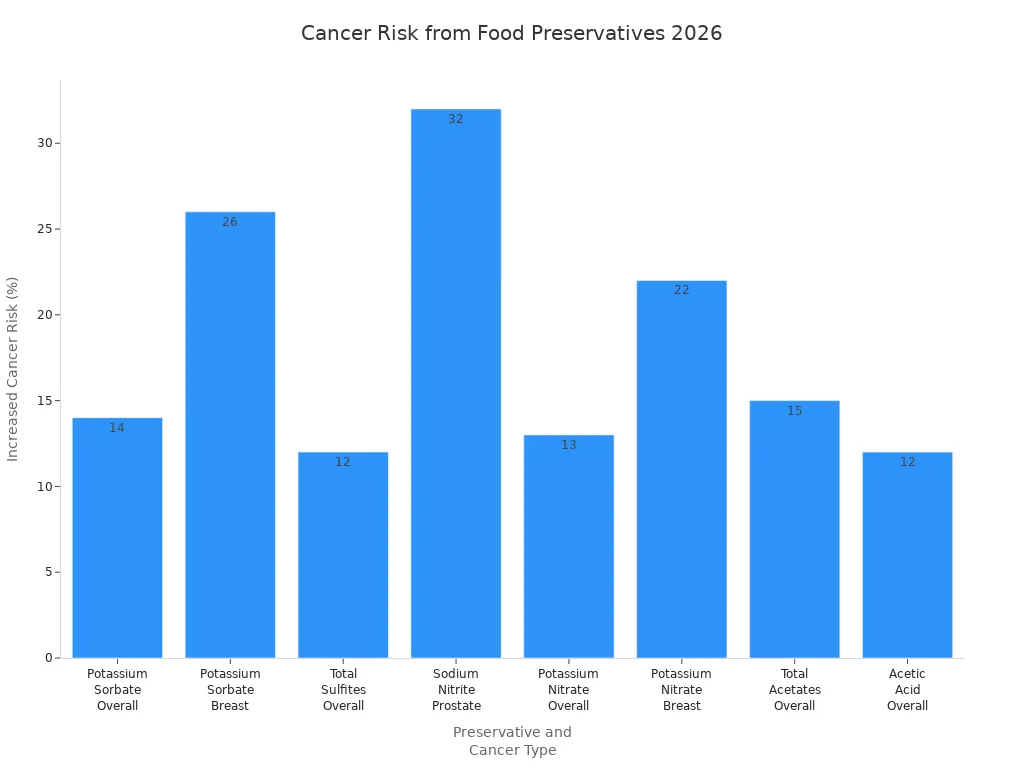
You need to know which preservatives are risky in 2026. Some additives can cause cancer or other health problems. Some can also raise blood pressure. The table shows the most common risks:
Preservative | Associated Cancer Risk |
|---|---|
Potassium sorbate | |
Potassium sorbate | 26% higher risk of breast cancer |
Total sulfites | 12% higher risk of overall cancer |
Sodium nitrite | 32% higher risk of prostate cancer |
Potassium nitrate | 13% higher risk of overall cancer |
Potassium nitrate | 22% higher risk of breast cancer |
Total acetates | 15% higher risk of overall cancer |
Total acetates | 25% higher risk of breast cancer |
Acetic acid | 12% higher risk of overall cancer |
Total erythorbates | More cancer cases |
Sodium erythorbate | More cancer cases |
Some preservatives have other problems. Try not to use these if you can:
Propylparaben: Studies say it may change hormones. The EU does not allow it in food.
Red Dye No. 3: The FDA banned it in 2025 because of cancer worries.
Tip: Always check for new safety news before picking a preservative.
Allergenicity and Sensitive Groups
Some people have bad reactions to certain preservatives. Sulfites can cause asthma attacks or even anaphylaxis. This is worse for people with asthma. About 3–10% of people with asthma react to sulfites. Sodium benzoate can cause asthma symptoms in kids. If you make food for sensitive groups, you must check for these risks.
Interactions with Ingredients
Preservatives can mix with other ingredients in your food. These mixes can change how safe or strong the product is. Some preservatives can raise blood pressure or cause heart disease. The table shows more health risks:
Preservative Type | Associated Health Risk |
|---|---|
Sorbates | Breast cancer |
Sulfites | Prostate cancer |
Nitrates | Overall cancer risk |
Nitrites | Overall cancer risk |
Acetates | Overall cancer risk |
You should always test how a Food Preservative works in your recipe. This helps you stop bad side effects and keeps your food safe for everyone.
Practical and Economic Considerations
Cost and Availability
You should think about price and supply when picking a food preservative. Natural preservatives usually cost more than synthetic ones. This can make your product more expensive to produce. If you use natural preservatives, you might pay higher prices. Some preservatives are hard to get because of supply chain issues or new rules. You need to check if you can find enough preservative for your needs.
Economic Factor | Description |
|---|---|
Rising Consumer Awareness | People want healthier and natural foods. |
Market Restrictions | Supply chain issues and government rules can limit choices. |
Opportunities | New technology and teamwork help the market grow. |
Demand for Natural Alternatives | Health concerns push people to choose natural preservatives. |
Higher Manufacturing Costs | Natural preservatives cost more than synthetic ones. |
More people want clean-label products. This makes companies use natural preservatives, even if they cost more.
Ease of Use
You need to pick a preservative that works with your process. Some preservatives need special storage, like keeping them cold or frozen. If you do not store them right, bad bacteria can grow. Foods that need refrigeration should go in the fridge right away. Keeping foods cold slows down bacteria growth. You must follow storage rules to keep food safe.
Store preservatives at the correct temperature.
Use preservatives that fit your food’s needs.
Check how long you can keep ready-to-eat foods.
If you use preservatives that are easy to handle, you save time and make fewer mistakes.
Tip: Always read the instructions for storage and handling. This helps you keep your food safe and fresh.
Impact on Food Quality
Preservatives change how your food tastes, feels, and looks. You want your food to stay safe and fresh, but you also want it to taste good. Preservatives stop food from spoiling, so flavor and texture are protected. If you use too much, you might change the taste or look. You need to balance safety and quality.
They help keep food fresh and safe.
Managing additives is important for quality and satisfaction.
You should test your product to make sure the preservative does not ruin how it tastes or feels. If you manage additives well, your customers stay happy and your food stays safe.
Trends and Natural Alternatives
Natural Food Preservative Options
You can pick from many natural ways to keep food fresh. These choices help you skip synthetic chemicals. They also match what people want in clean-label foods. In 2026, some natural preservatives are very popular:
Rosemary extract, oregano oil, and citrus extracts stop spoilage germs. They help keep food safe.
Vinegar-based preservatives work well and fit many foods. They make up about 32% of the market.
Salt-based preservatives control moisture and stop microbes from growing.
Sugar-based options help preserve jams and sweets. Sugar pulls water out of food.
Oil-based and honey-based preservatives give antioxidant and antimicrobial benefits.
You can use these natural preservatives to keep food safe and good. They work well for foods that are not processed much.
Clean-Label and Consumer Preferences
People now want simple and easy-to-understand ingredients. This is why clean-label products are getting more popular. Many want foods with fewer additives and more natural choices. The clean-label preservatives market keeps growing. You see this trend in fresh foods, ready-to-eat meals, baked goods, and dairy alternatives. Clean-label preservatives help stop spoilage. They also keep taste and texture as people expect. If you sell premium or artisan foods, you often pick these options. This helps you meet customer needs for clear labels and quality.
Evaluating New Solutions
You need to watch for new Food Preservative solutions. In 2026, stricter rules and more demand for natural ingredients push you to try new technologies. You see more plant-based antimicrobials and microencapsulation for slow release. Smart packaging works with preservatives. Companies use spray drying to make powders that are easy to handle. You must check each new solution for safety and effectiveness. This means looking at the technology, checking for hazards, and making sure the preservative fits your product and market. As you change, you help your brand stay ahead in the food industry.
Region | CAGR (2024-2030) | Key Drivers |
|---|---|---|
U.S. | 6.6% | Health awareness, clean-label preference |
Asia Pacific | 7.9% | Food industry growth, urbanization, health-conscious consumers |
China | 6.9% | Demand for natural, synthetic-free products |
Tip: Keep an eye out for new trends in natural preservatives and packaging. These can help you meet safety rules and what customers want.
To choose a safe and effective food preservative in 2026, you should:
Pick one that works against many germs at low amounts.
Make sure it is safe for people to eat.
Check that it stays strong during storage.
See if it fits with your other ingredients.
Follow all rules and get approval.
You can balance safety, rules, and quality by keeping good records, using clear labels, and training your team.
Stay alert for new trends and rules. This helps you keep your food safe and your customers happy.
FAQ
What does “GRAS” mean for food preservatives?
“GRAS” means “Generally Recognized As Safe.” Experts agree it is safe to eat. The FDA looks at science and past use before giving this label.
Can natural preservatives replace all artificial ones?
Natural preservatives work for many foods. Some foods still need artificial ones for longer shelf life. Always test natural options to see if they work for your food.
How do I know if a preservative is approved in my country?
Check your country’s food safety website or agency. You can also look at the FDA or EFSA lists. Always read the newest rules before using a new preservative.
Do food preservatives cause allergies?
Some preservatives, like sulfites, can cause allergies. People with asthma or allergies should check food labels. You can pick foods with fewer additives to lower your risk.
Will using more preservative make food safer?
Adding more preservative does not always make food safer. Too much can change taste or hurt your health. You should use the amount that experts recommend.