Looking for a xanthan gum substitute that is healthy? You can use psyllium husk, chia seeds, flaxseed, guar gum, arrowroot, cornstarch, agar agar, tapioca starch, egg whites, gelatin, or okra powder. These options come from plants or other natural things. Many give you fiber, help your stomach, and have fewer extra chemicals. Most are good for gluten-free, vegan, or allergy-safe diets.
See why guar gum is special:
Substitute
Source
Health Benefits
Guar Gum
Guar plant seeds
Xanthan Gum
Bacterial process
Mostly thickens food, not many direct health benefits
Key Takeaways
Many natural xanthan gum substitutes are healthy. Psyllium husk, chia seeds, and flaxseed add fiber. They help with digestion. They also work for gluten-free and vegan diets. Psyllium husk is good for gluten-free bread. It makes dough soft and chewy. Chia and flaxseed add moisture to baked goods. They also give more nutrition. Guar gum and arrowroot help recipes feel thicker. They also improve texture. Each substitute works in a different way. You should change the amount you use carefully. Soak chia seeds and flaxseed before using them. This helps them make a gel. The gel holds ingredients together. It makes muffins, cookies, and breads feel better. Pick substitutes that fit your diet and recipe. This helps you get the best results. You can enjoy healthier and allergy-friendly baking.
Xanthan Gum Substitute Overview
Psyllium Husk
You might notice psyllium husk in many gluten-free recipes. It comes from the outer layer of psyllium seeds and is packed with fiber. When you add it to dough, it soaks up water and forms a gel, making your bread soft and moist. This gel helps gluten-free dough hold together, rise, and feel chewy—almost like regular bread. You can use psyllium husk powder as a xanthan gum substitute in breads, pizza crusts, and rolls. Just mix about 2 teaspoons per 2 cups of flour. Let your batter rest after mixing for the best texture. Psyllium husk works well for gluten-free, vegan, and allergy-friendly diets.
Psyllium husk is a plant-based fiber.
It binds water, making dough easier to knead and shape.
It gives gluten-free bread a chewy texture and helps it rise.
It is a top choice for anyone looking for a natural xanthan gum substitute.
Chia Seeds
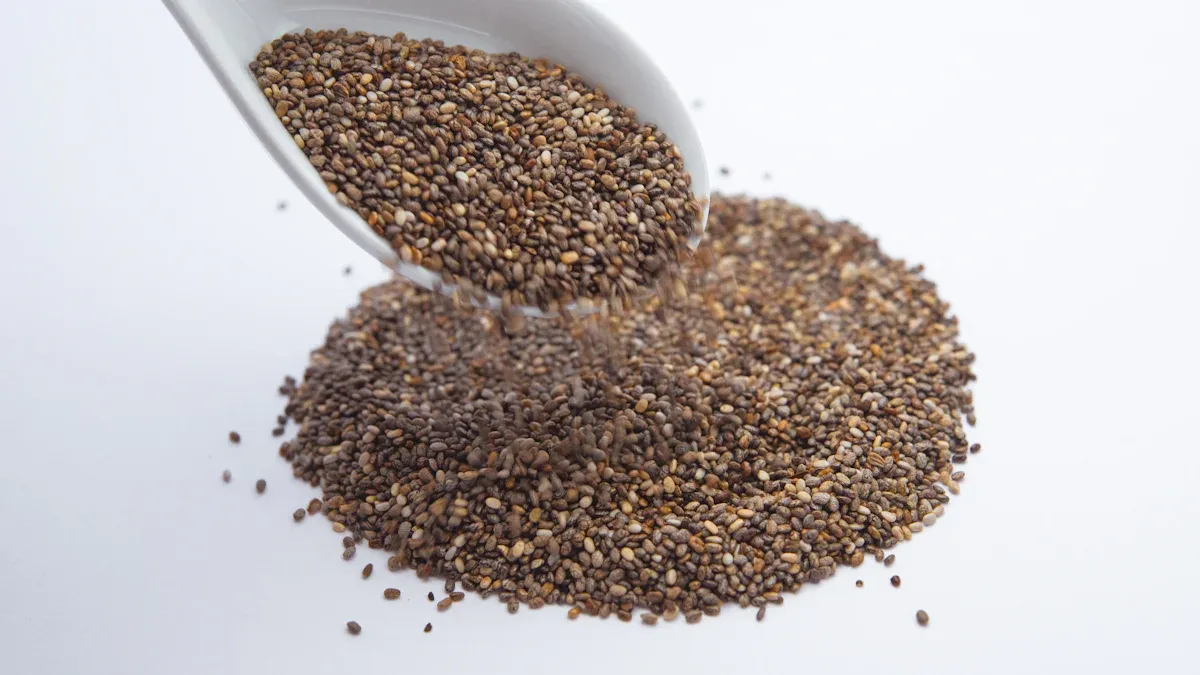
Chia seeds are tiny but mighty. When you soak them in water, they swell up and turn into a gel. This gel acts as a binder, holding your baked goods together. You can use chia seeds in muffins, pancakes, and cookies. To make a chia gel, mix 1.5 to 2 tablespoons of chia seeds with a cup of water and let it sit for about 15 minutes. Blend the mixture to make it smooth, then add it to your recipe. Chia seeds are high in fiber, omega-3s, and protein. They work great in gluten-free and vegan recipes, especially if you want a xanthan gum substitute that adds nutrition and moisture.
Tip: Chia seeds have a mild taste and add a soft, moist texture to baked goods. They are perfect for people with egg or gluten allergies.
Flaxseed
Flaxseed is another plant-based option that works well as a xanthan gum substitute. When you grind flaxseed and mix it with water, it forms a gel called a “flax egg.” This gel binds ingredients and adds moisture to recipes like muffins, pancakes, and breads. Flaxseed is rich in omega-3 fatty acids and fiber, making it a healthy choice. Use 1 tablespoon of ground flaxseed with 2.5 tablespoons of water to replace 1/4 teaspoon of xanthan gum. Keep in mind, flaxseed can make baked goods a bit denser than xanthan gum, but it is a great fit for gluten-free and vegan diets.
Guar Gum
Guar gum comes from guar beans and is a popular thickener in gluten-free baking. It helps dough hold water and air, making your baked goods less crumbly. Guar gum is plant-based, so it fits vegan diets. It is also gluten-free and works well for most people with allergies, though some may have sensitivities. Use guar gum in breads, cakes, and sauces. It thickens quickly in cold water but can lose thickness in acidic or hot dishes. If you want a xanthan gum substitute that is easy to use and works in many recipes, guar gum is a solid pick.
Guar gum is vegan and gluten-free.
It improves texture and prevents crumbling.
Arrowroot
Arrowroot is a white powder made from tropical plants. It is naturally gluten-free and free from common allergens like dairy, soy, and nuts. Arrowroot works as a thickener in soups, sauces, and desserts. It gives a light, fluffy texture to baked goods and does not change the flavor. Arrowroot is easy to digest and rich in fiber, B-vitamins, iron, and potassium. It is perfect for allergy-friendly, Paleo, and gluten-free diets. Add arrowroot at the end of cooking for the best results, especially in fruit fillings and puddings.
Cornstarch
Cornstarch is a common kitchen staple. It thickens sauces, gravies, and pie fillings. You can use it as a xanthan gum substitute in some baked goods, but it does not add much fiber or nutrition. Cornstarch is gluten-free, so it is safe for people with celiac disease or gluten sensitivity. It works best in recipes that need a smooth, glossy finish, like puddings or glazes. If you want a simple, allergy-friendly thickener, cornstarch is a good choice.
Agar Agar
Agar agar is a plant-based thickener made from seaweed. It is high in fiber and minerals like calcium and manganese. Agar agar forms a firm gel, making it a popular vegan substitute for gelatin. You can use it in jellies, puddings, and some baked goods. It helps you feel full and supports digestion. Agar agar is safe for most diets, but you should use it with enough water to avoid stomach discomfort. It is a great xanthan gum substitute for vegan and allergy-friendly recipes.
Agar agar is vegan and gluten-free.
It adds fiber and minerals.
Use it in desserts and recipes that need a firm set.
Tapioca Starch
Tapioca starch comes from the cassava root. It is gluten-free and works well as a thickener in sauces, soups, and baked goods. Tapioca starch gives a chewy, stretchy texture to breads and helps keep them moist. It is easy to use but needs to be heated above 64°C (about 147°F) to thicken properly. Tapioca starch is a good xanthan gum substitute for gluten-free and allergy-friendly recipes, but it does not add much nutrition.
Egg Whites
Egg whites are a natural binder and thickener. They help hold ingredients together and add structure to cakes, muffins, and breads. Egg whites work best in recipes that are not vegan or egg-free. They give baked goods a light, airy texture and help them rise. If you do not have dietary restrictions, egg whites can be a simple xanthan gum substitute.
Gelatin
Gelatin is made from animal collagen and forms a firm gel when cooled. It is often used in desserts like jelly, marshmallows, and gummy candies. Gelatin gives foods a bouncy, stable texture. It is not suitable for vegan or vegetarian diets, but it works well for people who eat animal products. Gelatin is a good xanthan gum substitute in recipes that need a firm set, but it does not work the same way in baked goods.
Okra Powder
Okra powder is made from dried okra pods. It is rich in fiber, vitamins, and minerals like vitamin K, C, and B6. Okra’s natural mucilage acts as a binder, helping gluten-free and vegan recipes stick together. You can use okra powder in breads, batters, and coatings. It is gentle on digestion and adds nutrition to your meals. Okra powder is a great choice for gluten-free, vegan, and allergy-friendly diets.
Note: Okra powder works well with gluten-free flours like cassava, coconut, oat, or cornmeal to create tasty, healthy recipes.
Health Benefits
Fiber Content
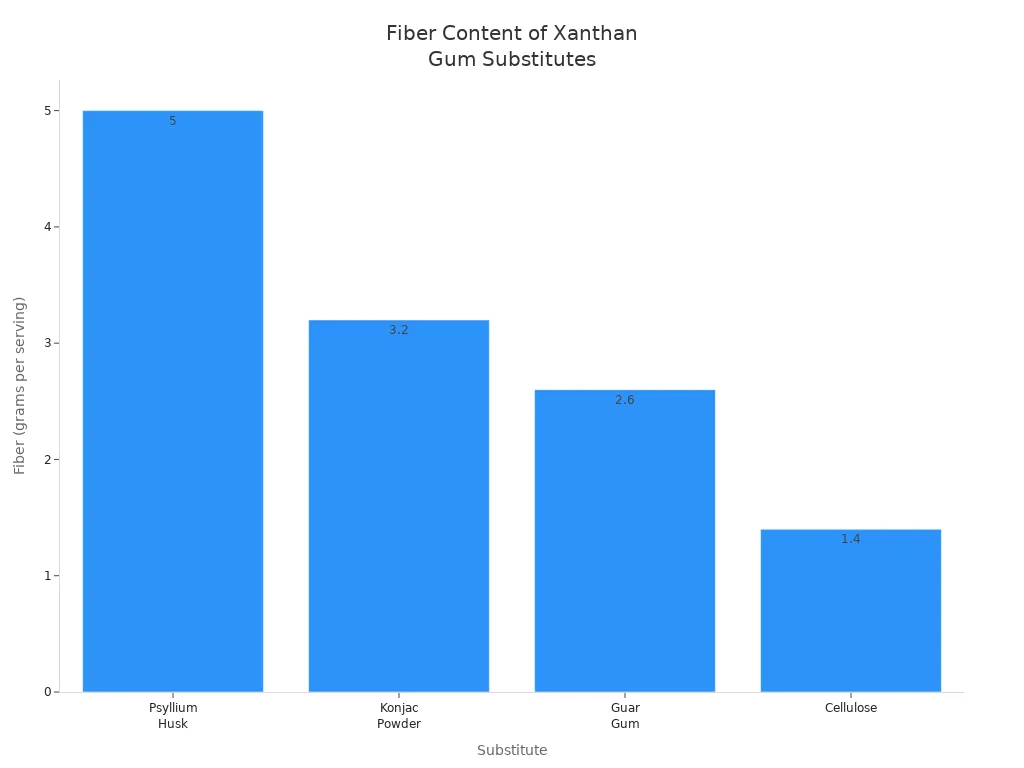
Some xanthan gum substitutes have lots of fiber. Psyllium husk gives you about 5 grams in one tablespoon. Chia seeds and ground flax seeds also have plenty of fiber. Guar gum and konjac powder add fiber, but not as much. Look at this table to see the fiber in each substitute:
Substitute | Fiber Content per Serving | Notes |
|---|---|---|
Psyllium Husk | ~5 grams per tablespoon | High dietary fiber, forms gel, good binder |
Konjac Powder | ~3.2 grams per teaspoon | High in glucomannan fiber, gelling agent |
Chia Seeds | High (exact grams not specified) | Absorbs 12x water, neutral flavor |
Cellulose | ~1.4 grams per teaspoon | Dietary fiber from plant cell walls |
Guar Gum | ~2.6 grams per teaspoon | Fiber content less emphasized |
Ground Flax Seeds | High (not specifically quantified) | High fiber, omega-3 fatty acids |
Psyllium husk and chia seeds soak up water. They help baked goods stick together. Flaxseed gives you fiber and healthy fats. If you want more fiber, these are good choices.
Nutritional Value
These substitutes give you more than fiber. Chia seeds and flaxseed have omega-3 fatty acids. These help your heart stay healthy. Okra powder has vitamins K, C, and B6. Arrowroot and tapioca starch are easy to digest. They are gentle on your stomach. Agar agar gives you minerals like calcium and manganese. If you want extra nutrients, try chia seeds, flaxseed, or okra powder.
Tip: Chia seeds and flaxseed add healthy fats and protein. They are great for breakfast foods.
Dietary Compatibility
You may need a substitute that fits your diet. Here are some options for different needs:
Gluten-free and vegan: Psyllium husk, chia seeds, flaxseed, guar gum, agar agar, arrowroot, tapioca starch, and okra powder.
Allergy-friendly: Arrowroot, tapioca starch, and okra powder do not have common allergens.
Not vegan: Egg whites and gelatin.
Psyllium husk, chia seeds, and agar agar work well in gluten-free and vegan baking. If you have allergies, arrowroot and okra powder are safe. Pick the substitute that matches your health goals and diet.
How to Use Xanthan Gum Substitutes
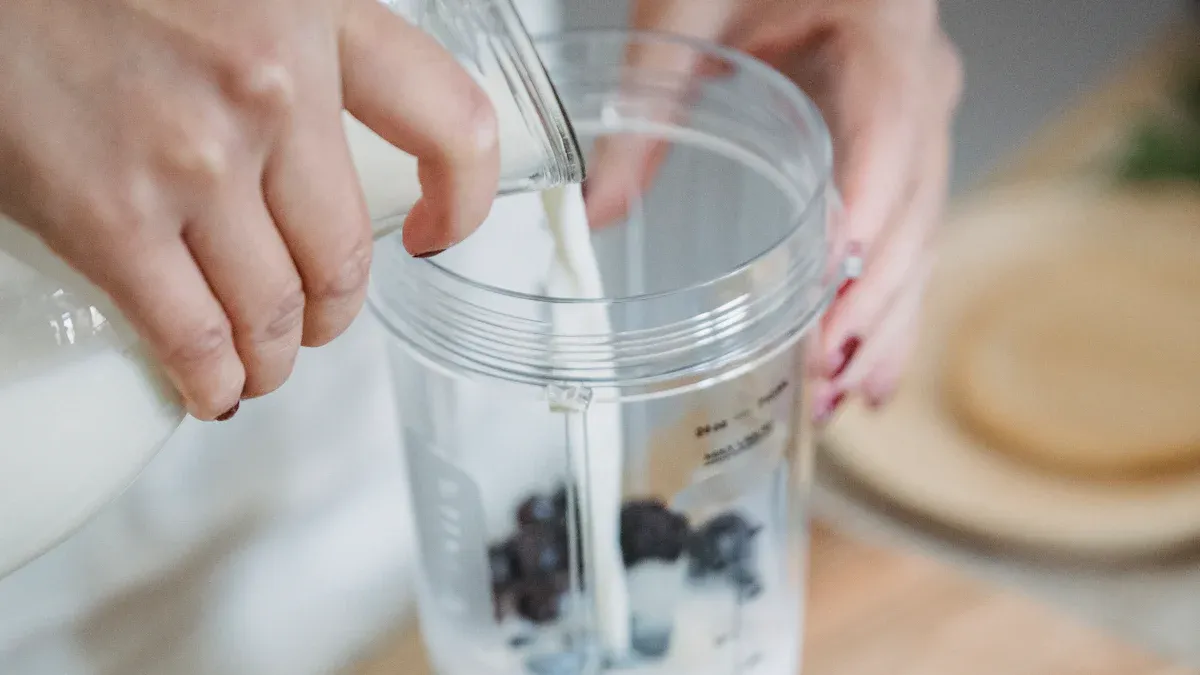
Usage Ratios
Getting the right amount of a xanthan gum substitute can make or break your recipe. You don’t want your bread to turn out too dense or your cookies to crumble. Here’s a quick table to help you swap xanthan gum for other binders:
Substitute | How Much to Use Compared to Xanthan Gum |
|---|---|
Whole Psyllium Husks | |
Psyllium Husk Powder | Use 1/2 of the xanthan gum amount |
Guar Gum | Use the same amount |
Chia Seeds | Use 1:1 with psyllium husk (soak first) |
If you’re using flaxseed or chia seeds, mix them with water before adding to your dough. For example, blend 1 tablespoon of ground flaxseed with 2.5 tablespoons of water to replace about 1/4 teaspoon of xanthan gum. Guar gum is easy—just swap it in at a 1:1 ratio. Psyllium husk works best in powder form, but whole husks also do the trick. Remember, each xanthan gum substitute acts a little differently, so start with these ratios and adjust as needed.
Tip: Always let your dough rest for 10-15 minutes after adding psyllium husk or chia seeds. This gives them time to soak up water and form a gel, which helps your baked goods hold together.
Recipe Tips
You want your gluten-free bread or cake to taste great and have the right texture. Here are some tips to help you use xanthan gum substitutes like a pro:
Pick the right substitute for your recipe. Psyllium husk and guar gum work well in bread and rolls. Chia seeds and flaxseed are perfect for muffins and cookies.
Soak chia seeds and flaxseed in water before mixing them into your batter. This helps them form a gel that binds everything together.
Don’t use cornstarch as a xanthan gum substitute in gluten-free baking. Cornstarch thickens but doesn’t bind, so your baked goods may turn out dry and crumbly.
Baking powder and baking soda are not binders. They help your dough rise, but they won’t hold it together like xanthan gum or its substitutes.
If your gluten-free flour blend already has xanthan gum, cut back on any extra binder. Too much can make your bread gummy.
Eggs or extra egg whites can help bind ingredients, especially in recipes that already use eggs.
Try different amounts and combinations. Sometimes you need to experiment to get the texture just right.
Note: You may need to adjust the amount of water in your recipe when using a xanthan gum substitute. Some binders soak up more liquid than others.
Texture and Results
You want your gluten-free baked goods to be soft, moist, and not crumbly. Each xanthan gum substitute changes the texture a little:
Substitute | Texture Effect in Gluten-Free Baking | Extra Notes |
|---|---|---|
Psyllium Husk | Keeps bread soft and moist; crumb stays chewy | Great for rolls and pizza crust |
Guar Gum | Thickens and stabilizes; similar to xanthan gum | Works in cakes and sauces |
Chia Seeds | Forms a gel; helps reduce crumbling | Adds moisture and mild flavor |
Flaxseed Meal | Mimics gluten structure; helps hold shape | Can make baked goods denser |
Aquafaba | Makes cakes and muffins fluffy and light | Good for egg-free recipes |
Pureed Fruits | Adds moisture and natural binding; boosts flavor | Try applesauce or banana |
No single xanthan gum substitute works for every recipe. You might notice small changes in crumb texture or moisture. Psyllium husk keeps bread chewy and soft. Guar gum gives cakes a nice structure. Chia seeds and flaxseed help stop cookies from falling apart. Aquafaba makes muffins light and fluffy. Pureed fruits add moisture and a hint of sweetness.
😊 Don’t be afraid to experiment! Try different substitutes and amounts until you find what works best for your favorite recipes.
Comparison Table
Health
You want your baking ingredients to do more than just hold things together. Psyllium husk, chia seeds, and flaxseed give you real health benefits. Psyllium husk is packed with soluble fiber. It helps your digestion, lowers cholesterol, and keeps blood sugar steady. Chia seeds and flaxseed add both soluble and insoluble fiber. They also bring omega-3 fatty acids and antioxidants, which support your heart and brain. Xanthan gum, on the other hand, does not offer any nutrients or health perks. If you want your recipes to help your body, choose natural binders like psyllium, chia, or flaxseed.
Substitute | Fiber | Omega-3s | Antioxidants | Other Health Benefits |
|---|---|---|---|---|
Psyllium Husk | High | No | No | Gut health, cholesterol, sugar |
Chia Seeds | High | Yes | Yes | Heart, brain, flexibility |
Flaxseed | High | Yes | Yes | Heart, brain, moderate binder |
Xanthan Gum | None | No | No | None |
Tip: If you want the healthiest option, psyllium husk stands out for fiber. Chia and flaxseed add extra nutrients.
Texture
Texture can make or break your gluten-free baking. Guar gum gives structure and elasticity, so your bread does not crumble. Arrowroot makes sauces and gravies glossy and clear, but it does not form strong gels. Agar agar creates firm, sliceable gels, perfect for puddings and vegan jellies. Chia seeds and flaxseed add moisture and flexibility, while psyllium husk keeps bread chewy and soft.
Substitute | Texture in Baking | Best For |
|---|---|---|
Guar Gum | Elastic, prevents crumbling | Breads, cakes, cookies |
Arrowroot | Glossy, clear, weak gel | Sauces, fruit fillings |
Agar Agar | Firm, sliceable gel | Jellies, puddings |
Psyllium Husk | Chewy, moist crumb | Gluten-free breads |
Chia/Flaxseed | Moist, flexible, mild flavor | Muffins, cookies |
Want a chewy bread? Try psyllium husk. Need a firm jelly? Agar agar is your best bet.
Ease of Use
You probably want something easy to use in your kitchen. Cornstarch is the simplest swap. You just measure and mix—no soaking or grinding needed. Psyllium husk is gentle on your stomach and easy to measure, but you need to use twice as much as xanthan gum. Chia seeds and flaxseed work well, but you must soak or grind them first. Gelatin and egg whites are easy for some recipes, but not for vegan diets. Arrowroot and tapioca starch need careful measuring.
Cornstarch: Easiest, 1-to-1 swap, found in most kitchens.
Psyllium Husk: Easy, gentle, just adjust the amount.
Chia/Flaxseed: Good binders, need soaking or grinding.
Gelatin: Simple, but can make bread gummy and is not vegan.
Arrowroot/Tapioca: Need quantity tweaks, less straightforward.
😊 If you want quick results, reach for cornstarch or psyllium husk. For extra nutrition, try chia or flaxseed, but plan for a little prep time.
You have many healthy options instead of xanthan gum. Each one is unique and helpful. Some give you more fiber. Others make food chewy or work for vegan diets. Look at this table to help you choose:
Factor | What to Look For |
|---|---|
Chewy (psyllium), gel-like (agar agar) | |
Dietary Needs | Vegan (chia, agar agar), not vegan (gelatin, egg whites) |
Recipe Fit | Breads (psyllium), desserts (agar agar) |
Try using different substitutes in your cooking. You could discover a new favorite!
FAQ
Can I use more than one xanthan gum substitute in a recipe?
Yes, you can mix substitutes. For example, try psyllium husk with chia seeds. This combo can give your bread a better texture. Start with small amounts and see how your recipe turns out.
Which substitute works best for gluten-free bread?
Psyllium husk usually works best for gluten-free bread. It helps your dough stay moist and chewy. You get a texture close to regular bread. Guar gum is another good choice if you want a lighter crumb.
Do xanthan gum substitutes change the taste of food?
Most substitutes have a mild flavor. Chia seeds and flaxseed may add a nutty taste. Psyllium husk and guar gum taste neutral. You probably will not notice a big change in most recipes.
Are these substitutes safe for people with allergies?
Many substitutes are allergy-friendly. Arrowroot, tapioca starch, and okra powder do not have common allergens. Always check labels to make sure there are no hidden ingredients.
How do I store xanthan gum substitutes?
Keep most substitutes in a cool, dry place. Use airtight containers for seeds and powders. Store chia seeds and flaxseed in the fridge to keep them fresh longer.