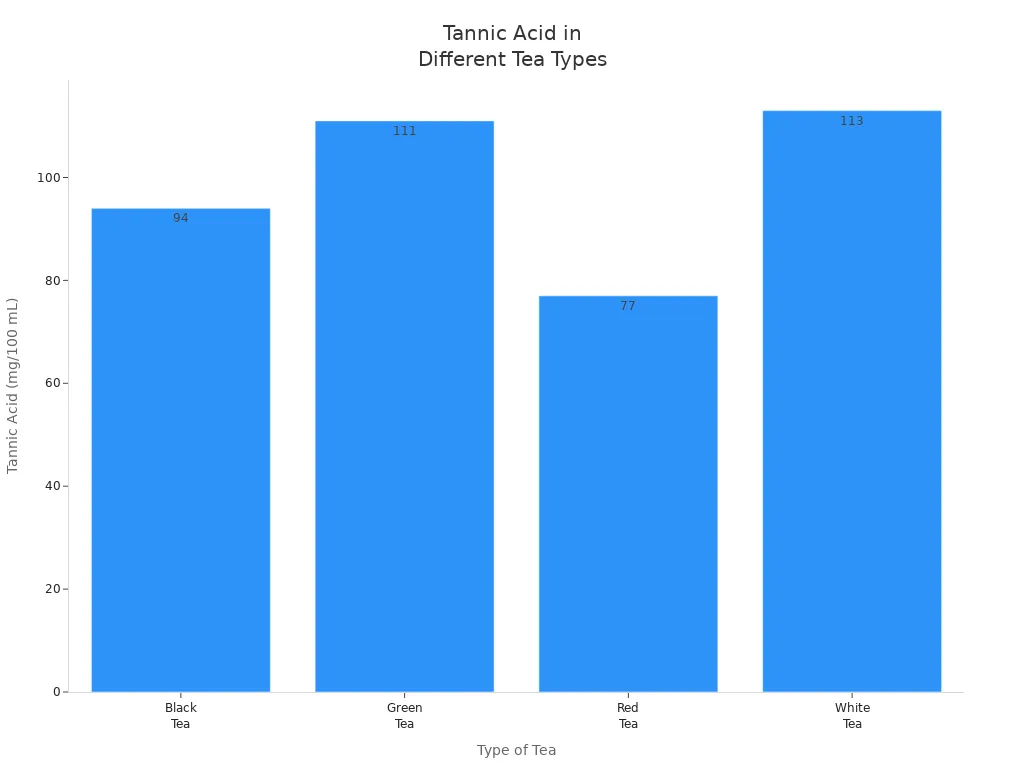
Tannic acid plays a big part in how tea tastes and how it helps your health. You notice its astringency and bitterness with every sip, and it gives tea its rich color. This compound also acts as an antioxidant, helping your body fight harmful substances. When you learn about tannic acid, you can choose teas that match your taste and health needs. The amount of tannic acid changes from one tea to another, as shown in the chart below.
Key Takeaways
Tannic acid makes tea taste dry and bitter. It changes how you taste each sip. Different teas have different amounts of tannic acid. Black tea has the most tannic acid. Green tea has the least tannic acid. How long you brew tea can change tannic acid levels. Hotter water and longer brewing make more tannic acid. Cooler water and less time make tea less bitter. Tannic acid is a strong antioxidant. It helps your body fight bad things and clean itself. Eating tea with foods high in protein can help. It can make the dry taste less strong. This makes drinking tea more fun.
What Is Tannic Acid?
Chemical Nature and Sources
Tannic acid is in every cup of tea. It is part of a group called tannins. Tannins are polyphenolic biomolecules. They can stick to proteins and other things in your mouth. This makes your mouth feel dry and tight when you drink tea. Tannic acid gives tea its yellow or brown color. It also helps make tea taste special.
Tannic acid is not only in tea. Many foods and drinks have it too. Here are some examples:
Coffee
Chocolate
Wine
Apple juice
Strawberries
Raspberries
Blackberries
Pomegranate
Plums
Walnuts
Peanuts
Black-eyed peas
Lentils
Most legumes have tannins. Red beans have the most tannins. White beans have the least. Peanuts without shells have very little. Chickpeas have a small amount.
Tip: If you want less tannic acid, pick lighter beans. Try to eat less red wine and dark chocolate.
Tannic Acid vs. Other Tannins
You may wonder how tannic acid is different from other tannins and polyphenols in tea. Tannins have a special chemical shape. They need at least 12 hydroxyl groups and five phenyl groups to stick to proteins well. This makes them different from other polyphenols. Polyphenols have smaller molecules and fewer places to stick.
Here is a quick comparison:
Feature | Description |
|---|---|
Classification | Tannins are polyphenolic biomolecules that stick to proteins and other things. |
Chemical Structure | Tannins need at least 12 hydroxyl groups and five phenyl groups to stick to proteins. |
Comparison with Polyphenols | Tannins are bigger and have special shapes compared to other polyphenols. |
The amount of tannic acid in tea depends on the kind you pick. Black tea has the most tannic acid. Green tea has the least. Oolong tea is in the middle.
Type of Tea | Tannin Concentration (%) |
|---|---|
Black Tea | 27 to 55 |
Oolong Tea | 18 to 41 |
Green Tea | 13 to 21 |
When you know these facts, you can see how tannic acid changes your tea.
Tannic Acid and Tea Flavor
Astringency and Bitterness
When you drink tea, you often notice a dry feeling in your mouth. This is called astringency. Tannic acid causes this effect. It binds to proteins in your saliva and makes your mouth feel tight or puckered. You also taste bitterness, especially in strong teas. Both astringency and bitterness come from tannic acid and other tannins in tea.
Scientists have studied how tannic acid shapes the taste of tea. Here is what they found:
Finding | Description |
|---|---|
Tannins are linked to astringency and bitterness in tea. | |
Astringency and bitterness | Astringency often comes with bitterness, changing how you taste the tea. |
Molecular weight impact | Smaller tannins taste more bitter. Larger tannins feel more astringent. |
You may notice that astringency gets stronger as you brew your tea longer. Bitterness also increases, but not as much as astringency. Some tea compounds, like EGC, give both bitter and astringent tastes. When you drink early spring teas, the astringency can feel even stronger.
Tip: If you want less astringency, brew your tea for a shorter time or use cooler water.
Color and Complexity
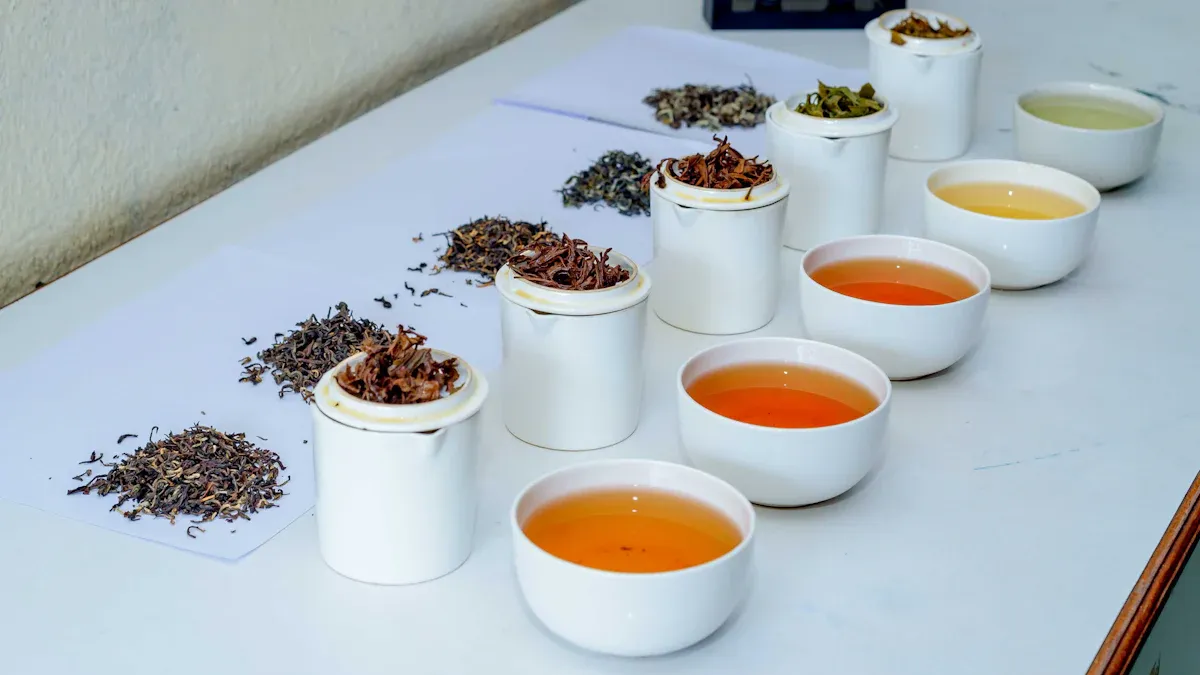
Tannic acid does more than change taste. It also gives tea its color. When you look at a cup of black tea, you see a deep brown or red shade. Green tea looks lighter, often yellow or pale green. Tannic acid reacts with other parts of the tea leaf during processing. This reaction creates the rich colors you see.
You also get more complex flavors because of tannic acid. It adds depth and layers to your tea. You might taste wood, earth, or even fruit notes. The balance of astringency, bitterness, and color makes each cup unique.
Here are some ways tannic acid shapes your tea:
Gives black tea a dark, bold look.
Makes green tea light and fresh.
Adds richness and complexity to oolong and red teas.
Differences by Tea Type
Not all teas have the same amount of tannic acid. The type of tea and how it is made change the tannin level. Black tea has the most tannic acid. Green tea has the least. Oolong and red teas fall in between.
Here is a quick look at tannin content in different teas:
Type of Tea | Tannin Content (%) |
|---|---|
Black Tea | 27 – 55 |
Oolong Tea | 18 – 41 |
Green Tea | 13 – 21 |
You can also see differences in popular tea brands:
Some black teas have up to 68 mg tannin per gram.
Indian teas often have about 24 mg tannin per gram.
Green teas usually have less, around 5 to 7 mg tannin per gram.
If you like a strong, bold taste, choose black tea. If you want a lighter, less bitter drink, try green tea. Oolong tea gives you a balance between the two.
Note: The way you brew your tea also changes the tannic acid level. Hotter water and longer brewing times pull out more tannins.
By understanding tannic acid, you can pick the tea that matches your taste. You can also adjust your brewing to get the flavor you like best.
Tannic Acid: Health Effects
Antioxidant Properties
You may wonder how tea helps your body fight harmful substances. Tannic acid plays a key role in this process. Scientists have found that tannic acid acts as a strong antioxidant. It can stop the damage caused by free radicals, which are unstable molecules that can harm your cells. In one study, tannic acid stopped almost 98% of lipid peroxidation at a low concentration. This means it worked better than other common antioxidants, such as BHA and vitamin E, which needed higher amounts to do the same job. Tannic acid also helps your body by grabbing onto toxic metals like lead and cadmium. This action keeps these metals from building up in your organs. When you drink tea, you give your body a tool to fight off some harmful substances found in the environment.
Detoxification and Digestion
Tannic acid does more than protect your cells. It also affects how your body handles food. Here is what researchers have learned about tannic acid and digestion:
Tannic acid can lower how much protein your body absorbs from food.
The effect on protein absorption gets stronger as you take in more tannic acid.
Other nutrients, such as carbohydrates and fats, do not seem to be affected.
You will not notice changes in how much food you eat or how your body uses energy, even if you get less protein.
These effects have been seen in animal studies, such as those with black goats.
If you drink a lot of tea, you may get less protein from your meals. Most people do not need to worry unless they drink very large amounts of tea every day.
Potential Side Effects
You should know that tannic acid can cause problems if you get too much. Some people may feel sick after drinking a lot of strong tea. Here are some possible side effects:
Stomach upset, such as nausea, vomiting, or pain.
Constipation, because tannic acid makes things tighter in your gut.
Allergic reactions, which can range from mild hives to serious breathing problems.
Trouble absorbing iron, which can lead to low energy or anemia.
Liver problems, especially if you already have liver disease.
Stained teeth from drinking tea often.
Kidney issues, mainly for people who already have kidney problems.
Most people can enjoy tea safely. Experts suggest you should not take in more than 560 mg of tannic acid each day. The safe limit for humans is not exact, so it is best to drink tea in moderation.
Note: If you have health concerns, talk to your doctor before making big changes to your tea habits.
Managing Tannic Acid
Choosing Teas by Tannic Acid Level
You can shape your tea experience by picking teas with different levels of tannic acid. Black tea has the highest amount, so you will taste more astringency and bitterness. Green tea has the lowest, giving you a lighter and smoother drink. Oolong tea sits in the middle. If you want a gentle flavor, try white or green teas. For a bold taste, choose black tea. Always check the label or ask your tea seller for details about tannin content.
Brewing Methods to Adjust Astringency
How you brew your tea changes how much tannic acid ends up in your cup. Shorter brewing times and cooler water pull out less astringency. Longer brewing and hotter water bring out more bitterness and a stronger taste. You can see this in the table below:
Brewing Time (min) | Temperature (°C) | Polyphenolic Content (mg GAE in 100 g d.m.) |
|---|---|---|
5 | 100 | 605 |
10 | 100 | 1566 |
10 | 100 | 3500 |
You can also change the flavor by using different techniques. Roasting tea at higher temperatures for longer times can break down harsh compounds. This makes the tea taste smoother. Some teas use a process called catechin oligomerization. This changes the structure of the tea and reduces astringency. Amino acids like L-theanine can also help mask any leftover dryness.
Pairing Tea with Food
Pairing tea with the right foods can balance the effects of tannic acid. Foods high in protein, like cheese or eggs, can soften the dry feeling in your mouth. Sweet treats, such as pastries or fruit, can also help. Try drinking black tea with a slice of cake or green tea with sushi. You will notice a smoother taste and a more enjoyable tea time.
Tip: Experiment with different teas, brewing styles, and snacks. You will find the perfect match for your taste buds.
Tannic acid changes how tea tastes and helps your health. You taste astringency and bitterness because tannic acid touches your mouth. Scientists learned that age affects how you feel astringency, but saliva does not always matter.
Key Findings | Details |
|---|---|
Astringency Sensitivity | People of different ages react to tannic acid in tea |
Age Impact | Older people need more tannic acid to notice astringency |
Salivary Properties | Young people’s saliva flow connects to astringency sensitivity |
When you know about tannic acid, you can pick teas that match your taste and health needs.
Evidence Type | Description |
|---|---|
Astringency Perception | |
Consumer Guidance | Knowing this helps you choose and make tea you enjoy |
Tea has many flavors and health effects. You can try different teas and ways to brew them to find what you like.
Brewing time changes taste and healthy parts.
Different cultures have their own ways to brew tea.
How strong you make tea changes taste and benefits.
Tip: Try new teas and brewing styles to find the flavor and health mix you like most.
FAQ
What does tannic acid taste like in tea?
You taste tannic acid as dryness and bitterness. It makes your mouth feel tight or puckered. You notice this most in black tea.
Can you reduce tannic acid in your tea?
Yes! You can brew your tea for a shorter time or use cooler water. These methods pull out less tannic acid and make your tea smoother.
Is tannic acid safe for everyone?
Most people can drink tea with tannic acid safely. If you have stomach issues or low iron, you should talk to your doctor first.
Does adding milk change tannic acid’s effects?
Adding milk can help. Milk proteins bind to tannic acid. This reduces dryness and bitterness in your tea.