Isomaltulose is seen as healthier than sucrose. It has a lower glycemic index. It also digests more slowly. More people now pick products with isomaltulose. This is true in North America and Asia. Scientists found isomaltulose does not cause big blood sugar spikes. It may help lower triglyceride levels. This helps with fat burning and metabolic health. Many sports drinks use isomaltulose for these reasons. Supplements also use it.
You can make better sugar choices. Learn how these sugars affect your body.
Key Takeaways
Isomaltulose breaks down slowly in your body. It gives you steady energy. It does not cause quick blood sugar jumps like sucrose.
Picking isomaltulose can help you manage blood sugar. It helps your body burn fat. It can make your metabolism better.
Isomaltulose helps good bacteria in your gut grow. It keeps you hydrated better than sucrose.
Isomaltulose is good for cooking and baking. It tastes less sweet than sucrose. It is better for your teeth.
Sucrose is easy to buy and costs less. But isomaltulose has special health benefits you should think about.
Isomaltulose and Sucrose
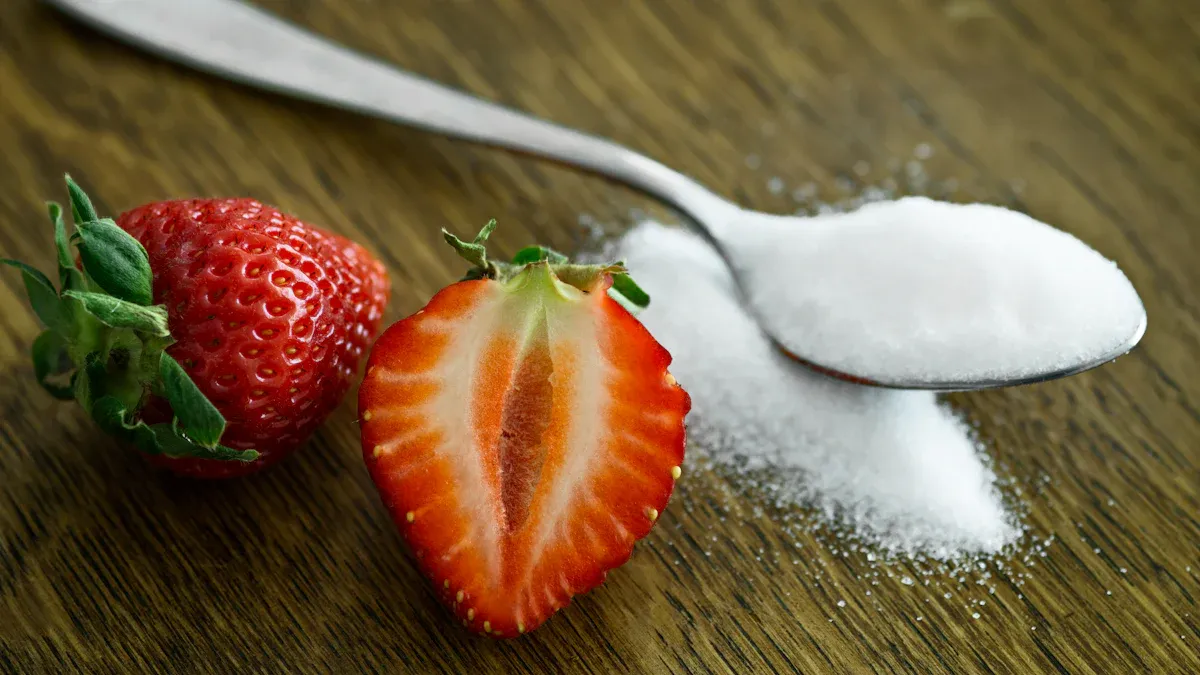
Isomaltulose Overview
Isomaltulose is not in most kitchens. But it is found in many foods and drinks. Isomaltulose is a sugar made from glucose and fructose. These sugars join with a special link called an α-1,6 glycosidic bond. This bond makes isomaltulose a reducing sugar. It can react with other things in your body.
Isomaltulose is in small amounts in honey, wheat, barley, legumes, and root vegetables. Most isomaltulose comes from a special process. Scientists use bacteria to change sucrose into isomaltulose. They use sugar from beets or sugar cane for this. New technology lets experts use microbes to make isomaltulose from sugar cane leftovers. This makes the process better for the environment.
Tip: Isomaltulose digests slowly. It gives you steady energy. You do not get a fast sugar rush.
Sucrose Overview
Sucrose is table sugar. It is the most common sugar at home and in stores. Sucrose is also a disaccharide. It is made from glucose and fructose. These sugars join with an α-1,2 glycosidic bond. This bond makes sucrose a non-reducing sugar.
Most sucrose comes from sugarcane and sugar beet. These plants give us almost all the sugar in stores. Sucrose is also in fruits and vegetables like peaches, oranges, watermelons, mangoes, carrots, and sweet potatoes. To make sucrose, workers crush the plants, wash them, make syrup, filter, and boil. This makes pure sugar crystals.
Here is a quick look at sucrose:
Aspect | Details |
|---|---|
Primary dietary sources | Sugarcane, sugar beet, minor sources: date palm, sorghum, sugar maple |
Natural occurrence | Fruits and vegetables: peach, orange, watermelon, mango, carrot, sweet potato |
Production methods | Crushing, washing, syrup making, filtering, boiling, crystallizing |
Climatic regions | Sugarcane: tropical; sugar beet: temperate |
Production volume |
Health Effects
Blood Sugar
Different sugars change your blood sugar in different ways. Studies show sucrose makes blood sugar go up fast. Then it drops quickly. Isomaltulose acts in another way. It digests slowly. Your blood sugar rises gently and stays steady longer. This slow process means your body uses less insulin at once.
Parameter | Isomaltulose Effect Compared to Sucrose | Approximate Change | Statistical Significance |
|---|---|---|---|
Prolonged absorption | +50 minutes | p = 0.004 | |
Plasma insulin | Lower postprandial levels | 10–23% decrease | p < 0.05 |
C-peptide | Lower postprandial levels | 10–23% decrease | p < 0.05 |
Glucagon | Lower postprandial levels | 10–23% decrease | p < 0.05 |
Glucose-dependent insulinotropic peptide (GIP) | Lower levels | 10–23% decrease | p < 0.05 |
Glucagon-like peptide 1 (GLP-1) | Higher postprandial levels | ~64% increase | p < 0.001 |
Insulin-to-glucagon ratio | Increased | Significant | p < 0.001 |
Systemic glucose appearance | Reduced | ~35% decrease | p = 0.003 |
Insulin action | Enhanced | Significant | p = 0.013 |
Isomaltulose has a glycemic index of about 32. Sucrose has a glycemic index of 65. This means isomaltulose raises blood sugar less and more slowly. If you want to control blood sugar, isomaltulose can help. It helps you avoid big spikes and crashes.
Tip: Foods with a lower glycemic index, like isomaltulose, may help you keep your energy steady and support better blood sugar control.
Energy
Your body uses sugar for energy every day. Sucrose gives you quick energy, but it does not last long. Isomaltulose gives energy slowly. Your body takes longer to absorb it. You feel steady and not jittery or tired.
Both sugars give you fuel during exercise. Isomaltulose keeps your blood sugar more stable. Studies show isomaltulose causes fewer ups and downs in blood sugar. Some athletes say they have better endurance with isomaltulose. Results can change based on the sport and how much you eat.
Note: If you want lasting energy for sports or daily activities, isomaltulose may be a better choice than sucrose.
Weight
The sugar you pick can change your weight. A study with overweight adults showed isomaltulose helped people lose more weight than sucrose. Isomaltulose led to more fat loss. It also helped people feel full, so they ate less. Slow digestion and low glycemic index help your body burn more fat after meals.
If you want to lose weight or keep it off, try isomaltulose instead of sucrose. This switch may help you reach your goals. It may also lower your risk for heart problems and diabetes.
Metabolism
Metabolism is how your body uses food for energy. Isomaltulose changes how your body burns fuel. When you eat isomaltulose, your body releases less insulin. Your body burns more fat. Studies show isomaltulose helps your cells use sugar better. This can lower your risk for insulin resistance and health problems.
Isomaltulose also helps your gut stay healthy. It helps good probiotics grow in your digestive system. These bacteria help you digest food and keep your immune system strong.
Parameter | Isomaltulose Beverage | Sucrose Beverage | Water (Control) |
|---|---|---|---|
1.53 ± 0.44 (higher than sucrose and water) | 1.20 ± 0.29 (similar to water) | 1.00 (reference) | |
Urine Production | Lower than sucrose and water | Similar to water | Baseline |
Plasma Volume Change (ΔPV) | Temporary reduction at 30 min | No significant change | Baseline |
Blood Glucose & Lactate | Delayed increase | Faster increase | Baseline |
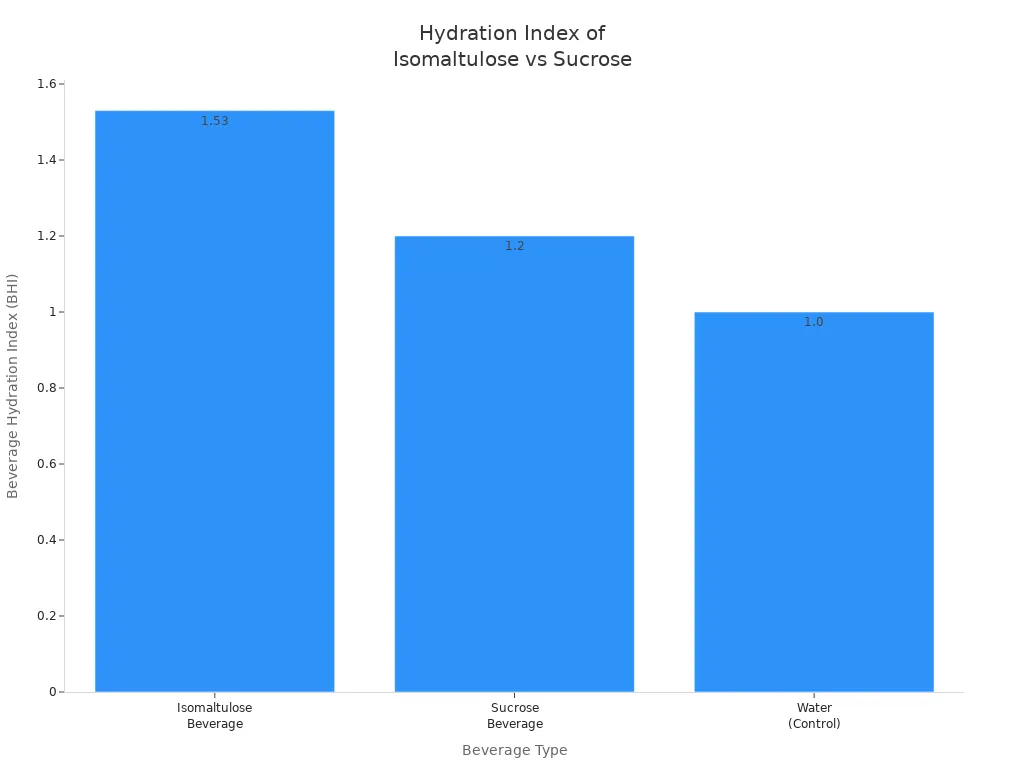
Tip: Isomaltulose drinks keep you hydrated better than sucrose drinks. You may stay hydrated longer and lose less water through urine.
Isomaltulose Benefits
Metabolic Impact
Many health experts say isomaltulose is a good sugar substitute. Food safety groups in Europe, North America, and Asia allow isomaltulose in foods and drinks. They approve it because research shows it helps with glucose metabolism.
Isomaltulose digests slowly because of its special chemical bond. Your body breaks it down slowly. Glucose enters your blood little by little. This slow release stops sharp jumps in blood sugar and insulin. If you have diabetes or want to control blood sugar, this steady effect can help you.
Aspect | Evidence Summary |
|---|---|
Digestion and Absorption | Isomaltulose has an α-1,6 glycosidic bond. This makes it harder to break down quickly than sucrose. It digests slowly and releases glucose into the blood over time. |
Glycemic Response | Studies show isomaltulose lowers blood sugar after eating. The drop is about 8 mg/dL at 60 minutes. This is less than the amount doctors look for to make a big difference. |
Insulin Demand | Eating isomaltulose means your body needs less insulin. This is good for people who need to control blood sugar, like those with diabetes. |
Hormonal Effects | Isomaltulose lowers GIP and raises GLP-1. These hormones help control how your body uses sugar. This may help your body use sugar better and lower problems from high GIP. |
Variability Factors | The effect on blood sugar can change. It depends on the person, type of diabetes, what you eat with it, and other nutrients. These things change how your body absorbs and uses sugar. |
Clinical Implications | Isomaltulose may help people manage blood sugar. It works for healthy people and those with diabetes. But results depend on your diet and your own body. |
You can get these benefits from isomaltulose. Studies show isomaltulose leads to less insulin and GIP during exercise. This keeps blood sugar steady and stops high insulin. Some studies say isomaltulose helps burn more fat, especially before exercise. Slow digestion and low glycemic index are important for these effects.
Tip: If you want to keep your metabolism healthy and avoid sudden energy drops, picking isomaltulose instead of regular sugar may help you stay in control.
Endurance
You may wonder how isomaltulose affects sports or exercise. Athletes and active people want steady energy and better endurance. Isomaltulose gives slow energy during exercise.
Isomaltulose is a slow-release carbohydrate. It gives steady energy when you are active.
It lowers blood sugar and insulin compared to fast sugars like maltodextrin.
Studies show more fat burning and steady blood sugar during long exercise with isomaltulose.
One study found better cycling times with isomaltulose. This is because it releases energy slowly and saves muscle glycogen.
These effects happen in many groups, like healthy adults, overweight people, diabetics, and athletes.
Science shows isomaltulose helps endurance as much as sucrose or glucose. You may get steadier blood sugar and burn more fat in long workouts. This helps save muscle energy for later. In one study, cyclists who took isomaltulose burned more fat and finished faster than those who took maltodextrin.
A study with runners showed isomaltulose kept blood sugar steady and helped burn more fat during exercise. These changes may help you do better in sports that need stamina. But results can change based on the sport, how much you take, and your own body.
Note: If you want better endurance and steady energy, isomaltulose may be a good choice for your nutrition plan.
Comparison
Table
You can look at this table to see how isomaltulose and sucrose are different. The table puts important facts about both sugars next to each other. This makes it easier to see how each sugar acts in your body.
Aspect | Isomaltulose | Sucrose | Key Difference |
|---|---|---|---|
Absorption delay | About 50 minutes slower | Baseline | Isomaltulose digests more slowly |
Peak rate of glucose appearance | 17.1 μmol·kg⁻¹·min⁻¹ | 33.1 μmol·kg⁻¹·min⁻¹ | Isomaltulose has a lower peak |
Oral glucose reaching circulation | 65% of ingested glucose | 92% of ingested glucose | Less glucose goes into blood with isomaltulose |
Endogenous glucose production | Near zero at 105 min | Peaks at 60 min | Isomaltulose stops glucose production sooner |
GLP-1 response | 20.3 pmol/L | 12.4 pmol/L | Isomaltulose raises GLP-1 more |
GIP response | 28.1 pmol/L | 31.5 pmol/L | Isomaltulose lowers GIP more |
Insulin sensitivity index | Higher | Lower | Isomaltulose helps insulin work better |
Breath 13CO2 excretion | 28% lower, delayed peak | Higher, earlier peak | Isomaltulose burns carbs more slowly |
Glucose infusion rate recovery time | 193.6 min | 158.2 min | Isomaltulose takes longer to recover |
Key Differences
You might want to know how these sugars are different in your daily life. Here are the main things to remember:
Isomaltulose digests much slower than sucrose. Your body takes longer to absorb it, so your blood sugar stays steady.
Sucrose digests fast. It makes your blood sugar go up quickly, which can make your energy drop soon after.
Isomaltulose helps good gut bacteria grow, like Lactobacillus and Bifidobacterium. Sucrose does not help these bacteria.
Isomaltulose gives you more short-chain fatty acids. These help your gut and help your body use energy better.
Studies say isomaltulose can lower swelling in your body and help you control your weight. Sucrose does not do this.
If you want better insulin sensitivity and steady energy, isomaltulose is a good pick.
Sucrose is easy to find and costs less. You see it in many foods and drinks.
Tip: If you want to help your gut and keep your blood sugar steady, pick foods with sugars that digest slowly.
Practical Tips
Taste
When you try different sugars, you can taste the difference. Sucrose is very sweet and tastes like regular table sugar. The sweetness is strong and comes fast. Isomaltulose is sweet too, but not as strong. Its sweetness is about half as much as sucrose. The taste is clean and does not have a weird aftertaste. Isomaltulose can also cover up bad flavors from other sweeteners. If you want a softer sweetness, isomaltulose is a good choice. The more you use, the sweeter it gets, and heat does not change the taste.
Sucrose: Strong, quick sweetness
Isomaltulose: Mild, pure sweetness, no aftertaste
Both: Similar taste, but isomaltulose is less sweet
Tip: If you like gentle sweetness or do not want strong sugar flavors, try foods with isomaltulose.
Usage
You can use both sugars in lots of foods. Sucrose is good for baking, drinks, and desserts. It melts and turns brown easily. Isomaltulose looks and tastes almost the same, but it is not as sweet. You find isomaltulose in sports drinks, cereal, chocolate, and dairy foods. Isomaltulose does not break down in heat or acid, so it works well in baked foods and drinks that are heated. It stays together longer than sucrose. You can use it to add bulk in recipes. Isomaltulose does not feed mouth bacteria, so it helps keep your teeth healthy.
Sucrose: Best for baking, candy, and home cooking
Isomaltulose: Good for sports foods, weight loss snacks, and tooth-friendly treats
Both: Work in many recipes, but isomaltulose has extra health perks
Application | Sucrose | Isomaltulose |
|---|---|---|
Baking | ✔️ | ✔️ (more stable) |
Drinks | ✔️ | ✔️ (sports, low-GI) |
Dairy | ✔️ | ✔️ |
Tooth-friendly | ❌ | ✔️ |
Weight management | ❌ | ✔️ |
Availability
You can find sucrose almost everywhere. It is cheap and easy to buy. You see it in stores, restaurants, and most packaged foods. Isomaltulose is harder to get. It costs more because it takes more work to make. Most foods with isomaltulose are in health stores or special sections. You see it more in North America and Europe, where people want healthier foods. In Asia-Pacific and Latin America, the price makes it less common. Isomaltulose is getting more popular, but it is still not used a lot.
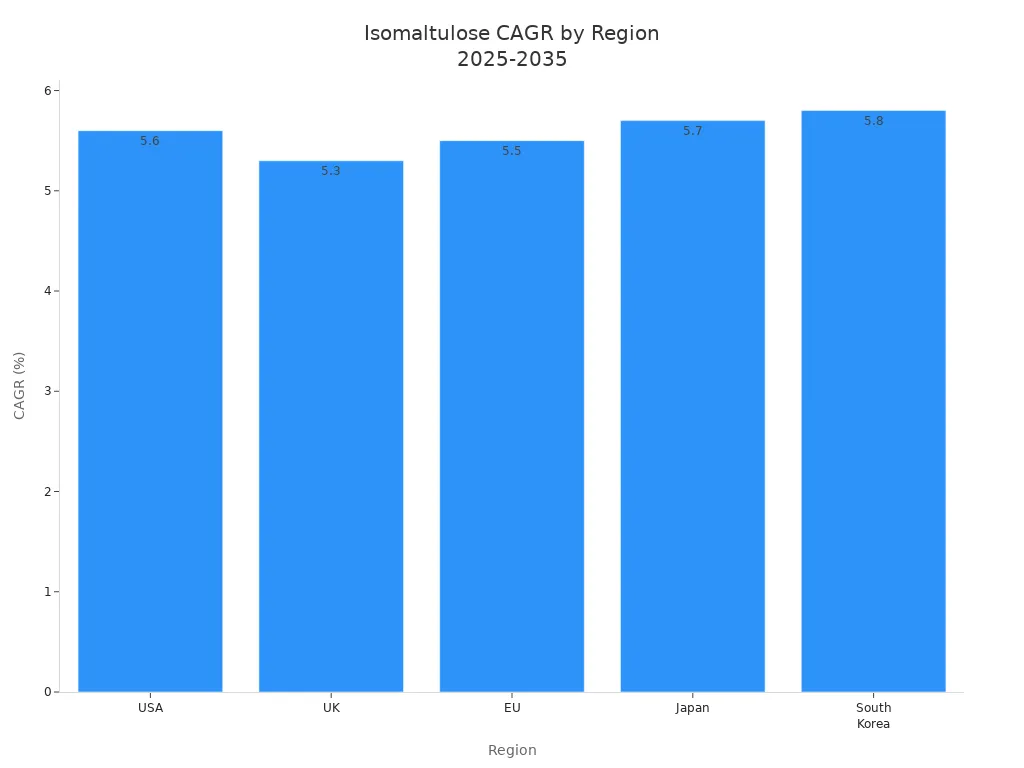
Note: If you want to buy isomaltulose, look for it in sports, diabetic, or special foods. Sucrose is easy to find, but isomaltulose gives special health benefits if you can get it.
You can pick better sugars if you know how they work in your body.
Getting energy slowly helps stop big jumps in blood sugar.
This sugar will not hurt your teeth or make your stomach feel bad.
It helps good bacteria in your gut and keeps your metabolism healthy.
Always ask a doctor before you change your diet a lot. Eat sweet foods only sometimes and pick what is best for you.
FAQ
What is the main health benefit of isomaltulose over sucrose?
Isomaltulose makes your blood sugar rise slowly. This helps stop sudden drops in energy. Your body uses more fat for fuel. Many people pick isomaltulose to help control blood sugar.
Can you use isomaltulose in baking and cooking?
You can use isomaltulose in most recipes. It does not break down when heated. You can bake, cook, or mix it in drinks. The sweetness is mild, so you might need to add more to get the same taste.
Does isomaltulose taste different from regular sugar?
Isomaltulose is sweet but not as strong as table sugar. The taste is clean and gentle, with no strong aftertaste. Many people enjoy it in snacks and drinks.
Tip: If you want a lighter sweetness, try isomaltulose in your recipes.
Is isomaltulose safe for people with diabetes?
People with diabetes can use isomaltulose. It raises blood sugar less than sucrose. Always talk to your doctor before changing your diet.