You may wonder if carrageenan-in-cat-food is safe for your cat. The FDA has not banned carrageenan-in-cat-food as an ingredient. Scientists and pet owners continue to debate the safety of carrageenan-in-cat-food.
The FDA states that the evidence is not strong enough to ban carrageenan-in-cat-food. They note that no studies have been conducted on people, and the research did not replicate how the human stomach works.
Some studies raise concerns about carrageenan-in-cat-food, while others do not show any harm. This can leave you feeling uncertain. It’s important to seek clear answers based on the facts we have about carrageenan-in-cat-food.
Key Takeaways
Carrageenan is often found in wet cat food. It helps keep the food moist and smooth. The FDA says undegraded carrageenan is safe for pets. Degraded carrageenan is not allowed because it can be harmful. Some studies show carrageenan might cause gut problems in cats. But the evidence is not clear. If you want to avoid risks, pick brands without carrageenan. Always check the ingredient list on the food. Talk to your vet if you worry about your cat’s food.
What Is Carrageenan-in-Cat-Food
Source and Purpose
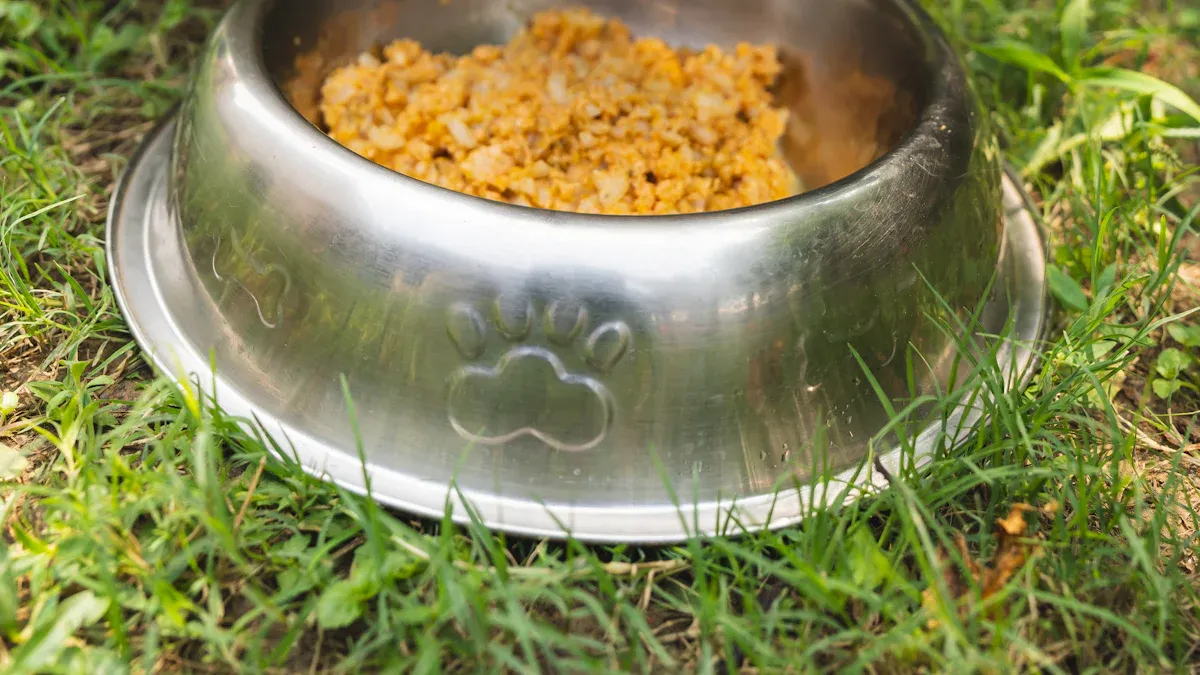
You might notice carrageenan-in-cat-food on many labels. Companies add this ingredient to keep cat food moist and stable. Carrageenan-in-cat-food comes from two kinds of red seaweed called Eucheuma cottonii and E. spinosum. Workers pick these seaweeds and dry them out. Then, they treat the seaweed with a strong chemical. This step removes things that should not be there and makes semi-refined carrageenan. After washing and drying again, the carrageenan is ready for pet food.
Carrageenan-in-cat-food works as a thickener and stabilizer. It helps the food keep its shape and texture. Wet cat food stays smooth and creamy because of carrageenan. This ingredient also stops liquids and solids from separating. That makes the food look better to your cat.
Carrageenan-in-cat-food helps keep many products fresh and the same every time.
Common Uses in Cat Food
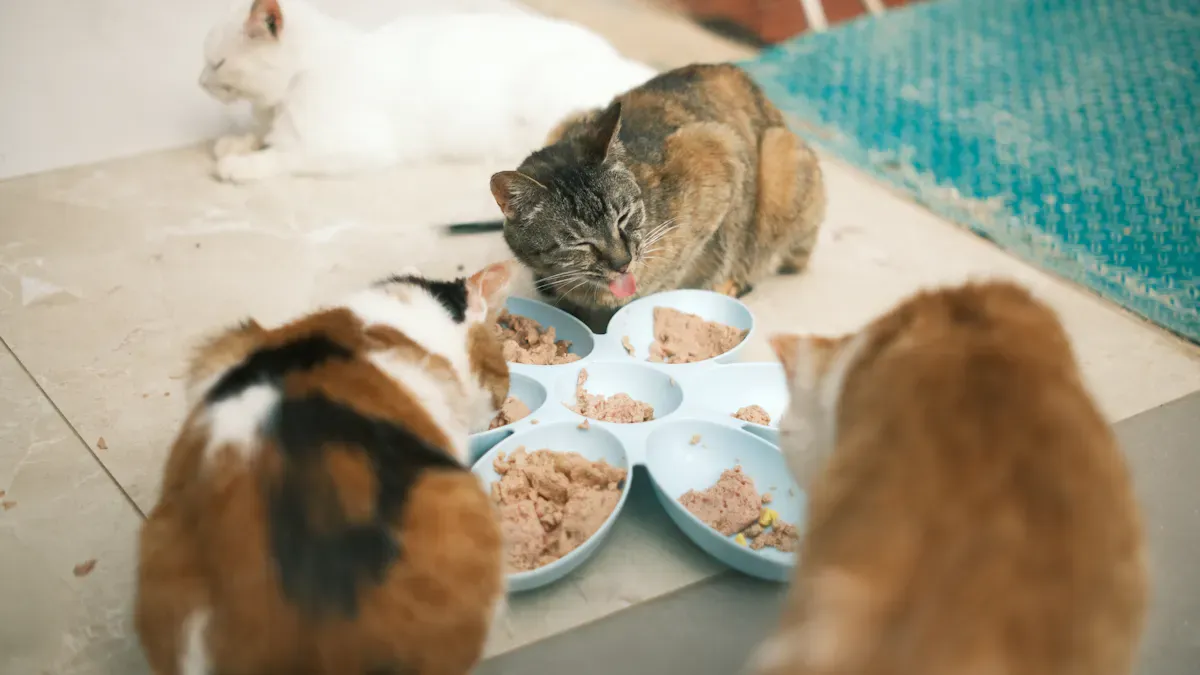
Carrageenan-in-cat-food is found most often in wet cat foods. It is in both gravy and pate types. Many brands use carrageenan to make food look and feel better. Some brands that use carrageenan are Blue Buffalo, Dave’s Pet Food Naturally Healthy, Fussie Cat Premium, Friskies, Merrick Purrfect Bistro, 9 Lives Hearty Cuts, Blue Buffalo Freedom, Natural Balance, and Royal Canin Kitten. Hill’s Science Diet usually does not use carrageenan.
Wet cat foods with gravy or pate often have carrageenan-in-cat-food.
Brands like Blue Buffalo and Friskies add carrageenan to their foods.
Hill’s Science Diet mostly leaves out carrageenan.
You can look at the ingredient list on your cat food to check for carrageenan. Many pet owners try to find foods without carrageenan if they worry about safety.
Types of Carrageenan
Degraded vs. Undegraded
You might see “carrageenan” on pet food labels, but not all carrageenan is alike. Scientists talk about two main types: degraded and undegraded. These types are different in how they act and how safe they are.
Undegraded carrageenan has big, stable molecules.
Degraded carrageenan, also called poligeenan, has small, broken molecules.
Both types come from seaweed, but how they are made changes their structure.
Undegraded carrageenan is put in food, including carrageenan-in-cat-food. Degraded carrageenan is not allowed in food because it can cause health problems.
You should know that only undegraded carrageenan is okay for pet food. Degraded carrageenan is not safe and is not used in cat food.
Scientists and rule-makers agree that the chemical differences between degraded and undegraded carrageenan are important for safety.
Regulatory Status
Regulators check both types of carrageenan before saying if they are safe for pets and people. The FDA and EFSA (European Food Safety Authority) have made rules about which type can be used.
Form | Classification by FDA | Classification by EFSA | Safety Status |
|---|---|---|---|
Undegraded | Safe as a food additive | Not specified | Safe |
Degraded (poligeenan) | Not approved | Not recommended for infants | Unsafe for consumption |
The FDA says undegraded carrageenan is safe to use in food.
EFSA does not want carrageenan in baby formula because of health risks.
Degraded carrageenan is not approved for food anywhere.
You should look at labels to make sure your cat’s food uses only undegraded carrageenan-in-cat-food. Food-grade carrageenan must follow strict rules to keep your pet safe.
Scientific Evidence and Safety Concerns
Studies on Carrageenan-in-Cat-Food
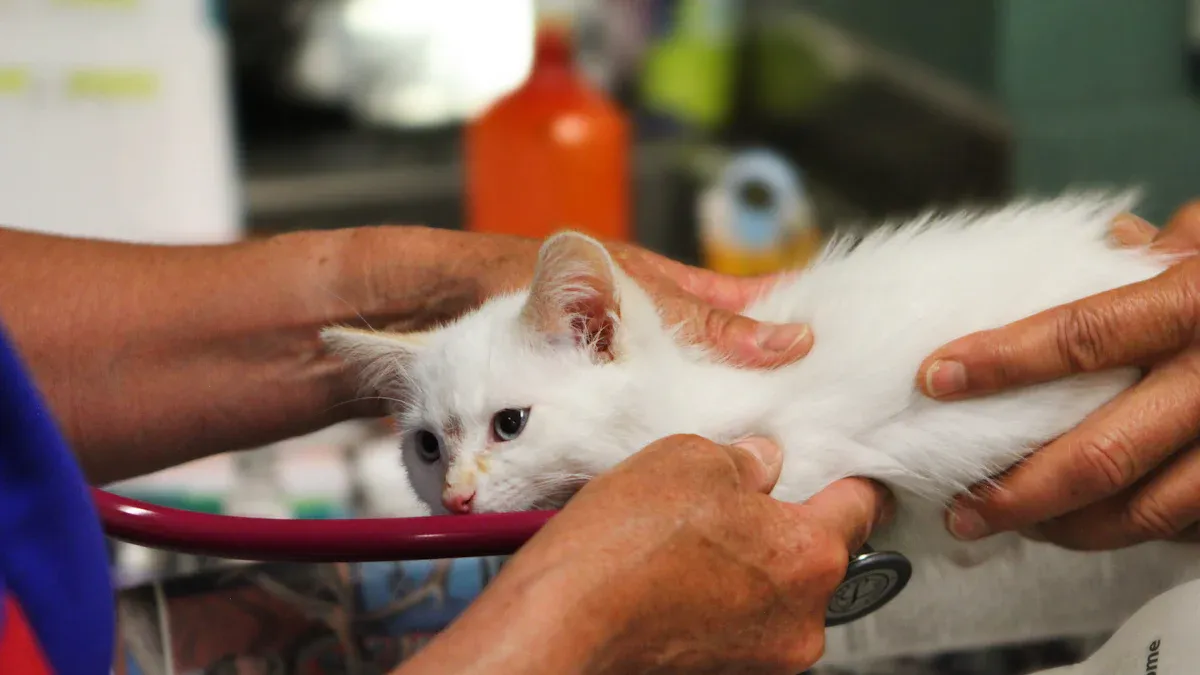
Scientists do not all agree about carrageenan-in-cat-food safety. Some studies say carrageenan can hurt a cat’s stomach and intestines. Other research does not show clear harm. This makes it confusing to know what is best for your cat.
Some researchers found carrageenan can cause gut inflammation. The body makes a chemical called TNF-⍺ when it reacts to carrageenan. TNF-⍺ is linked to diseases like IBD and cancer.
Carrageenan-in-cat-food might make the body create more TNF-⍺. This chemical is also tied to asthma and autoimmune diseases.
Some scientists worry about what happens if cats eat carrageenan-in-cat-food for a long time. They think inflammation could lead to bigger health problems.
Animal studies show that food-grade carrageenan can cause stomach inflammation. It can also cause more gut injuries, ulcers, and even tumors. Carrageenan’s special chemical structure makes the body’s immune system react. This causes long-lasting inflammation. Long-term inflammation can lead to serious diseases, including cancer.
Other studies do not find these same problems. Some scientists say carrageenan-in-cat-food does not hurt healthy cats. They think it is safe if used in small amounts. The evidence is not clear, so scientists keep studying this topic.
Potential Risks and Unknowns
You may wonder if carrageenan-in-cat-food changes inside your cat’s body. Some scientists worry undegraded carrageenan can turn into degraded forms. A cat’s stomach is very acidic. This acid can change carrageenan into things that might hurt your cat.
Research shows undegraded carrageenan can become degraded carrageenan in a cat’s gut. Acid and bacteria in the intestines help this happen. Cats have more acid in their stomachs than people do, so the risk is higher for cats.
Heat, enzymes, and bacteria in your cat’s stomach can turn carrageenan into harmful poligeenans. These can cause inflammation and other health problems. Scientists do not know exactly how much carrageenan changes in the stomach. So, the risk is still not certain.
You should watch for new research about carrageenan-in-cat-food. The science is not finished, and more studies are needed. If you are worried about carrageenan-in-cat-food, talk to your vet and check your cat food’s ingredients.
Should You Avoid Carrageenan-in-Cat-Food
Practical Advice
You might ask if you should keep carrageenan-in-cat-food away from your cat. Many pet owners skip this ingredient because they worry about health risks. Some people say their cats got stomach problems after eating food with carrageenan. Studies show even the non-degraded kind can cause gut issues or weaken the immune system.
If you want your cat to have less carrageenan, you can do a few things:
Pick brands that say “carrageenan-free” on the label.
Choose foods from companies like Performatrin Ultra and Weruva. These brands have grain-free and carrageenan-free foods.
Watch your cat for signs of stomach upset, like vomiting or diarrhea, if they eat canned food.
Talk to your vet if your cat’s health or behavior changes.
Always read the ingredient list before buying new cat food.
Carrageenan is in lots of canned pet foods. You should check labels often and stay alert. If you are not sure, ask your vet for help.
Identifying Carrageenan-Free Products
It is not hard to find safe food for your cat. Many brands now have carrageenan-free options. You can look for these brands:
Answers Pet Food
Beau’s To Go Pet Food
BioEthics Pet Food
Caru Pet Food (check each product)
Darwin’s Pet Food
Evermore Pet Food
Frenchie’s Kitchen Pet Food
Fresh Fetch Pet Foods
The Honest Kitchen Pet Foods
K9 Natural Pet Food
Lucky Dog Cuisine
Mulligan Stew Pet Food
Nature’s Logic Pet Food
Primal Pet Food
Rudy Greens Pet Foods
Steve’s Pet Food
TruDog
Some other brands also say “carrageenan-free” on their packages. Always check the ingredient list to be sure.
Many companies use other things to thicken or keep cat food stable. Here are some common choices:
Type | Examples |
|---|---|
Plant-derived | Guar gum, Sodium alginate |
Animal-derived | Animal plasma, Gelatin |
You can use this table to compare ingredients when you shop. If you stay informed, you help your cat stay healthy and happy.
People still argue about carrageenan-in-cat-food. The FDA says it is safe for pets. Some other groups are more careful.
The FDA lets pet food have carrageenan and calls it GRAS.
JECFA does not want it in baby formula.
IARC says degraded carrageenan might cause cancer.
You should read labels before you buy cat food. Ask your vet if you are not sure. Watch for new studies about carrageenan-in-cat-food. Making smart choices helps your cat stay healthy.
FAQ
Is carrageenan natural or artificial?
Carrageenan comes from red seaweed. Companies use seaweed to make carrageenan for food. It is called a natural ingredient. But it must be processed before it goes in cat food.
Can carrageenan cause allergies in cats?
Most cats do not get allergies from carrageenan. Some cats might have stomach pain or diarrhea. If your cat feels sick, stop giving that food. Talk to your vet for advice.
How do I know if my cat food has carrageenan?
Look at the ingredient list on the can or bag. Find the word “carrageenan.” Some brands write “carrageenan-free” if they do not use it.
What are safe alternatives to carrageenan in cat food?
You can use these other ingredients:
Alternative | Source |
|---|---|
Guar gum | Plant |
Agar-agar | Seaweed |
Xanthan gum | Bacteria |
These ingredients make cat food thick and stable without carrageenan.
Should kittens eat food with carrageenan?
Pick kitten food without carrageenan if you are worried. Kittens have weak stomachs. Many brands sell carrageenan-free food for young cats.