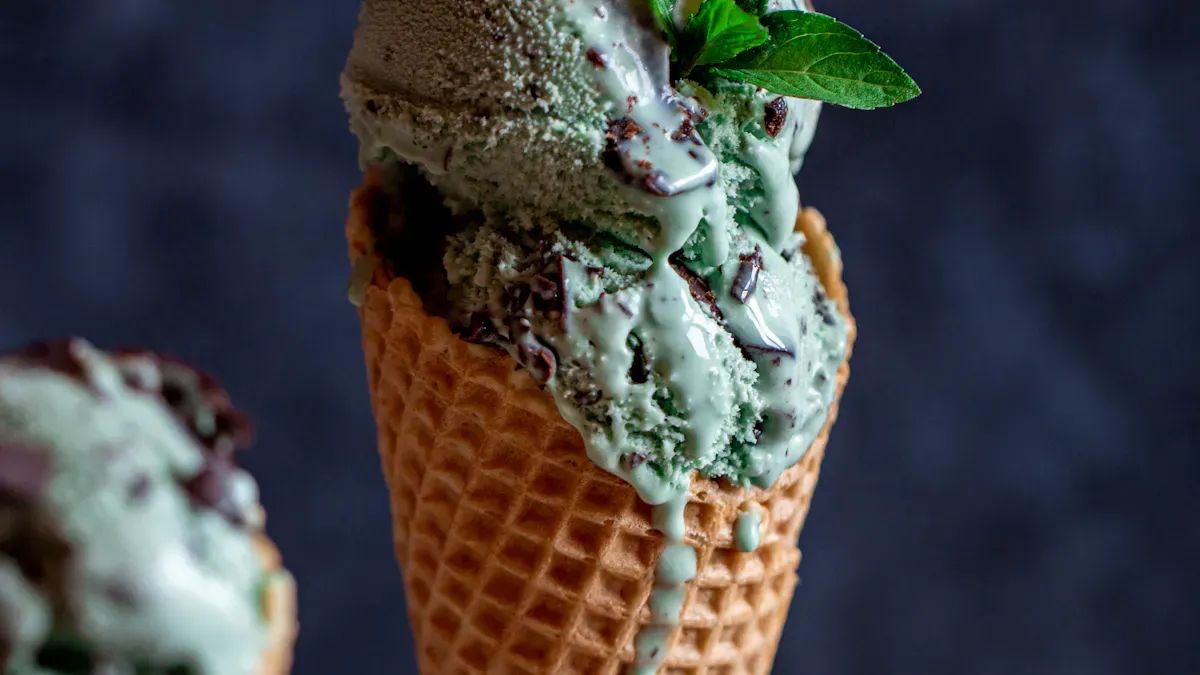
You can tell when carrageenan, derived from red seaweed, is in your ice cream. This ingredient helps make ice cream smooth and creamy while maintaining a steady texture. It prevents the formation of large ice crystals, ensuring a delightful experience. Using iota and kappa carrageenan reduces ice crystal size to about 9 µm, compared to larger crystals of about 14.5 µm found in ice cream without stabilizers after storage. Manufacturers incorporate carrageenan to maintain the quality of ice cream, giving you a tastier and more enjoyable treat that features the unique benefits of ice cream seaweed.
Key Takeaways
Carrageenan comes from red seaweed. It helps ice cream stay smooth and creamy. It stops big ice crystals from forming. Picking ice cream with carrageenan keeps its texture and taste good, even after you store it. Iota-carrageenan makes a soft gel. This makes ice cream creamy and easy to scoop. Kappa-carrageenan makes ice cream firm. Seaweed farming for carrageenan is good for the environment. It does not need fresh water or fertilizers. Look for ‘ice cream seaweed’ on labels. It is a natural ingredient that makes your dessert better.
Ice Cream Seaweed Origins
What Is Carrageenan?
Have you ever wondered why ice cream feels so smooth? Carrageenan comes from red seaweed. When you see ice cream seaweed on a label, it means carrageenan is in it. Carrageenan works as a stabilizer and thickener. It keeps ice cream creamy and stops it from separating. Carrageenan is found in many foods. It is very important in frozen desserts.
Extraction from Red Seaweed
To get carrageenan, people collect certain red seaweed from the ocean. These seaweeds grow near coasts all over the world. The main kinds used for ice cream seaweed are:
Chondrus crispus
C. ocellatus
Gigartina stellata
G. acicularis
G. pistillata
G. canaliculata
G. chamissoi
G. radula
G. skottsbergii
Gymnogongrus furcellatus
Eucheuma cottonii
E. spinosum
E. gelatinae
Furcellaria fastigiata
Hypnea musciformis
H. spicifera
Seaweed farming for carrageenan is good for the environment. Farmers do not need fresh water or fertilizer. They do not need farmland to grow seaweed. Seaweed farms help the coast by taking in carbon dioxide. They also help sea animals. But taking too much seaweed can hurt the ocean. Some supply chains have problems with being sustainable.
Tip: If you pick ice cream with seaweed carrageenan, you help the planet when it is managed well.
Ice cream seaweed makes your dessert better. It also connects you to the ocean and nature.
Texture Benefits
Smoother Mouthfeel
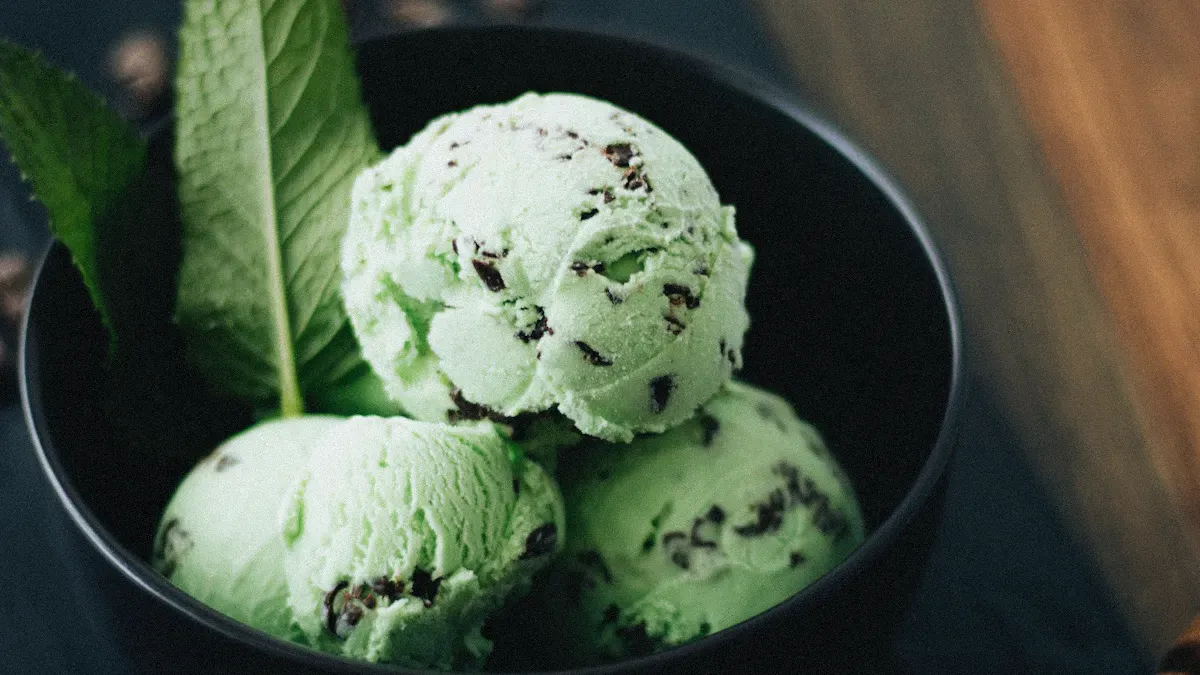
When you eat ice cream, you want it to feel smooth. Carrageenan helps make ice cream feel soft and creamy. It works better than some other stabilizers, like guar gum. Carrageenan keeps ice crystals small. You do not feel any rough or icy pieces. It holds proteins together and stops water from moving too much. This gives you a creamy bite every time.
Kappa-carrageenan connects with milk proteins in ice cream. This makes the ice cream smoother. It also stops ice crystals from getting bigger in the freezer. You can enjoy your ice cream even after it sits for days.
Tip: If you want ice cream that stays smooth, pick products with ice cream seaweed on the label.
Carrageenan also makes ice cream thicker. It slows down how water moves inside the dessert. This keeps the texture soft and smooth for many days.
Creaminess and Consistency
You want your ice cream to be creamy and easy to scoop. Carrageenan helps with this. It makes the mix thicker and more stable. When you add carrageenan, ice cream does not melt too fast or get watery.
Tests show how carrageenan changes ice cream. These tests measure thickness and flow. Here is a table that shows what happens when you use iota-carrageenan:
Rheological Property | Observation |
|---|---|
Consistency Index | Increased with the addition of enzymatic hydrolysates of ι-carrageenan after maturation |
Flow Behavior Index | Ice cream mixes showed non-Newtonian shear-thinning behavior. Viscosity decreased at higher shear rates |
Viscosity Change | Hydration of proteins and stabilizers during maturation changed viscosity |
When you use carrageenan, the ice cream mix gets thicker after it sits. It also scoops better. This means you get a creamy texture from start to finish.
Carrageenan helps proteins and water work together in the mix. This teamwork gives you a dessert that feels rich and smooth. You can trust your ice cream will taste and feel great every time.
Stability Mechanisms
Preventing Ice Crystal Growth
You want your ice cream to stay smooth and creamy, even after it sits in your freezer. Carrageenan helps you achieve this by stopping large ice crystals from forming. When you add carrageenan, it creates a gel-like network around the tiny ice crystals. This network slows down how water moves inside the ice cream. As a result, small crystals do not join together to make bigger ones. You get a better texture every time you take a bite.
Carrageenan forms a protective barrier around ice crystals.
It slows the movement of water, so large crystals do not grow.
Studies show carrageenan works better than locust bean gum for keeping ice crystals small.
If you choose ice cream seaweed as an ingredient, you help your dessert stay soft and enjoyable for longer.
Tip: Look for ice cream with carrageenan if you want a treat that stays smooth after storage.
Resistance to Melting
You may notice that some ice creams melt quickly, while others hold their shape longer. Carrageenan gives your ice cream more resistance to melting. It thickens the mix and makes it harder for water molecules to move. This means your ice cream does not turn into a puddle as fast.
Carrageenan increases the thickness, or viscosity, of the ice cream.
It limits how much water can move, so melting slows down.
By stopping ice crystals from growing, carrageenan also keeps the texture and taste better as the ice cream melts.
When you pick ice cream with carrageenan, you get a dessert that stays firmer and tastes great, even on warm days.
Types of Carrageenan
Iota-Carrageenan in Ice Cream
Not every carrageenan acts the same in ice cream. Iota-carrageenan makes a gel that is soft and stretchy. This helps ice cream stay smooth and bendy after freezing. When you eat ice cream with iota-carrageenan, it feels creamy and moves easily in your mouth. Each bite feels nice and not hard.
Iota-carrageenan makes a gel that is soft and stretchy.
It works well in frozen treats like ice cream and milkshakes.
You get a creamy texture that does not fall apart.
A study found iota-carrageenan changes how milk ice cream mixes act. It keeps the mix steady while it sits. Sometimes, iota-carrageenan can make the mix less steady, but its hydrolysates (broken-down forms) help make it steadier. Using the right kind of iota-carrageenan gives you better ice cream.
Note: If you want ice cream that stays creamy and smooth, pick products with iota-carrageenan.
Kappa-Carrageenan as Stabilizer
Kappa-carrageenan is not like iota-carrageenan. It makes a gel that is harder and breaks more easily. This means ice cream will be less stretchy and more solid. Kappa-carrageenan is used in other dairy foods, but it also helps in ice cream. It keeps the mix together and makes the ice cream firm.
Kappa-carrageenan makes a gel that is hard and breaks easily.
It gives ice cream a steady shape and helps stop melting.
You get a treat that stays strong, even when it gets warm.
When you see ice cream seaweed on a label, you know your dessert uses natural things to get the best texture. Both iota- and kappa-carrageenan work together to make ice cream creamy, steady, and fun to eat.
Ingredient Interactions
Casein and Protein Network
When you eat ice cream, you want it to be smooth. Carrageenan helps make this happen. It comes from red seaweed. Carrageenan works as a stabilizer and an emulsifier. It connects with casein, which is a milk protein. This connection forms a strong network in the ice cream. The network keeps everything mixed together. You do not see the ice cream separate or get watery. The texture stays thick and even from start to finish. This network also helps keep ice cream fresh while it is stored. You get ice cream that feels smooth and tastes good every time.
Did you know? The way carrageenan and casein connect is why your ice cream is so creamy.
Effects on Overrun and Melting
Carrageenan does more than help texture. It also changes how much air gets into ice cream. This is called overrun. Overrun makes ice cream light and easy to scoop. Kappa-carrageenan affects many things in ice cream:
Kappa-carrageenan makes high-protein ice cream mixes thicker.
More kappa-carrageenan means more overrun.
Ice cream gets softer as kappa-carrageenan goes up.
Kappa-carrageenan changes the size of fat globules in the mix.
The melting speed of ice cream changes with more kappa-carrageenan.
Carrageenan helps balance air, fat, and water in ice cream. This gives you a dessert that is creamy, melts slower, and feels lighter. Next time you eat ice cream, remember that carrageenan from seaweed is helping make it perfect.
Practical Implications
Benefits for Makers
Carrageenan helps ice cream makers in many ways. It keeps ice cream smooth and creamy for a long time. The texture stays the same, even after weeks in the freezer. Carrageenan stops ice cream from separating into icy or watery parts.
Here is a table that shows how carrageenan helps:
Benefit Type | Description |
|---|---|
Improved Consumer Perception | Carrageenan makes ice cream feel better in your mouth. People like it more because it tastes smooth. |
Ensuring Exceptional Product Stability | Carrageenan keeps ice cream mixed well. It stops it from separating and helps it last longer. |
Cost-Effectiveness and Operational Efficiency | Carrageenan lets you use fewer ingredients. It makes making ice cream easier and saves money. |
Carrageenan works well even when you use a small amount. It costs less than other stabilizers. You can use less and still get good results. Carrageenan is easy to buy and works in many recipes. This makes making ice cream faster and easier.
Many ice cream makers want simple ingredients on their labels. Carrageenan comes from seaweed, so you can call your ice cream natural. Shoppers like simple and easy-to-understand ingredients. Using carrageenan hydrolysate at 0.1–0.3% helps you keep ice cream smooth and lets you say it is natural.
Consumer Perception
People have different feelings about seaweed in ice cream. Most people like how carrageenan makes ice cream creamy and smooth. This is important for low-fat and non-dairy ice creams. Carrageenan helps these ice creams taste rich, like regular ice cream.
Carrageenan stops ice crystals from forming. Your ice cream stays creamy after being stored.
It makes ice cream feel better, especially if it has less fat.
Many shoppers want natural and plant-based ingredients. Carrageenan fits this because it comes from seaweed. Some people worry about additives. They may mix up food-grade carrageenan with poligeenan, which is not used in food. The FDA and EFSA say food-grade carrageenan is safe.
Tip: If you see “ice cream seaweed” or carrageenan on the label, you know it helps your ice cream stay creamy and stable. It also supports clean label choices.
You can notice how carrageenan from seaweed changes ice cream. It makes the texture creamy and stops it from separating. Your ice cream stays stable and does not fall apart. The table below explains what each type does:
Carrageenan Type | Key Effect in Ice Cream |
|---|---|
Kappa | Longest melting time |
Iota | Highest overrun, smallest crystals |
Lambda | Creamy effect, less freeze-thaw stability |
Carrageenan helps ice cream makers spend less money. It also gives you a tastier dessert. When you learn about these ingredients, you can pick ice cream that fits what you like. New ideas will give you even more options soon.
FAQ
Is carrageenan safe to eat in ice cream?
Yes, it is safe to eat carrageenan in ice cream. Groups like the FDA and EFSA say food-grade carrageenan is okay. You do not have to worry about it hurting your health.
Does carrageenan change the taste of ice cream?
Carrageenan does not change how ice cream tastes. You will not notice any new flavor. It only makes the texture better and keeps ice cream creamy.
Can you eat carrageenan if you have a dairy allergy?
You can eat carrageenan because it comes from seaweed, not milk. But always check the whole ingredient list. Some ice creams might still have dairy in them.
Is carrageenan suitable for vegan or plant-based diets?
Yes, carrageenan is good for vegan and plant-based diets.
It comes from red seaweed.
You can eat creamy ice cream without using animal products.