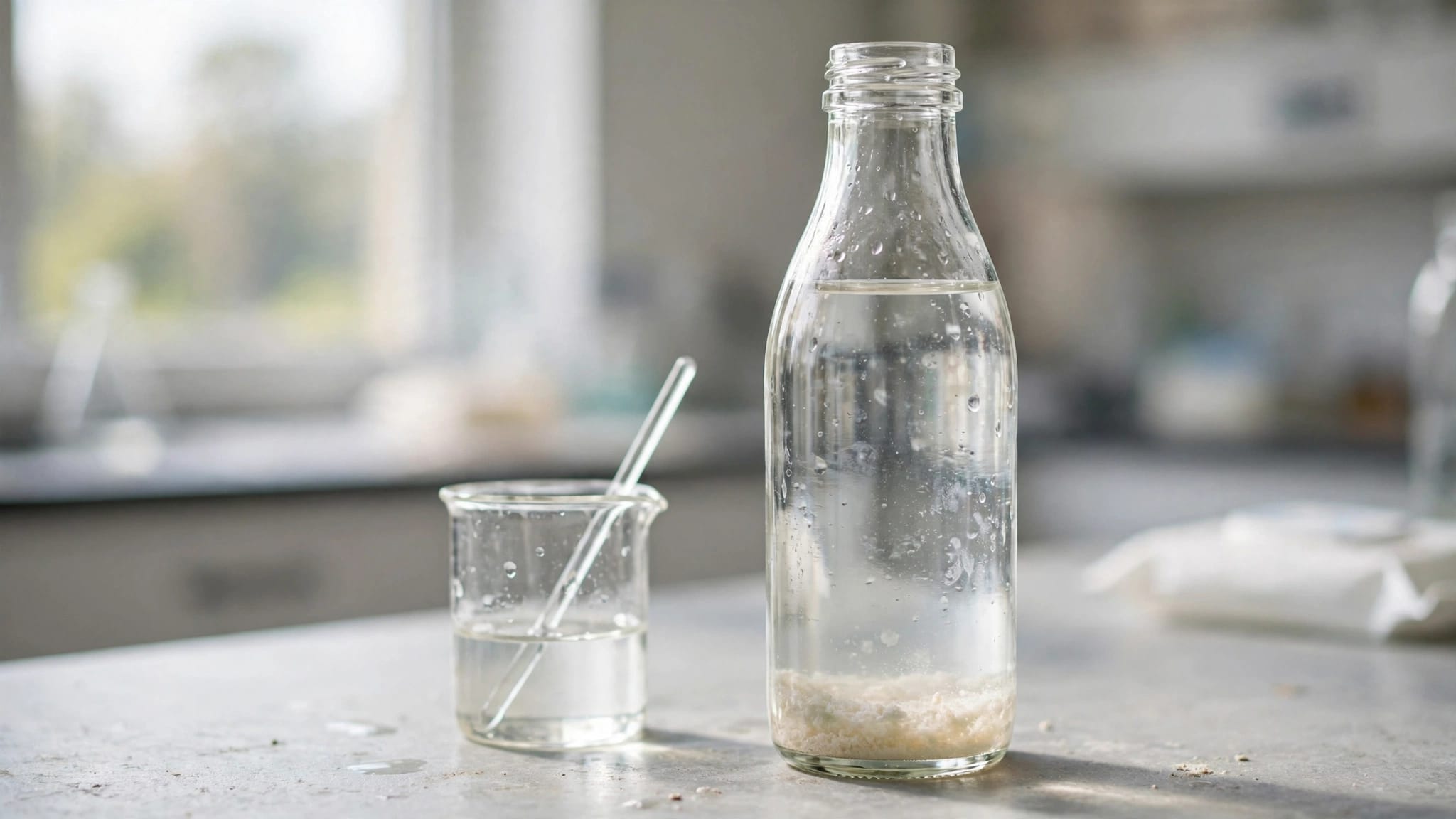
Mineral salts in beverages settle when they remain undissolved, form insoluble material, or become associated with particles that sink. In fortified ready-to-drink (RTD) products, pH, protein interactions, processing, and storage can change that behavior after mixing.
A clear bench sample is only a starting point. Shelf-life stability depends on the finished formula and production conditions, so identify the sediment before changing the mineral or stabilizer system.
Key Takeaways
- Separate undissolved mineral particles from protein aggregates and other sediment before selecting a corrective action.
- Compare mineral forms at the same elemental nutrient target, then evaluate taste, compatibility, and stability after processing.
- Use stabilizers to support suspension where appropriate, but confirm nutrient distribution and redispersibility throughout the intended shelf life.
Identify What Is Settling
Undissolved Material
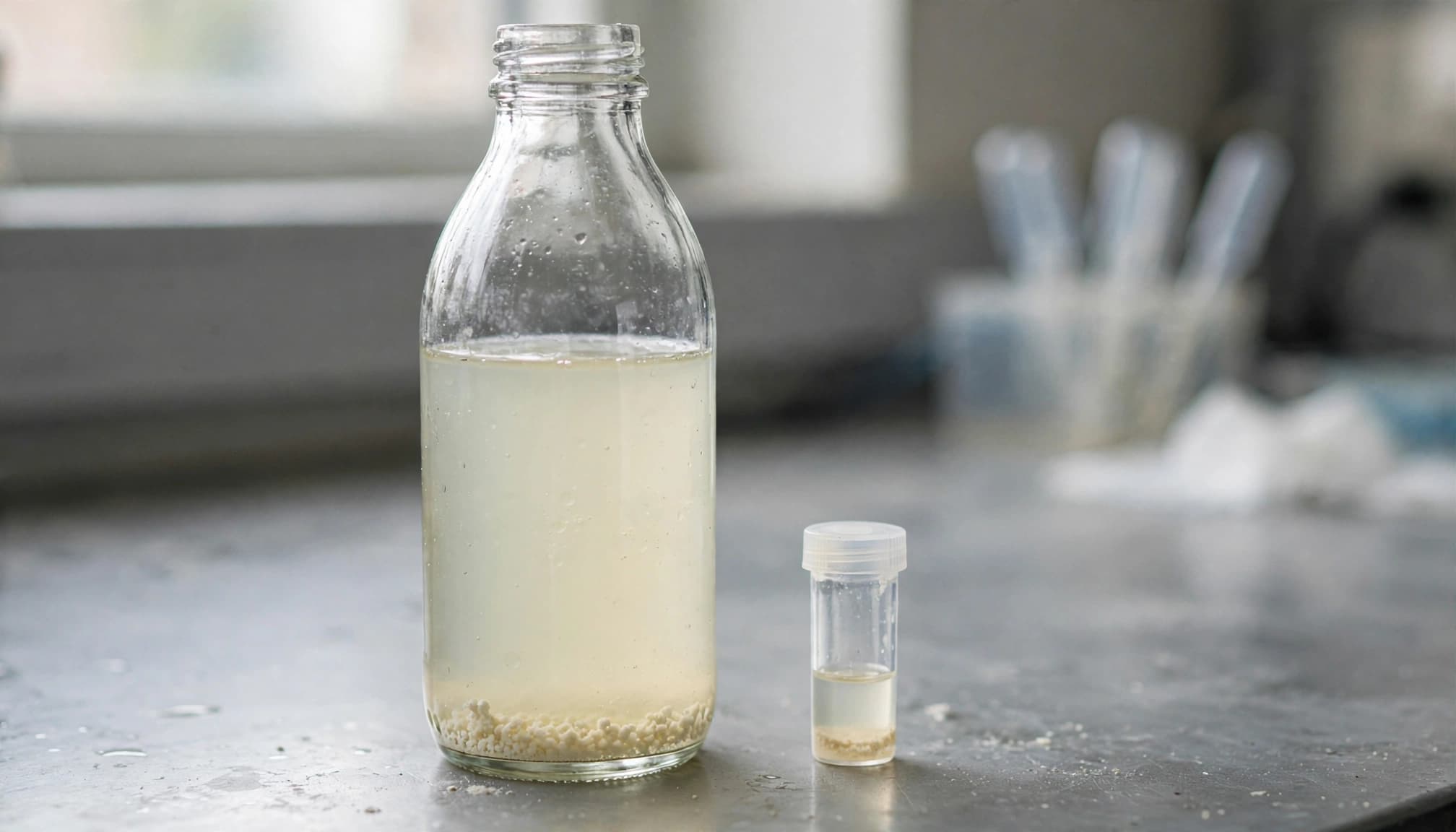
A mineral ingredient may disperse without fully dissolving. Fine particles can initially look uniform, then collect at the bottom during storage.
Solubility limits depend on the mineral form and liquid conditions. A supplier’s water-solubility specification does not establish performance in a beverage containing acids, proteins, sugars, and other salts.
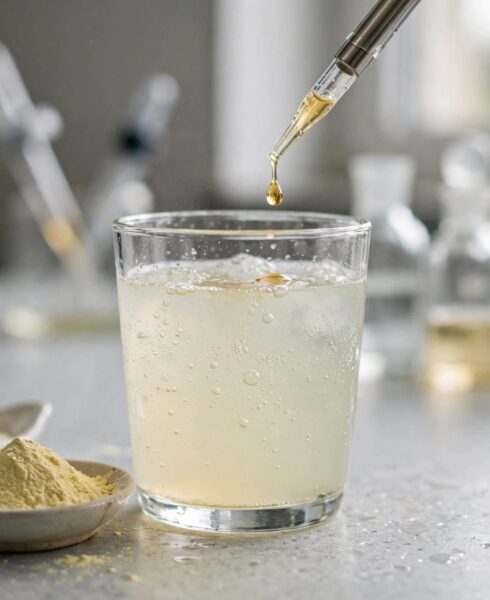
Compare the mineral solution before and after addition to the beverage base. Record haze, grit, and visible particles.
Material Formed After Mixing
Sediment that appears after heating or storage may contain aggregated protein, mineral-rich particles, or both. Its appearance alone does not establish the cause.
Examine the sediment separately from the liquid above it. Use microscopy to compare particle shapes. Elemental analysis, such as ICP-MS, can show whether sediment is mineral-rich, while protein-focused analysis can help identify protein aggregates.
A mineral can remain in the bottle while becoming unevenly distributed between servings. Total mineral content alone does not demonstrate delivery uniformity.
Select Mineral Salts for the Finished Beverage
Compare Chemical and Physical Forms
Mineral selection should balance solubility, elemental content, taste, and low reactivity. A high mineral percentage offers little benefit if the selected grade produces sediment or unacceptable flavor.
Sodium chloride and potassium chloride are familiar electrolyte ingredients. Calcium chloride and magnesium chloride also appear in beverage applications, including sweetener-modification research.
Magnesium citrate and calcium lactate provide other forms to evaluate. Compare their specifications and performance in the actual formula rather than treating salts of the same mineral as interchangeable.
Calculate the Elemental Contribution
The weight of a mineral salt is not the weight of its elemental mineral. Chemical form, hydration state, and assay affect the ingredient quantity needed.
Calculate additions using the supplied grade’s specification. Include minerals already present in water, protein ingredients, juices, and premixes. For premixes that supply trace elements, check their assays and compatibility in the finished formula.
Compare candidates at an equivalent elemental target. Otherwise, a lower sediment level may reflect a lower mineral addition rather than better compatibility.
Control pH and Ingredient Interactions
Evaluate the Final pH
pH affects mineral behavior and protein stability. A salt that performs in water may behave differently after acidification or addition to a buffered beverage base.
Measure pH after ingredient addition, after thermal processing, and during storage. Record the measurement temperature so results remain comparable.
Acid addition can also create temporary local conditions that differ from the final batch pH. Evaluate dilution, addition rate, and mixing when instability appears during acidification.
Review Proteins and Other Ingredients
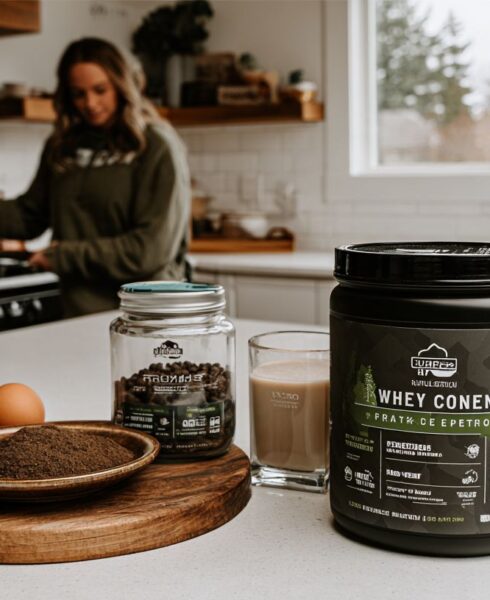
Calcium can promote protein aggregation during heating. In protein-fortified drinks, visible sediment may therefore involve the mineral system without consisting mainly of mineral crystals.
Our guidance on whey protein stability in RTD drinks covers related protein and mineral compatibility considerations.
Citrate and phosphate ingredients can affect mineral balance and protein stability, but they are not universal corrections. Their effect depends on concentration, pH, and the complete formula.
Include stabilizers in this review. Calcium and potassium can influence hydrocolloid behavior, so an electrolyte adjustment may also change texture or suspension performance.
Adjust Dispersion, Stabilization, and Processing
Separate Hydration From Suspension
Poorly dispersed powders can produce grit that resembles mineral precipitation. Confirm hydration before increasing stabilizer dosage, especially when protein or gum particles remain visible.
Evaluate mixing time and addition order in a controlled trial. Hydrate each ingredient under suitable conditions rather than applying one fixed sequence to every formulation.
Gellan gum, CMC, carrageenan, and other food-grade thickener options can support suspension in suitable systems. Select by beverage pH, protein content, mineral composition, and mouthfeel.
A stabilizer may slow settling without increasing mineral solubility. Excessive dosage can also create an unacceptable texture.
Compare Samples Across Processing Stages
Collect samples before heating, after heating, and after cooling. This comparison shows whether instability begins during mixing or develops through the thermal process.
Homogenization can improve dispersion and reduce some particle or aggregate sizes. It does not make an incompatible mineral system permanently soluble.
Record temperature, holding time, shear conditions, and homogenization settings. At scale, changes in powder incorporation and mixing efficiency can produce results that differ from laboratory batches.
Keep microbial safety requirements fixed while evaluating process adjustments. Stability improvements cannot replace a validated preservation process.
Test Stability Under Intended Storage Conditions
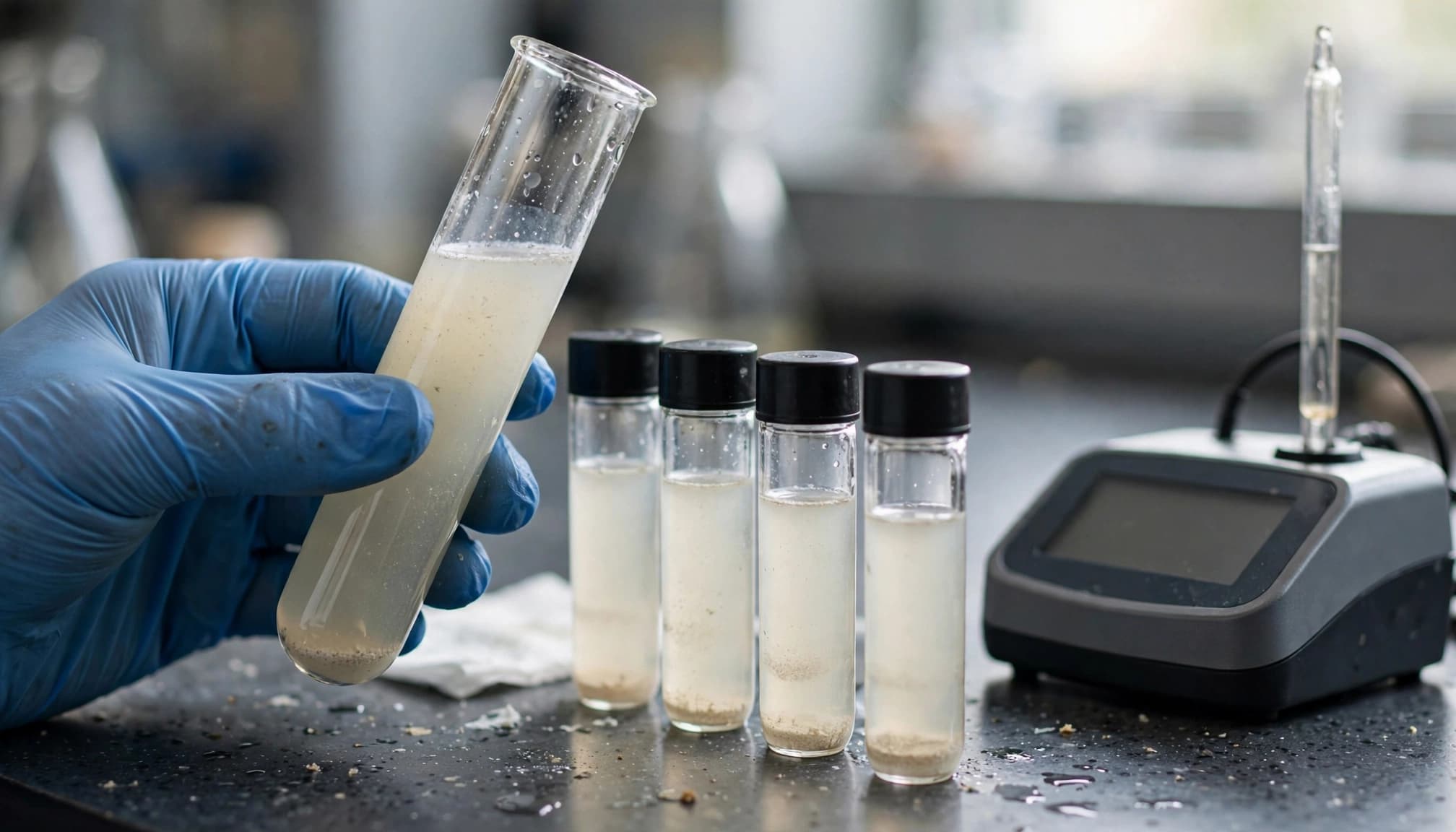
Use a three-step comparison to separate formulation effects from process and storage effects.
- Establish a reference batch and change one factor at a time, such as mineral form, addition order, or stabilizer system.
- Process candidates under representative conditions and store them in the intended packaging, including relevant temperature variation.
- Compare appearance, pH, viscosity, sediment, redispersibility, and mineral distribution at defined intervals.
Temperature changes can affect solubility, viscosity, and aggregation. Record actual storage temperatures rather than relying only on labels such as “ambient.”
Measure nutrient concentration in samples taken from different bottle positions before mixing. Repeat after the intended shaking procedure where the product requires shaking.
Accelerated storage and centrifugation can help rank candidates, but neither replaces real-time testing. A sample without sediment after one week does not establish commercial shelf life.
For mineral enrichment claims, retain evidence that the finished product meets applicable conditions under the EU Health Claims Regulation. The relevant framework is Regulation (EC) No 1924/2006, dated 20 December 2006, rather than a regulation first published in 2012.
Match Mineral Performance to the Application
Juices, teas, carbonated drinks, water, near-water beverages, and instant drink powders can carry mineral salts. Each presents different clarity, flavor, and compatibility requirements.
Sports drinks supply electrolytes lost through sweat, including sodium, potassium, magnesium, and calcium. Some are formulated as isotonic drinks, with osmolality similar to body fluids. Use before, during, or after exercise depends on activity and fluid requirements. Overly concentrated drinks can slow absorption and cause digestive discomfort. Severe dehydration requires appropriate medical attention.
Low blood sodium is hyponatremia. Muscle cramps and fatigue are nonspecific symptoms and should not be treated as proof of sodium deficiency.
Reduced-sugar drinks with noncaloric sweeteners add another selection criterion: sweetness quality. An ACS research summary reports modest individual effects of calcium, magnesium, and potassium chlorides on rebaudioside A’s lingering sweetness.
The combined salts reduced lingering sweetness by up to 79% in the reported work. Reduced-chloride blends also removed a faint salty off-taste in two zero-calorie colas. These sensory results do not establish shelf stability in another formula.
Put Mineral Concentrations in Context
Schaffer et al.’s 2022 study of 990 beverages estimated that beverages could provide 45% of phosphorus, 37% of calcium, 29% of magnesium, and 27% of potassium dietary reference values in Germany.
Cow’s milk was the main beverage source of calcium, potassium, sodium, and phosphorus. Coffee, beer, and bottled water contributed magnesium and other minerals.
The reported concentrations in mineral water and medicinal water translate into these serving amounts.
| Mineral and Water Type | Reported Concentration | Amount per 250 mL |
|---|---|---|
| Calcium in some medicinal waters | Almost 700 mg/L | Almost 175 mg |
| Magnesium in some mineral-rich waters | Above 100 mg/L | Above 25 mg |
| Magnesium in higher-content waters | Above 200 mg/L | Above 50 mg |
These reported examples describe existing beverages, not recommended fortification levels. Water composition does not establish compatibility in a protein drink or juice.
Some soft drinks exceeded 200 mg/L phosphorus. The study flagged potential implications for children’s bone metabolism.
Keep sodium and salt units separate when setting targets. Five grams of salt equals approximately 2,000 mg sodium. Germany’s reported median sodium intakes were 3.4 g for women and 4.0 g for men, not those amounts of salt.
Questions Before Your Trial
Can Shaking Correct Mineral Sediment?
Shaking may redistribute loose sediment, but it does not remove the cause. Hard sediment or persistent aggregates may remain unevenly distributed.
Measure redispersibility using the intended consumer handling conditions. A “shake well” instruction needs supporting product data rather than visual assessment immediately after vigorous laboratory mixing.
Should You Increase Stabilizer First?
First identify whether the material is undissolved mineral, protein aggregate, or another particle. Then compare an appropriate stabilizer adjustment against mineral selection and process changes.
A thicker sample may settle more slowly while retaining the same compatibility problem. Include sensory assessment and mineral distribution in the comparison.
Build Stability Around the Complete System
Mineral settling depends on the selected salt, beverage composition, processing, and storage conditions. A successful correction must address the observed failure rather than appearance alone.
Start with a controlled comparison of mineral form and compatibility. Confirm the result through representative processing, nutrient-distribution measurements, and storage testing before selecting the production formula.