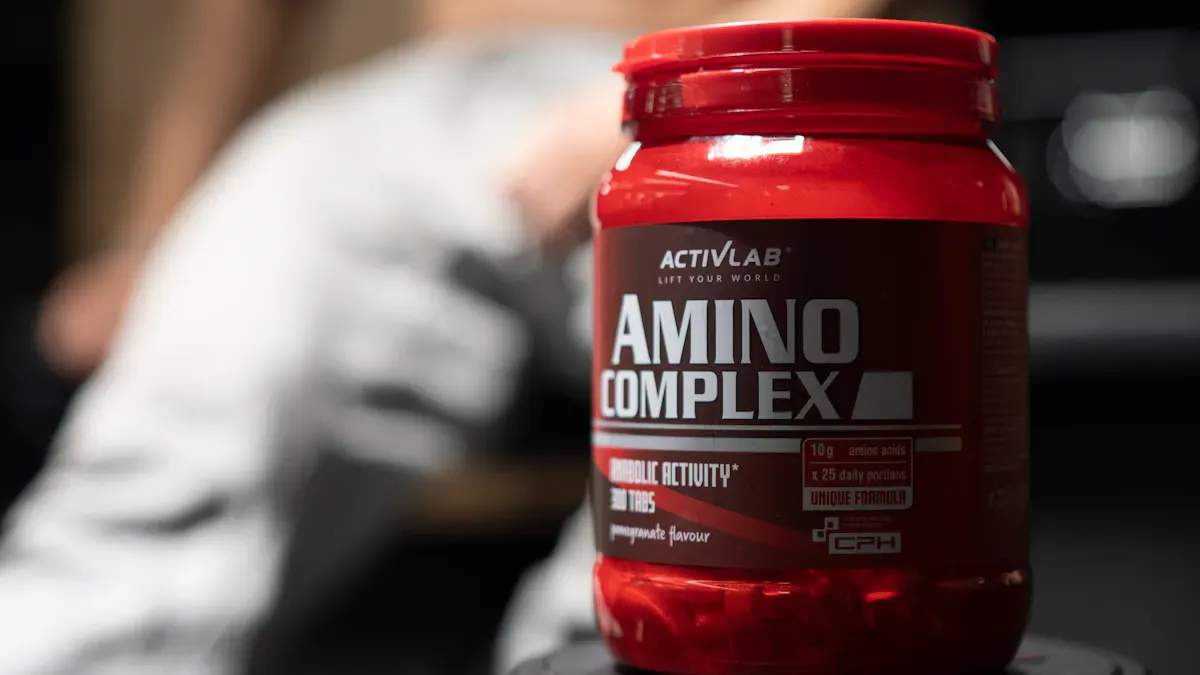
You use L-Valine to help your muscles grow. It gives you more energy and keeps you healthy. This important amino acid helps your body heal after you exercise. It stops your muscles from breaking down. It also helps you last longer when you work out.
Use Case | Description |
|---|---|
Muscle Recovery | L-Valine helps your muscles heal after exercise. It also stops your muscles from getting weaker. |
Metabolic Regulation | It helps your body keep the right amount of nitrogen. It also helps your body use energy better. |
Sports Nutrition | It helps athletes do better in sports. It also helps them last longer during tough workouts. |
Treatment of Muscle-Wasting | It helps people with muscle problems like cachexia and muscle atrophy. |
You get valine benefits by keeping your muscles strong. You also get more energy and a stronger immune system.
Key Takeaways
L-Valine helps your muscles grow and heal. It lets you recover faster after you exercise. This amino acid gives you more energy. It keeps your blood sugar level steady when you work out. L-Valine also helps your brain work better. It can help you focus and remember things, even when you feel stressed. Your immune system gets stronger with L-Valine. It helps your body fight off sickness and get better fast. Eat foods with L-Valine like chicken, eggs, and lentils to stay healthy.
Main Valine Benefits and Uses

Muscle Growth and Recovery
Strong muscles help you stay active. L-Valine helps your muscles grow after exercise. When you use L-Valine with other amino acids, your body builds more muscle. This helps fix muscle tissue and makes soreness less. You feel less pain after working out. Your muscles heal faster. L-Valine lowers creatine kinase, so there is less muscle damage. If you want stronger muscles and faster healing, valine can help.
L-Valine helps your body make muscle protein.
It helps your muscles heal fast.
You feel less pain after exercise.
It keeps your muscles safe from damage.
Energy Production and Blood Sugar Regulation
Your body needs energy to do things. L-Valine helps your cells make energy. It helps your body make ATP, which gives your muscles power. L-Valine helps your cells make more energy. It helps your body use fat and sugar for fuel. When you exercise or do not eat, L-Valine keeps your blood sugar steady. This stops your muscles from breaking down for energy.
Mechanism | Description |
|---|---|
ATP Generation | L-Valine helps your cells make ATP for energy. |
Mitochondrial Biogenesis | It helps your cells build more parts that make energy. |
Lipid Metabolism | L-Valine helps your body use fat for energy. |
Glucose Metabolism | It helps your body use sugar and keeps blood sugar balanced. |
L-Valine helps your body make sugar during exercise.
It keeps your blood sugar steady.
Your muscles stay strong because your body does not break them down.
Valine helps you have more energy and better blood sugar.
Nervous System and Cognitive Support
Your brain needs amino acids to work well. L-Valine helps your nerves and helps you focus. It helps your body make chemicals that send signals in your brain. When you have enough L-Valine, your brain works faster. You feel more awake. You may remember things better and pay attention more. Valine helps your mind, especially when you are stressed or after hard activity.
L-Valine helps your brain send messages.
It helps you remember and focus.
You feel more awake and ready to learn.
Immune Function and Antioxidant Effects
A strong immune system keeps you from getting sick. L-Valine helps your body make cells that fight germs. These cells protect you from sickness and keep you healthy. L-Valine helps your body heal after hard workouts by making your immune system stronger. Athletes who take L-Valine get sick less and heal faster.
L-Valine helps your body fight damage from free radicals. It helps your cells use sugar and starts ways to protect your body. Your body makes more glutathione, which is a strong antioxidant. L-Valine lowers swelling and helps your body use fat in a healthy way. These valine benefits keep you safe from diseases and help your body stay balanced.
Tip: To stay healthy and heal faster, eat enough L-Valine.
L-Valine helps your body make cells that fight germs.
It helps your body fight sickness.
It makes more antioxidants and lowers swelling.
Valine helps protect you from diseases and helps you heal faster.
How L-Valine Works in the Body
Protein Synthesis and Muscle Maintenance
You need L-Valine to build and keep strong muscles. This amino acid helps your body make new proteins. When you eat enough L-Valine, your body activates the AKT/mTOR pathway. This pathway tells your cells to start making protein. You get faster muscle growth and better repair after exercise. L-Valine also boosts energy in your cells by helping them make ATP. Your muscles use this energy to work and heal.
L-Valine increases nitric oxide in your body. It does this by activating the PI3K/Akt1 pathway. Nitric oxide helps blood flow to your muscles. You get more oxygen and nutrients, which helps your muscles recover. When you feel tired or stressed, L-Valine helps your body keep muscle tissue. You do not lose muscle when you fast or work out hard.
L-Valine helps your body make new muscle protein.
It gives your muscles energy to heal and grow.
You keep your muscles strong during stress or fasting.
It improves blood flow and brings more nutrients to your muscles.
Note: If you want to keep your muscles healthy, make sure you get enough L-Valine in your diet.
Interaction with Other BCAAs
L-Valine works together with other branched-chain amino acids (BCAAs), like leucine and isoleucine. You get the best results when you have all three. These amino acids help your body build and repair muscle. They also give you energy during exercise. When you take L-Valine with other BCAAs, your body uses them to protect muscle tissue. You feel less tired and recover faster.
BCAA | Main Benefit |
|---|---|
L-Valine | Muscle repair, energy |
Leucine | Protein synthesis, growth |
Isoleucine | Blood sugar, energy balance |
You need a balance of BCAAs for strong muscles and good health. L-Valine helps you get the most from your workouts and keeps your body working well.
Food Sources of L-Valine
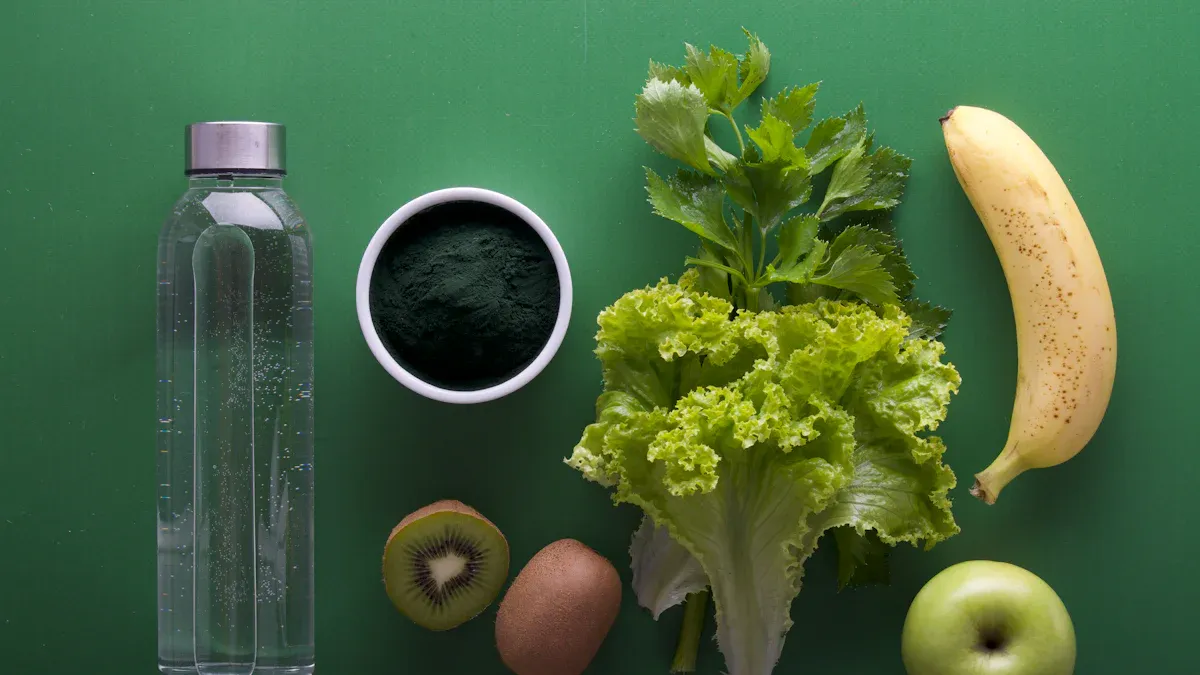
You can get L-Valine from many foods. Your body cannot make this amino acid, so you need to eat foods that contain it. Both animal-based and plant-based foods give you L-Valine, but the amount and how well your body uses it can differ.
Animal-Based Sources
Animal foods give you a rich supply of L-Valine. Your body absorbs L-Valine from these foods very well. Animal proteins have a structure that makes them easy to digest. You get more L-Valine from animal sources because your body can use it quickly.
Common animal-based sources of L-Valine include:
Chicken breast
Eggs
Beef
Fish (like salmon and tuna)
Milk and dairy products (cheese, yogurt)
Food | L-Valine Content (per 100g) |
|---|---|
Chicken breast | 1.2 g |
Eggs | 0.9 g |
Beef | 1.1 g |
Salmon | 1.0 g |
Milk | 0.4 g |
Tip: If you want your body to use L-Valine well, choose animal-based foods. These foods have high bioavailability, so your body gets more benefit.
Plant-Based Sources
You can also find L-Valine in plant foods. These foods help you get enough L-Valine if you follow a vegetarian or vegan diet. Plant proteins, however, are harder for your body to digest. The structure of plant proteins, like their β-sheet conformation, makes them less available. Some plants have substances, such as phytic acid and protease inhibitors, that block your body from using all the protein. Non-starch polysaccharides in plants can also slow down digestion.
Good plant-based sources of L-Valine include:
Lentils
Soybeans and tofu
Peanuts
Quinoa
Pumpkin seeds
Food | L-Valine Content (per 100g) |
|---|---|
Lentils | 0.6 g |
Soybeans | 1.5 g |
Peanuts | 1.1 g |
Quinoa | 0.4 g |
Pumpkin seeds | 1.0 g |
Note: If you eat mostly plant foods, try to include a variety of sources. This helps you get enough L-Valine, even though your body may not absorb it as easily as from animal foods.
Recommended Intake and Supplementation
Daily Requirements
Your body needs L-Valine every day because it cannot make it. Experts say you should get 10 to 14 milligrams for each kilogram you weigh. This amount helps your muscles, energy, and immune system work well.
If you play sports or exercise a lot, you may need more. Athletes often need extra L-Valine to help their muscles heal and keep their energy up. The table below shows how L-Valine helps both athletes and people who do not exercise much:
Aspect | Athletes | General Population |
|---|---|---|
Muscle Building | Valine helps muscle mass and recovery. | Less focus on muscle recovery. |
Energy Source | Used for energy during activity. | Energy needs met through diet. |
Blood Sugar Control | Keeps blood sugar steady during exercise. | Controlled by regular diet. |
Stress Reduction | Lowers stress hormone levels. | Less effect on stress hormones. |
Immune Support | Supports immune system under stress. | General immune support from diet. |
Recommended Intake | 10-14 mg/kg before/after training. | Standard intake without special focus. |
Tip: If you play sports or train hard, you might need more L-Valine. Ask a doctor or nutritionist to help you find the right amount.
Supplementation Tips
You can get L-Valine from food, but some people use supplements. L-Valine comes in different forms:
You can take L-Valine alone as a single supplement.
Many people use BCAA supplements. These have L-Valine, L-Leucine, and L-Isoleucine together.
Whey protein and egg protein powders also give you BCAAs, including L-Valine.
More people are buying L-Valine supplements for sports and health. From 2016 to 2019, the market grew by 65% each year. Experts think it will keep growing.
When you buy supplements, always check the label. Companies must follow rules for labels. They need to show the protein quality using the Protein Digestibility Corrected Amino Acid Score (PDCAAS). If a product does not have enough essential amino acids, the label must say it is “not a significant source of protein.”
Note: Always read supplement labels and pick trusted brands. If you have health problems or take medicine, talk to your doctor before using L-Valine supplements.
Risks and Side Effects
Potential Side Effects
Most people can use L-Valine from food safely. If you take supplements, you might get some side effects. It is important to know what could happen if you add L-Valine to your day.
Some common side effects are:
Nausea or an upset stomach
Vomiting or diarrhea
Feeling tired or weak
Tingling or a crawling feeling on your skin
Trouble moving your muscles the right way
Hallucinations (seeing or hearing things that are not real)
Bloating or pain in your stomach
A few people might get too much ammonia in their body. This can make you feel confused or very weak. If you have any of these problems, stop taking L-Valine and talk to your doctor.
Note: Taking too much L-Valine can make your liver and kidneys work harder. Over time, this can make these organs not work as well.
Who Should Avoid L-Valine Supplements
Some people should not use L-Valine supplements. If you have certain health problems, it can be unsafe. Some medicines can also cause problems with L-Valine.
Do Not Use L-Valine If You Have: |
|---|
Kidney problems |
Nerve problems (like ALS) |
Mental health or mood problems |
Diabetes |
Seizures |
Metabolic disorders |
Cancer |
Heart problems |
Some medicines can change how L-Valine works in your body. If you take corticosteroids for swelling, L-Valine may not work as well. Thyroid medicine can also slow down how your body uses L-Valine.
Tip: Always talk to your doctor before starting any new supplement. This is very important if you have a health problem or take medicine.
L-Valine can help your muscles and support your liver. You should only use it when you know it is safe for you.
L-Valine helps you build muscle and feel more energetic. It also keeps you healthy. Studies show L-Valine helps your muscles heal after exercise. It gives you energy and protects your liver.
Benefit | How It Helps You |
|---|---|
Muscle Recovery | Fixes muscles and makes soreness less |
Boosts Endurance | Stops you from feeling tired during workouts |
Liver Support | Keeps your liver working well |
Pick foods with lots of L-Valine. Ask your doctor before taking supplements. Add L-Valine to your meals to help your body stay strong and healthy.
FAQ
What does L-Valine do for your body?
L-Valine helps your muscles grow and heal. You get more energy for exercise. Your body uses L-Valine to keep your immune system strong and your mind sharp.
Can you get enough L-Valine from food?
Yes, you can. You find L-Valine in foods like chicken, eggs, lentils, and peanuts. Eating a balanced diet gives you enough L-Valine for good health.
Who should consider L-Valine supplements?
You may need supplements if you are an athlete, follow a strict vegan diet, or have trouble getting enough protein. Always ask your doctor before starting any supplement.
Is L-Valine safe for everyone?
Most people can use L-Valine safely from food. If you have liver, kidney, or nerve problems, you should avoid supplements. Talk to your doctor if you have health concerns.
How do you know if you need more L-Valine?
You may feel tired, weak, or have slow muscle recovery. If you notice these signs, check your diet. A doctor can help you decide if you need more L-Valine.