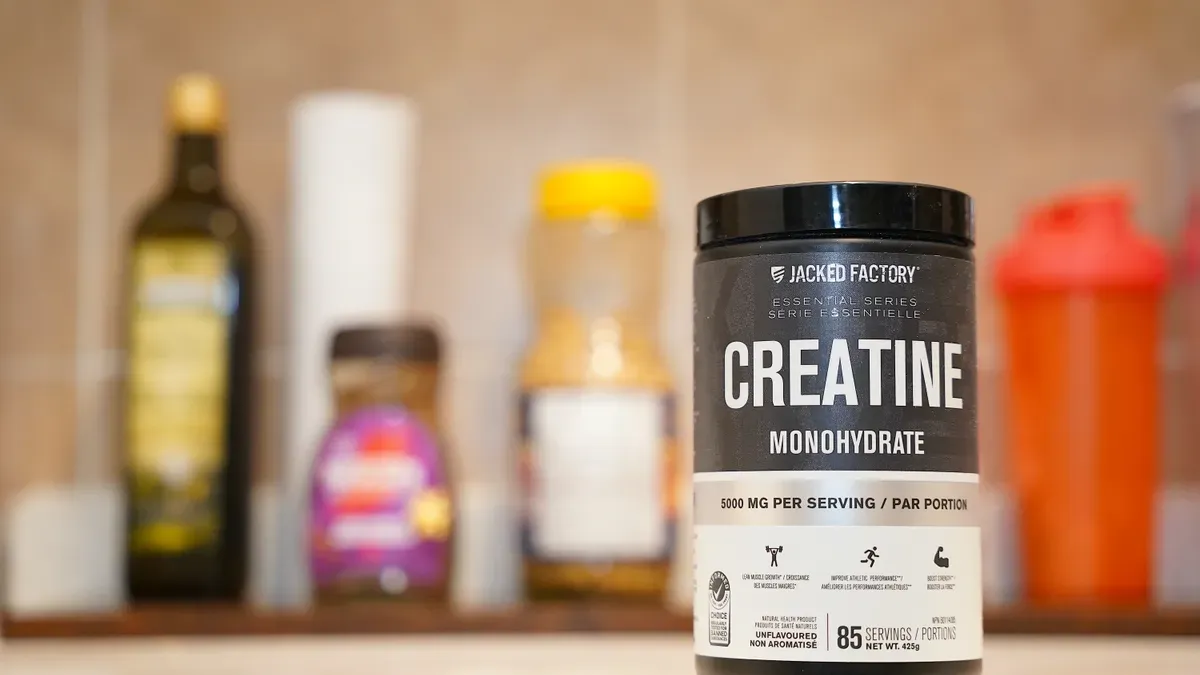
When choosing the best creatine for your fitness goals, it’s important to compare Creatine Monohydrate VS Creatine Salts. Creatine monohydrate is effective for most people, with studies showing it boosts performance, strength, and helps build lean muscle more efficiently than other forms. Creatine is a natural compound that supports your muscles during exercise, making it popular among athletes who want to get stronger and improve endurance. When deciding between Creatine Monohydrate VS Creatine Salts, consider effectiveness, safety, and cost. Some people prefer creatine salts, such as HCl, because they are easier to digest and mix better in water. Comparing Creatine Monohydrate VS Creatine Salts means looking at results, potential side effects, price, and convenience. By weighing these factors, you can choose the creatine that best fits your needs.
Key Takeaways
Creatine monohydrate is the most studied type. It is also the cheapest. It helps muscles grow. It makes you stronger. It helps you do better in sports.
Creatine salts, like HCl, mix well in water. They may not upset your stomach as much. This is good for people with sensitive stomachs.
Both creatine monohydrate and salts help muscles and strength. They work the same if you take the right amount.
Taking 3-5 grams of creatine each day is safe for most healthy adults. It can help you do better in workouts. It also helps you recover faster.
Pick creatine monohydrate if you want to save money. It also has proven results. Choose creatine salts if you want it to mix well. Pick them if you want it to be easy on your stomach.
What Is Creatine?
Muscle Performance Benefits
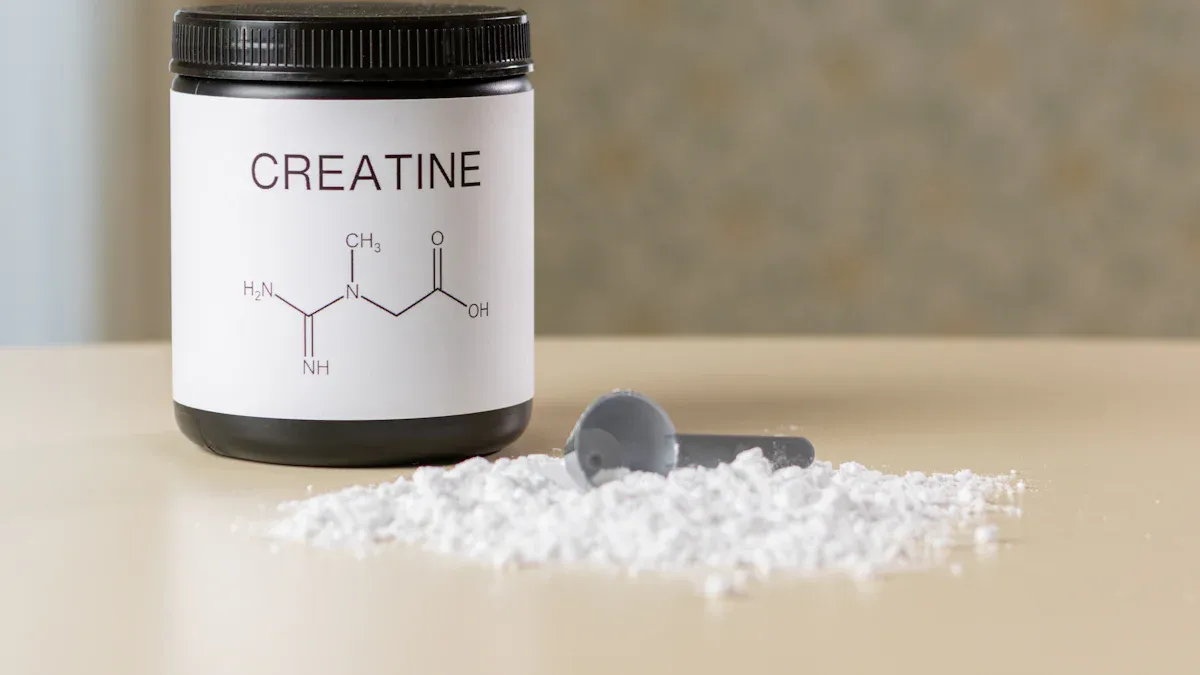
Creatine is found naturally in your muscles. You use it when you move or exercise. It helps your muscles make energy fast. This is important for short, hard activities. Taking creatine lets your muscles store more phosphocreatine. This helps your body make ATP, which gives your muscles energy. More creatine in your muscles can help you get stronger and build muscle.
Creatine works in a simple way. Phosphocreatine helps your muscles make ATP quickly. This happens during short, hard work. For the first 10 to 30 seconds, it makes ATP faster than other ways.
Here is a table showing what creatine does:
Aspect | Description |
|---|---|
Chemical Formula | (H2N)(HN)CN(CH3)CH2CO2H |
Function in Muscle | Helps recycle ATP in muscles and brain. |
Role of Phosphocreatine | Gives phosphate to ADP to make ATP, giving more energy. |
Ergogenic Effects | Makes you stronger and faster in hard exercise by 5% to 15%. |
Muscle Stores | Raises phosphocreatine in muscles, helping make ATP for energy. |
Creatine helps you train harder and longer. You can lift more weight and run faster. You also recover better after exercise. Studies show creatine makes you stronger and helps you perform better. It can help you build muscle and lose fat if you do resistance training.
Creatine helps you train more and harder.
It affects how your muscles grow and heal.
It changes cells, inflammation, and stress in muscles.
These changes make you stronger and help you build muscle.
Clinical trials show creatine helps many athletes. You can gain muscle, power, and endurance. Here is a table with some study results:
Study | Creatine Dosage | Training Type | Outcome | p-value |
|---|---|---|---|---|
Claudino et al. | 20 g/day for 7 days, 5 g/day for 42 days | Whole-body resistance training | Jumped higher | 0.23 |
Nunes et al. | 0.3 g/kg/day for 7 days, 0.03 g/kg/day for 49 days | Whole-body resistance training | Gained lean muscle | < 0.001 |
Yáñez-Silva et al. | 0.03 g/kg/day for 14 days | Elite soccer training | More peak power | ≤ 0.05 |
Wang et al. | 20 g/day for 6 days | Complex training | Stronger bench rows | ≤ 0.05 |
Wang et al. | 20 g/day for 6 days, 2 g/day for 28 days | Complex training | Stronger half-squats | ≤ 0.05 |
Ribeiro et al. | 20 g/day for 5 days, 3 g/day for 51 days | Whole-body resistance training | More muscle mass | ≤ 0.05 |
Why Supplement Creatine
You take creatine to get stronger and build muscle. Creatine turns into phosphocreatine in your muscles. This helps make ATP, which gives your muscles energy. You can do better in short, hard activities like sprinting or lifting.
Creatine helps you grow lean muscle.
It boosts performance in tough exercises.
Creatine helps your muscles recover by lowering damage and swelling.
It makes more energy by raising ATP.
Creatine can help your mind stay clear and focused.
You might need creatine if you eat little of it. Vegans and vegetarians often have less creatine. Taking creatine raises the amount in your muscles. Most foods only give you 1-2 grams of creatine each day. Supplements can give you 5-20 grams, which increases muscle creatine a lot.
Creatine supplements help you build muscle and perform better in many types of training. You get the best results if you use creatine with resistance training.
Creatine can help you recover faster and make more energy. It can also help you focus better. These benefits make creatine popular for athletes and people who want to reach their fitness goals.
Creatine Monohydrate
Research and Effectiveness
Creatine monohydrate is very popular for building muscle. It is known as the best choice for strength. Scientists have studied creatine since 1912. Harvard found it helps muscles grow. In the 1960s, experts learned creatine helps make ATP. ATP gives your muscles energy. By 1993, athletes started using creatine supplements to get stronger.
Creatine monohydrate is the most studied type. Many studies show it raises creatine in your blood and muscles. You get stronger and do better in sports. Big reviews show creatine monohydrate helps you build muscle with exercise. Even people who do not train hard can get more muscle power if they use creatine. Creatine monohydrate works best when you exercise.
Creatine monohydrate is trusted for strength and muscle growth. Scientists have studied it for a long time.
Here is a table comparing creatine monohydrate to other types:
Aspect | Creatine Monohydrate | Creatine HCl |
|---|---|---|
Research Volume | Lots of studies | Not many studies |
Effectiveness | Proven for strength and performance | No extra benefit over monohydrate |
Solubility | Good, better if micronized | Very high |
Cost | Cheapest | Usually costs more |
Digestive Effects | Most people handle it well | Said to be gentler, but proof is limited |
Dosage and Purity
You need to know how much creatine to take and how clean it is. Experts say healthy adults should take 3-5 grams of creatine monohydrate each day. You can use a loading phase, but daily use works well for strength and muscle growth. Creatine monohydrate is safe and pure. German-made creatine monohydrate is 99.9% pure. Some other brands may have more impurities, so check the label.
Take 3-5 grams of creatine monohydrate every day.
Choose creatine monohydrate that is very pure.
Mix creatine with water to use it easily.
Creatine monohydrate is cheap and easy to buy. You can trust it to help you get stronger and build muscle. Some people worry about holding water, but studies show it is not a big problem for most. You get the best results when you use creatine monohydrate with exercise. Creatine monohydrate stays the best choice because it works, is safe, and is proven by science.
Creatine Salts
Types (HCl, Nitrate)
There are many kinds of creatine you can buy. The most common types are creatine hcl, creatine nitrate, creatine malate, and creatine citrate. Each one has special features. Creatine hcl mixes well in water and your body absorbs it fast. You might not feel as bloated with creatine hcl as with other types. Creatine nitrate can help your blood move better and may help you last longer in sports. Some people use buffered creatine because it stays stable, but not many people use it.
Here is a table that lists the main types of creatine and their features:
Type of creatine | Features | Advantages | Disadvantages |
|---|---|---|---|
Creatine monohydrate | Most studied, classic form | Best price/effectiveness ratio | May cause water retention |
Creatine hcl | More soluble, lower dose | Very good solubility | Less testing than monohydrate |
Creatine malate | Supports energy production | May improve aerobic capacity | Fewer clinical trials |
Creatine citrate | Well soluble | May promote regeneration | Requires higher dose to work |
You can see creatine hcl mixes very well in water. You also need less creatine hcl than creatine monohydrate. Many athletes pick creatine hcl for these reasons.
Solubility and Use
Solubility means how well something mixes in water. Creatine hcl mixes much better than creatine monohydrate. You can put creatine hcl in a small glass of water and it will not leave any grains. This makes it easy to drink and gentle on your stomach. You might not get as much bloating or stomach pain with creatine hcl.
Creatine hcl has a different chemical structure than creatine monohydrate. Here is a table that shows how they are different:
Creatine Form | Chemical Structure | Acidity Level |
|---|---|---|
Creatine Monohydrate | Creatine base with water molecule | Less acidic |
Creatine HCL | Creatine base with hydrochloride (HCL) | More acidic |
You can see creatine hcl is more acidic. This helps it mix faster in water. You may like creatine hcl if you do not like gritty drinks.
How well creatine mixes in water changes how you use it. Here is a chart that shows how much creatine each type can mix in water:
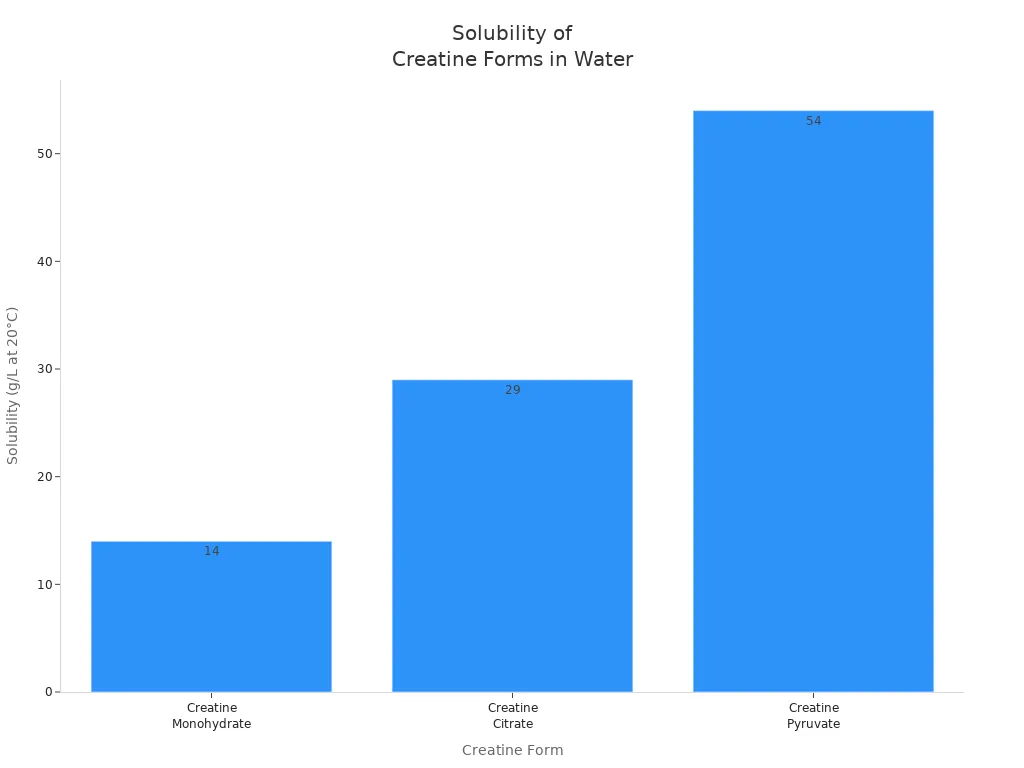
Creatine hcl is not in this chart, but it mixes even better than creatine citrate. You can use less creatine hcl and still get the same results as other types. This means you only need a small scoop to get strong effects.
You might want to try creatine hcl if your stomach is sensitive or you want a powder that mixes well. Many people think creatine hcl is easy to use every day. You can add it to water or juice and drink it before or after you exercise. Creatine hcl helps your muscles make energy quickly, so you can work out harder and recover faster.
Creatine Monohydrate vs Creatine Salts
Effectiveness
When you look at creatine monohydrate and creatine salts, you want to know which one helps you build muscle and get stronger. Most experts say creatine monohydrate works best. People see bigger gains in strength and muscle size with it. Athletes and coaches trust creatine monohydrate because it has worked for many years.
Some people say creatine salts, like creatine HCl or buffered creatine, work faster or are easier on your stomach. Some brands say these types mix better or cause less stomach pain. But studies show creatine monohydrate and creatine salts give you the same results if you take the right amount. You do not get more muscle or strength from creatine salts. The biggest difference is how well each type mixes in water and how your stomach feels after you take it.
Here is a table that shows what studies found about creatine monohydrate and creatine salts:
Creatine Form | Effectiveness Compared to Monohydrate | Source Link |
|---|---|---|
Creatine Monohydrate | ||
Buffered Creatine | No greater muscle creatine content | |
Creatine Ethyl Ester | Less effective muscle creatine uptake | |
Novel Creatine Forms | No superiority over monohydrate |
You can see creatine monohydrate and creatine salts give you the same muscle and strength gains. No creatine salt is better for muscle or strength.
Scientific Evidence
You may want to know what science says about creatine monohydrate and creatine salts. Scientists have studied creatine monohydrate for over 30 years. More than 500 studies show it helps you build muscle, get stronger, and recover faster. Creatine salts, like creatine HCl, have fewer than 20 studies. Most of these do not show better results than creatine monohydrate.
No studies show creatine salts work better than creatine monohydrate for raising muscle creatine.
Most research finds creatine monohydrate helps muscle and performance more than other types.
Creatine monohydrate is absorbed well, and your body uses it or gets rid of it safely.
Studies comparing creatine HCl and monohydrate show no big differences in muscle or strength if you take the same amount.
Buffered creatine does not give you more muscle or strength than creatine monohydrate.
Research does not show creatine salts cause fewer side effects than creatine monohydrate.
You might wonder about how your body absorbs creatine. Some people say creatine salts absorb faster. Here is a table that compares how fast your body takes in each type:
Creatine Type | Bioavailability | |
|---|---|---|
Creatine Monohydrate | Moderate | Similar |
Creatine HCl | Faster | Similar |
Creatine HCl may mix and absorb a little faster, but both types give your muscles the same amount of creatine. You do not get more muscle or better results just because it absorbs faster.
Tip: If you want the most proven results, pick creatine monohydrate. You get the same muscle and strength gains as with creatine salts, and you know it is safe.
When you compare creatine monohydrate and creatine salts, you see both help with muscle and strength. The main difference is how they mix in water and how your stomach feels. Science says creatine monohydrate is the best choice for most people. You get strong results, safety, and a good price.
Creatine Monohydrate vs HCl
Muscle Growth and Performance
You might wonder which creatine helps you get stronger. Many athletes ask about creatine monohydrate vs hcl. Both types give your muscles more energy. This lets you lift heavier weights. You can also recover faster after workouts. Creatine monohydrate is made of about 90% creatine. Creatine hcl has about 78% creatine. You get more creatine in each scoop of creatine monohydrate. Creatine hcl mixes very well in water. You only need a small scoop to get good results.
Creatine hcl goes into your body faster. You might feel it working soon after you take it. Both creatine monohydrate and creatine hcl help you gain muscle and strength. Studies say there is no big difference if you use the same amount. You can pick either one and still get strong results.
Creatine monohydrate gives you more creatine for each gram.
Creatine hcl mixes fast and absorbs quickly.
Both types help you build muscle and get stronger.
You get about the same results with both types.
You can trust creatine monohydrate or creatine hcl to help your workouts. Both types help you reach your fitness goals.
Side Effects
You may worry about side effects when using creatine. Most people do not have any problems. Sometimes, you might get a small stomach ache. Creatine monohydrate vs hcl can affect your body in different ways. Creatine monohydrate can cause bloating or an upset stomach. This happens more if you take a lot at once. Creatine hcl mixes better in water. You may have less bloating and fewer stomach problems.
Here is a table that shows the side effects for each type:
Creatine Type | Reported Side Effects |
|---|---|
Creatine Monohydrate | Minor digestive issues, stomach upset during loading phases, bloating due to poor solubility and large doses. |
Creatine HCl | Fewer gastrointestinal side effects, better solubility, less bloating, and minimal water retention. |
You can see creatine hcl is easier on your stomach. You may not feel as much bloating or water weight. Creatine monohydrate sometimes causes mild bloating or stomach pain. Creatine hcl gives you less bloating and less water weight.
Most people do not get side effects from creatine.
Small stomach problems can happen, like bloating or upset stomach.
Creatine hcl may be easier for your stomach.
If your stomach is sensitive, you might want to try creatine hcl. You can avoid bloating and feel better during your workouts.
You can use creatine monohydrate or creatine hcl safely. Both types help you build muscle and do better in sports. Pick the one that works best for you and enjoy the benefits of creatine.
Cost and Value
Price Comparison
When you buy creatine, you want a good deal. Creatine monohydrate works well and costs less than other types. Many athletes pick it because it is strong and cheap. Here are some prices you might find:
Creatine monohydrate costs less per serving than Kre-Alkalyn and other salts.
Kre-Alkalyn usually costs $0.20 to $0.50 or more for each serving.
Basic creatine monohydrate is cheaper, so it is good for your budget.
You can check the prices for popular brands in this table:
Brand | Price Per Serving |
|---|---|
Naked Creatine | $0.13 |
Optimum Nutrition | $0.20 |
Crazy Muscle | $0.49 |
Klean Athlete | $0.50 |
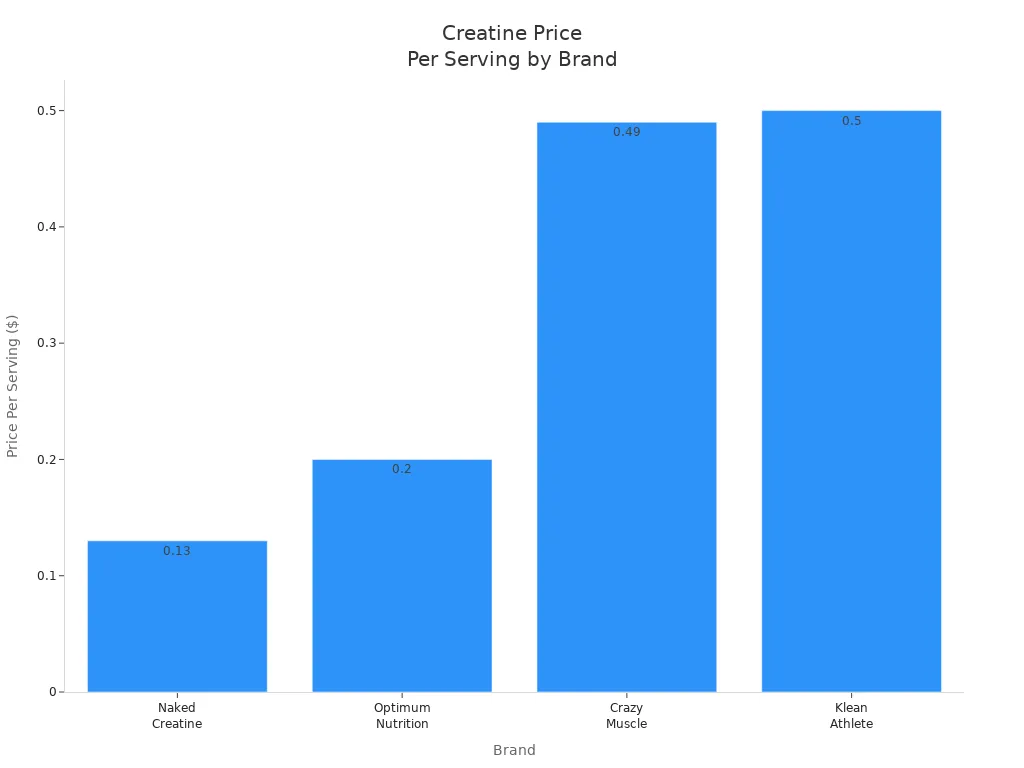
You can save money by choosing creatine monohydrate. It gives you the same muscle and strength as more expensive salts.
Long-Term Use
You might ask if creatine is safe to use for a long time. Studies show creatine monohydrate helps you build muscle and do better in sports. It stays safe and does not cause big side effects, even after months or years. Most people only notice weight gain, which is usually more muscle.
Using creatine monohydrate for a long time does not hurt your health. Your body handles it well, and you keep seeing good results. Creatine salts do not have as much research. Scientists have not found proof that they work better or are safer than creatine monohydrate.
Tip: If you want a supplement that is safe and costs less, creatine monohydrate is the best choice.
Choosing the Right Creatine
For Most Users
If you want the best results from creatine, you should look at what works for most people. Creatine monohydrate stands out as the top choice. You get strong research backing, great value, and proven muscle gains. Many studies show that creatine monohydrate increases your muscle creatine stores by up to 40%. You can expect better performance in your workouts, with gains of 5% to 10% in strength.
Here is a table that shows why creatine monohydrate is the gold standard:
Reason | What It Means for You |
|---|---|
Research Backing | Decades of studies prove it works and is safe |
Cost-Effectiveness | You pay less for the same or better results |
Proven Efficacy | You build muscle and get stronger with regular use |
You also save money with creatine monohydrate. It costs less than other forms, so you can use it for a long time without spending much. Most people do not have side effects. You get the most out of your training with this form of creatine.
Tip: If you want a reliable and affordable way to boost your workouts, creatine monohydrate is your best bet.
For Sensitive Stomachs
Some people feel bloated or get an upset stomach from creatine. If you have a sensitive stomach, you might want to try creatine salts like HCl. This form mixes better in water and is easier to digest. You do not need a loading phase, so you can start with a small dose right away.
When you look at creatine salts, you see less water retention and fewer stomach problems. Many users with sensitive stomachs prefer creatine HCl because it causes less bloating. Studies show that people who use loading doses of creatine report more stomach issues, especially females. You can avoid these problems by choosing a form that is gentle on your stomach.
Here is a quick list to help you decide:
Choose creatine monohydrate for the best value, safety, and muscle gains.
Pick creatine HCl if you want less bloating and easier digestion.
Use creatine supplements that fit your needs and comfort.
You can match your creatine choice to your fitness goals and how your body feels. This helps you get the most from your training.
You now know that creatine monohydrate works best for most people. Creatine salts can help if you have a sensitive stomach or want easy mixing. Always match your creatine choice to your goals and how your body feels. Before you start, talk to a doctor, especially if you have kidney problems. Try a small dose of creatine, like 3 to 5 grams each day, and watch how you feel. Most adults find creatine safe and well tolerated. Some things to remember:
Creatine can raise creatinine levels, but this does not mean kidney damage in healthy people.
The safety of creatine for children and teens is not clear.
Higher doses of creatine do not give better results and may stress your kidneys.
You can use creatine to boost your workouts, but always listen to your body and check with a professional if you have concerns.
FAQ
Is creatine safe for daily use?
You can use creatine safely every day if you are healthy. Studies show that daily use does not harm your kidneys or liver. Drink enough water to stay hydrated.
Will creatine make you gain fat?
Creatine does not cause fat gain. You may see your weight go up because your muscles hold more water. You build muscle, not fat.
Can teens use creatine?
You should talk to a doctor before teens use creatine. Experts do not have enough research on safety for children and teens.
What is the best way to take creatine?
You can mix creatine powder with water or juice. Take 3-5 grams each day. You do not need a loading phase for good results.
Form | How to Take |
|---|---|
Monohydrate | Mix with water |
HCl | Mix with water |
Do you need to cycle off creatine?
You do not need to cycle off creatine. You can use it all year. Your body keeps its benefits as long as you take it.