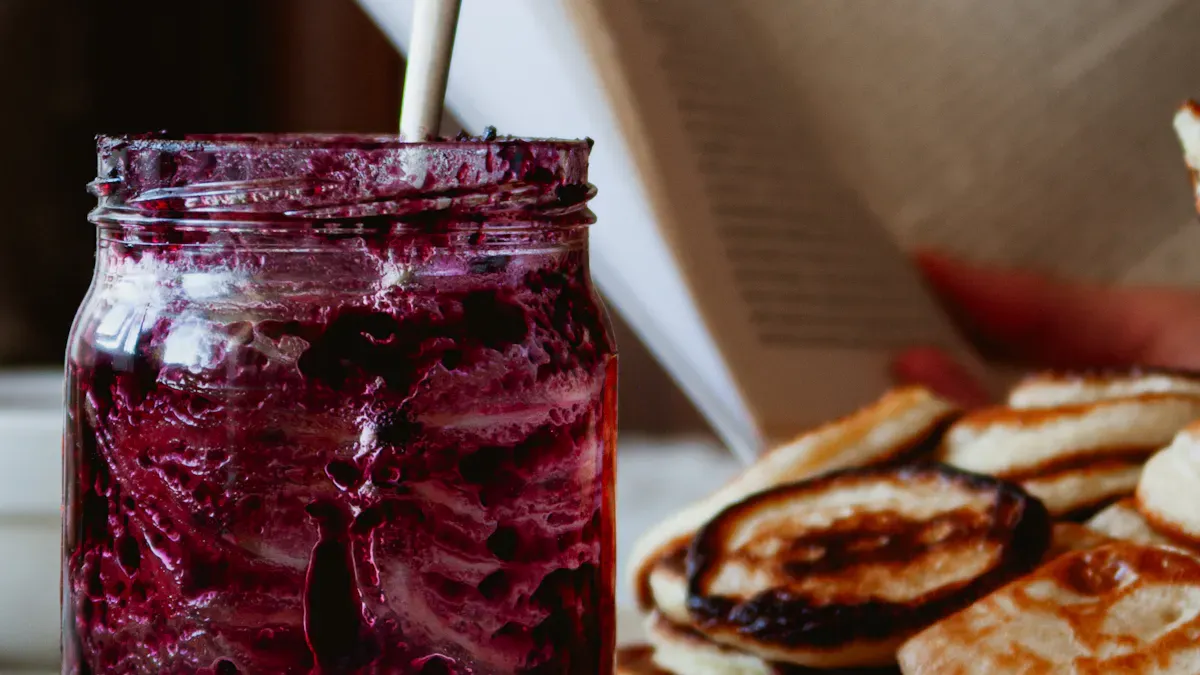
You can make delicious jam at home with pectin and jam. Pectin helps you create a gel-like texture, making your jam thick and easy to spread. You will notice that the jam stays smooth and cohesive, without separating. Pectin also locks in flavor and keeps your jam fresh longer.
Gel-like texture forms as pectin traps water and fruit juices.
Smoothness and thickness make spreading easy.
Pectin preserves flavor and extends shelf life.
You just need a few ingredients and tools. You will find the process simple and enjoyable, no matter your experience level.
Key Takeaways
Pectin is essential for making jam thick and spreadable. It helps trap water and fruit juices, ensuring a smooth texture.
Choose ripe fruit for the best flavor and color. Mixing just-ripe and fully ripe fruit enhances both taste and gelling power.
Follow the correct order when mixing ingredients: add pectin before sugar to ensure even distribution and proper setting.
Test your jam for set using the saucer method or flake test. Look for signs like stable bubbles and a thick consistency.
Store your jam in clean, sterilized jars. Proper sealing and storage can keep your jam fresh for up to a year.
Pectin and Jam: What You Need to Know
What Is Pectin
Pectin is a natural substance found in many fruits. You can think of it as a type of fiber that helps fruits keep their shape. When you make jam, pectin acts as the main ingredient that helps the mixture thicken and set.
Pectin is a long branched molecule composed of galacturonic acid rings. It can have hundreds to thousands of these rings, with various branching types. The structure is complex, enabling plant cells to maintain firm shapes. In jam making, pectin molecules tangle together when heated with sugar, forming a gel network as they cool, which is essential for the gelling process.
Why Use Pectin in Jam
You use pectin in jam to get a smooth, spreadable texture. Pectin and jam work together to trap water and fruit juices, making the jam thick. This process also helps lock in the fresh flavor of the fruit. When you add pectin, you can use less cooking time, which means the fruit keeps more of its vitamins. You also get a jam that lasts longer on your shelf.
Types of Pectin
You can choose from different types of pectin for your jam. There are two main options: commercial pectin and natural pectin. Commercial pectin comes in powder or liquid form. You can buy it at most grocery stores. Natural pectin comes from fruits like apples, citrus peels, or quinces. Some recipes use only the natural pectin in the fruit, while others add extra pectin for a better set.
Type | Source | Common Use |
|---|---|---|
Commercial | Store-bought powder | Consistent results |
Natural | Apples, citrus peels | Traditional jams |
You can decide which type works best for your recipe. Both help you make delicious pectin and jam at home.
Ingredients & Equipment
Essential Ingredients
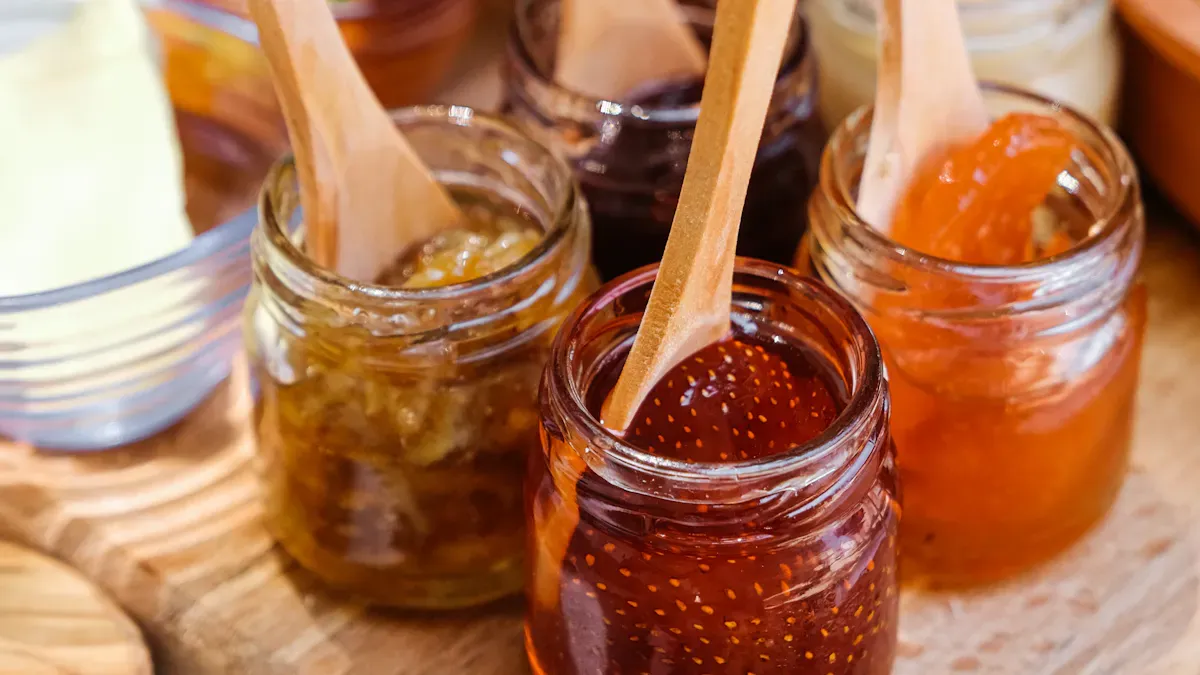
You need only a few basic ingredients to make jam with pectin. Start with fresh fruit. You can use many types of fruit for jam making. Some of the most common choices include:
Blackberry
Boysenberry
Dewberry
Loganberry
Red Raspberry
Youngberry
Blueberry
Cherry
Currant
Fig
Gooseberry
Grape
Orange (for marmalade)
Peach
Pear
Plum
Rhubarb
Strawberry
Spiced tomato
Choose ripe fruit for the best flavor and color. You also need granulated sugar. Sugar helps the jam set and keeps it safe to eat. Pectin is the key ingredient that helps your jam thicken. You can use either powdered or liquid pectin. Lemon juice is important, too. It adds brightness and helps the pectin work better.
Tip: Measure your ingredients carefully. Accurate amounts help pectin and jam set properly.
Equipment List
You do not need fancy tools to make jam. Gather these items before you start:
Large nonreactive pot (stainless steel or enamel)
Long-handled spoon (wooden or heatproof)
Measuring cups and spoons
Ladle
Canning jars with lids and bands
Jar lifter or tongs
Clean towels
A nonreactive pot keeps the fruit’s flavor pure. Use clean jars to keep your jam safe for storage.
Optional Additions
You can add extra flavors to your jam. Try a pinch of cinnamon, a splash of vanilla, or a few sprigs of fresh herbs. Some people like to add a little butter to reduce foam. You can also mix different fruits for a unique taste. These additions let you create your own special version of pectin and jam.
Jam Making Steps
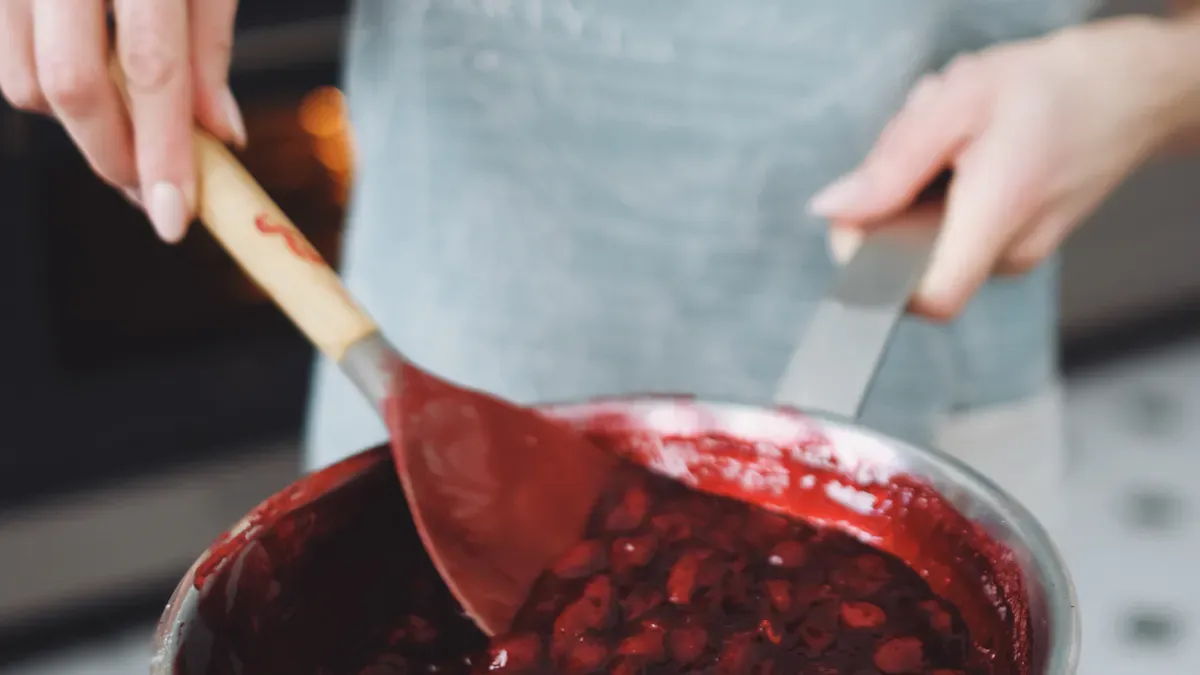
Prepare Fruit
Start by choosing the best fruit for your jam. Wash the fruit well to remove dirt and chemicals. Let the fruit dry for several hours before you use it. This step helps prevent extra water from making your jam runny.
Pick a mix of just-ripe and fully ripe fruit. Just-ripe fruit has more natural pectin, which helps your jam set.
Add about 5 to 10% unripe fruit to your batch. Unripe fruit contains even more pectin and helps with the gelling process.
Remove stems, pits, and any damaged spots. Cut the fruit into small, even pieces for even cooking.
Here is a quick guide to how ripeness affects your jam:
Evidence Description | Key Point |
|---|---|
Just-ripe fruit has the highest pectin levels. | Optimal for gelling. |
Overripe fruit has lower pectin content. | Can lead to setting issues. |
Mixing fully ripe and just-ripe fruit is recommended. | Balances flavor and gelling power. |
Underripe fruits have higher pectin levels than overripe ones. | Important for jam consistency. |
Enzymes in ripe fruit break down pectin into pectic acid. | Affects texture and setting of jam. |
Mix Ingredients
Place your prepared fruit in a large nonreactive pot, such as stainless steel or enamel. Add lemon juice to the fruit. Lemon juice helps the pectin work and brightens the flavor. Next, sprinkle the pectin over the fruit and lemon juice. Stir well to combine.
Tip: Always add pectin before sugar. This step helps the pectin dissolve and mix evenly with the fruit and juice.
Here is a simple ratio for your ingredients:
Ingredient | Amount |
|---|---|
Pectin | |
Fruit | 3 lbs |
Sugar | 2 cups |
Lemon Juice | 1 Tbls |
Wait to add sugar until after the pectin has mixed with the fruit and lemon juice. This order gives you the best chance for a smooth, thick jam.
“Pectin’s most significant role is in forming a gel-like texture in jams. When heated with sugar and acid, pectin molecules interact, creating a network that traps water and fruit juices.”
Cook and Boil
Turn on the heat and bring the fruit, lemon juice, and pectin mixture to a boil. Stir often to prevent sticking. Once the mixture boils, add the sugar all at once. Stir until the sugar dissolves.
“The ultimate goal in jam-making is to form a molecular web that holds all of the fruit’s juices together. And the molecule that forms the web is none other than pectin. Getting there, though, is a well-choreographed dance in which heat, sugar, and acid all pitch in to get the pectin to do its thing, pushing the mixture over the cusp from fruit syrup to jam—without going all the way to jello salad.”
Bring the mixture back to a full, rolling boil. Boil hard for 1-2 minutes. This short, high-heat boil helps the pectin and jam set quickly and preserves the fresh fruit flavor.
The target temperature for jam is 217-222°F (103-106°C).
The ideal set point is 220°F.
Boil for 1-2 minutes after adding pectin for the best texture.
Test for Set
You want your jam to be thick but still spreadable. Use these methods to check if your jam is ready:
Saucer Method: Place a saucer in the freezer. Drop a spoonful of hot jam onto the cold saucer. Wait 20 seconds, then push the edge with your finger. If the surface wrinkles, your jam is set.
Flake Test: Scoop up some jam with a wooden spoon. Tilt the spoon. If the jam hangs from the edge without dripping, it is ready.
Look for these signs:
Bubbles in the jam become larger and more stable as it thickens.
When you lift a spatula, the jam clings instead of dripping off quickly.
The freezer plate test shows wrinkling at the edges when nudged.
If your jam does not pass these tests, boil it for another minute and test again.
Can and Store
Prepare your jars and lids before you start cooking the jam. Sterilize them to keep your jam safe for long-term storage.
Clean the jars to remove all dirt and debris.
Boil a large pot of water.
Submerge the jars in the boiling water, making sure they fill with water.
Boil for at least 10 minutes to sterilize.
Once your jam is ready, ladle it into the hot jars. Leave about 1/4 inch of space at the top. Wipe the rims clean, place the lids on, and screw on the bands.
Use a jar lifter or tongs to place the jars back in the boiling water. Process them for 10 minutes to seal. Remove the jars and let them cool. You will hear a “pop” as the lids seal.
Sealed jam can be stored at room temperature for at least 1 year, as long as the seal stays intact and there are no signs of spoilage.
Enjoy your homemade pectin and jam on toast, in desserts, or as a sweet gift!
Troubleshooting & Tips
Common Issues
You may run into a few problems when making jam with pectin. Knowing the causes and how to prevent them helps you get the best results every time. Here is a table of common issues, their causes, and how you can avoid them:
Problem | Cause | Prevention |
|---|---|---|
Crystals | Too much sugar | Measure ingredients carefully and use a tested recipe. |
Mold or Fermentation | Yeasts and mold grow on jelly | Process jars in a boiling water canner and test the seal. |
Soft Jam | Overcooking fruit | Avoid overcooking to keep pectin strong. |
Stiff or Tough Jam | Overcooking | Cook to the right temperature, not too long. |
Syneresis | Too much acid in juice | Keep the right acidity in your recipe. |
If your jam does not set, check these points:
Make sure you used enough sugar and pectin.
Heat the jam to at least 218°F.
Do not double the recipe, as it may not heat evenly.
Avoid cooking too long, which can break down pectin.
Tip: Always follow the recipe and measure each ingredient for the best results.
Adjusting Consistency
If your jam turns out too runny or too stiff, you can fix it. Try these steps:
Reboil the jam if it is too soft. Pour all the jam back into a pot, heat it to 220°F, and test again.
If you add lemon juice late, cook the jam a few extra minutes to remove extra water.
Use powdered pectin for a more reliable set.
Perform a gel test by placing a spoonful of hot jam on a cold plate to check the thickness.
You can also adjust for altitude by cooking to the right temperature for your location.
Storage Advice
Store your finished jam in clean Mason jars with self-sealing lids. Process the jars in a boiling water canner to remove air and prevent mold. Keep your jam in a cool, dry, and dark place. This keeps the flavor and texture fresh for up to a year.
Refrigeration can help keep jam safe after opening. You may notice a slight change in thickness, but the jam will still taste great. Freezing also works well for long-term storage.
Note: Always check the seal before eating. If you see mold or smell anything odd, do not eat the jam.
You can enjoy making jam with pectin at home. The process gives you fresh flavor and a sense of accomplishment. Many beginners ask about sweetness, jar sealing, and foam. You can fix sweetness by stirring in more sugar. Foam is safe and often just a thin film. Sealing jars requires clean rims and new lids. Making small batches helps you avoid common problems. Share your results or ask questions below. 🍓
FAQ
How do you know if your jam is sealed properly?
Listen for a “pop” as the jar cools. Press the center of the lid. If it does not move, the jar is sealed. If it pops up and down, refrigerate and use soon.
Can you use less sugar in jam with pectin?
You can use low-sugar or no-sugar pectin. Regular pectin needs sugar to set. Always follow the instructions on your pectin package for best results.
What should you do if your jam does not set?
Reboil the jam with extra pectin.
Test again for set.
Store runny jam in the fridge and use as syrup.
Is it safe to eat jam with bubbles or foam?
Bubbles and foam are normal. Skim off foam before sealing jars for a clear look. Foam does not affect safety or taste.