
You might wonder what is in natural food coloring. These colors come from safe things like plants and algae. Many people worry about how food dyes affect health, especially for kids. Picking natural choices can help you feel good about your food. Some common ingredients are:
Carotenoid
Beta-carotene
Annatto
Lutein
Lycopene
Curcumin
Anthocyanin
Paprika
Spirulina
Chlorophyll
You can trust that natural food coloring uses things you know and can say.
Key Takeaways
Natural food coloring is made from safe things like plants and algae. These choices help you eat healthier foods.
Always read ingredient labels closely. Look for words like ‘beet powder’ or ‘turmeric’ to find natural colorings.
Some natural dyes, such as carmine, may cause allergies. Check for allergens before you eat anything.
Pick USDA-certified organic foods to stay away from artificial dyes. This helps you get safer ingredients.
You can make natural food coloring at home. Use things like beet juice or spinach. This is a fun and healthy way to color your food.
Natural Food Coloring Overview
What Is It
Foods like candy and drinks look bright. These colors often come from natural sources. Natural food coloring uses things from plants, algae, minerals, or animals. Some colors come from beet juice, turmeric, spirulina, or grape skins. These ingredients color food without lab-made chemicals. People pick natural food coloring because it feels safer. It also seems more real. Surveys show most people like natural colors more than artificial dyes. In Europe, many think natural coloring is healthier. More people want healthy options now. Families and health-focused shoppers look for these choices.
How It Differs from Artificial Dyes
You might wonder how natural colors are different. The main difference is where they come from. Natural food coloring uses plants and minerals. Artificial dyes are made in factories with chemicals. Here are some main differences:
Natural dyes use things from nature. Artificial dyes use chemicals.
Artificial dyes need batch checks from the FDA. Natural dyes need FDA approval but not for every batch.
Natural color additives cost more and can change food flavor. Artificial dyes cost less and do not change taste.
New trends care about the planet. Companies use biotechnology to grow plants with more color. Algae is a good way to make colors. Many people care about fair trade and ethical sourcing.
The table below shows the environmental impact:
Aspect | Natural Colorants | Synthetic Colorants |
|---|---|---|
Energy Consumption | Uses less energy | |
Water Consumption | Uses more water | Uses less water |
Environmental Issues | Can be used for other things | Can cause pollution and toxicity |
Cost | Costs more to make | Costs less to make |
Natural coloring agents matter to people who care about health. The market for these products keeps growing. The global market size was $1.57 billion in 2024. It may double by 2034. You see more natural colors in foods like fish and poultry substitutes. Companies also make colorings that help health and add color.
Ingredients in Natural Food Coloring
Plant and Algae Sources
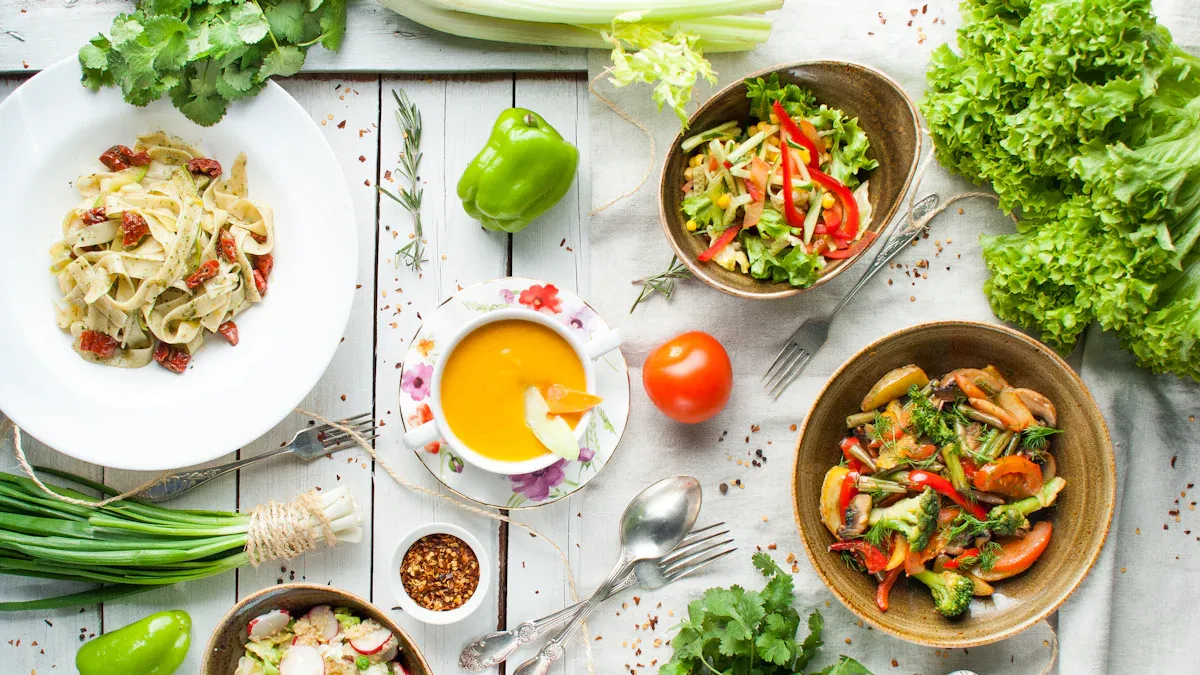
Many natural food coloring ingredients come from plants and algae. These sources give lots of colors for foods and drinks. You might see reds, yellows, greens, and blues in snacks. These colors come from pigments found in nature.
Here is a table that shows the main sources and pigments:
Source Type | Pigments |
|---|---|
Plants | Chlorophyll, Carotenoids, Anthocyanins, Flavonoids |
Microorganisms | Carotenoids, Phycobiliproteins |
Algae | Phycobiliproteins |
Chlorophyll is found in leafy greens. Carotenoids make carrots and pumpkins orange. Anthocyanins give berries and grapes their red and purple colors. Betalains from beets and other plants add red and yellow shades.
Microalgae are important for natural food coloring. These tiny organisms give chlorophylls, carotenoids, and phycobiliproteins. You get special colors and health benefits from these pigments.
Companies use different ways to get colors from plants and algae. They use these extraction methods:
Water extraction works for pigments like betalains from beets and phycocyanin from spirulina. The pigment mixes with water.
Solvent extraction helps get oil-soluble pigments, such as curcumin from turmeric. A solvent separates the color from the plant.
Enzyme extraction is another way, but it is not used much.
Some popular plant and algae-based natural colorings are:
Beet extract: Has betalains, gives red and yellow colors.
Turmeric: Has curcumin, adds a bright yellow color.
Spirulina: Gives a strong blue-green color from phycocyanin.
Butterfly pea flower: Makes blue and purple colors.
Grape skin: Gives deep red and purple colors.
You also see products made from these sources for natural colorings. Here are some examples:
Gardenia Yellow: Used for its bright yellow color.
Gardenia Green: Made by mixing Gardenia Yellow and Gardenia Blue.
Gardenia Black: Gives a dark color for foods.
Gardenia Red: Adds a bright red color.
Gardenia Blue: Stays stable in heat and light. You find it in drinks, jams, baked goods, dairy, and protein drinks.
Fruit Green: Used for green colors in foods.
Red Yeast Red and Red Yeast Yellow: Used for red and yellow coloring.
Turmeric: Adds yellow color and health benefits.
Grape Skin Red: Used for red colors.
Beet Red: Gives foods a natural red color.
Tip: Look for these names on ingredient labels to find natural food coloring in products.
Animal and Mineral Sources
Natural food coloring can also come from animals and minerals. These ingredients give more color choices, especially reds and pinks.
Here is a table with common sources and how companies process them:
Source Type | Source Name | Color Description | Processing Method |
|---|---|---|---|
Animal | Carmine | Bright red | Taken from cochineal beetles |
Animal | Pigments | Many colors | Taken from blue crab shells |
Plant | Annatto | Orange to red | Taken from Bixa orellana |
Plant | Beetroot | Red | Taken from Beta vulgaris L. |
Plant | Paprika | Red | Taken from Capsicum annuum L. |
Plant | Lycopene | Red | Taken from tomatoes (Solanum lycopersicum) |
Carmine is a well-known color from animals. You get a bright red color from carminic acid, which comes from cochineal beetles. The food and drink industry uses carminic acid in many products. You see more carminic acid in foods because people want natural and safe ingredients.
Pigments from blue crab shells also give colors, but they are not used much in foods. Most mineral sources for natural colorings are rare or not used in foods.
Plant-based colorings like annatto, beetroot, paprika, and lycopene are found in many foods. These ingredients add orange, red, and pink colors.
Note: If you want to avoid animal colorings, check labels for carmine or cochineal.
Natural food colorings come from many sources. You get bright, stable colors from plants, algae, and animals. These ingredients help you enjoy colorful foods and choose natural options.
Food Dyes Safety
Scientific Consensus
You may wonder if food dyes from natural sources are safe. Scientists have studied the safety of food dyes for many years. Most experts agree that natural food dyes are safer than synthetic ones. Research shows that natural food colorants are now more popular because people worry about the health risks of artificial dyes. Studies highlight the safety and health benefits of natural food dyes. This makes them a better choice for you and your family.
A 2023 FDA update requires companies to prove the safety of food dyes before using them.
The FDA sets rules for which foods can have food dyes, how much can be used, and how they must appear on labels.
Most children do not have problems with food dyes when used as directed.
Many people think all natural food dyes are safe, but some can still cause allergies or sensitivities. Not all natural food dyes come from plants. Some come from animals or minerals.
FDA and Regulations
The FDA checks the safety of food dyes before they reach your table. You can see how the FDA controls food dyes in the table below:
Regulation Aspect | Details |
|---|---|
Types of Foods | Lists which foods can use each food dye. |
Maximum Amounts | Limits how much food dye can go into food. |
Labeling Requirements | Tells companies how to list food dyes on labels. |
Safety Evaluation | Companies must show food dyes are safe at the levels used. |
Certification Status | Food dyes can be certified or exempt, but both must meet safety rules. |
Safety Considerations | FDA checks what is in the food dye, how much people eat, and purity. |
Approval Criteria | Food dyes must show no harm based on science before approval. |
You can trust that the FDA reviews the safety of food dyes carefully. The safety of food dyes depends on following these rules.
Allergies and Health Risks
You should know that some natural food dyes can cause allergies. The most common reactions come from carmine, which comes from dried bugs. Carmine can cause strong allergic reactions, asthma, or even anaphylaxis in rare cases. Annatto, a plant-based food dye, can also cause mild skin reactions.
Food Coloring Ingredient | Health Risks |
|---|---|
May cause severe allergic reactions, asthma, and anaphylaxis at low doses. | |
Annatto | Allergic reactions reported, but less common than with carminic acid. |
Many people believe natural food dyes never cause problems, but you should always check labels if you have allergies. Some food dyes may also change the taste of food.
The safety of food dyes remains high when you use them as directed. Most people do not have health problems from natural food dyes. You can feel confident about the safety of food dyes in your meals.
Identifying Natural Food Coloring
Reading Ingredient Labels
You can find natural food coloring by reading food labels. The FDA has rules for how companies list color additives. Certified colors, like FD&C Yellow No. 5, must be named on the label. Non-certified colors, such as beet powder or annatto, might be called “colorings” or “color added.” Some, like cochineal extract and carmine, must always be named.
When you check a label, look for words like “vegetable juice for color,” “beet powder,” or “turmeric.” These words usually mean the food uses natural coloring. If you see “FD&C Red No. 40,” it is an artificial color.
Here is a table to help you know the difference:
Type of Coloring | Labeling Example |
|---|---|
Certified Colors | FD&C Yellow No. 5 or Yellow 5 |
Non-Certified Colors | Vegetable Juice for Color or natural color |
Artificial Flavor | artificial flavor |
Natural Flavor | natural flavor |
Tip: To avoid artificial dyes, pick foods with plant-based color names.
Tips for Choosing Safe Products
You can make good choices for your family by following some easy steps. These tips help you stay away from unwanted dyes and keep food safe:
Buy less packaged food. This helps you eat fewer artificial dyes.
Always read ingredient labels. Stay away from foods with artificial coloring.
Drink more water instead of soda. Sodas often have artificial dyes.
Give kids other choices. You do not have to say no to all treats.
Choose USDA-certified organic foods. These do not have artificial dyes.
Use colorful fruits and vegetables. Kids like fun, healthy-looking foods.
Eat many different foods. This lowers the chance of eating bad ingredients.
Switch out snacks for healthier ones. Many snacks have artificial colors.
You can also make your own food coloring at home. Try beet juice, spinach, or turmeric to color baked goods and drinks. This lets you control what goes into your food.
Note: Always check for allergies before using new colorings, especially animal-based dyes like carmine.
Natural food coloring does more than make food look nice. It can help your health with antioxidants and anti-inflammatory effects. Studies say natural dyes are safer than artificial ones. Artificial dyes can cause allergies or hyperactivity. The US and EU have strong rules to keep food safe.
Tip: Pick foods with labels that say all-natural, GMO-free, and allergen-free. Look for fruit and vegetable names in the ingredients.
Region | Regulation | Impact |
|---|---|---|
US | FDA checks dyes | Safer choices for you |
EU | Stricter bans | More natural options |
Natural food coloring lets you eat safe and colorful meals every day.
FAQ
Can you use natural food coloring in baking?
Yes, you can use natural food coloring for baking. Plant-based colors work in cakes and cookies. They also work in bread. Some colors fade when heated. Always check the label for baking tips.
Are natural food colorings safe for children?
Most natural food colorings are safe for kids. You should look for allergies. Carmine and annatto can cause reactions. Always read ingredient labels before giving colored foods.
Do natural food colorings change the taste of food?
Some natural food colorings can change how food tastes. Beet juice and turmeric add a mild flavor. Pick colors with less taste if flavor is important.
How do you store natural food coloring?
Store natural food coloring in a cool, dry spot. Keep bottles closed tight. Some colors need to be kept cold. Always follow package instructions for best results.