When you look at the label on non-dairy creamers, you will see these main ingredients:
Hydrogenated vegetable oils make your drink smooth and rich.
Sweeteners make your coffee taste sweet.
Flavoring agents give your coffee the right taste.
Sodium caseinate helps mix oil and water for a creamy feel.
Stabilizers and emulsifiers keep everything mixed together.
Nutritional additives add more vitamins or minerals.
You might think all non-dairy creamer ingredients do not have dairy, but sodium caseinate comes from milk. If you have allergies or follow a strict diet, you should check labels closely. Many non-dairy creamers use plant oils and thickeners to make coffee creamy without using real cream.
Key Takeaways
Non-dairy creamers have things like hydrogenated oils, sweeteners, and sodium caseinate. These help make the creamer smooth and taste better.
Always check the labels before you buy. Some non-dairy creamers have sodium caseinate. This is a milk protein. It can cause allergies even if it says ‘non-dairy.’
Pick creamers with natural things and less sugar for better health. If you have special diets, look for ‘vegan’ or ‘plant-based’ on the label.
There are many plant-based creamers like almond, oat, and coconut. Each one tastes and feels different. Try a few to see which you like best.
Stabilizers and emulsifiers are in non-dairy creamers. They keep the creamer smooth and stop it from separating. This makes your coffee creamy every time.
Common Non-Dairy Creamer Ingredients
When you check non-dairy creamer ingredients, you will see some that are used a lot. These ingredients work together to make your coffee creamy and smooth. Each one has a job. Knowing about them can help you pick the best creamer.
Corn Syrup Solids and Sweeteners
Corn syrup solids are found in many non-dairy creamers. They are made by breaking down corn starch. This is done with a process called partial hydrolysis. This process gives the solids a high DE value. That helps the creamer’s texture and thickness. These solids make your drink sweet and thick.
Sweeteners are also important in non-dairy creamers. They come from different sources. Each kind changes the taste and calories in your coffee. Here is a table to compare the most common sweeteners:
Sweetener Type | Flavor Impact | Caloric Content |
|---|---|---|
Sucrose (Table Sugar) | Provides familiar sweetness | Adds calories |
High-Fructose Corn Syrup | Intensifies sweetness, cost-effective | May raise health concerns |
Stevia and Monk Fruit | Natural alternatives, low-calorie | Minimal calories |
Sugar Alcohols (e.g., Erythritol) | Sweetness with reduced calories, minimal blood sugar impact | Reduced calories |
Some sweeteners add more calories. Others keep the creamer low in sugar.
Vegetable Oils and Fats
Vegetable oils are also used in non-dairy creamers. These oils help make the creamer creamy. The most common oils are:
Soybean oil
Canola oil
Sunflower oil
Palm oil
Coconut oil
Palm kernel oil
These oils work together to feel like real cream. When you pour creamer in your coffee, these oils make it taste smooth and rich. The oils also help the creamer mix well with hot drinks. This way, your coffee is always the same.
Tip: If you want your creamer to feel like real cream, pick one with a mix of these oils.
Sodium Caseinate and Proteins
Sodium caseinate is a protein in many non-dairy creamers. Even though it says “non-dairy,” sodium caseinate comes from milk. People with milk allergies should not use it, but it does not have lactose.
Here are some facts about sodium caseinate:
Sodium caseinate is a milk allergen.
It can cause allergies like hives, stomach pain, vomiting, bloody stools (especially in babies), and even anaphylaxis.
It does not have lactose, so people who cannot have lactose can use it, but people with milk allergies should not.
Sodium caseinate helps the creamer mix well with coffee. It holds water and fat together. This makes the creamer look and feel creamy. Here is a table that shows what this protein does:
Property | Description |
|---|---|
Opacity | Makes the creamer look creamy and white |
Solubility | Mixes easily, improving texture |
Heat Stability | Stays stable in hot coffee |
Dairy Flavor | Adds a mild dairy taste |
Mouthfeel | Gives a rich, smooth feel |
Water- and Fat-Binding | Helps blend oil and water for a creamy result |
Structural Characteristics | Has a structure that helps it act as an emulsifier |
Emulsifiers: Lecithin, Mono- and Diglycerides
Emulsifiers are often found in non-dairy creamers. They keep the oils and water mixed, so your creamer does not separate.
Lecithin is a popular emulsifier. It helps powdered creamers dissolve fast in warm coffee. Lecithin has a special shape with a water-loving head and a fat-loving tail. This helps the powder mix well and keeps the creamer smooth.
Mono- and diglycerides are also used as emulsifiers. They help keep oil and water mixed, so your creamer stays creamy and does not clump. These ingredients also help the creamer last longer.
But, mono- and diglycerides can come from animal fats or be made in a lab. This matters if you are vegan or avoid processed foods. Some brands do not say where they come from, so check the label if you have special needs.
Flavorings, Stabilizers, and Thickeners
Flavorings, stabilizers, and thickeners are important in non-dairy creamers. They make sure your creamer tastes good, stays mixed, and feels thick.
You will see these ingredients in non-dairy creamers:
Thickeners: starch, xanthan gum, guar gum, locust bean gum, gum Arabic, cellulose derivatives
Gelling agents: alginate, pectin, carrageenan, gelatin, gellan, agar
Stabilizers: rice starch, which helps hold water and stop separation
Emulsifiers: faba bean protein, which adds foam and keeps plant-based creamers stable
Stabilizers and thickeners do more than just make things thick. They stop bits from forming and keep the creamer smooth, even if your coffee sits for a while.
Note: If you want a creamer that stays smooth and does not separate, look for one with these stabilizers and thickeners.
By learning about these common ingredients, you can pick the right non-dairy creamer for you. Always read the label, especially if you have allergies or follow a special diet.
How Non-Dairy Creamer Ingredients Work

Creating Creaminess and Texture
When you pour non-dairy creamer in coffee, you want it creamy and smooth. The ingredients work together to make this happen. Emulsifiers and stabilizers are important. They keep oil and water mixed, so your drink does not split. Gellan gum makes your coffee thicker and richer. Oat-based creamers feel smooth because of fat globules and beta-glucans. Beta-glucans help make the creamer thick and keep foam from popping. Different proteins in creamers can change how well they froth.
Emulsifiers and stabilizers stop the creamer from splitting.
Gellan gum makes the creamer thick and smooth.
Fat globules and beta-glucans in oat creamers help with texture and foam.
Protein amount changes how much the creamer can froth.
Enhancing Sweetness and Flavor
Non-dairy creamer tastes sweet because of different sweeteners. Each sweetener has its own taste and calories. These are the sweeteners you might find:
Sucrose gives a normal sweet taste but adds calories.
High-fructose corn syrup makes it sweeter and costs less.
Stevia and monk fruit are sweet but have fewer calories, which is good if you want something healthier.
Sugar alcohols like erythritol are sweet but do not raise blood sugar much.
Flavoring agents are also important. They mix with other ingredients to make the creamer taste good. Natural flavors can make healthy creamers taste better. Some brands use herbs and spices to add flavor and lower fat and sodium.
Improving Stability and Shelf Life
You want your non-dairy creamer to stay fresh and smooth. Some ingredients help with this. Stabilizers keep the texture even and stop the creamer from splitting. Emulsifiers help oil and water mix, so the creamer stays together. Preservatives stop germs from growing, so your creamer lasts longer.
Ingredient Type | Contribution to Stability and Shelf Life |
|---|---|
Stabilizers | Keep texture even and stop splitting |
Emulsifiers | Help oil and water mix |
Preservatives | Stop germs and make creamer last longer |
Most non-dairy creamers last longer than dairy creamers. If you have shelf-stable non-dairy creamer that is not open, it can last 9 to 12 months in your pantry. After you open it, put it in the fridge and use it in two weeks. Liquid non-dairy creamer in the fridge can last up to three weeks.
Tip: Always read the label for storage rules to keep your non-dairy creamer fresh.
Non-Dairy Coffee Creamer Variations
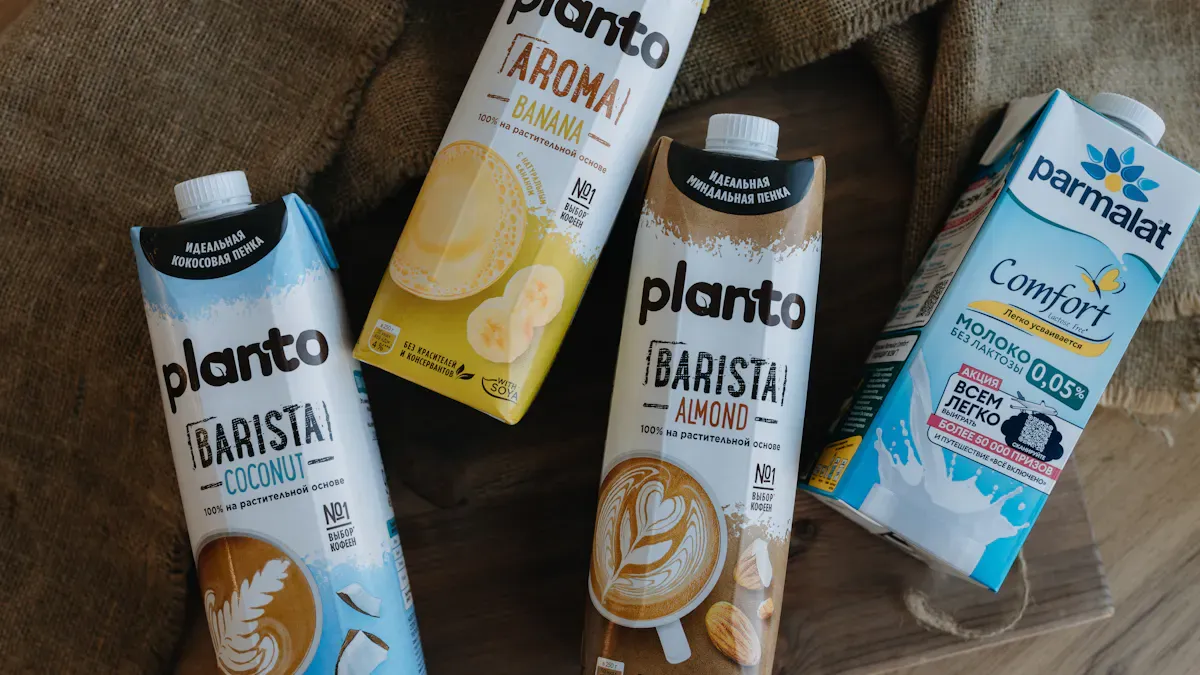
Plant-Based Options: Almond, Coconut, Oat, Soy
There are many non-dairy coffee creamers made from plants. Almond, coconut, oat, and soy are the most common types. Each one uses different things to make it creamy and tasty. If you want a vegan creamer, these do not have animal products. You can see how they are different in this table:
Type of Creamer | Texture | Flavor | Nutritional Benefits |
|---|---|---|---|
Almond Milk | Light | Mild, nutty | Low in calories and fat |
Oat Milk | Smooth | Naturally sweet | Higher starch content for full-bodied mouthfeel |
Coconut Milk | Thick | Rich, sweet | Higher fat content for creaminess |
Soy Milk | Smooth | Neutral | Higher protein content for frothing ability |
If you want a good non-dairy creamer, try these plant-based ones. Many people like them because they are vegan and taste different.
Unique Ingredients in Plant-Based Creamers
Plant-based non-dairy creamers use special things you do not find in regular creamers. These things help make the right taste and feel for your drink. Some common ones are:
Coconut or almond milk powders make it creamy and nutty.
Oat or rice powders make it smooth and thick without a strong taste.
Pea protein isolates help with texture and add a mild, savory flavor.
Natural colorants like turmeric or caramel make the creamer look white, like dairy.
Some vegan creamers also have extra vitamins and minerals. These help you get more nutrition in your coffee. If you want to make your own non-dairy creamer, you can use these plant-based things at home.
Tip: Always read the label to see what is inside. This helps you pick a vegan creamer that is right for you.
Differences in Taste and Texture
Plant-based non-dairy creamers taste and feel different from regular non-dairy creamers. The plant ingredients change how the creamer mixes with coffee. Some vegan creamers taste mild and nutty. Others are rich and sweet. Oat and soy creamers are usually smooth and creamy. Coconut creamers are thicker.
Many people want vegan creamers that taste and feel like dairy. Companies try to make the taste and texture better. Surveys show that people care most about taste and feel. Sometimes, plant-based creamers taste strange or do not mix well. You can try different kinds to find your favorite.
If you want to control what is in your creamer, you can make your own at home. This way, you know all the ingredients you use.
Note: Taste and texture can change based on the oil-to-water mix and the type of plant ingredients. Try a few vegan creamers to see which one you like best.
Health and Dietary Considerations for Non-Dairy Creamers
Dairy Content and Allergens
Some people think non-dairy means no milk at all. But this is not always true. Many non-dairy creamers have sodium caseinate. This comes from milk. People with milk allergies can get sick from it. Always check the label for milk proteins. The word “non-dairy” does not always mean safe for everyone. There is no law that says non-dairy must be milk-free. This can make things confusing if you need to avoid dairy.
Here is a table to help you see common allergens in non-dairy creamers:
Allergen Type | Description |
|---|---|
Milk Proteins | Non-dairy creamers can have milk proteins like casein, which is a big allergen. |
Dairy-Free Label | There is no rule for this label, so people with milk allergies can get confused. |
Non-Dairy Label | The rules let casein be in non-dairy creamers, so non-dairy does not always mean milk-free. |
If you have allergies, always read the ingredients list. Some non-dairy creamers also have soy, nuts, or gluten. These can cause problems for people who are sensitive.
Tip: If you are allergic to milk, pick creamers that say “vegan” or “plant-based” and always check the ingredients.
Nutritional and Health Aspects
Non-dairy creamers can be very different in nutrition. The ingredients in them can change how healthy they are. Some non-dairy creamers have a lot of sugar, fat, or calories. Others use better things like nuts or oats. Here is a chart that shows the calories, fat, and sugar in different non-dairy creamers:
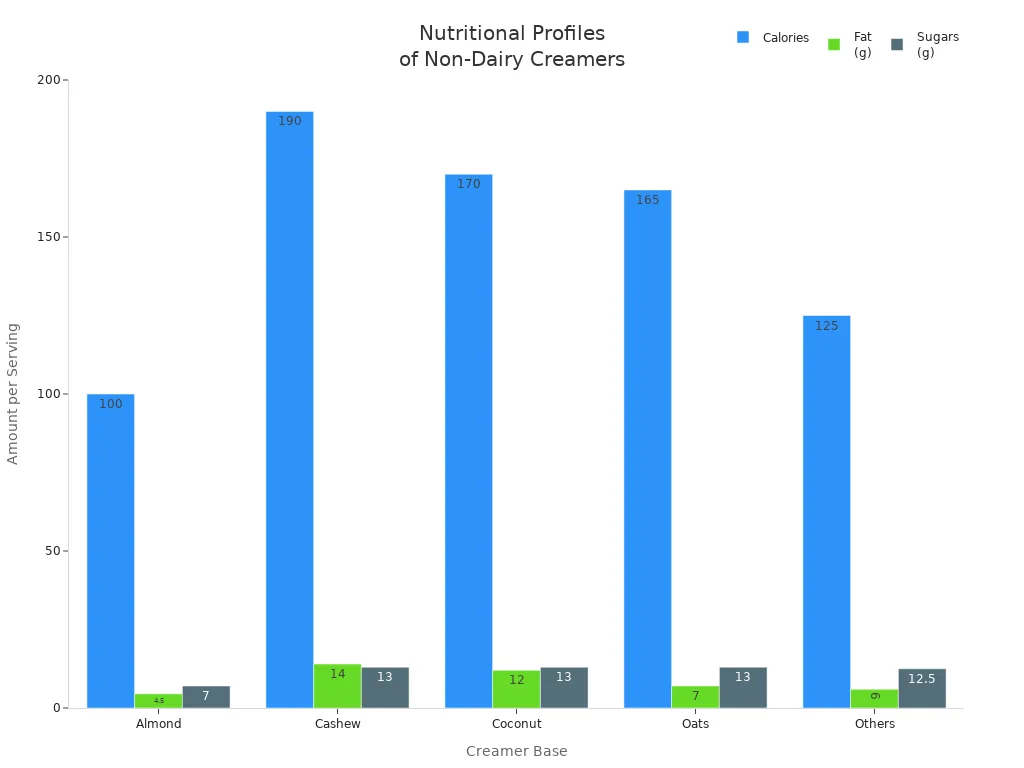
Some non-dairy creamers use partially hydrogenated oils. These oils can raise your bad cholesterol and lower your good cholesterol. This can make heart disease more likely. Many non-dairy creamers also have added sugars. Too much sugar can make you gain weight and get type 2 diabetes. Some things like carrageenan and some emulsifiers can upset your stomach or cause swelling if you use them a lot.
Here are some health risks from using non-dairy creamers often:
Partially hydrogenated oils can make heart disease more likely.
Added sugars can cause weight gain and diabetes.
Some emulsifiers and thickeners can hurt your stomach.
When you pick a non-dairy creamer, try these tips from nutritionists:
Choose ones that are unsweetened or use natural sweeteners.
Look for healthy fats from nuts or coconut.
Make sure the creamer fits your diet, like gluten-free if you need it.
Think about brands that use eco-friendly packaging.
Note: Always read the label and check the ingredients. This helps you find a non-dairy creamer that is good for your health and tastes good in your coffee.
Each ingredient in non-dairy creamers has a job. Some make it creamy. Others add sweetness or help it stay mixed. Reading the label can help you find allergens. You can also see if there are any dairy ingredients. If you are vegan or do not eat lactose, pick creamers that say “vegan” on the label. Brands with simple ingredients are easier to understand. When you pick a creamer, think about these things: 1. How good the ingredients are 2. How much sugar it has 3. How much fat it has 4. If it fits your diet 5. If it is good for the planet. Knowing these things helps you choose a creamer that tastes good and is healthy for you.
FAQ
Can you use non-dairy creamers if you have a milk allergy?
You should check the label. Many non-dairy creamers have sodium caseinate, which comes from milk. If you have a milk allergy, pick creamers labeled “vegan” or “plant-based” for safety.
Are non-dairy creamers healthier than regular cream?
Non-dairy creamers can have less fat than cream. Some brands add sugar or processed oils. You should read the nutrition facts to find the healthiest option for your needs.
Do non-dairy creamers contain lactose?
Most non-dairy creamers do not have lactose. Sodium caseinate is from milk but does not contain lactose. If you want to avoid lactose, check the label for milk ingredients.
How long does non-dairy creamer last after opening?
You should keep opened liquid non-dairy creamer in the fridge. Use it within two to three weeks. Powdered creamers last longer. Always check the package for storage tips.