Isomaltulose is a sweetener found in honey and sugar cane juice. It helps people who want to be healthy. Many people pick isomaltulose because it keeps blood sugar steady. It has low-glycemic properties. Studies show palatinose, which is another name for isomaltulose, lowers blood glucose and insulin more than regular sugar. This sweetener also helps your gut stay healthy. It protects your teeth from damage.
The world food market for isomaltulose was over USD 1.2 billion in 2024. There is strong demand for it in sports nutrition, bakery, and drinks.
Key Takeaways
Isomaltulose is a sweetener found in honey and sugar cane juice. It gives energy slowly. It helps keep blood sugar steady.
It has a low glycemic index. This means it causes smaller rises in blood sugar and insulin. It helps people with diabetes. It helps keep energy balanced.
Isomaltulose helps gut health. It helps good bacteria grow. It is gentle on the stomach. It is safe and easy to digest.
This sweetener protects teeth. It does not feed bad mouth bacteria. It lowers the risk of cavities more than regular sugar.
Athletes get benefits from isomaltulose. It gives steady energy during exercise. It helps improve endurance and performance.
Isomaltulose Overview
What Is Isomaltulose?
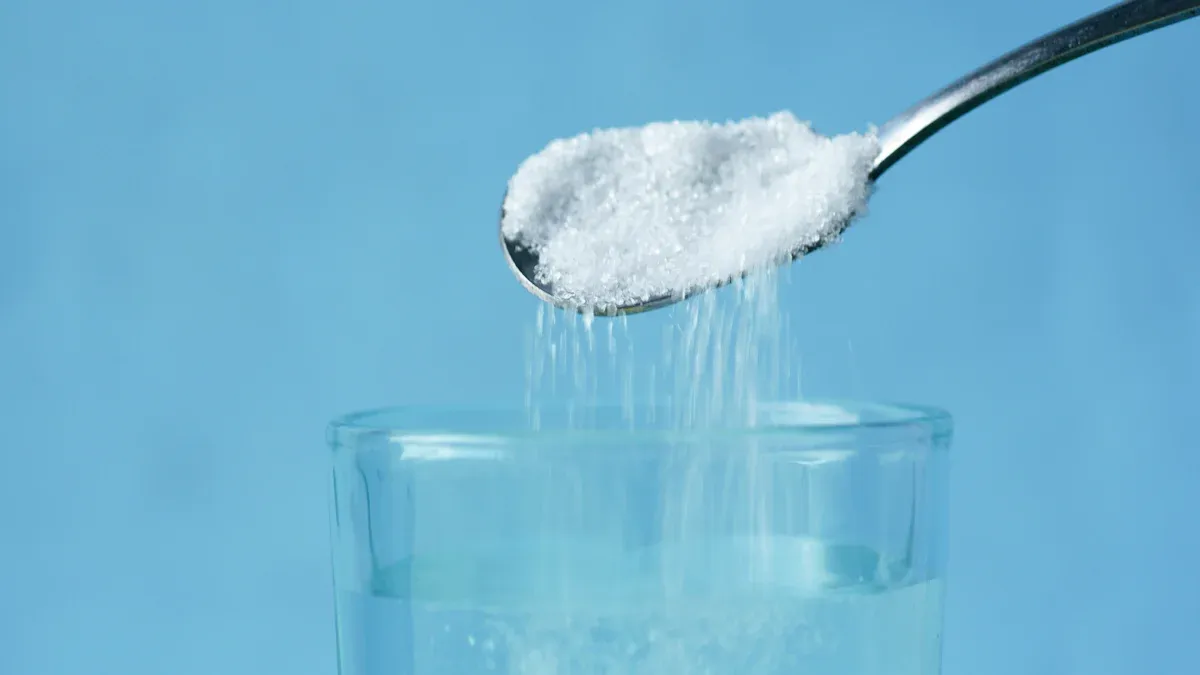
Isomaltulose is a carbohydrate that works as a sweetener. Scientists call it a disaccharide. This means it has two simple sugars: glucose and fructose. These sugars are joined by an α(1→6) glycosidic bond. Regular sugar uses an α(1→2) bond instead. Isomaltulose’s formula is C12H22O11. It has eight special points called stereocenters. When water is added, it becomes a hydrate and gets heavier. Food makers use isomaltulose because it tastes sweet and gives steady energy.
Natural Sources
Honey is the main natural source of isomaltulose. Bees make honey, and it has this slow-release sugar. Sugar cane juice also has a little isomaltulose. These foods have isomaltulose in their natural form. No other foods have much of this sweetener.
Isomaltulose vs. Sugar
Isomaltulose and table sugar both have glucose and fructose. But their bonds are not the same. Isomaltulose’s α-1,6 bond is harder to break down. This makes it digest slower. Its glycemic index is 32, which is lower than sucrose’s 65. Eating isomaltulose causes blood sugar and insulin to rise slowly. Studies show isomaltulose gives a 20% lower blood sugar peak. It also causes a 55% lower insulin response than sucrose. This helps people control blood sugar, especially with diabetes.
Tip: Picking isomaltulose as a sweetener can help keep blood sugar steady and support health.
Palatinose Explained
Palatinose is another name for isomaltulose. Both names mean the same thing. Palatinose is made from glucose and fructose joined by an α-1,6 bond. This bond makes palatinose digest slowly and give steady energy. Palatinose is fully digestible and gives 4 kcal per gram. It does not feed bad mouth bacteria, so it helps teeth. Food companies use palatinose for its health benefits and balanced sweetness.
Aspect | Sucrose | |
|---|---|---|
Composition | Disaccharide of glucose and fructose | Disaccharide of glucose and fructose |
Glycosidic bond | α-1,6 linkage | α-1,2 linkage |
Digestion rate | Slower hydrolysis in small intestine | Rapid hydrolysis |
Glycemic index (GI) | Lower (slow glucose release) | Higher (fast glucose release) |
Tooth friendliness | Not fermented by oral bacteria, reduces acid | Fermented by oral bacteria, acid |
Metabolic effect | Low and balanced blood glucose and insulin | Rapid blood glucose and insulin spikes |
Sweetness | About 50% of sucrose | Standard sweetness |
Source | Found in honey, sugar cane juice, made from sucrose | Natural sugar in many plants |
Health Benefits
Low-Glycemic Sweetener
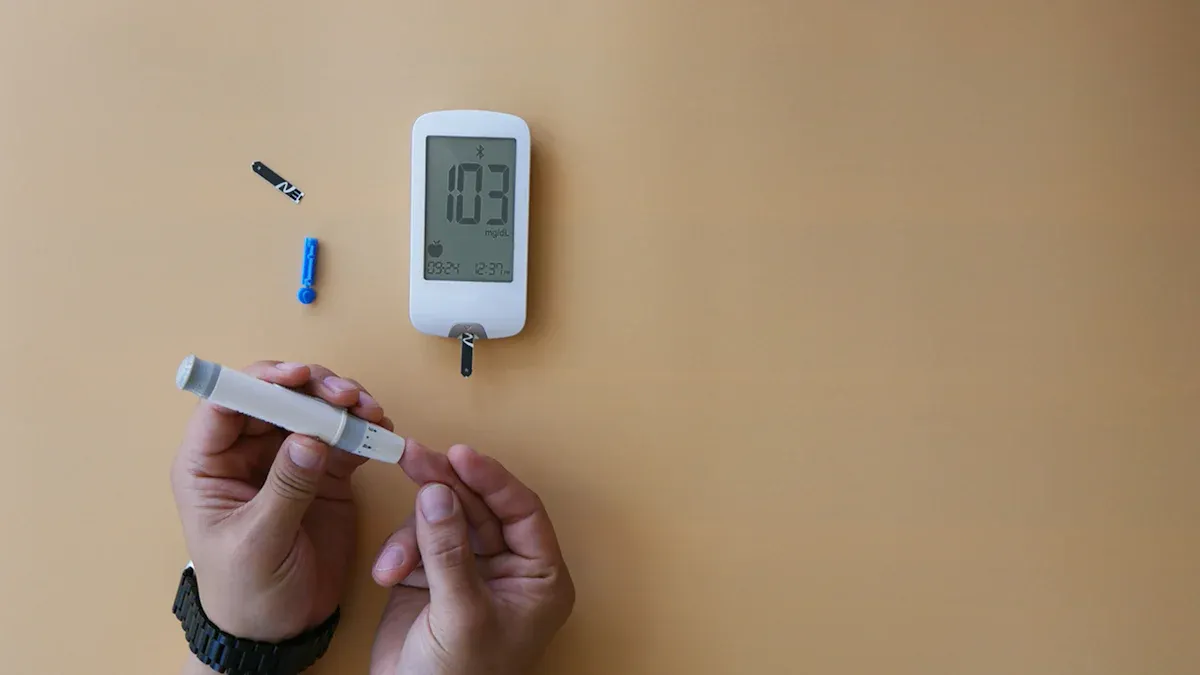
Palatinose is a sweetener with a low glycemic index. Scientists use glycemic index to see how fast carbs raise blood sugar. Palatinose has a glycemic index of 32, which is much lower than regular sugar. This means it raises blood sugar more slowly.
Studies show palatinose can lower blood sugar after meals by 20%–52% and insulin by 30%–50% compared to sucrose or maltodextrin.
These effects are seen in both healthy people and those with diabetes.
Research shows palatinose is absorbed more slowly and the liver takes up more glucose.
Groups like EFSA and FDA say palatinose is safe and good for teeth.
Picking a low-glycemic sweetener like palatinose helps keep blood sugar steady and supports health.
Blood Sugar Control
Palatinose helps control blood sugar. Its α-1,6 glycosidic bond makes it digest slowly. This causes glucose to enter the blood gradually and gives a gentle rise in blood sugar.
Both healthy and diabetic people have lower blood sugar after eating palatinose than sucrose.
A study found plasma glucose drops by about 7.99 mg/dL at 60 minutes after eating.
People with diabetes who control their blood sugar well see even better results.
The effect is not huge, but palatinose is still a good choice for managing blood sugar, especially for diabetes.
Many studies show palatinose gives a longer and lower blood sugar response than sucrose.
Slow digestion means the pancreas makes less insulin and fewer incretins, which help release insulin.
Studies include adults with diabetes, people with trouble handling glucose, and others with health problems.
Palatinose leads to lower peaks in blood sugar and insulin, which helps control blood sugar.
Gut Health
Palatinose helps the gut by acting as a prebiotic.
Lab studies show palatinose helps good bacteria grow and boosts short chain fatty acids like acetic and butyric acids.
In a lab model of the human colon, palatinose lowers the Firmicutes to Bacteroidetes ratio, which helps balance gut bacteria.
Rat studies show palatinose increases good bacteria like Faecalibacterium and Phascolarctobacterium and lowers bad bacteria.
Tests show more short chain fatty acids and better bile acid profiles.
Rats eating palatinose have lower body weight, eat less, handle glucose better, and have lower blood fats.
Clinical trials show palatinose is easy to digest and safe.
During exercise, 50 g of palatinose does not upset the stomach or slow down how fast the stomach empties compared to maltodextrin.
People do not report stomach problems, so palatinose is safe for digestion.
Dental Health
Palatinose is good for teeth and helps dental health.
Tests on chocolate with palatinose show it does not lower plaque pH below the level that causes tooth decay.
The product got the ‘Happy Tooth’ seal, showing it is safe for teeth.
Studies show palatinose is barely broken down by mouth bacteria and stops the formation of glucans that cause cavities.
Animal studies show palatinose is fully digested and absorbed in the small intestine, and it breaks down slower than sucrose.
Palatinose does not make dental plaque more acidic, so it is a good sucrose replacement for teeth.
When compared to other sweeteners, palatinose changes dental plaque bacteria only a little and causes just a short drop in saliva pH.
It is absorbed slower than sucrose and is fully digested, so people with diabetes like it.
Palatinose is good for teeth but not totally safe from cavities, so brushing and flossing are still important.
Energy Release
Palatinose gives slow and steady energy.
The sucrase-isomaltase enzyme breaks down palatinose 4.5 times slower than sucrose.
Because it digests slowly, palatinose goes farther in the small intestine, changes hormone levels, and keeps carbs coming into the blood longer.
Blood sugar stays up longer after eating palatinose, showing it gives steady energy.
Palatinose is fully digested and is a steady energy source.
Athletes get steady energy from palatinose.
In a study, male athletes who ate palatinose before running used carbs for energy longer.
Their top power was higher after eating palatinose.
Other studies show better cycling times and more power after long exercise with palatinose.
Aspect | Effect of Palatinose Compared to Sucrose or Maltodextrin | Notes and Variability |
|---|---|---|
Postprandial Blood Sugar Levels | Steady energy supply | |
Insulin and GIP Concentrations | Lower insulin and GIP after eating | Stops high insulin |
Substrate Utilization | Sometimes more fat burned | Depends on exercise |
Endurance Performance | Better cycling times and more power | Results differ |
Gastrointestinal Tolerance | Usually good and easy to handle | Depends on dose |
Palatinose is easy to digest and gives steady energy for athletes and active people.
Food Uses and Improved Nutritional Profile
Food Applications
Palatinose is used in many foods and drinks. Food companies add it to make products with a low glycemic index. It also helps people feel full for longer.
Meal replacement shakes like Feed Smart Food and Huel use palatinose as a sugar.
Dairy foods, such as yogurt and milk drinks, have palatinose because it is good for teeth.
Candy that is called tooth-friendly often has palatinose to help protect teeth.
Some fruit drinks and juices use palatinose for a smoother, less sharp sweetness.
Breads and cakes use palatinose for slow energy and good baking results.
Palatinose has been popular in Japan since 1985. More people are using it in foods for diabetes and health.
Improved Nutritional Profile
Palatinose changes how healthy foods are in many ways. It digests slowly and is absorbed well, with over 93% taken in from both drinks and solid foods. Glucose from palatinose helps the body make energy. Fructose from palatinose turns into lactate and glucose in the gut, liver, and kidney.
Foods with palatinose cause lower blood sugar and insulin than foods with sucrose or glucose.
Insulin levels drop by 30–50% after eating palatinose.
Palatinose gives glucose for longer, up to one hour more than sucrose.
It is only half as sweet as sucrose, but it stays stable in sour foods like yogurt.
Palatinose does not change how yogurt ferments or feels, so baking stays good.
People with diabetes, older people, and those worried about weight may get the most help from palatinose foods. The better nutrition helps keep blood sugar steady and energy lasting longer.
Sports Nutrition
Athletes and active people pick palatinose for steady energy. Studies show palatinose digests slower than sucrose when exercising. Men who train for endurance and eat palatinose have lower blood sugar and insulin, but burn more fat.
Palatinose helps keep glucose ready and helps the body use fat during long workouts.
Soccer players who drank drinks with palatinose kept higher blood sugar and played better.
Palatinose gives long-lasting energy and helps with endurance, so it is important in sports foods.
Tip: Palatinose is a smart pick for athletes who want steady energy and better performance.
Safety and Considerations
Safety and Approvals
Palatinose is a sweetener that is safe for many foods. Food safety groups in many countries have checked palatinose. They have approved it for people to eat. The European Union, United States, China, and Ireland all looked at palatinose. These groups studied it in animals and humans. They did not find any safety problems or allergy risks. The table below shows how each place approves palatinose and what they found.
Regulatory Agency / Region | Approval Status / Regulation | Safety Assessment Summary |
|---|---|---|
European Union (EU) | Authorized as novel food ingredient via Commission Decisions 2005/457/EC and 2005/581/EC after UK FSA and BfR assessments | Panel considers information sufficient; no safety concerns; no allergenicity expected |
United States (USA) | GRAS status granted in 2017 (GRN. 00681) | Human clinical trials show good tolerability; no significant adverse effects |
China | Approved as food additive (standard GB 1886.182–2016) | Not specified in detail, but approval implies safety evaluation |
Ireland (FSAI) | Safety assessment concluded well tolerated at doses up to 1.0–1.3 g/kg body weight/day | Confirmed rapid hydrolysis and absorption; no intestinal side effects expected |
Animal tests gave palatinose in large amounts for weeks. No big health problems happened. Human studies with babies, adults, and people with diabetes showed palatinose is easy to handle. Palatinose has almost no protein, so allergies are very rare.
Who Should Use Isomaltulose
Palatinose works in many diets. It is good for kids, adults, and older people. People with diabetes may use palatinose to help keep blood sugar steady. The chart below shows safe amounts for different groups.
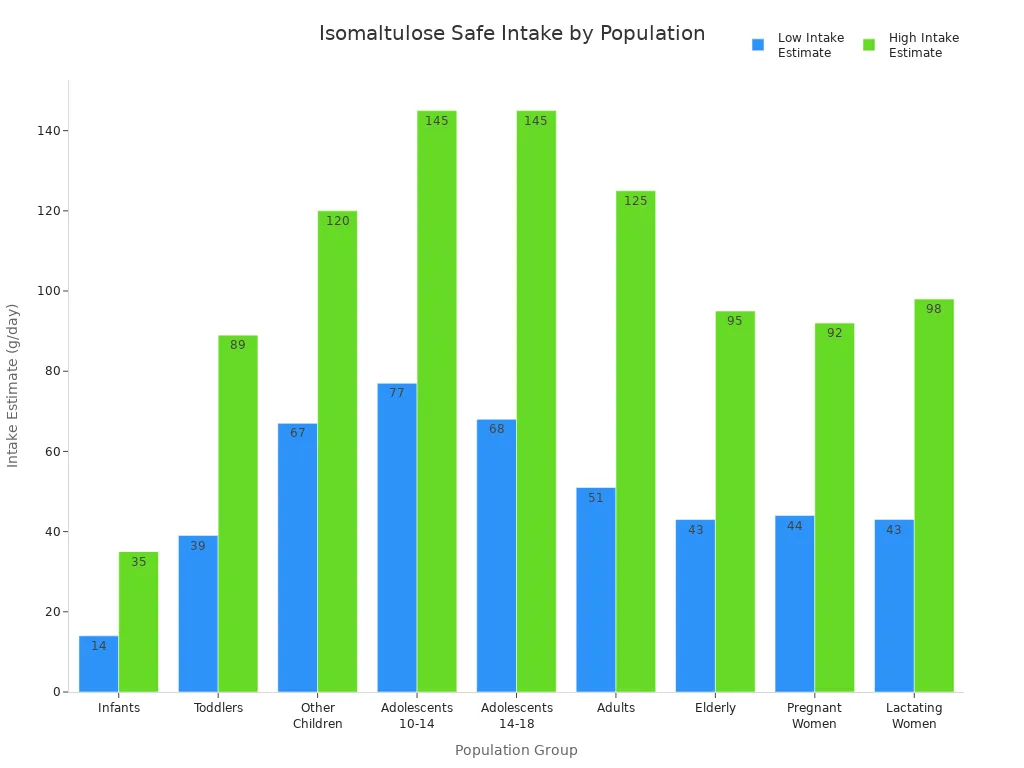
Most people can eat palatinose like they eat regular sugar. The highest safe amount is 178 grams per day for teen boys. Palatinose is used in foods with simple labels. It is a good pick for people who care about what is in their food.
Note: People with hereditary fructose intolerance should not eat palatinose.
Palatinose almost never causes side effects. Some people may get mild stomach problems if they eat too much. These problems happen more with isomalt, which is made from palatinose. Possible symptoms are:
Gas or bloating
Stomach rumbling
Mild stomachache
Healthy adults can eat up to 50 grams of palatinose each day. Kids ages 8–18 can eat up to 35 grams in chocolate with no trouble. There is less information for younger kids, so parents should watch for any problems.
Palatinose is a safe and steady energy source for most people. It is good for sports, health, and everyday foods.
Picking the best sweetener can help you stay healthy. Scientists found some good things about these sweeteners:
They give energy slowly, so blood sugar stays steady.
They are good for teeth and lower the chance of getting cavities.
Foods with a low glycemic index help keep insulin levels balanced.
You can check food labels to find these sweeteners or ask a nutritionist for help. When you know more, you can make better choices and eat healthier.
FAQ
What foods contain isomaltulose?
Isomaltulose is in many foods. You can find it in baked goods and cereals. Dairy drinks and sports nutrition foods often have it. Some candies and fruit juices use isomaltulose. It makes foods sweeter and healthier.
Is isomaltulose safe for children?
Most children can safely eat isomaltulose. Studies show kids ages 8–18 do well with it. Parents should watch if kids eat a lot. Too much may cause a stomach ache.
Note: Children with hereditary fructose intolerance should not eat isomaltulose.
Does isomaltulose cause tooth decay?
Isomaltulose does not help bad mouth bacteria grow. It helps keep teeth safe from cavities. Dentists say it is a tooth-friendly sweetener.
Sweetener | Tooth Decay Risk |
|---|---|
Isomaltulose | Low |
Sucrose | High |
Can athletes use isomaltulose for energy?
Athletes use isomaltulose for steady energy. It helps keep blood sugar steady during exercise. Many sports drinks and energy bars have isomaltulose for this reason.