You use Fumaric Acid in bread to help your loaves last longer, taste better, and have improved texture. This ingredient works by stopping bacteria and mold, so your bread can stay fresh for up to two weeks or more, while regular bread often goes stale much sooner. You also notice that it brings a slight tang and helps dough feel smoother. Knowing about this ingredient helps you make better choices as a baker or when buying bread.
Key Takeaways
Fumaric Acid helps bread stay fresh for longer. It stops mold and bacteria from growing. This can make bread last up to two weeks or more.
This ingredient makes dough feel smoother. It is easier to handle. The bread becomes softer and rises better.
Fumaric Acid gives baked goods a light tangy taste. It helps balance the sweet flavor. It also makes the food taste better overall.
Using Fumaric Acid saves money. You only need a little bit. It helps with flavor and keeps bread fresh.
It is safe to use in baking. Experts say it is Generally Recognized as Safe (GRAS). You can use it in many bakery foods, not just bread.
Fumaric Acid Overview

Definition
You may ask what Fumaric Acid is and why bakers use it. Fumaric Acid is a natural compound found in plants and inside your body. In baking, people add it to foods, and you might see E297 on labels. The table below shows its main facts:
Property | Description |
|---|---|
Chemical Name | |
Chemical Formula | HO2CCH=CHCO2H |
Classification | Organic compound, Dicarboxylic acid |
Isomer | trans isomer of butenedioic acid |
Salts and Esters | Known as fumarates |
Occurrence | Widely occurs in nature |
Taste | Fruit-like taste |
E Number | E297 (food additive) |
Fumaric Acid is part of the dicarboxylic acids group. This group gives it special features that help in baking.
Properties
When you add Fumaric Acid to bakery items, you get many helpful features:
It does not mix well with cold water, but hot water works better.
It gives a strong sour taste, which makes bread and cakes tangy.
It does not soak up much water from the air, so it stays dry.
It stays strong even when baking at high heat.
You save money because you only need a little bit.
It helps bread last longer by acting as a preservative.
It helps dough rise during baking.
Tip: Fumaric Acid keeps working after baking, so your bread still gets its benefits.
Functions
Shelf Life
You want bread to stay fresh longer. Fumaric Acid helps with this. It works as a natural preservative. It stops mold and bacteria from growing. These are the main reasons bread goes bad. Many bakers use it in flat bread. It slows down spoilage. Studies show fumaric acid makes bread more acidic. It works best with other preservatives. Using both can help bread last longer and keep its quality.
Study Title | Findings | |
|---|---|---|
Effect of preservatives addition on the shelf-life extensions and quality of flat bread as determined by near-infrared spectroscopy and texture analysis | Fumaric acid made bread more acidic but did not make bread last longer than other preservatives; it helped other preservatives work better. |
Note: Fumaric acid is a natural preservative. It fights germs. Some bakers use special forms to make it work better in bread.
Dough Rheology
When you mix dough, you want it easy to shape. Fumaric Acid changes how dough acts. It makes dough stronger and more stretchy. This helps you knead and shape it. Adding about 0.3% fumaric acid changes proteins and starches. These changes help dough stretch and stick together. You get bread with more volume and a softer inside. The acid lowers moisture and pH. This makes dough less sticky and easier to work with.
Fumaric acid helps yeast work better.
It changes the size of proteins and starches.
Bread gets bigger and has less moisture.
Dough is easier to handle and shape.
Flavor
Some breads and cakes taste tangy or sour. Fumaric Acid gives this flavor. It acts as an acidifying agent. This means it makes bread taste a little sour. The sour taste makes bread and cakes taste fresh and interesting. The acid also balances sweetness in cakes and muffins. In baking powders, it helps bread rise and adds flavor.
Role of Fumaric Acid | Description |
|---|---|
Acidifying Agent | Adds sourness and controls pH in baked goods. |
Flavor Enhancer | Makes the flavor stronger, especially the sour taste. |
Dough Strength | Makes dough stronger and keeps bread, cakes, and muffins fresh. |
Fumaric acid gives bakery foods a tart taste.
It helps make the classic sour flavor in artisan breads.
Gluten Strength
You want bread to rise well and have good texture. Gluten is the protein that gives bread structure. Fumaric Acid reacts with gluten proteins when mixing. It forms bonds with parts of gluten. This can make the gluten network weaker. If you use too much, bread may be smaller. Compared to other acids, fumaric acid can lower gluten strength. Use the right amount for best results.
Tip: You can use fumaric acid instead of cream of tartar. Be careful with how much you use. Too much can make dough weak.
pH Control
Controlling dough pH is important for flavor and shelf life. Fumaric Acid lowers pH and makes dough more acidic. This stops bad bacteria and mold from growing. Lower pH helps dough rise better. It also gives bread a finer crumb. You can use fumaric acid to change pH without making bread too sour. This helps in recipes that need a mild taste.
Fumaric acid controls pH in baked goods.
It helps bread stay fresh and improves texture.
Yeast Activity
Yeast makes bread rise. You want yeast to work well but not too fast. Fumaric Acid helps control yeast activity. It slows yeast down a little. This gives bread a better rise and crumb. The acid also makes mixing and proofing faster. This saves time when baking. Fumaric acid helps dough become soft, light, and easy to slice.
Fumaric acid helps dough by breaking down proteins.
It softens gluten and makes mixing easier.
Bread has a more even crumb and softer texture.
Fumaric Acid vs. Other Acids
Comparison
Different acids do different things in baking. Fumaric Acid, citric acid, and tartaric acid are used a lot. The table below shows how they are not the same:
Acid Type | Properties and Applications |
|---|---|
Fumaric Acid | Low moisture absorption, extends shelf-life of powdered products, used in smaller quantities for taste effects. |
Citric Acid | Flavor enhancement, metal chelation properties. |
Tartaric Acid | Strong tart taste, used in baking powders, specific applications in grape and lime-flavored products. |
You use Fumaric Acid in rye bread, jellies, jams, and dough conditioners. Citric acid makes food taste better and helps keep it fresh. Tartaric acid gives a strong tart flavor and is used in baking powders.
Here is a list that shows what each acid does:
Fumaric Acid: Makes bread last longer, helps dough, and works in many baked goods.
Citric Acid: Makes food taste brighter and helps keep it fresh.
Tartaric Acid: Adds a sharp tartness and helps baked goods rise.
Advantages
Fumaric Acid has many good points compared to other acids. Encapsulated Fumaric Acid can keep bread fresh for up to 21 days. Other acids only last 7 to 11 days. You use less Fumaric Acid, so you save money and make recipes work better.
Feature | Encapsulated Fumaric Acid | Other Acidulants |
|---|---|---|
Shelf Life Extension | Up to 21 days | 7-11 days |
Ingredient Efficiency | High | Moderate |
Yeast Preservation | Yes | Sometimes |
Cost Savings | Significant | Limited |
pH Control | Precise | Less precise |
Fumaric Acid does not soak up much water. Dry mixes stay loose and do not clump. It stays strong even when baking at high heat. You only need a little bit to get a big effect, so you spend less.
Tip: Fumaric Acid lets you use fewer extra preservatives. It works as an acidulant, pH regulator, and preservative all at once.
This table shows more good things about Fumaric Acid:
Advantage | Description |
|---|---|
You use less because of its strong acidity, which saves money. | |
Heat Stability | It works well even at high baking temperatures. |
Longer Shelf Life | It stops bacteria and mold, so your bread stays fresh longer. |
Low Hygroscopicity | It does not soak up water, so your mixes stay dry and easy to use. |
When you use Fumaric Acid, you make your baked goods better. Its strong acidity, low water absorption, and ability to mix with other ingredients make it a smart choice for many bakery recipes.
Safety and Regulations
GRAS Status
You might wonder if fumaric acid is safe in bread. “GRAS” means “Generally Recognized as Safe.” Experts in the United States and other places have checked fumaric acid. They say it works well to control acidity, add flavor, and keep food fresh. You can find it in fruit juices, desserts, pie fillings, and lots of baked goods.
It is in many foods besides bread.
It helps with acidity and flavor in bakery items.
Fumaric acid is trusted by food makers. You get safe products when you pick foods with it. Scientists and food experts agree it helps keep bakery foods fresh and tasty. You can use it in recipes and feel sure it is safe.
Tip: GRAS means you can use fumaric acid in bakery foods safely if you follow the rules.
Usage Limits
You must follow rules when adding fumaric acid to food. Different places have their own limits. The FDA in the US says you can use up to 0.1% by weight. The European Union has strict rules to keep food safe and good. Asia has fewer rules, so more foods there have fumaric acid.
Region | Regulatory Limits for Fumaric Acid | Market and Regulatory Environment Summary |
|---|---|---|
US | FDA checks carefully; food and drink makers use it a lot | |
EU | Strict rules; limits not listed | EFSA helps keep food safe and controls pH |
Asia (APAC) | No set limits; more relaxed | Big market; rules help more production |
You should always check your local rules before using fumaric acid. Using the right amount keeps bread safe and tasting good. You avoid problems with safety and quality when you follow these rules.
Note: Always measure carefully. Too much fumaric acid can change how your bread tastes and feels.
Applications
Bread Types
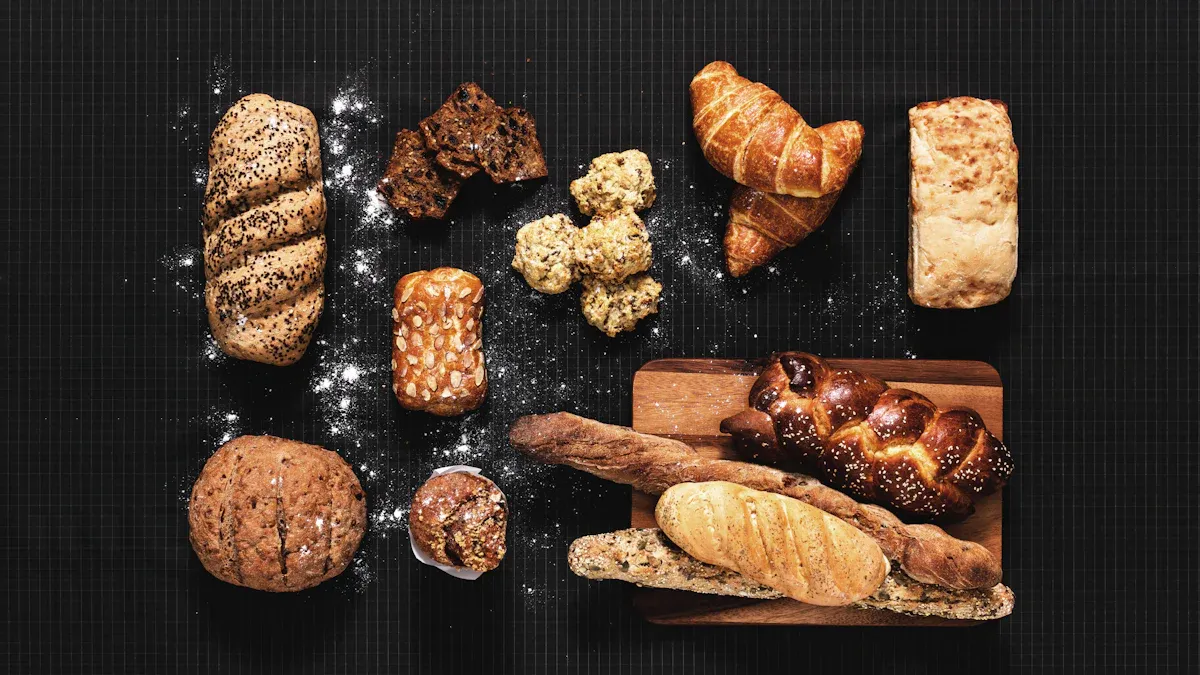
Fumaric acid is used in many breads. Bakers add it to make dough better and bread last longer. It also helps bread feel softer. Rye bread gets more holes and is easier to shape. Sourdough tastes more sour and ferments better. Tortillas made from corn or wheat stay fresh and do not get moldy fast. Biscuit doughs for the fridge keep their quality and last longer.
Type of Bread | |
|---|---|
Rye Bread | Improved dough machinability, increased porosity, extended shelf life. |
Refrigerated Biscuit Doughs | Enhanced dough quality and shelf stability. |
Corn and Wheat Tortillas | Lower pH for mold inhibition, improved texture. |
Sourdough | Increased sourness and improved fermentation. |
Gelatin Desserts | Enhanced texture and stability. |
Acid-coated Candies | Prolonged shelf life due to moisture resistance during storage. |
Tip: Fumaric acid works in artisan breads, flatbreads, and sweet baked goods. It helps them stay fresh and soft.
Encapsulated Forms
Encapsulated fumaric acid gives better baking results. It has a special coating that keeps it from working too soon. This stops it from mixing with yeast and gluten right away. The acid comes out later, which lowers pH and stops mold. Bread lasts longer and other preservatives work better. Encapsulated fumaric acid also helps dough rise, even in cold dough.
Key Point | Explanation |
|---|---|
Delayed Release | Encapsulation delays acid release, protecting yeast and gluten during mixing. |
Yeast Activity | Yeast ferments properly, leading to better dough stability. |
Mold Inhibition | Acid lowers pH at the right time, stopping mold growth. |
Maintains acidity to suppress spoilage organisms. | |
Preservative Efficacy | Boosts other preservatives, keeping bread fresher. |
Dough Quality | Prevents defects like blisters by controlling acid activity. |
Microbial Control | Manages acidity for safe, high-quality products. |
Dough Rise | Preserves leavening power in cold doughs for better texture. |
Other Bakery Products
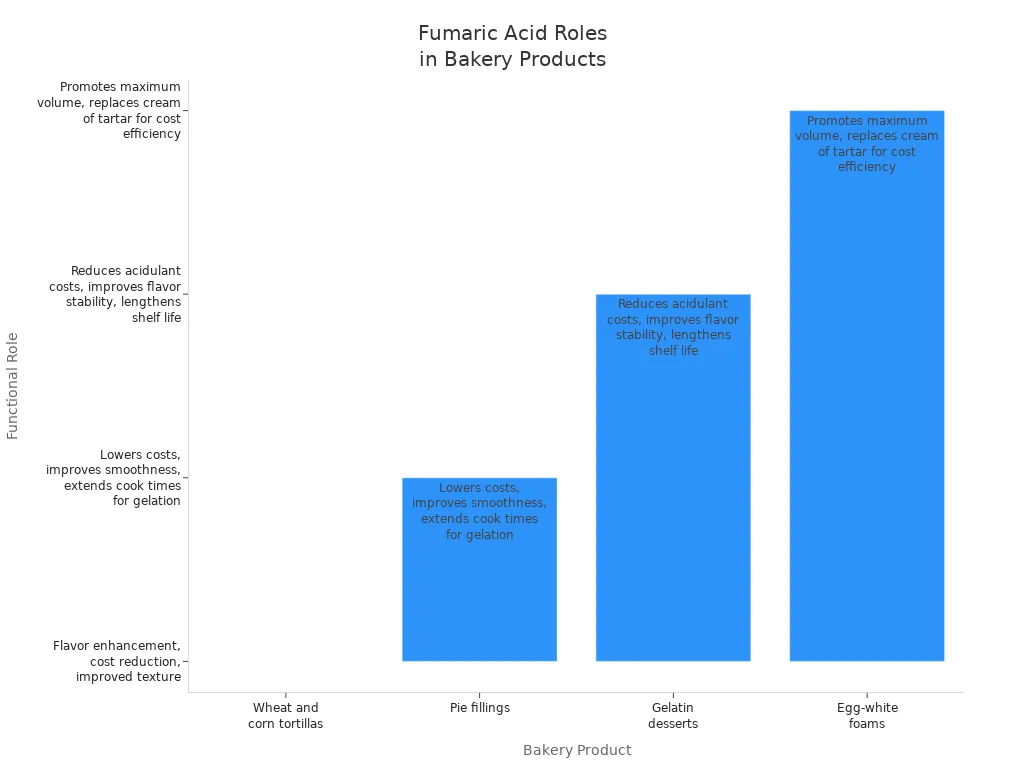
Fumaric acid is not just for bread. Tortillas use it for better taste and texture. Pie fillings become smoother and cook well. Gelatin desserts last longer and taste fresh. Egg-white foams get bigger and can use fumaric acid instead of cream of tartar, which saves money.
Bakery Product | |
|---|---|
Wheat and corn tortillas | Flavor enhancement, cost reduction, improved texture |
Pie fillings | Lowers costs, improves smoothness, extends cook times for gelation |
Gelatin desserts | Reduces acidulant costs, improves flavor stability, lengthens shelf life |
Egg-white foams | Promotes maximum volume, replaces cream of tartar for cost efficiency |
Note: Fumaric acid helps bakery foods taste better, last longer, and look nice.
You get lots of good things from using fumaric acid in baking.
It keeps bread fresh by stopping mold and germs.
You spend less money since you use less acid.
Description | |
|---|---|
Acidulant & pH Control | Adds a sour taste, balances flavors, and keeps bread safe. |
Leavening Agent | Helps bread rise and makes the inside soft. |
Dough Conditioner | Makes dough easier to work with and improves how it feels. |
Now, more bakeries use fumaric acid because people want bread that tastes better and lasts longer. Experts think this ingredient will stay important as baking changes.
FAQ
What does fumaric acid do in bread?
Fumaric acid helps your bread stay fresh longer. It stops mold and bacteria. You also get a slight tangy flavor and better dough texture.
Is fumaric acid safe to eat?
Yes, you can eat foods with fumaric acid. Food experts say it is safe when you use the right amount. You find it in many baked goods.
Can you use fumaric acid in gluten-free baking?
You can use fumaric acid in gluten-free recipes. It helps control pH and improves shelf life. Your gluten-free bread can taste better and last longer.
Does fumaric acid change the taste of bread?
Fumaric acid gives bread a mild sour taste. You notice a fresher, tangier flavor. It also balances sweetness in cakes and muffins.