Ethylparaben is a common chemical in cosmetics and medicines. Companies use it as a preservative. It stops germs from growing. It helps products last longer. Many items need ethylparaben to stay safe and stable.
Product Type | Percentage Containing Ethylparaben |
|---|---|
Cosmetics | |
Personal Care Products | Found in 46% (in one study) |
Pharmaceuticals (USA) | Used in 20% |
Ethylparaben does not harm people much. It works well to keep products clean. This makes it a popular choice for companies.
Key Takeaways
Ethylparaben is a preservative found in many cosmetics and medicines. It helps stop germs and keeps products safe and fresh.
It works well in small amounts, usually from 0.1% to 0.3%. Ethylparaben is often mixed with other parabens for better protection.
Groups in the US, EU, and Asia set strict rules for ethylparaben. These rules make sure it is safe for people to use every day.
Most experts say ethylparaben is safe at these levels. But people with sensitive skin or hormone worries should read product labels closely.
You can find ethylparaben near the end of ingredient lists. It often has names that end with ‘-paraben’. This helps people choose products wisely.
Ethylparaben Overview
What is Ethylparaben
Ethylparaben is a man-made compound. It works as a preservative in many things. Companies add it to stop bacteria, yeast, and mold from growing. This keeps cosmetics and medicines safe for a longer time. Ethylparaben is an ester of para-hydroxybenzoic acid with an ethyl group. This special structure helps it stop germs from ruining products.
You can find ethylparaben in lotions, creams, shampoos, and makeup. It works well even when used in small amounts. This makes it cheap for companies to use. Factories make ethylparaben from p-hydroxybenzoic acid and ethanol. They mix these together in a process called esterification. This creates ethylparaben and water. When the water is removed, pure ethylparaben is left. It is then ready to go into cosmetics and medicines.
Property | Details |
|---|---|
Ethylparaben (Ethyl 4-hydroxybenzoate) | |
Chemical Formula | C9H10O3 |
Molecular Weight | 166.17 |
CAS Number | 120-47-8 |
SMILES Notation | O=C(C1=CC=C(C=C1)O)OCC |
Structure Classification | Phenols, Monophenols |
Description | Ethyl ester of para-hydroxybenzoic acid; part of paraben family |
Usage | Antifungal preservative, food additive |
Paraben Family
Parabens are a group of chemicals with similar shapes. Each one is an ester of p-hydroxybenzoic acid with a different alkyl group. Some common types are methylparaben, propylparaben, butylparaben, isobutylparaben, and isopropylparaben. Ethylparaben is part of this group. It is different because it has an ethyl group attached.
All parabens help keep products fresh, but they work in different ways. Methylparaben and propylparaben are used the most. Ethylparaben is not as strong as butylparaben, but it mixes better with water. Companies often use more than one paraben at a time. This helps make products safe and work well.
Paraben Type | Usage Frequency | Antimicrobial Effectiveness | Typical Concentration in Products | Solubility & Formulation Notes |
|---|---|---|---|---|
Methylparaben | Most commonly used, often combined with propylparaben | Moderate antimicrobial activity | Up to 25% (historical max), usually ≤1% | High water solubility, widely used in cosmetics and pharmaceuticals |
Propylparaben | Most commonly used, often combined with methylparaben | Higher than ethylparaben, less than butylparaben | Up to 25% (historical max), usually ≤1% | Good balance of solubility and antimicrobial activity |
Ethylparaben | Widely used but at lower concentrations than methyl and propylparaben | Lower antimicrobial potency than butylparaben (about 4-fold less) | Higher water solubility than longer chain parabens, used to balance formulation properties | |
Butylparaben | Less commonly used than methyl and propylparaben | Approximately 4 times more effective than ethylparaben | Up to 5% (historical max) | Lower water solubility due to longer alkyl chain, which can affect formulation stability |
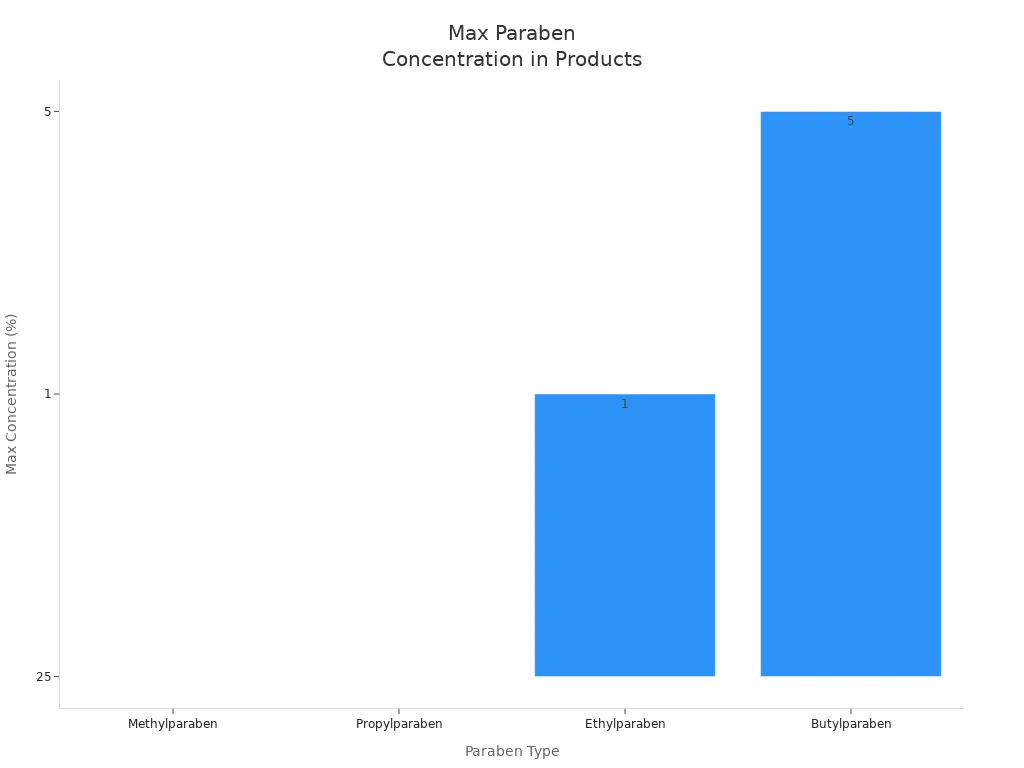
Parabens are still popular. They protect products from germs, stay stable, and are not very toxic when used in small amounts.
Preservative Role
Why Preservatives Matter
Preservatives are very important in cosmetics and medicines. They stop bad germs from growing in products. Germs can get in during making, storing, shipping, or when people use the product. If there are no preservatives, bacteria, yeast, and fungi can spoil creams and lotions. Spoiled products may look, smell, or feel different. They can also make people sick.
Germs get into products when people open and use them. Water and air help germs enter.
Preservatives help products last longer and stay safe.
Rules say there can only be a small number of germs in cosmetics and medicines. Most products must have less than 1,000 CFU per gram or milliliter. Products for kids must have even fewer germs.
Studies show that products without preservatives spoil fast and may get moldy or change color.
Sometimes, products are taken off shelves because of germs. This shows why preservatives are needed.
Preservatives keep both the product and the user safe. They stop infections, allergies, and other health problems. By stopping germs, they help keep products looking, feeling, and smelling good.
Preservatives like parabens help products stay safe and work well until they expire.
How Ethylparaben Works
Ethylparaben is a strong protector against germs. It is part of the paraben family and is used in many products. Ethylparaben stops bacteria, yeast, and fungi by messing up how they work. It works in many types of products because it is good in different pH levels.
Ethylparaben fights germs well, especially some bacteria and fungi. It is often mixed with other parabens or preservatives. This helps protect against more types of germs.
Companies use ethylparaben in small amounts, usually 0.1% to 0.3%. Even at these low levels, it keeps products safe and fresh. Ethylparaben is used in shampoos, lotions, and creams. It mixes well with other things because it dissolves in water.
Ethylparaben does not make harmful things like formaldehyde.
It stays strong and works well in most formulas.
It rarely causes allergies or skin problems if used safely.
By stopping germs, ethylparaben helps products last longer. It keeps them looking, feeling, and smelling nice. People can trust products with ethylparaben to stay safe and fresh.
Ethylparaben is a trusted and often-used preservative. It keeps products and people safe from germs.
Ethylparaben Safety
Regulatory Limits
Rules for ethylparaben in cosmetics and medicines are very strict. These rules help keep people safe from possible harm. The FDA in the United States lets products have up to 0.8% ethylparaben. All parabens together cannot be more than 1%. The European Union has similar rules. They allow up to 0.4% ethylparaben in one cosmetic product. Asian countries, like Japan, also have rules, but the exact limits can be different. Most places make companies list parabens on the label if they use them.
Region | Regulatory Authority / Regulation | Ethylparaben Limit | Notes |
|---|---|---|---|
USA | FDA | Up to 0.8% as single paraben; total parabens ≤ 1% | Limits vary by product type; labeling required |
EU | Cosmetic Products Regulation (CPR) & SCCS | Authorized concentrations considered safe and unchanged (similar to US ~0.8%) | Stricter limits for propyl- and butylparaben; labeling and warnings in some countries (e.g., France) |
Asia | Varies by country (e.g., Japan) | Specific numeric limits for ethylparaben not detailed | Some countries require labeling and restrict other parabens; safety assessments often required |
Groups like the SCCS in Europe have checked ethylparaben and say it is safe at allowed amounts. Other groups, like EFSA and JECFA, say it is okay to have up to 10 mg per kilogram of body weight each day for methylparaben and ethylparaben. Scientists use special tests, like LC-MS-MS, to measure ethylparaben in products. These tests help make sure companies follow the rules and keep products safe.
Agencies set safe limits for ethylparaben. They check products and make sure companies do safety tests before selling them.
Health Concerns
Ethylparaben and other parabens are in many products people use. Some scientists worry about health problems. Ethylparaben can act like estrogen in the body. It can also mess with hormone signals. This might cause hormone problems.
Parabens, including ethylparaben, can act a little like estrogen and block some male hormones.
They might change how the immune system works and cause allergies.
Some studies link ethylparaben to breathing and allergy problems, especially in kids.
Ethylparaben’s germ-fighting power might change the good germs in the gut and lungs, which could lead to more allergies.
Animal studies show ethylparaben can mess up hormones, but studies in people are not clear.
Ethylparaben can get into the body through the skin or mouth. It can build up in fat and may cause hormone problems over time. Some research links ethylparaben to problems with having babies, like fewer eggs and changes in periods. Scientists have found ethylparaben in breast cancer tissue, so they wonder if it is linked to some cancers. Short-term use is not likely to hurt you, but using a lot over time might raise the risk of hormone and body changes.
People with hormone or fertility problems should get tested for ethylparaben. Health groups watch ethylparaben levels to see if there are any health risks.
Scientific Consensus and Ongoing Research
Most experts and rule-makers say ethylparaben is safe if used at low levels. The FDA and the European Commission’s science group agree it is okay in small amounts. Studies show ethylparaben acts a little like estrogen, but there is no strong proof it causes cancer or fertility problems. Agencies keep checking new research and change the rules if needed.
Aspect | Evidence Summary |
|---|---|
Safety Consensus | Ethylparaben and other parabens are considered safe when used within approved concentration limits by regulatory bodies such as the U.S. FDA and the European Commission’s Scientific Committee on Consumer Safety. |
Regulatory Limits | EU Cosmetics Regulation limits individual parabens to 0.4% concentration; labeling is required for higher amounts. CIR considers parabens safe at typical use levels. |
Scientific Findings | Some studies suggest weak estrogenic activity and potential endocrine disruption, but evidence is inconclusive and further research is recommended. |
FDA Role | FDA regulates cosmetics under the FD&C Act but does not have specific paraben regulations; relies on safety assessments and labeling requirements. |
Public Concern | Despite some conflicting studies and public concern, the prevailing regulatory stance supports safe use within established limits. |
Research Gaps | Ongoing evaluation and further research are encouraged due to limited data on long-term effects. |
Parabens have been used for a long time as gentle and helpful preservatives.
Most research shows ethylparaben is safe at the amounts found in products.
Some animal and lab studies raise worries, but these do not always mean people will have problems.
Rule-makers want companies to be honest on labels and keep studying ethylparaben.
People can choose if they want to use products with ethylparaben. Scientists are still learning about its effects, especially on hormones and health. More research will help us know if there are any long-term dangers.
Common Products
Cosmetics
Ethylparaben is found in many cosmetics and personal care items. Companies use this preservative to stop germs like fungi, yeast, mold, and bacteria. Shampoos, lotions, and conditioners are the main products that use ethylparaben. It helps keep them from going bad and keeps them good to use. Ethylparaben is also added to creams, makeup, and sunscreens. These products have water, so they can get germs more easily. Using ethylparaben helps products last longer and keeps them safe for people.
Shampoos
Lotions
Conditioners
Creams
Makeup
Sunscreens
Personal care items stay safe and work well because ethylparaben fights germs. This preservative helps keep cosmetics safe for people to use every day.
Pharmaceuticals
Medicines also use ethylparaben to stop germs from growing. Creams, ointments, gels, and lotions for the skin often have ethylparaben. Liquid medicines like syrups and suspensions use it to stay clean and safe. Some tablets and shots may have ethylparaben to help them last longer. Animal medicines like syrups and suspensions also use ethylparaben to keep them safe and fresh.
Topical creams, ointments, gels, lotions
Oral syrups and suspensions
Tablets
Parenteral formulations
Veterinary syrups and suspensions
Ethylparaben is important in cosmetics and medicines because it stops germs and fungus from growing.
Label Identification
People can find ethylparaben in products by reading the ingredient list. Companies usually put ethylparaben and other parabens near the end of the list. This is because they use only a little bit. You might see names like methylparaben, ethylparaben, propylparaben, butylparaben, isobutylparaben, or isopropylparaben. Sometimes, labels use other chemical names, so it is good to check carefully if you want to avoid parabens.
Rules around the world say companies must show all ingredients for safety. In places like India, companies must follow strict rules and use the right names. The European Union and United States also make companies label ingredients clearly, especially if they might cause health problems. Ethylparaben is on lists of preservatives to watch for, so reading labels helps people make smart choices.
Tip: Look for ingredient names that end with “-paraben” to find ethylparaben and similar preservatives in cosmetics and personal care items.
Ethylparaben is used to keep cosmetics and medicines fresh. It stops bacteria and fungi from growing. This helps products stay safe and last longer.
Rules in the United States, European Union, and Japan let companies use ethylparaben in small amounts.
People can find ethylparaben listed on product labels. It is usually close to the end of the ingredient list.
Health experts say to use products with ethylparaben carefully. Do not use too many products with ethylparaben at the same time.
FAQ
What is ethylparaben’s main purpose in cosmetics?
Ethylparaben is used to keep products fresh. It stops bacteria, yeast, and mold from growing. This helps make cosmetics safe and last longer.
Is ethylparaben safe for daily use?
Most experts say ethylparaben is safe at allowed amounts. Most people do not have side effects. People with sensitive skin should read labels and ask a doctor.
How can consumers identify ethylparaben on product labels?
Look for “ethylparaben” near the end of the ingredient list. Other parabens have names that look alike.
Tip: If a name ends with “-paraben,” it is a preservative.
Does ethylparaben cause allergies or skin irritation?
Ethylparaben almost never causes allergies or skin problems. Most people can use it without trouble. People with sensitive skin should try a small test first.
Which products most often contain ethylparaben?
You can find ethylparaben in shampoos, lotions, creams, makeup, and some medicines.
Product Type | Common Use |
|---|---|
Cosmetics | Yes |
Pharmaceuticals | Yes |
Food | Sometimes |