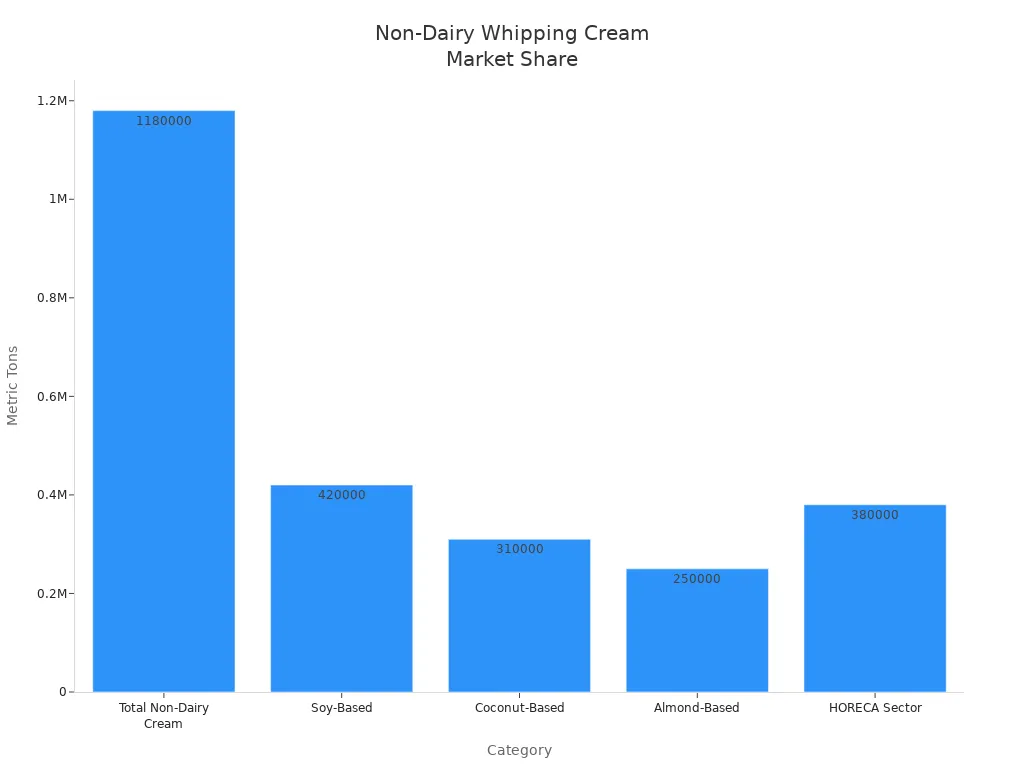
When you go into your kitchen, you have to pick between dairy and non dairy whipping cream. The big difference is what they are made of. Dairy whipping cream uses milk fat. Non dairy whipping cream uses vegetable oils and stabilizers. Non dairy cream usually has less saturated fat and cholesterol. If you are vegan or cannot have lactose, non dairy whipping cream helps you make more recipes. The market for non dairy cream is getting bigger. You can see this in the chart below, which shows more people buying non dairy cream, especially vegan kinds.
|
Type |
Fat Content |
Ingredients |
|---|---|---|
|
Dairy Whipping Cream |
30 to 36% milk fat |
Made from milk fat, has natural protein, calcium, vitamins A, D, and B12. |
|
Non-Dairy Whipping Cream |
Lower saturated fat and cholesterol |
Made from vegetable oil, often has added sugars and stabilizers for texture and flavor. |
You can see vegan choices almost everywhere now, like in cakes and sauces. If you want vegan food, there are many options. Vegan products make it simple to bake, cook, and make treats without using dairy.
Key Takeaways
-
Dairy whipping cream has a lot of milk fat. It gives a smooth and creamy feel that is great for desserts and sauces.
-
Non-dairy whipping cream is good for vegans. It usually has less saturated fat and cholesterol. This makes it a good choice for people who cannot have lactose.
-
You can use both types of cream in many recipes. But dairy cream works better for whipped toppings and desserts because it stays firm longer.
-
If you chill your cream and tools before whipping, you get more volume and better texture. This tip works for both dairy and non-dairy cream.
-
Think about your diet and what your recipe needs. This will help you pick between dairy and non-dairy whipping cream for baking and cooking.
Dairy Whipping Cream: What It Is
Ingredients and Fat Content
When you reach for dairy whipping cream, you’re choosing a product that’s all about richness. Dairy whipping cream comes straight from milk, and it’s packed with milk fat. You’ll find that dairy whipping cream usually contains between 30% and 36% milk fat. If you want to whip cream for desserts, you need at least 30% milk fat. Heavy dairy whipping cream has 36% or more, which means it whips up fast and holds its shape well. Here’s what you’ll find in dairy whipping cream:
-
Milk fat (30–36%)
-
Natural proteins
-
Vitamins A, D, and B12
You get a creamy texture and a smooth mouthfeel every time you use dairy whipping cream. The high fat content makes it perfect for recipes that need stability and volume.
Uses in Baking and Cooking
Dairy whipping cream is a superstar in your kitchen. You can use dairy whipping cream in so many ways. If you want to top a dessert, dairy whipping cream gives you fluffy whipped cream. You can pour dairy whipping cream into soups and sauces to make them richer. Dairy whipping cream works great in pasta dishes, adding a creamy touch. You can even use dairy whipping cream in homemade ice cream or spoon it over warm apple pie. Here are some common uses for dairy whipping cream:
-
Whipped cream for cakes, pies, and fruit
-
Creamy sauces for pasta or chicken
-
Rich soups
-
Fluffy pancakes with whipped cream
-
Homemade ice cream
Dairy whipping cream helps you create desserts and dishes that taste amazing and look beautiful.
Key Features
Dairy whipping cream stands out because of its fat content and versatility. You can whip dairy whipping cream into soft or stiff peaks, depending on what you need. Dairy whipping cream gives you a stable texture, which is important for decorating cakes or making mousse. You can use dairy whipping cream in both sweet and savory recipes. Here’s a quick look at what makes dairy whipping cream special:
|
Type of Cream |
Fat Content |
Common Uses |
Whippable |
|---|---|---|---|
|
Whipping Cream |
30-36% |
Desserts, toppings, sauces |
Yes |
|
Heavy Cream |
36% or higher |
Rich sauces, soups, desserts |
Yes |
Tip: If you want the best results, chill your dairy whipping cream before whipping. Cold dairy whipping cream whips faster and holds its shape longer.
Dairy whipping cream is your go-to for recipes that need volume, stability, and a rich taste. You’ll notice the difference in texture and flavor every time you use dairy whipping cream.
Non-Dairy Whipping Cream: Overview
Main Ingredients and Types
When you look for non-dairy whipping cream, you see many choices. You can pick non-dairy whipping cream made from soy, coconut, almond, oat, or rice. These non-dairy options often use vegetable oils to give you a creamy texture. You also find stabilizers and sugars in non-dairy whipping cream. These help the cream stay thick and sweet. Some non-dairy whipping cream uses caseinates or whey protein to make it smooth and stable. You might see milk replacers powder in non-dairy whipping cream. This makes it good for vegan and lactose-intolerant diets.
Here’s a table to show you the main ingredients in non-dairy whipping cream:
|
Ingredient Type |
Description |
|---|---|
|
Caseinates |
Make non-dairy whipping cream smooth and stable. |
|
Whey Protein Concentrates and Isolates |
Help non-dairy whipping cream whip up and add nutrition. |
|
Milk Replacers Powder |
Mimic dairy, perfect for vegan and non-dairy diets. |
You can find non-dairy whipping cream in cartons, cans, and frozen packs. Some brands, like Rich’s® and Silk®, offer non-dairy whipping cream for baking and cooking. You can also try whipped coconut cream if you want a tropical flavor.
Common Uses
You can use non-dairy whipping cream in many recipes. If you want to make vegan cakes, non-dairy whipping cream works well. You can whip non-dairy whipping cream for toppings on pies, cupcakes, and fruit. Non-dairy whipping cream is great for sauces, soups, and pasta. You can use non-dairy whipping cream in coffee or tea for a creamy taste. Whipped coconut cream is perfect for desserts and smoothies. You can also use non-dairy whipping cream in frostings and fillings.
Here are some ways you can use non-dairy whipping cream:
-
Whip non-dairy whipping cream for cake toppings
-
Stir non-dairy whipping cream into soups and sauces
-
Make vegan ice cream with non-dairy whipping cream
-
Use whipped coconut cream for fruit salads
-
Add non-dairy whipping cream to coffee or tea
Stabilizers in non-dairy whipping cream help you get a thick, stable foam. Added sugars make non-dairy whipping cream sweet and easy to use in desserts.
Key Features
Non-dairy whipping cream stands out for its flexibility. You can use non-dairy whipping cream if you need a lactose-free or vegan option. Non-dairy whipping cream lasts longer than dairy cream. You get a lighter texture with non-dairy whipping cream. Many non-dairy whipping cream products come pre-sweetened, so you don’t need to add sugar. Non-dairy whipping cream whips up fast and holds its shape. You can use non-dairy whipping cream in hot and cold recipes.
Here’s a table to show you how non-dairy whipping cream compares to dairy whipping cream:
|
Feature |
Non-Dairy Whipping Cream |
Dairy Whipping Cream |
|---|---|---|
|
Dietary Restrictions |
Lactose-free, vegan-friendly |
Contains lactose, not for vegans |
|
Shelf Life |
Longer shelf life |
Shorter shelf life |
|
Texture |
Lighter, less oily |
Rich and creamy |
|
Sweetness |
Pre-sweetened |
Unsweetened |
|
Whipping Ability |
Whips easily, stable |
Holds stiff peaks |
|
Nutritional Value |
Varies, often lower in fat |
Higher in fat, more vitamins |
Tip: If you want a plant-based dessert, try whipped coconut cream. You get a light, fluffy topping with a hint of coconut.
Non-dairy whipping cream gives you more choices for baking and cooking. You can make vegan treats, lactose-free sauces, and creamy drinks with non-dairy whipping cream. You get great results every time you use non-dairy whipping cream.
Dairy and Non-Dairy Whipping Cream: Comparison
Taste and Texture
When you try dairy and non-dairy whipping cream, you notice they taste different. Dairy whipping cream feels smooth and creamy because it has a lot of fat. It gives a rich flavor that melts in your mouth. Non-dairy whipping cream can also be creamy, especially if it uses coconut milk or cream. Some brands add things to make it light and fluffy. Non-dairy options are often sweeter because many are pre-sweetened.
Here’s a table to help you compare taste and texture:
|
Attribute |
Dairy Whipping Cream |
Non-Dairy Whipping Cream |
|---|---|---|
|
Creaminess |
Offers a smooth, creamy sensation due to high fat content. |
Can achieve similar creaminess with coconut milk or cream. |
|
Lightness |
Light and airy, melts effortlessly in the mouth. |
Comparable lightness achieved with stabilizers and emulsifiers. |
|
Stability |
Maintains shape well due to high fat content. |
Can maintain shape with stabilizers like xanthan gum. |
If you want whipped cream that is light and fluffy, both types work. Pick the one that fits your taste and diet.
Baking Performance
When you bake with these creams, you see how they work. Dairy whipping cream holds its shape better when whipped. It gives more volume and stays fluffy longer. This helps when you decorate cakes or make mousse. Non-dairy whipping cream whips up fast but may lose its texture quicker, especially with heat.
Here’s what you should know about baking with these creams:
-
Dairy whipping cream gives a stable, fluffy texture that lasts.
-
Non-dairy whipping cream whips easily but may not stay whipped as long in heat.
-
Both work for toppings, but dairy cream is better for stiff peaks.
Tip: If you need whipped cream to last for hours on a cake, dairy whipping cream is best. Non-dairy options are good for quick desserts or vegan treats.
Cooking Performance
You use both creams in many savory dishes. Dairy whipping cream brings a rich, buttery taste to soups, sauces, and pasta. Non-dairy whipping cream tastes lighter and sometimes sweeter. You can whip both for toppings, but dairy cream works better in recipes that need a creamy base.
Check out this table to see how they compare in cooking:
|
Feature |
Dairy Whipping Cream |
Non-Dairy Whipping Cream |
|---|---|---|
|
Flavor |
Rich and natural, buttery taste |
Lighter, may be pre-sweetened |
|
Whipping Ability |
Excellent, holds stiff peaks |
Stable consistency, whips easily |
|
Dietary Restrictions |
Contains lactose, not suitable for vegans |
Lactose-free, vegan-friendly |
|
Shelf Life |
Shorter compared to non-dairy |
Longer shelf life |
|
Nutritional Value |
Higher, contains vitamins A and D |
Varies, often lower in nutrients |
|
Versatility in Recipes |
Works well in sweet and savory dishes |
Great for desserts, may not suit all recipes |
If you want whipped cream that stays fluffy in hot dishes, dairy cream is best. Non-dairy whipping cream is great for vegan recipes and cold desserts.
Health and Dietary Factors
You might pick dairy or non-dairy whipping cream for health reasons. Dairy whipping cream has more calories and saturated fat. Non-dairy whipping cream usually has less saturated fat and cholesterol. If you are vegan, lactose-intolerant, or have allergies, non-dairy options are safer.
Here are some products and their benefits:
|
Product Name |
Vegan |
Dairy-Free |
Gluten-Free |
Sugar per Serving |
Benefits |
|---|---|---|---|---|---|
|
Silk® Dairy-Free Heavy Whipping Cream Alternative |
Yes |
Yes |
Yes |
0g |
Free from dairy, gluten, and carrageenan; No artificial colors & flavors; Verified by Non-GMO Project |
|
Product Name |
Vegan |
Dairy-Free |
Features |
|---|---|---|---|
|
Flora™ Professional Dairy-Free Multipurpose Crème |
Yes |
Yes |
Longer shelf life; No need to reduce; 25% more volume when whipped; Bain marie stable for up to 2 hours |
|
Product Name |
Calories per Serving |
Total Fat |
Saturated Fat |
Sodium |
Total Carbohydrate |
|---|---|---|---|---|---|
|
Country Crock Homestyle™ Dairy Free Heavy Whipping Cream |
45 |
4.5g |
3.5g |
5mg |
0g |
Choosing non-dairy whipping cream helps the planet too. Dairy cream uses more land, water, and energy. Non-dairy whipping cream has a smaller impact on the environment.
|
Metric |
Dairy Whipping Cream |
Non-Dairy Whipping Cream |
|---|---|---|
|
Greenhouse Gas Emissions |
Lower |
|
|
Land Use |
10 times higher |
Lower |
|
Freshwater Use |
2 to 20 times higher |
Lower |
|
Eutrophication Levels |
Much higher |
Lower |
Note: If you want whipped topping that is vegan, gluten-free, and low in sugar, non-dairy whipping cream gives you more choices.
You can whip up both creams for almost any recipe. Think about taste, texture, health, and the planet. Both types make light and fluffy toppings, but each has its own strengths.
When to Use Dairy or Non-Dairy Creams
Best Uses for Dairy Whipping Cream
Dairy whipping cream gives food a classic, rich taste. You can use it in cream sauces for chicken, steak, fish, or pork. It works well in pasta sauces like mac and cheese or alfredo. You can make homemade whipped cream for desserts, coffee, or hot chocolate. Dairy whipping cream is great for quick icing on cakes. Kids and people with sensitive stomachs can enjoy it. You can whip it for fluffy toppings on pies, pancakes, or fruit. Dairy whipping cream is best for recipes that need stability and volume, like mousse or cheesecake. It gives a creamy texture in hot and cold dishes.
Tip: Put dairy whipping cream in the fridge before whipping. Cold cream whips better.
Best Uses for Non-Dairy and Vegan Whipped Cream
You might pick vegan whipped cream if you are vegan, lactose intolerant, or want something lighter. Vegan whipped cream works in almost any recipe that needs a creamy topping or filling. You can use vegan whipped cream on desserts, drinks, or vegan recipes. It tastes great on waffles, pancakes, apple pie, and coffee. Vegan whipped cream makes vegan chocolate cake or fruit salad fluffy. You can use it in vegan mousse, cupcakes, or ice cream. Vegan whipped cream stays firm in cold dishes and gives a sweet, light texture.
Here’s a table with some vegan whipped cream ideas:
|
Recipe Name |
Ingredients |
Instructions |
|---|---|---|
|
Cinnamon Whipped Topping |
1 cup Silk Heavy Whipping Cream Alternative, cinnamon, sugar, vanilla |
Chill everything, mix, and beat until thick. |
|
Whipped Plant Cream |
2 cups Country Crock Homestyle Dairy Free Heavy Whipping Cream, powdered sugar, vanilla |
Whisk fast until it gets fluffy. |
You can use vegan whipped cream in vegan desserts, vegan chocolate cake, or as a topping for pancakes. Vegan whipped cream is important for anyone who likes vegan treats.
Recipe Examples
You can try lots of recipes with dairy or vegan whipped cream. Here are some favorites:
-
Strawberry Shortcake – Add whipped cream for a sweet finish.
-
Chocolate Mousse – Use whipped cream for a creamy texture.
-
Whipped Cream Pancakes – Put whipped cream in the batter for fluffiness.
-
Hot Chocolate – Spoon whipped cream on top for a cozy drink.
-
No-Bake Cheesecake – Mix in whipped cream for a light filling.
-
Fruit Salad – Stir whipped cream with fruit for a fresh treat.
-
Coffee Topping – Add whipped cream to coffee for a special touch.
-
Crepes – Fill crepes with whipped cream for breakfast.
-
Ice Cream Sundae – Top with whipped cream swirls.
-
Cupcakes – Frost cupcakes with whipped cream for a light finish.
You can swap dairy for vegan whipped cream in most recipes. Vegan whipped cream makes it easy to enjoy vegan desserts and cakes. You can use vegan whipped cream as a dairy-free choice in your favorite recipes. Try vegan whipped cream next time and see how simple vegan treats can be. Vegan whipped cream works in every recipe that needs a creamy, fluffy topping. You can use vegan whipped cream for pancakes, ice cream, or fruit salad. Vegan whipped cream is perfect for desserts, cakes, and cupcakes. You can whip vegan whipped cream for mousse, coffee drinks, or apple pie. Vegan whipped cream is a must in vegan kitchens. You can use vegan whipped cream for breakfast, dessert, or snacks. Vegan whipped cream gives a light, sweet finish in every recipe. You can make vegan whipped cream at home or buy it ready to use. Vegan whipped cream is easy to whip, keeps its shape, and tastes great in every recipe. You can use vegan whipped cream in desserts, cakes, pancakes, and ice cream. Vegan whipped cream is the best for anyone who loves vegan treats. You can enjoy vegan whipped cream in every recipe, from breakfast to dessert. Vegan whipped cream makes every recipe special.
Substituting Dairy and Non-Dairy Creams
How to Substitute Dairy with Non-Dairy
You can swap dairy whipping cream for non-dairy options in most recipes. Start with a high-fat plant milk like unsweetened soy, oat, or cashew milk. These give you a creamy base. Add refined coconut oil if you want more richness, but use unrefined only if you like a coconut taste. For sweetness and texture, use powdered sugar instead of liquid sweeteners. A splash of vanilla extract adds flavor.
Here’s a quick guide:
-
Use 1 cup of high-fat plant milk for every cup of dairy cream.
-
Mix in 2 tablespoons of refined coconut oil for extra fat.
-
Add 2-3 tablespoons of powdered sugar for sweetness.
-
Whip until you see soft or stiff peaks.
If you want to make vegan whipped cream, chill your plant milk and mixing bowl first. This helps the fat solidify and makes whipping easier.
How to Substitute Non-Dairy with Dairy
You can use dairy whipping cream instead of non-dairy cream in almost any recipe. Dairy cream whips up fast and holds its shape well. If you need to match the sweetness of non-dairy cream, add a little powdered sugar. For every 8-ounce carton of non-dairy whipped topping, whip 1-1/2 cups of heavy cream to get about 3 cups of whipped cream.
Tip: Chill your bowl and beaters for 5 to 10 minutes before whipping. This gives you better volume and stability.
If you want your whipped cream to last longer, add a spoonful of cornstarch or milk powder. This helps it stay fluffy.
Common Pitfalls and Tips
You might run into a few problems when swapping creams. Here’s how to avoid them:
-
Pick a cream with at least 20% fat for better stability.
-
Always chill your cream, bowl, and beaters before whipping.
-
Add sweeteners slowly while whipping.
-
Watch for soft or stiff peaks. Stop whipping before it turns grainy.
-
Look for non-dairy creams with stabilizers if you want a firm foam.
Storing vegan whipped cream is easy. Keep it in the fridge in an airtight container. If you make extra, storing vegan whipped cream in the freezer works for short periods, but whip it again before serving.
Note: Popular substitutes include coconut cream, soy milk with olive oil, and homemade vegan heavy cream. These work well in sauces, soups, and desserts.
You can get great results with both types if you follow these tips. Try different methods to see what works best for your recipes.
You have two great options for whipping cream. Dairy cream gives you a rich, natural taste and works best if you have no dietary restrictions. Non-dairy cream is perfect if you need a lactose-free or vegan choice. Here’s a quick guide:
-
Dairy cream is nutrient-rich but high in calories and fat.
-
Non-dairy cream lasts longer and suits vegan or allergy-friendly diets.
-
Both whip well, but non-dairy creams often come pre-sweetened.
Tip: Chill your bowl and beaters before whipping. Add flavors like vanilla for extra taste. Practice makes perfect!
FAQ
Can you freeze whipped cream?
Yes, you can freeze whipped cream. Scoop small dollops onto a tray, freeze them, then store in a bag. Thaw before using. Both dairy and non-dairy whipped cream freeze well for toppings.
Why does my whipped cream turn runny?
You may have overwhipped or used warm cream. Always chill your cream, bowl, and beaters. Stop whipping when you see soft or stiff peaks. If it turns runny, try whipping again for a few seconds.
Is non-dairy whipping cream always vegan?
Not always. Some non-dairy creams contain casein or whey, which come from milk. Check the label for “vegan” or look for plant-based ingredients. Brands like Silk® and Rich’s® offer vegan options.
Can I use non-dairy whipping cream in hot recipes?
You can use non-dairy whipping cream in hot dishes like soups and sauces. Some types may separate if boiled. Stir gently and add at the end for best results.