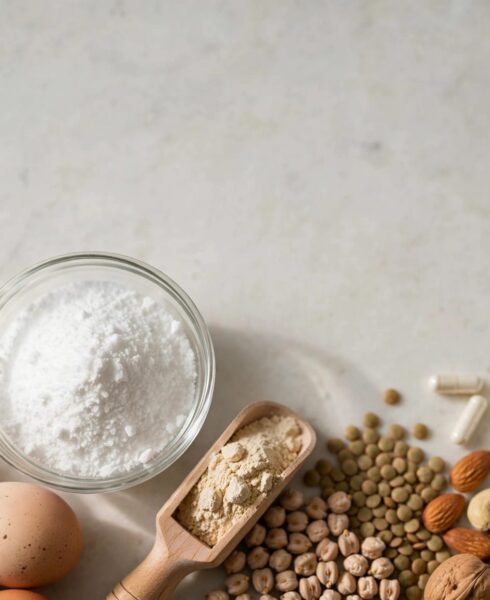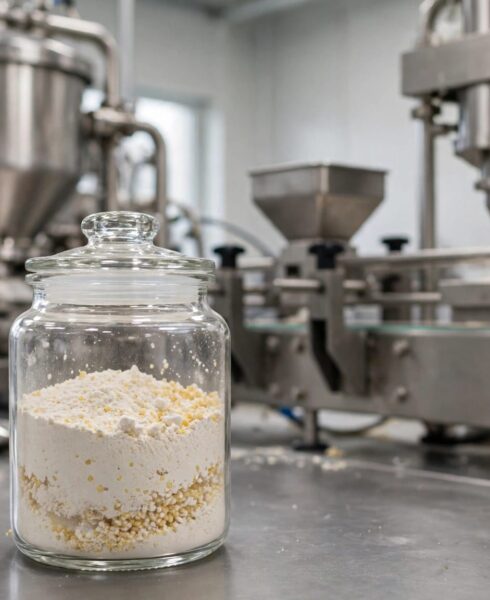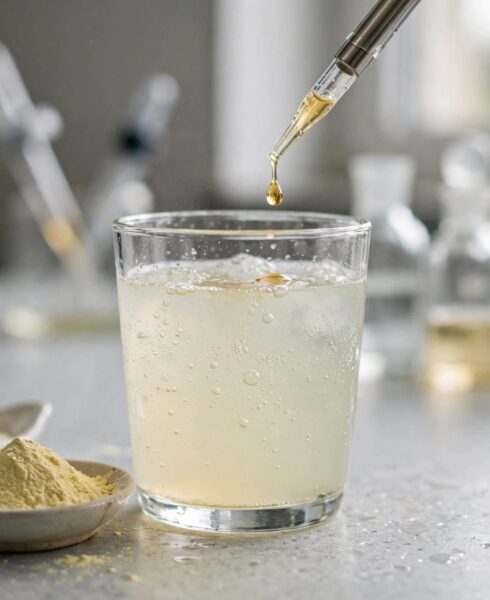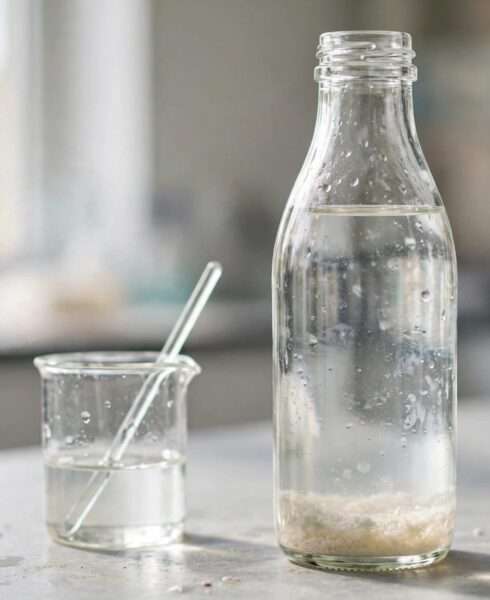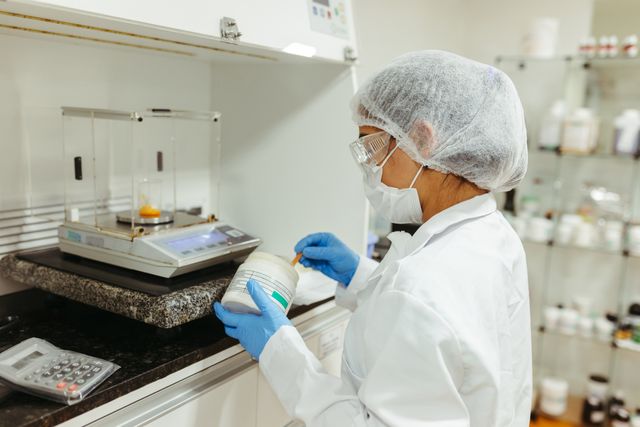
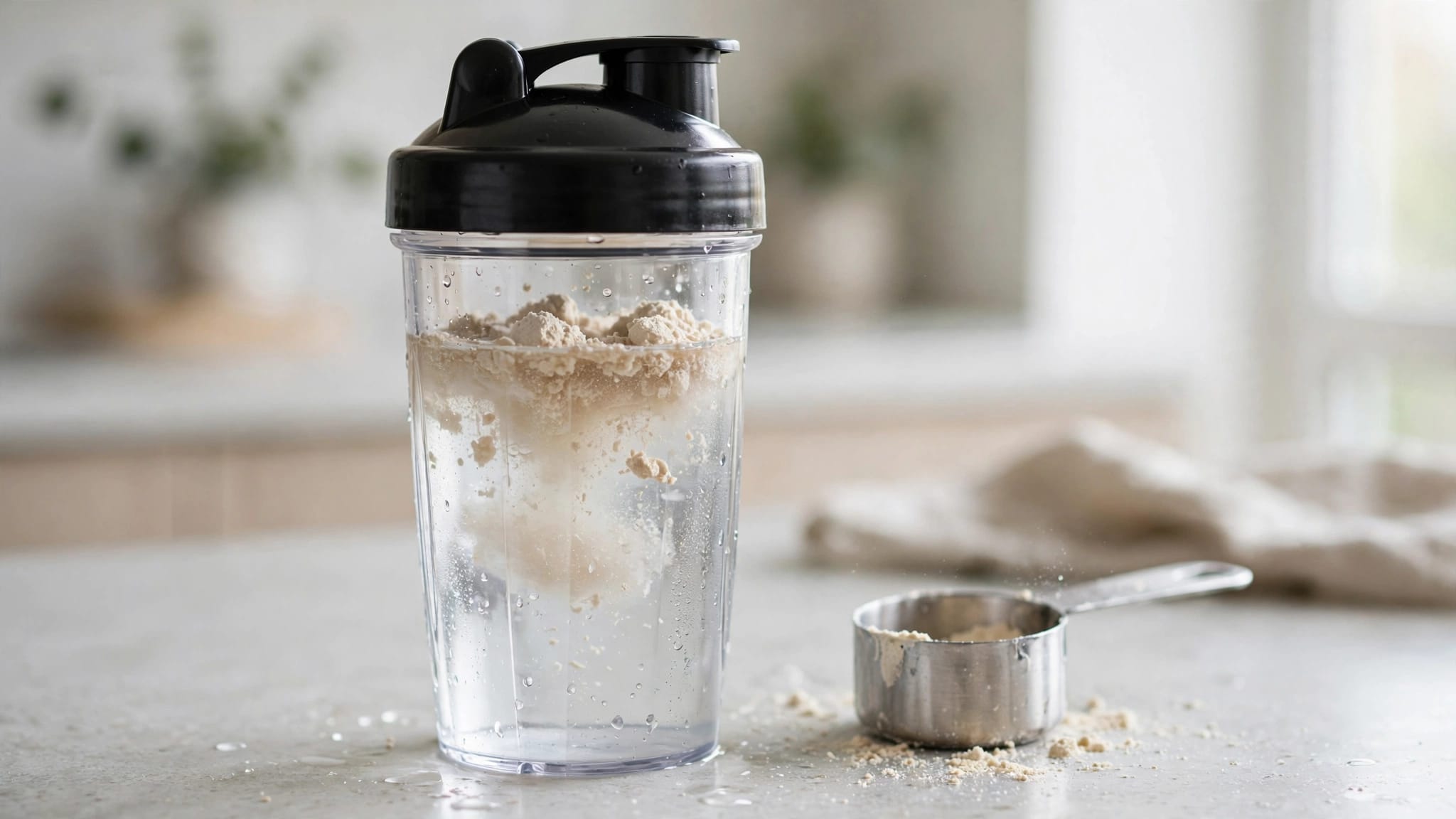
To improve protein powder wetting in cold water, add liquid first, use sufficient water, allow a short hydration pause, then mix. If powder still floats, compare an instantized grade before increasing mixing intensity.
High protein content alone does not predict mixing performance. Particle structure and surface treatment determine how readily water enters the powder.
Start by separating poor wetting from poor dispersion. Each problem needs a different trial.
Why High-Protein Powders Resist Wetting
Rehydration follows three stages: wetting, dispersing and solubilisation. Water contacts and penetrates the powder, particles separate throughout the liquid, then soluble components enter solution.
These stages can overlap. For poorly wettable whey protein, the first stage can limit the whole process.
Surface Properties Can Block Water Entry
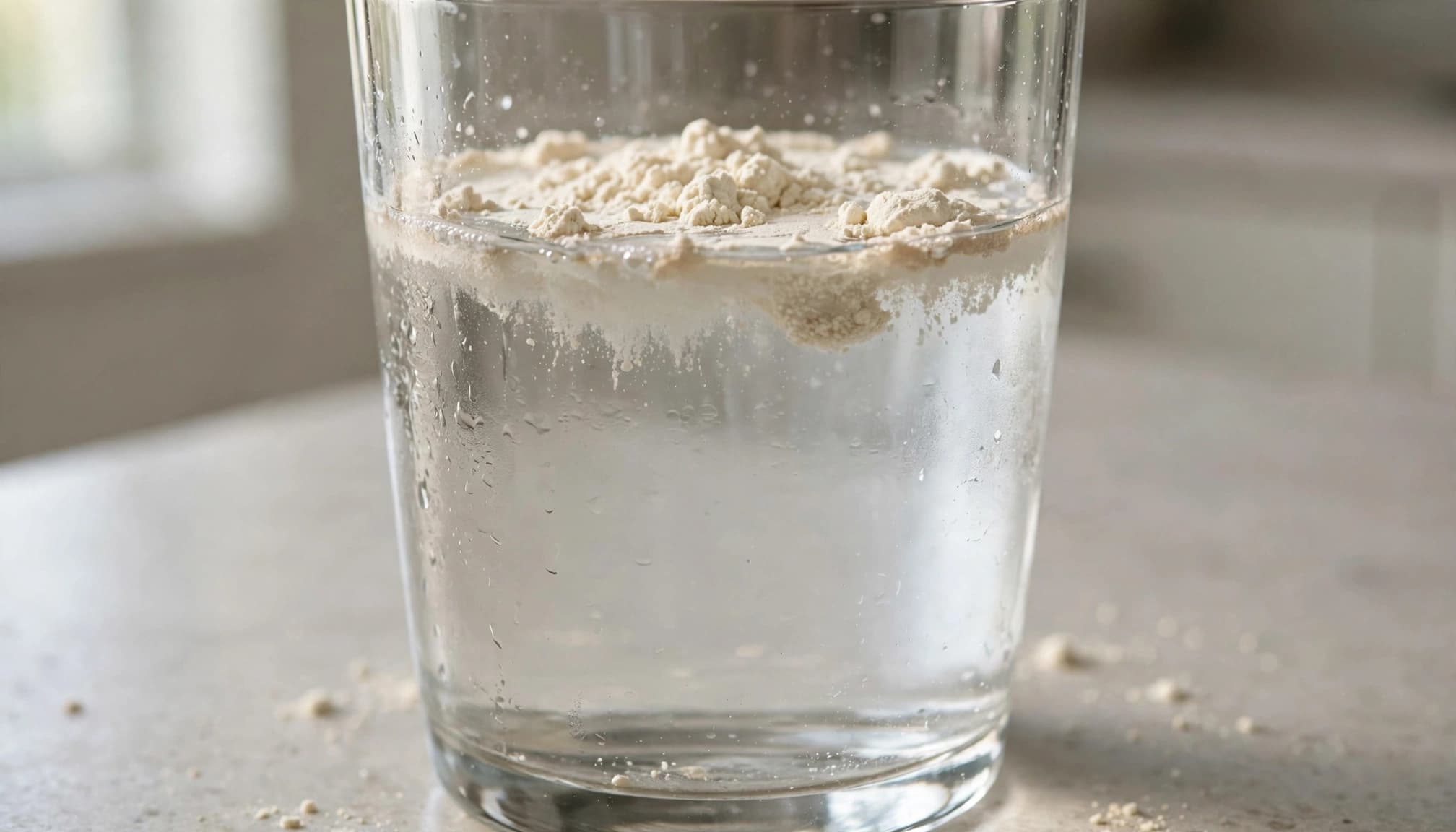
Whey protein isolate can float despite its low fat content. Hydrophobic regions on protein surfaces resist water, so fat is not the only explanation.
Ji and colleagues’ 2016 rehydration study describes poor whey powder wetting and gelatinous surface layers that obstruct further water penetration. A clump can therefore have a hydrated exterior and dry interior.
Contact angle describes this surface interaction. Below 90 degrees indicates a hydrophilic, more readily wetted surface; above 90 degrees indicates poor wetting.
Particle Size, Pores and Air Affect Penetration
Fine spray-dried particles can pack tightly, leaving narrow passages. When air remains trapped and water entry is delayed, particles may float on the surface as the powder hydrates.
Larger, porous agglomerates generally wet more readily because they contain larger interconnected voids. Large, dense lumps do not provide the same benefit.
The Washburn equation links larger capillary radius with deeper liquid penetration at a given time, when other conditions remain constant. Surface tension, contact angle and viscosity also matter. Cold water has higher viscosity than warmer water, which can slow capillary penetration.
A Cold-Water Mixing Routine
Use plain water first when troubleshooting. Milk, plant-based drinks, oils and dissolved solids introduce additional variables, including viscosity and protein interactions.
- Pour the water into a clean shaker before adding powder. Start with at least 10 to 12 US fluid ounces, approximately 300 to 355 mL, per scoop. Scoop sizes differ, so treat this as a troubleshooting reference rather than a universal formulation ratio. Leave air space for liquid movement.
- Sprinkle powder across the surface instead of depositing one compact mound. Allow 30 to 60 seconds for hydration before shaking or blending. This pause gives water time to enter accessible pores and reduces the dry material that mixing must break apart.
- Shake with a mixing ball for about 30 seconds, or use a blender briefly and inspect. If dry cores remain, mix for another 15 to 30 seconds. These are starting trial times, not guaranteed completion times. Let foam settle before assessing texture.
For persistent lumps, first prepare a smooth paste with 2 to 3 fluid ounces, approximately 60 to 90 mL, of liquid. Add powder gradually while stirring, then incorporate the remaining water. This approach is particularly useful for casein and plant proteins.
Keep the scoop dry during storage. Moisture-induced caking creates a separate problem that a better mixing routine may not fully correct.
Match the Method to the Protein
Whey Needs Surface Wetting First
Untreated whey protein isolate may resist initial water entry even when its soluble protein fraction dissolves well afterward. High purity doesn’t guarantee fast wetting.
For floating whey powder, compare instantized and untreated grades under the same cold-water conditions. If wetting improves but grit remains, investigate aggregation, formulation conditions, and ingredient solubility.
Our guide to whey protein drink solubility covers the next stage of troubleshooting. Record initial wetting and final drink smoothness as separate observations in your trial.
Casein and Plant Proteins Need Different Endpoints
For milk protein powders, casein-dominated grades can wet but disperse slowly because of interactions within and between micellar structures. Allow additional hydration time and evaluate reconstitution rather than expecting an immediately clear solution.
Pea, soy, and rice protein ingredients vary in processing history, particle structure, and insoluble material. A powder may disperse evenly yet retain some sediment or graininess.
Use the paste method, adequate dilution, and controlled mixing before changing the formula. Longer mixing can’t make every insoluble fraction dissolve. Compare each grade against the protein powder texture and mouthfeel required for the finished drink.
Use Symptoms to Choose the Next Trial
Observe the defect before changing ingredients. Floating powder, gelled lumps and settled particles indicate different limitations.
Use these checks to select one change at a time.
| Observed Problem | Likely Limitation | Next Trial |
|---|---|---|
| Dry powder remains on top | Poor wetting or trapped air | Compare an instantized grade and slower powder addition. |
| Lumps contain dry centers | Surface hydration blocks penetration | Increase dilution or prepare a paste first. |
| Drink thickens before lumps disappear | Rapid viscosity development | Reduce gum dosage or change addition order. |
| Grit remains after powder disappears | Insoluble material or aggregation | Compare protein grades under identical conditions. |
| Foam obscures the liquid | Excess air incorporation | Reduce mixing intensity after dispersion. |
Guar gum and xanthan gum absorb water and develop viscosity. Excess dosage or uneven dispersion can produce gel-like lumps before protein hydration is complete.
Our guidance on thickeners in plant protein beverages addresses this formulation interaction. Stabilization after mixing and rapid initial wetting are separate targets.
Instantizing Options for Product Developers
Evaluate Lecithin at the Powder Surface
Lecithin improves water contact by lowering interfacial tension between water and the powder surface. Soy and sunflower lecithin are common options for instant beverage powders.
Surface application matters. Adding lecithin to a finished dry blend does not necessarily reproduce a uniformly treated protein particle.
For ingredient selection, our food-grade lecithin options provide a starting point for application trials. Compare the lecithin grade and application process alongside wetting time, flavor, foam and finished-product declarations.
There is no universal dosage for every protein powder. Surface composition, particle size and the treatment process affect the amount required.
Compare Agglomeration With Wurster Coating
Fluidised bed agglomeration joins fine particles into larger, porous structures. Wurster coating applies material through a bottom-spray process around circulating particles.
Research on lecithin-treated whey protein isolate compared these routes. Agglomeration produced lower bulk density and higher porosity, while coating produced higher bulk density and lower porosity in the studied powders.
Both surface chemistry and pore structure therefore need evaluation. A label stating “instantized” indicates treatment intended to improve wetting and dispersion, but does not establish performance in every formula.
Run process trials in this order: compare untreated and instantized protein, evaluate lecithin application, then adjust agglomerate structure. Keep protein concentration, water temperature and mixing energy fixed during each comparison.
A Repeatable Wetting and Dispersibility Test
Use a controlled trial to compare powders or mixing changes. The following method is a practical screening procedure, not a validated solubility assay.
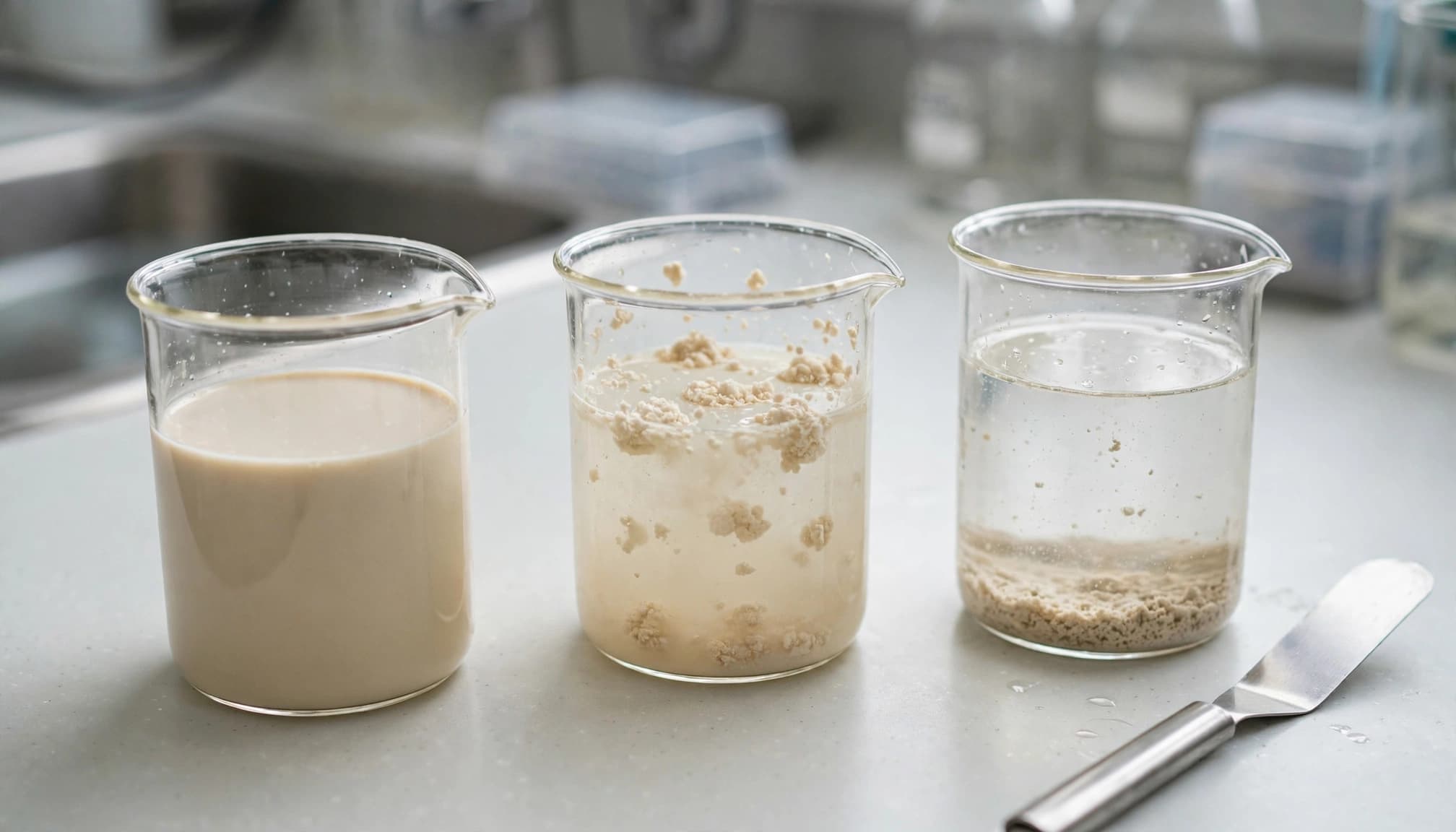
- Prepare identical transparent vessels containing 100 mL of water at 10 degrees Celsius. Weigh 10 g of each powder. Use the same water source, vessel dimensions and powder addition method for every sample.
- Add each powder over the same five-second period without stirring. Start a timer at first contact. Record when visible dry surface powder disappears. If it remains after five minutes, record the endpoint as greater than five minutes rather than estimating.
- Prepare a fresh set for dispersion testing. Add powder, wait 60 seconds, then stir for 30 seconds at approximately one revolution per second. Inspect immediately and after five minutes. Record floating material, lumps with dry centers, foam and sediment.
Repeat each comparison three times. Photograph samples against the same background, and report the range rather than only the fastest result.
The distinction matters: rehydration measurement research evaluates wettability separately from other rehydration properties. Disappearance below the surface does not prove molecular dissolution.
For developer trials, equal powder mass compares supplied ingredients. Run an additional comparison at equal protein concentration when evaluating finished beverage performance.
Key Takeaways
- Liquid-first addition, sufficient dilution and a hydration pause provide a defined starting routine.
- Porous agglomerates and suitable surface treatment help water enter powder and displace trapped air.
- Wetting time, lump breakup and residual sediment need separate measurements. A single visual score can hide the cause of poor mixing.
Questions Before You Trial
Does Warm Water Help Protein Powder Mix?
Warm liquid can speed wetting and hydration, but it introduces a safety condition. Warming trapped air and increasing water vapor pressure can pressurize a sealed shaker and force the lid open.
Use an open cup for warm-water premixing. Add cold water afterward if a cold drink is required. Room-temperature water is a simpler comparison condition.
Very hot water can also promote whey protein denaturation and aggregation. More heat is not a universal remedy.
What Should I Look for on the Label?
“Instantized” is the clearest buying cue for a powder designed to wet and disperse more readily. Soy lecithin or sunflower lecithin in the ingredient declaration is another useful indicator.
Neither guarantees a specific mixing time. Compare performance at your intended water temperature and serving concentration.
Does Clumping Mean the Powder Has Spoiled?
Clumping alone does not establish spoilage. Moisture exposure can cause caking.
Mold, an abnormal odor or clear signs of contamination are reasons to discard the powder. Mixing cannot restore a spoiled ingredient.
A Defined Starting Point for Trials
Improve water entry before increasing mixing intensity. Liquid-first addition, adequate dilution and a short hydration pause address common preparation problems.
For persistent defects, compare particle treatment and protein grade under fixed conditions. Record wetting, dispersion and sediment separately so the next change addresses the observed limitation.