Prevent vitamin premix segregation by matching particle size and density, validating dilution and blending, and limiting drops and vibration after mixing. Confirm nutrient uniformity after transfer and filling, not only inside the blender.
A blend can meet its average assay while individual portions contain different vitamin levels. Start with the ingredient properties, then follow the premix through each handling stage.
Why Vitamin Premixes Separate
A vitamin premix combines concentrated vitamins with a compatible diluent to support accurate addition to a larger formulation. Some premixes also contain minerals.
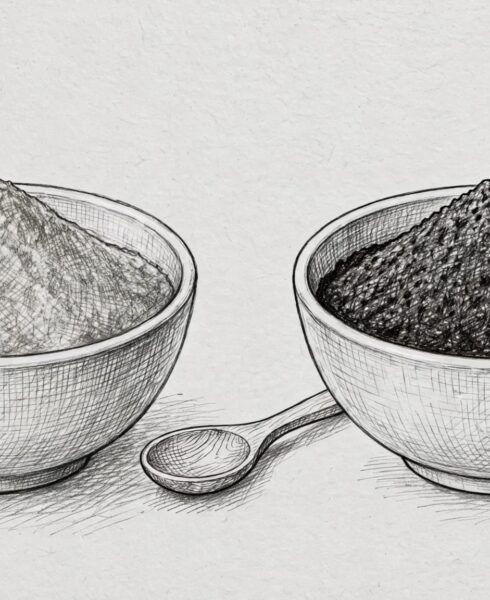
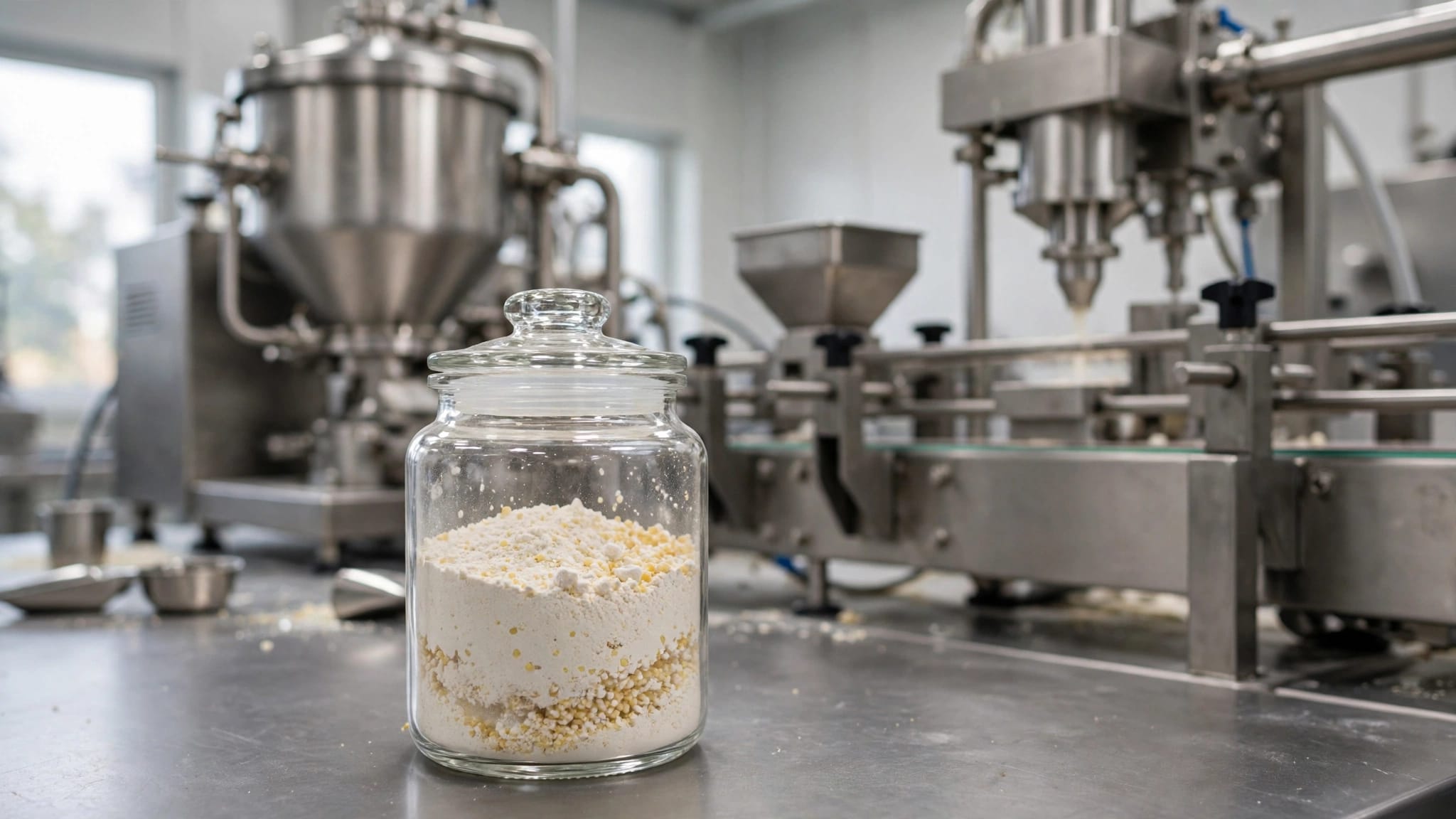
Differences in particle size and density allow components to separate during transport, discharge, and equipment vibration. Fine particles can move through spaces between coarse particles. Larger particles can roll farther across a powder pile.
Vitamin E preparations may contain relatively large particles, while many mineral ingredients are small and dense. Compare the supplied grades rather than relying on nutrient names.
Separation changes the nutrient ratio delivered to finished feed, nutrition powder, or individual dosage units. Additional mixing cannot protect a blend against uncontrolled handling afterward.
Match the Carrier to the Application
Compare Particle-Size Distributions
Compare sieve distributions for each vitamin preparation and the proposed carrier. An average particle size alone can hide substantial fine or coarse fractions.
Fine vitamin particles separate readily from a coarse base material, including coarse calcium carbonate. Wheat middlings and rice hulls are feed ingredients used to obtain overlapping, approximately bell-shaped particle-size distributions.
These feed materials are not default choices for food or pharmaceutical products. Select ingredients with appropriate identity, specifications, and compatibility for your intended use.
Compare our vitamin forms for premix formulation by activity, coating, particle form, and diluent, rather than vitamin name alone.
Compare Density and Flow Together
Measure bulk density and assess flowability for individual ingredients and the complete premix. Changes to the base material can raise or lower density, affecting bag capacity, volumetric dosing, and equipment discharge.
Bulk density is a practical screening measurement, but it does not describe every particle-density difference. Confirm performance in the actual blend.
A permitted silicon dioxide grade can support powder flow. Improved flow alone does not establish resistance to segregation.
Control Dilution and Blending
Prepare a Staged Dilution
Low-dose vitamins need enough dilution to distribute throughout the production batch. Direct addition of a small concentrated quantity can leave localized high and low concentrations.
Use a documented three-step sequence:
- Prepare an initial preblend with a measured portion of compatible carrier.
- Add more diluent in stages, mixing between additions to increase the preblend quantity.
- Introduce the diluted premix into the main blend using the validated loading sequence.
Avoid depositing the concentrate against vessel walls or into stagnant areas. Where appropriate for the equipment, load some bulk powder before the preblend, then add the remaining material.
Record actual weights and transfer losses. A correct formulation calculation doesn’t account for material retained in containers.
Define Equipment and Blend Time
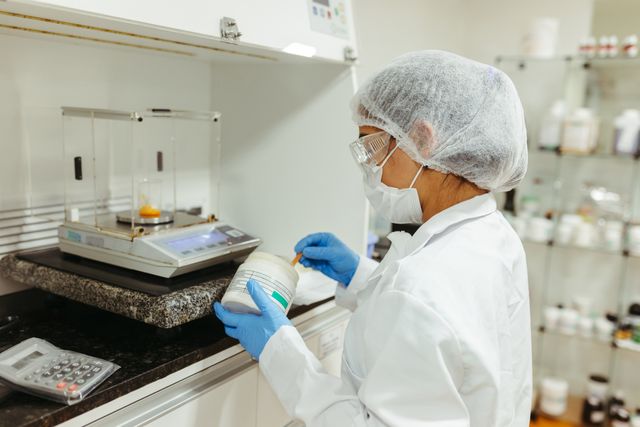
Ribbon, paddle, and tumble blenders require different operating conditions. Establish working fill, speed, loading sequence, and blend time through a controlled trial.
Collect samples at planned intervals to identify a mixing endpoint. Longer mixing isn’t automatically better; extended operation may damage protective coatings or promote separation.
Choose vitamin preparations with suitable handling properties, then evaluate them under representative mechanical conditions.
Repeat the trial after changes to batch size, base material, ingredient grade, or equipment.
Reduce Separation During Transfer and Packaging
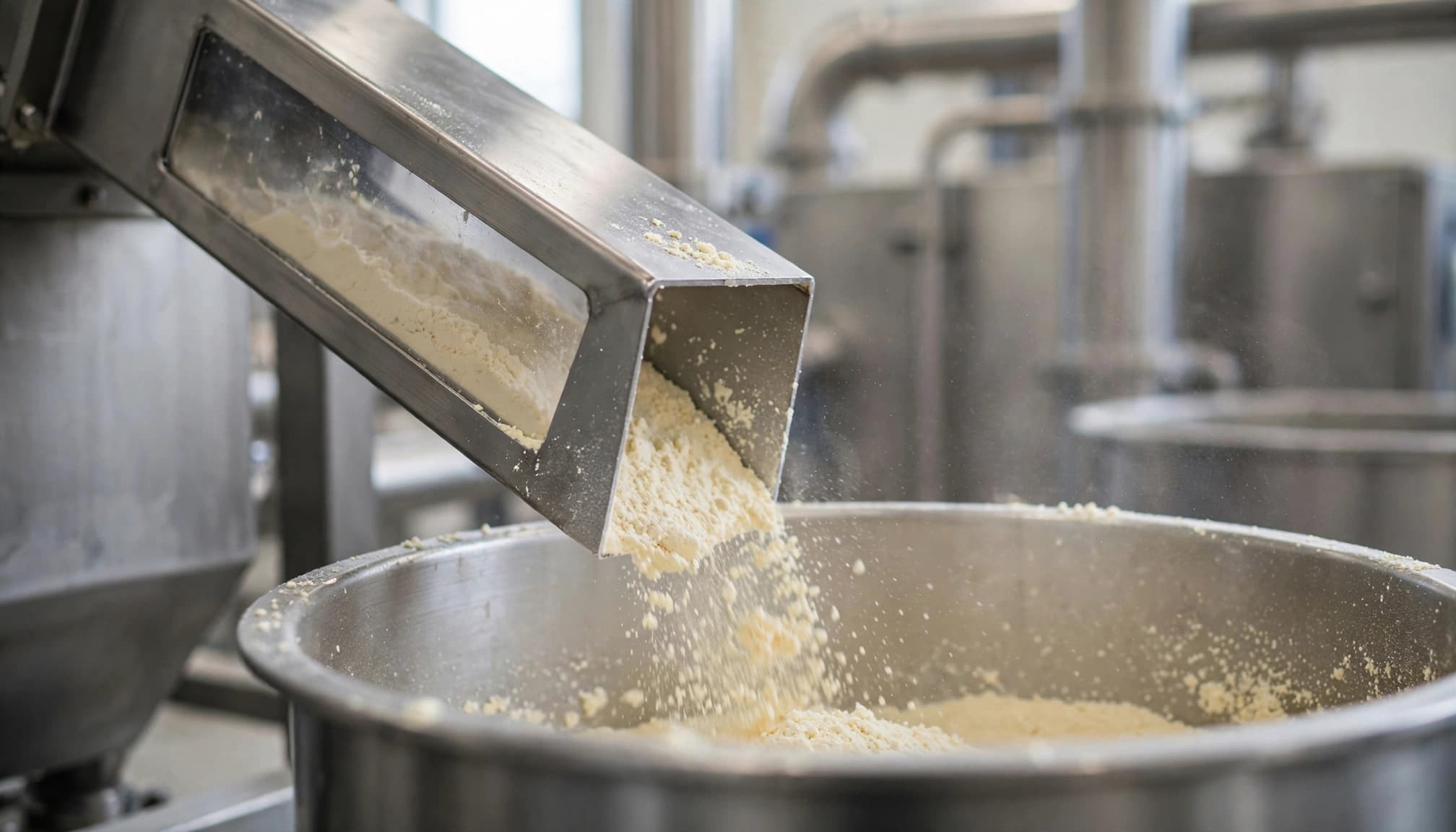
Check the premix at transfer points, since transfer can undo acceptable blender uniformity. Reduce free-fall height, repeated transfers, and unnecessary vibration between blending and final filling.
Review long chutes, open drops, pneumatic transfers, and hopper outlets as separate process steps. Powder piling, air movement, and uneven discharge can redistribute particle fractions.
Use enclosed, short transfers where practical. Assess hopper flow patterns and avoid prolonged vibration used only to force discharge.
Packaging trials should compare the beginning, middle, and end of filling. Select bag or container capacity using measured bulk density, then assess the packed product after representative transport.
Repeated tipping or shaking of partly filled containers can create further separation. Keep the handling sequence consistent during validation and production.
Test Uniformity Before and After Handling
Measure Distribution and Segregation Resistance
Collect separate samples at defined blender locations and throughout discharge. Include post-transfer and packaged samples, using sample masses relevant to the intended serving or dosage unit.
Assay representative vitamins rather than relying only on appearance. Calculate coefficient of variation as standard deviation divided by the mean, multiplied by 100.
A low coefficient of variation can describe a uniformly under-strength blend. Compare the mean assay with the nutrient target as well.
A vibratory trough simulates segregation caused by vibration and fall. Compare nutrient concentrations before and after the challenge, including different discharged fractions.
Set acceptance criteria before the trial and keep sampling conditions consistent. Do not pool samples when the purpose is to measure variation.
Measure Handling Properties
An Agway funnel classifies flowability by flow time under a defined method. Angle of repose provides another indication: a low, flat cone indicates better flow; a tall, steep cone indicates poorer flow.
A Heubach Dustmeter reports dust in mg per 100 g of sample. Dust creates worker-exposure and cross-contamination risks, and extraction can remove nutrient-bearing fines.
Include niacin and choline preparations in humidity weight-gain testing. Hygroscopic materials can gain weight, cake, and create conditions that accelerate chemical deterioration.
Use consistent conditioning and test methods when comparing candidate formulations.
Separate Chemical Loss From Physical Separation
Physical segregation redistributes nutrients. Chemical degradation reduces vitamin activity. Both can produce assay variation, but their corrective actions differ.
Light, heat, moisture, oxygen, pH, and ingredient contact affect vitamin stability. Feed guidance identifies vitamin K3, vitamin A, pyridoxine, vitamin B12, and folic acid among the more labile vitamins.
Keep vitamins separate from choline and trace minerals where the process permits. Choline is strongly hygroscopic, while inorganic trace minerals can promote oxidation and reduction reactions.
K-State recommends separate mineral premixes because mineral contact can affect vitamin stability, especially with iron and copper. Review copper and zinc sources and inclusion rates when investigating oxidation, since their effects can differ.
Sulfate mineral sources generally affect vitamin stability more than carbonates and oxides. K-State reports 40 to 50 percent lower vitamin activity losses with organic trace minerals during storage. This feed reference is not a guaranteed result for another formulation.
Separate storage reduces contact before manufacture. It doesn’t remove interactions after ingredients enter the finished product. Qualify any vitamin-trace mineral premix under the process intended for production.
After pelleting, check vitamin stability using the actual heat and moisture exposure from your process.
Protect Potency During Storage
Use Storage References With Their Conditions
K-State’s vitamin stability guidance gives feed-premix storage time references of about three to four months for vitamins alone. It recommends no more than 60 days when choline and trace minerals are present.
These are feed-specific storage time references, not validated shelf lives for food, supplement, or pharmaceutical formulations.
Store premixes in a cool, dry, dark location, using sealed plastic-lined bags or suitable protective packaging. Record storage time and storage conditions, including temperature, humidity, package condition, and opening dates.
In Yang and colleagues’ premix study, vitamin K3 showed degradation, retaining only 47.64 percent of initial activity after 12 months. The choline-free vitamin premix was stored at 25°C and 60 percent relative humidity. Removing choline did not eliminate degradation.
Match Protection to the Vitamin Form
Spray-dried preparations and beadlets, including cross-linked beadlets with antioxidants, can improve stability. Protection and vitamin stability depend on the coating, base material, vitamin form, and processing exposure.
Retinol is a suggested indicator of vitamin potency loss because vitamin A is sensitive and its assay is relatively inexpensive. It doesn’t replace testing other nutrients needed for release or shelf-life claims.
Use accelerated storage to identify weaknesses, while retaining real-time testing in the intended package. An acceptable appearance doesn’t establish retained potency.
Troubleshoot Variation at the Right Stage
Compare the location and timing of assay variation before changing the formulation.
| Observed Pattern | Process Check |
|---|---|
| Variation inside the blender | Review dilution, loading sequence, fill level, and blend time. |
| Uniform blender samples, variable packs | Inspect drops, hopper discharge, vibration, and filling sequence. |
| Nutrient-rich dust or extraction losses | Review fine particles, coatings, airflow, and dust collection. |
| Caking with declining potency | Review humidity exposure, package seals, and ingredient compatibility. |
Repeat sampling after changing one factor. Keep the analytical method, sampling mass, and sample locations consistent so the comparison remains useful.
A satisfactory blender result narrows the investigation. It does not establish that transfer, packaging, or transport is controlled.
Questions Before Your Production Trial
Can More Mixing Correct Segregation?
Additional mixing can correct incomplete distribution, but it cannot remove the underlying differences in particle size or density. A blend may become uniform and separate again during discharge.
Compare samples before and after handling. Use the results to distinguish an inadequate mixing endpoint from segregation after mixing.
Does a Stable Powder Prove Better Bioavailability?
Physical stability and retained vitamin activity do not establish improved absorption. Evaluate evidence for the actual chemical form and delivery system.
For beverage powders, also assess reconstitution and the complete beverage matrix. Our guidance on vitamins for beverage fortification covers these formulation considerations. A uniform dry blend does not establish stability after minerals, proteins, acidity, and processing are introduced.
Key Takeaways for Production Control
Control vitamin premix segregation through compatible ingredient properties, staged dilution, validated blending, and restrained handling. Confirm delivered uniformity after filling, rather than treating blender results as the final measure.
Track chemical stability separately through suitable packaging, storage control, and vitamin assays. Keep both measurements in the production specification: where the nutrients are distributed and how much activity remains.