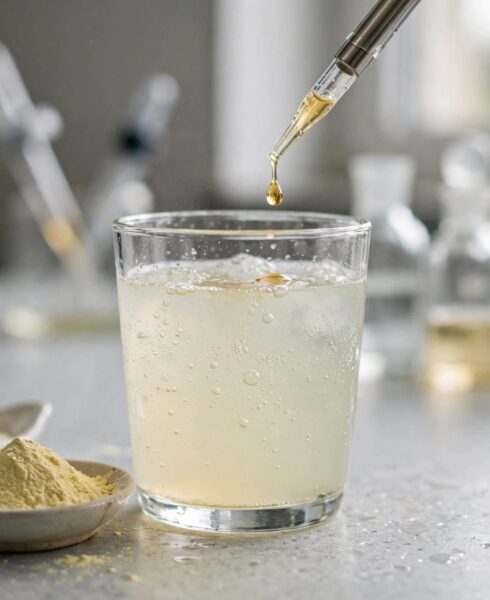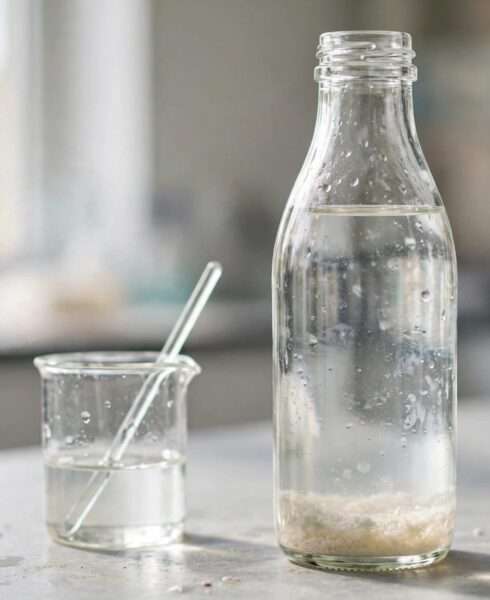
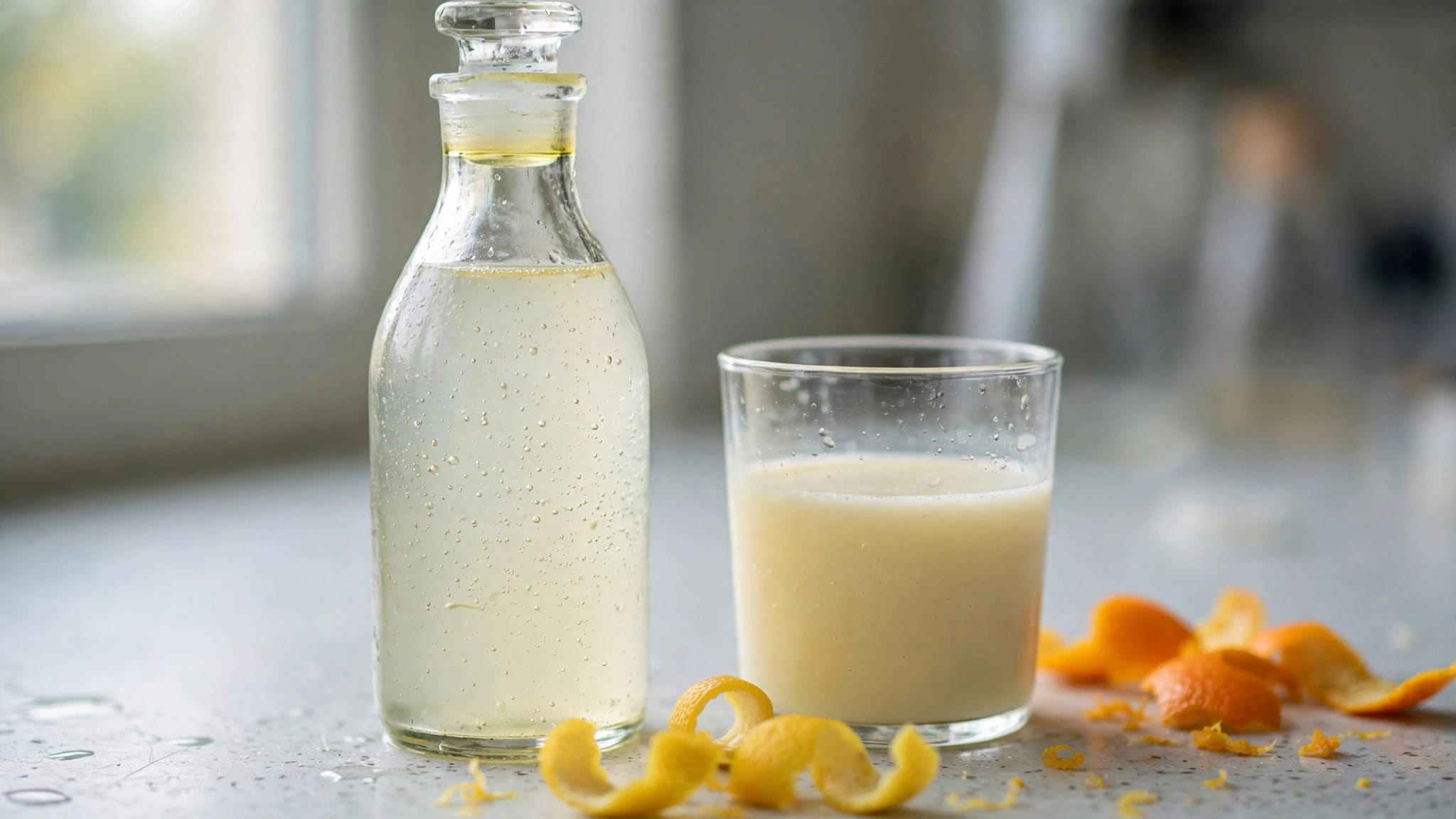
A citrus oil emulsion separates when droplets rise, cluster, merge, or grow faster than the drink can keep them dispersed. Citrus emulsion stability depends on droplet protection, density balance and performance after dilution into the finished drink.
A stable concentrate can still produce an oily bottle-neck ring after acidification, dilution and carbonation. Start with the separation pattern, then compare formulation and processing changes under the same storage conditions.
Why Citrus Emulsions Separate
Density Mismatch and Droplet Size
A beverage emulsion contains citrus oil droplets dispersed in a continuous aqueous phase. The phases remain physically distinct, even when the drink looks uniform.
Citrus oils are generally less dense than the aqueous phase, so droplets rise and form a concentrated cream layer. Denser droplets sediment instead.
Larger droplets separate faster. Droplet clusters can also move like larger particles, so a small initial particle size doesn’t prevent every creaming failure.
Flocculation, Coalescence, and Ripening
Flocculation brings droplets into clusters without merging them. Coalescence joins droplets into larger droplets after their protective interfacial layers fail.
Ostwald ripening transfers oil molecules through the aqueous phase from smaller droplets to larger ones. Oil solubility and composition influence this mechanism.
These processes interact. Clustering accelerates gravitational separation, while droplet growth increases flotation. Coalescence can eventually produce visible free oil.
Phase inversion changes an oil-in-water emulsion into a water-in-oil system. It is more relevant to concentrated formulations that undergo large changes in oil fraction, emulsifier balance, or processing conditions.
Select Emulsifiers and Weighting Agents Separately
Build a Protective Droplet Layer
Emulsifiers help form droplets and create an interfacial barrier that prevents them from contacting and merging. Gum arabic and emulsifying modified starch can provide steric protection by surrounding droplets with hydrated material.
Evaluate gum arabic E414 for beverage emulsions by grade, hydration behaviour, solubility, and performance in your flavour system. A purchasing specification alone doesn’t establish finished-drink stability.
Modified starch E1450 is another beverage-emulsion option. Compare it with gum arabic at the intended oil loading and dilution ratio.
Thickeners support stability by slowing droplet movement, but viscosity alone can’t repair inadequate interfacial coverage. Excess unadsorbed polymer can also promote depletion flocculation.
Correct Density Without Overweighting
A weighting agent such as sucrose acetate isobutyrate (SAIB) increases oil-phase density toward that of the aqueous phase. This reduces gravitational separation when the density match is appropriate.
Glycerol esters of wood rosins, identified as E445, are another weighting option where permitted for the intended application.
The two ingredient types perform different jobs. Increasing one doesn’t automatically compensate for a shortage of the other.
Use the finished drink as the density reference. Sugar changes aqueous-phase density and viscosity, so a concentrate balanced against water may behave differently after syrup blending.
Control pH, Pectin, and Citrus Oil Composition
Pectin Performance Depends on Its Structure
Pectin charge depends on pH and degree of methylesterification. A study comparing citrus pectin grades examined CP82, CP38 and CP10, alongside interactions with conventional emulsifiers.
Under those experimental conditions, the pectin-stabilized emulsions formed cream layers within one day at 4°C. Bridging interactions occurred in single-emulsifier systems, while depletion flocculation occurred in multiple-emulsifier systems.
Bridging occurs when polymer connects droplets. Depletion occurs when nonadsorbed material creates an attraction between them.
A separate study of citrus pectin reported larger droplets and lower stability as pH increased. At pH 6, glutamic acid improved stability. The amino acids glutamic acid and arginine performed better when added after emulsification than before.
These are system-specific findings. They do not establish pH 6 as a target for acidic soft drinks.
Different Citrus Oils Need Separate Trials
A comparison of three citrus oils used 5% oil and 4% Tween 80 for spontaneous emulsification. Bergamot oil was more stable than mandarin and sweet orange over the 24-hour observation period.
That 4% surfactant concentration applied to the study’s 5% oil level, not as a general dosage recommendation. The result does not establish a universal oil ranking or beverage dosage.
Changes in limonene, linalool and other constituents affect oil properties and molecular transfer. Oxidation can also change flavour during storage. When changing suppliers or grades, compare the composition and freshness of bergamot oil, lemon oil and other citrus oils, as well as their storage exposure.
Optimize Homogenization Before Increasing Dosage
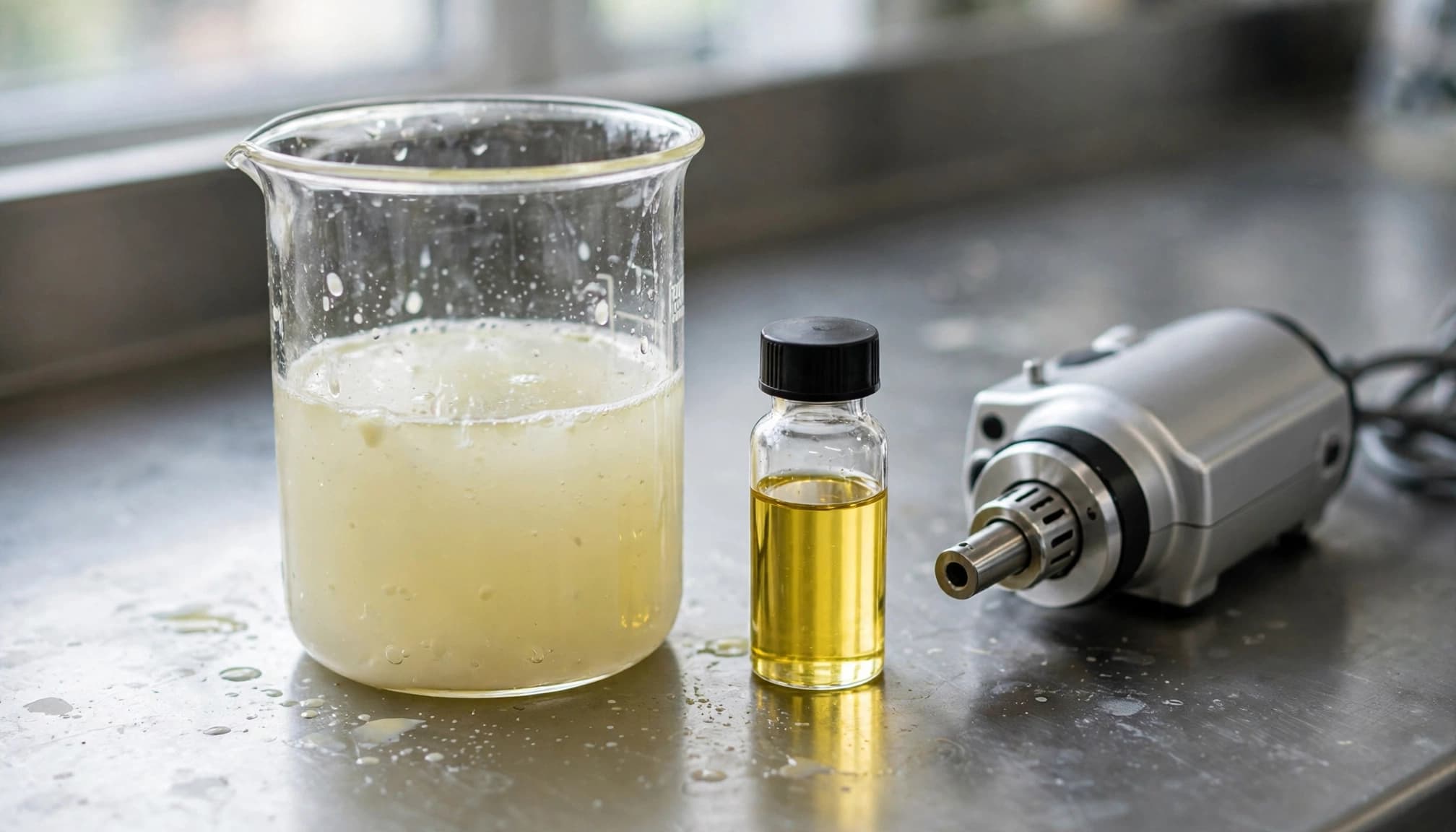
Homogenization reduces droplet size, but smaller droplets need more interfacial coverage. Raising pressure without enough interfacial stabilizer can create droplets that quickly recoalesce.
Fully hydrate the selected hydrocolloid, prepare a consistent pre-emulsion, and compare pressure, pass count, and outlet temperature. Record the complete particle-size distribution, including the coarse tail.
The concentrated-lemon PLOS ONE study proposed droplets below 3 micrometres with a narrow distribution as a useful stability target. Smaller droplets reduce flotation but don’t always prevent Ostwald ripening.
Spontaneous emulsification is a low-energy option that limits heat exposure from some high-energy processes. High-pressure homogenization can also use cooling to limit temperature rise and citrus flavour loss.
Control pH and soluble solids during comparison trials. Acids, minerals, and sugars can change droplet interactions or continuous-phase properties. Use the intended production water, ingredient-addition order, and target °Brix.
Connect Separation Patterns to Corrective Actions
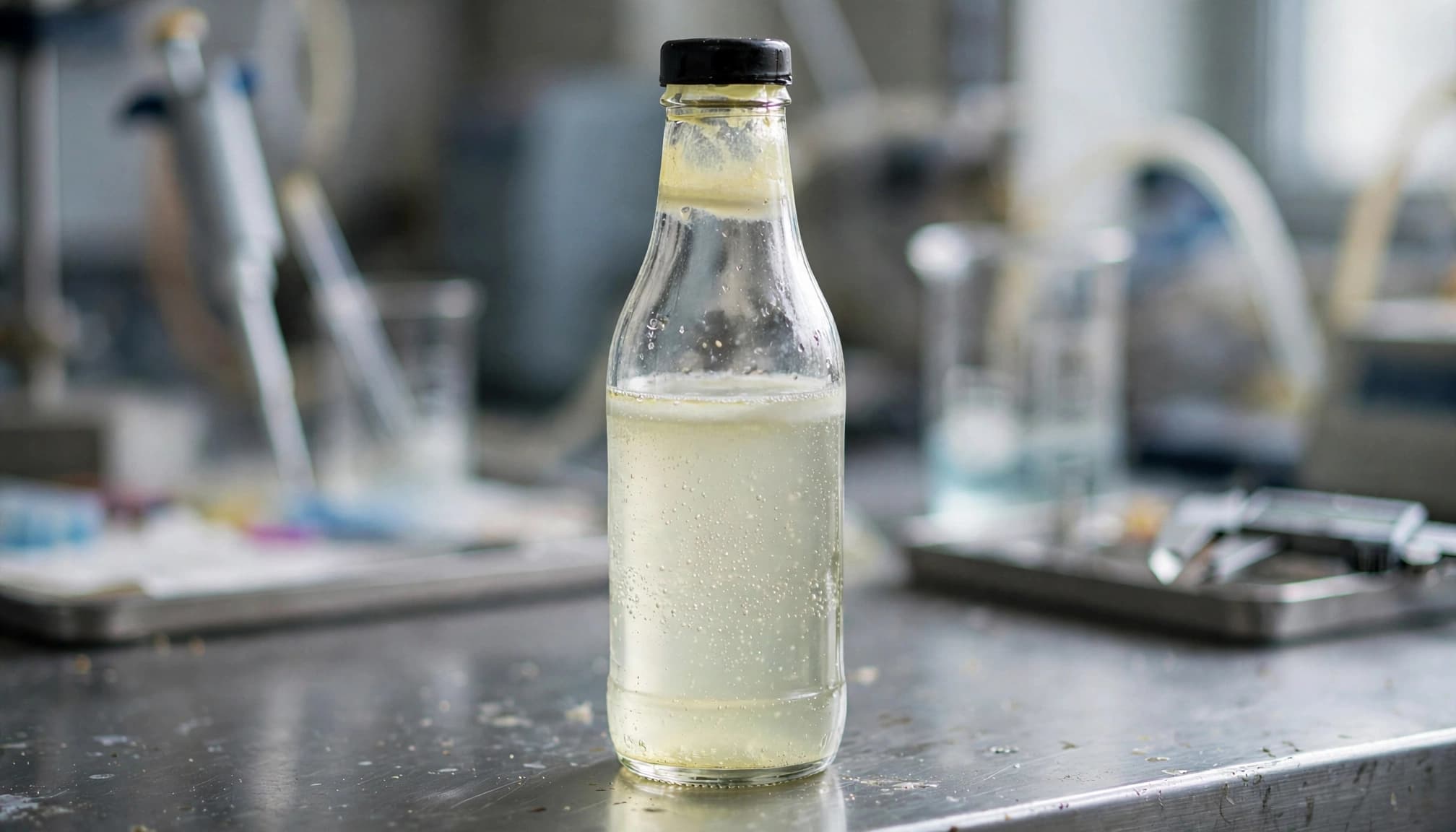
Lemon beverage emulsions are diluted and carbonated during bottling. Separation often appears as an opaque or oily ring around the bottle neck.
Use the observed pattern to choose the next controlled trial.
| Observed Pattern | Likely Cause | Corrective Trial |
|---|---|---|
| Cream layer that redistributes with gentle mixing | Density mismatch or droplet clustering | Compare weighting level and inspect droplet clusters. |
| Free oil or a persistent oily neck ring | Coalescence or inadequate droplet protection | Compare interfacial coverage and homogenization conditions. |
| Droplet size increases during storage | Coalescence or Ostwald ripening | Examine microscopy, oil composition, and size-distribution changes. |
| Sediment develops | Excess weighting or insoluble material | Measure phase densities and identify deposited particles. |
| Concentrate passes, bottled drink fails | Dilution, acidity, minerals, or process stress | Repeat testing in the complete carbonated formulation. |
The pattern narrows the investigation but doesn’t identify the mechanism by itself. A neck ring can result from several linked failures.
Photograph undisturbed bottles before mixing. Record layer height, ring appearance, and whether gentle inversion restores uniformity. Compare samples in the same bottle geometry because the neck can make small amounts of separated oil conspicuous.
Measure Citrus Emulsion Stability at Both Stages
Interpret Research Values as References
A PLOS ONE study of concentrated lemon found that formulations with 50% oil stayed stable for more than 15 days with either starch or gum arabic. The formulations also contained SAIB and a DSS surfactant.
Stable formulations had viscosity above 100 cP and an emulsion-to-mucilage surface-tension ratio above 1. These measurements apply to that experimental system, not to universal release limits.
Zeta-potential magnitudes around 25 to 30 mV are commonly cited as electrostatic stability references. In the study, they did not reliably predict stability because steric protection mattered more.
Surface tension and oil-water interfacial tension are different measurements. Evaluate each using its own method.
Use a Three-Stage Storage Trial
Combine visual inspection with particle size, microscopy, viscosity and, when useful, zeta potential. A review of emulsion assessment methods recommends assessing stability across multiple measurement scales.
- Prepare matched concentrate batches. Record oil fraction, stabilizer level, weighting level, hydration conditions and homogenization settings.
- Dilute each batch into the finished drink. Include the actual water, acid, sweetener, preservative system and carbonation process.
- Store packaged samples under defined conditions. Include intended storage conditions and a justified elevated-temperature condition. Compare results through the target shelf life.
An early screening schedule can include days 0, 1, 7 and 15. Continue testing longer to assess shelf life.
Use a consistent visual de-emulsification index, such as separated-layer height divided by total sample height. Record the temperature and measurement method with every viscosity result.
Key Takeaways
- Match the correction to the failure mechanism before increasing ingredient dosage.
- Compare droplet size, interfacial protection and density balance in both concentrate and finished drink.
- Treat short storage studies, zeta-potential thresholds and supplier dosages as references, not guarantees.
Questions Before You Trial
How Much Emulsifier Should You Use?
The required amount depends on oil fraction, ingredient grade, droplet surface area, and processing. A 50% oil concentrate needs its own emulsifier-to-oil evaluation; results from a 5% oil research emulsion cannot define that ratio.
Use a controlled trial with matched processing conditions. Compare particle size immediately after manufacture and after storage, rather than selecting dosage from initial appearance alone.
What Should a Lemon-Emulsion Specification Include?
Commercial specifications can list E414 and E1450 as stabilizing ingredients, with E445 as a weighting agent. A product-specific reference dosage of about 2.8 g/L refers to concentrate added to the beverage, not the use level of either individual ingredient.
Packaging references include 20 kg, 250 kg, and 1,000 kg units. Pack size does not establish suitability.
For grade matching, provide your oil system, target cloud, pH, °Brix, dilution ratio, process, and storage target. Our team can support gum arabic sample evaluation and product-document review for that application.
Confirm Stability in the Bottled Drink
Citrus emulsion stability must hold after the full production process. A uniform concentrate is only one part of that assessment.
Base your formulation decision on finished-drink performance under defined storage conditions. Compare the separation pattern, droplet-size changes, and sensory results against the same control.
Use those results to select the stabilizing system, weighting level, and process that fit your beverage.