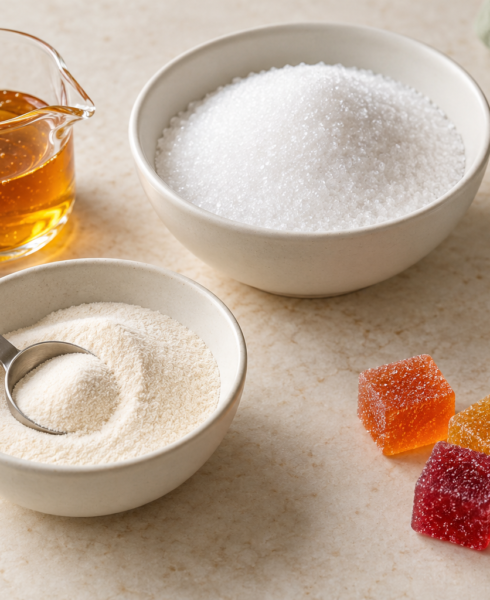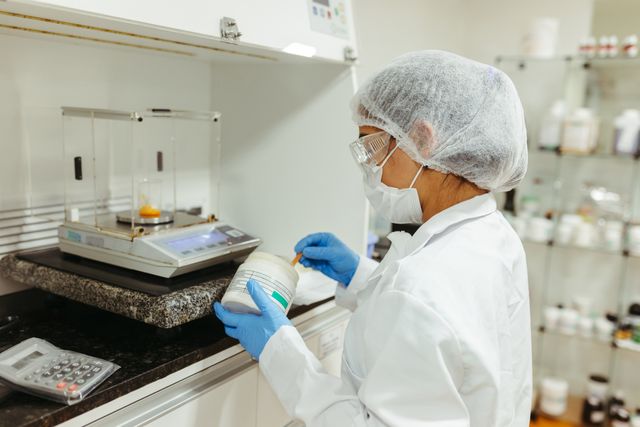
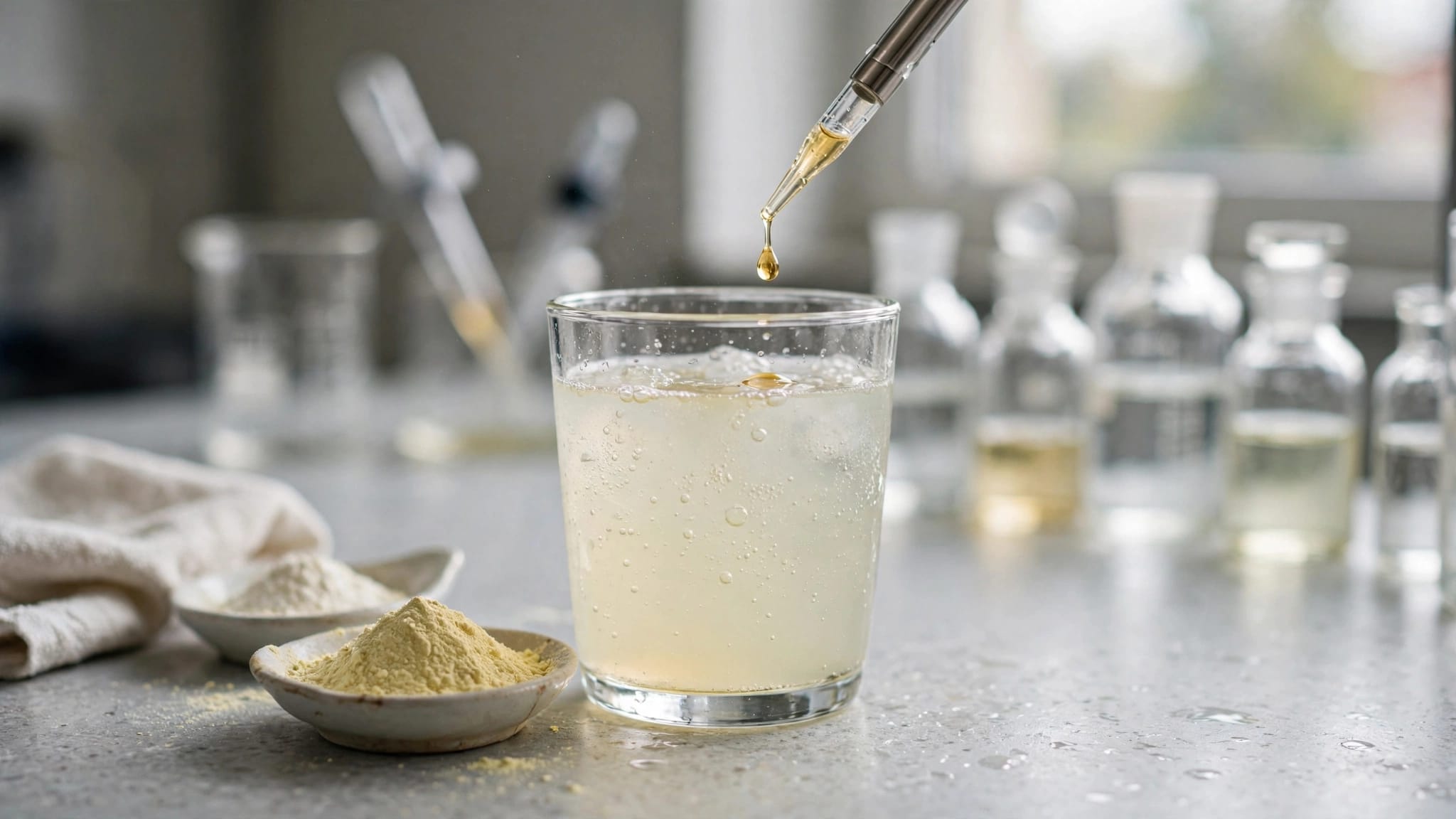
For beverage fortification, select forms that suit the finished drink, processing conditions, and shelf life of fortified beverages. The suitable option must deliver the target nutrient level without unacceptable separation, flavor, color, or stability changes.
A vitamin name alone does not define its performance. Compare the chemical form, potency, and delivery system, then evaluate the shortlisted grades in your actual formulation.
Key Takeaways
- Define the serving size, nutrient target, beverage pH, clarity requirement, process, packaging, destination market, and source or carrier restrictions before selecting a vitamin grade.
- Compare chemical form, potency, and delivery system. Fat-soluble vitamins generally need an emulsion or dispersible preparation in water-based drinks, and dispersibility does not mean molecular solubility.
- Test stability in the finished beverage. Heat, light, oxygen, pH, packaging, and ingredient interactions affect nutrient retention and physical quality.
- Evaluate flavor, color, mineral compatibility, and nutrient retention separately from bioavailability. Permitted forms, intended uses, labeling, and cumulative intake also constrain the formulation.
- Use controlled bench trials and measured retention to set overage. Compare cost per compliant serving and confirm performance through real-time shelf-life testing.
Define the Beverage Fortification Objective
Fortification means deliberately increasing a food’s vitamin or mineral content to improve its nutritional quality. Beverage fortification dates to the early 1930s, when US dairy processors began adding vitamin D to milk to combat rickets.
The WHO describes food fortification as an evidence-informed intervention that helps prevent, reduce, and control micronutrient deficiencies. The World Food Programme reports that micronutrient deficiencies affect over 2 billion people, often described as hidden hunger.
Public health outcomes depend on the nutrient, population, and delivery program. A Philippines assessment identified fortified powdered milk for childhood iron deficiency as cost-effective at about USD 66 per disability-adjusted life year averted. That figure is a program-specific result, not a beverage ingredient cost benchmark.
Your formulation brief needs a narrower starting point: serving size, target nutrient content, beverage pH, clarity requirement, process, packaging, and destination market.
Define source restrictions and carrier declarations at the same stage. A technically suitable form can still conflict with a vegan positioning or ingredient declaration.
Compare Solubility and Dispersibility
Chemical form determines properties such as acidity and solubility. Physical form, including crystalline powder, oil, emulsion, or coated powder, determines how the ingredient enters your process.
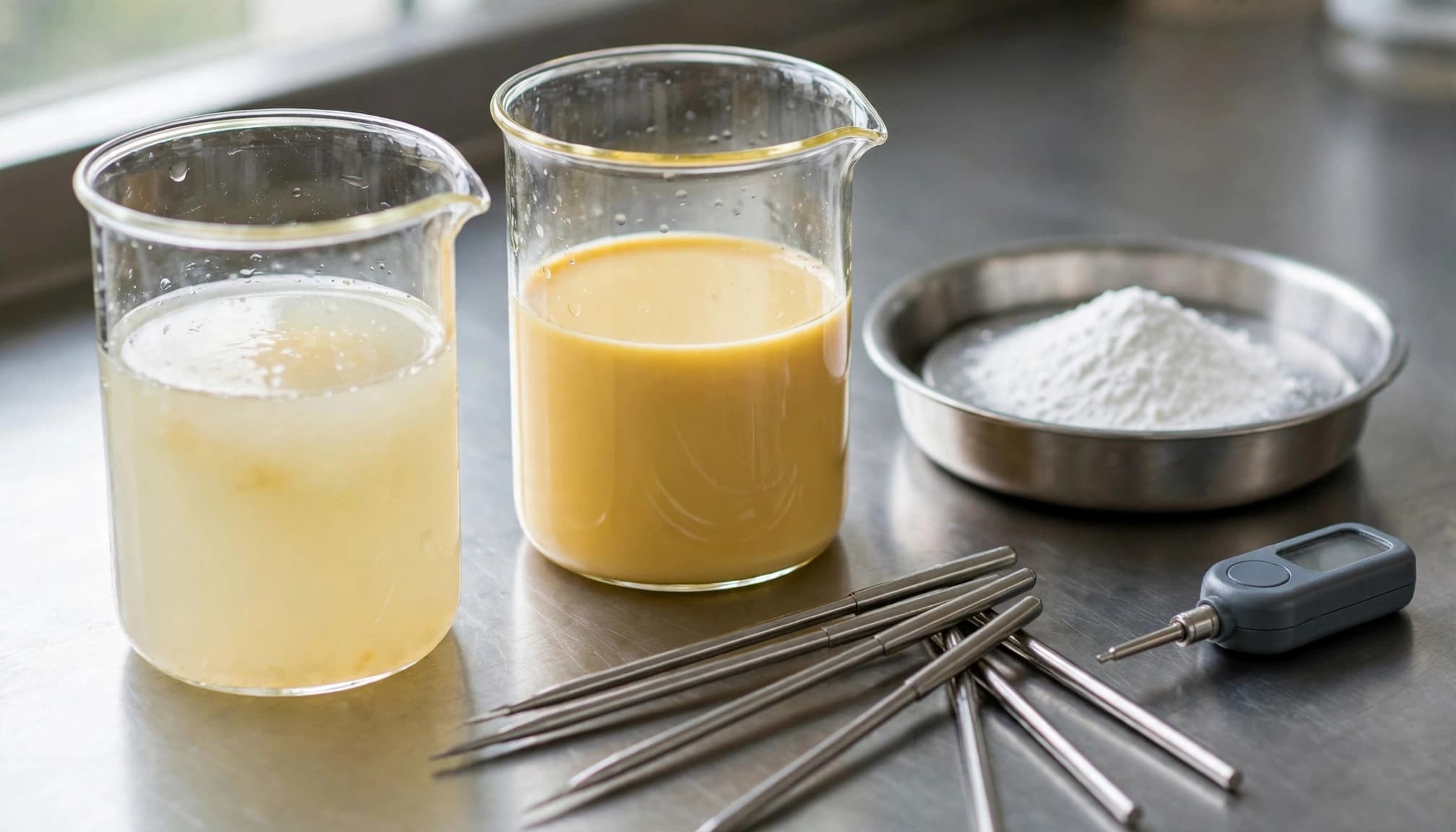
Water-Soluble Vitamins
Ascorbic acid dissolves in water and adds acidity. Sodium ascorbate and calcium ascorbate offer different acid loads, but also contribute sodium or calcium.
Thiamine hydrochloride is water-soluble; thiamine mononitrate is less soluble and commonly selected for dry systems. Riboflavin has limited water solubility, while riboflavin 5′-phosphate sodium is a water-compatible option for liquid formulations.
Compare these vitamin forms for beverage applications by assay, required concentration, and dissolution conditions. “Water-soluble vitamin” does not mean every form dissolves rapidly at every processing temperature.
Fat-Soluble Vitamins
Vitamins A, D, E, and K generally require an emulsion or dispersible preparation in water-based drinks. An oil concentrate added directly can separate or distribute unevenly.
Dispersibility is not molecular solubility. A water-dispersible vitamin D3 powder may distribute through the beverage as particles or droplets.
Evaluate creaming, sedimentation, particle size, and dose uniformity. Clear beverages need additional attention because a stable dispersion can still create visible haze.
Test Stability Across pH and Processing
Vitamin stability depends on dissolved oxygen, heat, ultraviolet light, pH changes, and interactions with other ingredients. A stable dry ingredient does not establish finished-beverage stability.
Match the Form to the Matrix
Record the actual beverage pH, buffering capacity, dissolved oxygen, and expected storage conditions. There is no universal pH window that protects every vitamin form.
Thiamine is heat-sensitive. Riboflavin is more heat-stable but breaks down under light exposure, so a clear package can undermine an otherwise suitable formulation.
Evaluate oxygen introduced during mixing and filling. Package oxygen transmission, headspace, and light protection belong in the stability assessment, not only in the packaging review.
Choose the Addition Point
Vitamin C losses during heat treatment of fruit-based beverages can range between 15% and 75%, depending on heating intensity and duration. This range cannot determine your product’s overage.
Heat-sensitive vitamins are typically added after pasteurisation and cooling when a validated post-process dosing system is available. More stable vitamins can enter earlier.
Post-process addition must preserve microbiological safety through an appropriate hygienic or aseptic system. Where hot filling or terminal heating is required, evaluate retention through the complete process.
Match Delivery Systems to Beverage Types
The main incorporation methods are direct addition, emulsification, microencapsulation, and chemical stabilisation. Chemical stabilisation can involve suitable derivatives, buffering, or permitted antioxidants.
Use the beverage format to narrow the starting options for fortified beverages.
| Beverage Type | Starting Approach | Main Trial Requirement |
|---|---|---|
| Clear acidic drink | Soluble B/C forms; clarity-compatible fat-soluble preparations | Haze, acidity, retention |
| Fruit juices or smoothies | Dissolved vitamins or protected dispersions | Oxidation, sediment, color |
| Dairy or plant-based drink | Emulsified or dispersible A/D/E/K grades | Homogenisation, protein compatibility |
| Sports drinks | Soluble vitamins with electrolyte system | Taste and compatibility with electrolytes |
| Instant beverage powder | Dry premix with suitable carriers | Segregation, reconstitution |
These are trial directions, not universal prescriptions. The same delivery system can behave differently after changes to protein, acidity, or electrolyte concentration.
Microencapsulation provides a barrier around sensitive ingredients, but protection depends on the wall material and process. Vitamin D3 in gum arabic-chitosan microparticles remained stable in fortified pear juice for seven days at 4°C.
That short refrigerated result does not establish protection through UHT processing, prolonged light exposure, or ambient storage.
Evaluate Flavor, Color, and Bioavailability
A vitamin preparation must meet the nutrient target within the drink’s sensory limits. Evaluate the complete ingredient, including its carrier, coating, and antioxidant system.
Measure Sensory Changes
Ascorbic acid changes sourness and acid balance. Mineral ascorbates change the formulation differently and can affect the mineral load.
Niacinamide may suit applications where a neutral flavor is important, but the finished concentration still needs sensory evaluation. Riboflavin contributes yellow color; beta-carotene can add substantial yellow-orange color.
Compare samples against an unfortified control after processing and storage. Record bitterness, metallic notes, aroma changes, color drift, and mouthfeel rather than relying on an immediate tasting.
Separate Retention From Availability
An assay shows how much vitamin remains. It does not establish absorption or prove that an encapsulated preparation releases the vitamin appropriately during digestion.
For vitamin C, the NIH review of available forms does not identify one supplemental form as consistently superior. Avoid paying a premium based only on a general “more bioavailable” claim.
Match supporting evidence to the actual chemical form and delivery system. Physical stability alone does not establish improved bioavailability.
Manage Mineral and Premix Compatibility
Iron and copper are minerals that can catalyse degradation of sensitive vitamins. Vitamin and mineral premixes are therefore often stored separately before final manufacture.
Separate premix storage does not remove interactions in the finished beverage. Evaluate the combined formula, including added minerals and their salts, proteins, flavors, colors, preservatives, and carriers.
Mineral selection is also application-specific. PURACAL PP is a calcium lactate ingredient with 14% mineral content, suited to acidified dairy and yogurt drinks. PURASAL HiPure P Plus is a liquid potassium lactate developed for sports-drink fortification.
These specifications illustrate why nutrient identity alone is insufficient. Salt form, active content, and beverage matrix affect the required addition and formulation response.
Calcium supplied through calcium ascorbate must also enter the mineral balance. Review protein stability and precipitation after that contribution is included.
Calculate Overage and Delivered Cost
Technologists commonly add vitamins above the label amount to compensate for processing and shelf-life losses. Set overage from measured retention, rather than applying one percentage across the premix.
The calculation is:
Required starting nutrient content = label target ÷ retained fraction.
At 80% measured retention, the starting requirement is 125% of the label target, equivalent to 25% overage. Account separately for established native nutrient content and the ingredient’s actual potency.
Compare cost per compliant serving, not price per kilogram. Include vitamin activity, carrier dilution, overage, mixing requirements, packaging protection, testing, and rejected batches.
The FDA’s fortification policy guidance includes correcting dietary insufficiency, restoring processing losses, and maintaining nutrient-to-calorie balance. It does not provide blanket permission to fortify every beverage.
Permitted forms, intended uses, labeling, and excessive cumulative intake remain formulation constraints. More overage is not automatically a safer commercial decision.
Run a Controlled Bench Trial
Use a controlled trial to compare shortlisted forms under the same conditions. Keep the base formulation, nutrient target, packaging, and storage schedule consistent.
- Define the control and candidate preparations. Record chemical form, assay or activity, carrier, dose, mixing sequence, pH, and intended addition point. Calculate additions on an equivalent nutrient basis.
- Reproduce the manufacturing sequence. Include hydration, holding time, homogenisation, heating, cooling, and filling. Assess dissolution or dispersion before and after processing, including samples taken across the batch.
- Follow potency and product quality through storage. Measure nutrient content, separation, sediment, color, flavor, and relevant physical properties in the intended package. Include realistic distribution temperatures and light exposure.
Use accelerated storage to identify weaknesses, but retain real-time shelf-life testing. A short warm-storage trial does not automatically predict long-term vitamin retention.
Record acceptance limits before comparing results. This keeps a visually attractive sample from passing despite inadequate nutrient delivery.
Questions Before Selecting a Grade
Which Vitamins Need the Closest Stability Control?
Vitamin C, thiamine, folate, and B12 often need careful matrix-specific evaluation. Riboflavin requires particular attention to light exposure.
Fat-soluble vitamins introduce an additional requirement: the preparation must remain uniformly distributed as well as chemically stable.
How Does Fortified Milk Differ From Normal Milk?
Fortified milk contains added nutrients, commonly vitamin D and sometimes vitamin A, beyond the levels supplied by the base milk.
The FDA explains vitamin D use in milk and milk alternatives. The applicable beverage category determines the permitted use, so plant-based and dairy formulations should not be treated as interchangeable.
Select Against Finished-Product Evidence
The suitable vitamin form delivers the required nutrient level through processing and shelf life with acceptable sensory and physical performance.
Use finished-product results to compare forms, protection systems, overage, and delivered cost. A clear formulation brief and controlled trial provide a more reliable purchasing basis than the vitamin name or ingredient price alone.