Sodium polyacrylate crosslinked gel usually works better than regular sodium polyacrylate for lasting longer and holding water. But the best one to use depends on what you need it for. Both sodium polyacrylate and the crosslinked gel can swell a lot. They can soak up as much as 300 grams of water for every gram of powder. The sodium polyacrylate market around the world was worth $6,490.5 million in 2022. It is expected to get even bigger. China, Japan, and Europe are the main places where it is sold. Most sodium polyacrylate is used in baby diapers. This is more than 70% of all its uses.
Global sodium polyacrylate market size: $6,490.5 million (2022)
Projected market size: $8,377.9 million (2028)
Main application: Baby diapers (over 70% market share)
Readers will find out how to pick sodium polyacrylate or the crosslinked gel. They will learn about absorbency, how well it holds water, how long it lasts, how it affects the environment, cost, and what it is used for.
Key Takeaways
Sodium polyacrylate soaks up water very fast. This makes it great for things like diapers that need quick soaking.
Crosslinked sodium polyacrylate gel keeps water in better when squeezed. It also works well in salty water. This makes it good for things that need to last a long time.
Pick sodium polyacrylate if you want to save money and use clean water. Pick the crosslinked gel if you need something strong and tough.
Both types can affect the environment. Sodium polyacrylate stays longer in landfills. The crosslinked gel breaks down faster in compost.
Knowing these differences helps you pick the right one. This makes sure your project works its best.
Sodium Polyacrylate and Crosslinked Gel Overview
Polymer Structure and Properties
Sodium polyacrylate is a superabsorbent polymer hydrogel. Scientists make it by linking many sodium acrylate units together. These units join to make long chains. The chains help the polymer soak up a lot of water. Sodium polyacrylate can hold water up to a thousand times its weight. This is why it is called a super-absorbent polymer. The chains have carboxyl groups that pull in water. When water gets in, the chains swell and trap the water inside.
When sodium polyacrylate turns into a crosslinked gel, the chains connect at special points. These connections make a 3D network. The cross-linking keeps the polymer from melting in water. Instead, the hydrogel swells but stays in shape. This network helps the hydrogel keep its form even when full of water. The crosslinked gel can take more pressure and lasts longer.
Key Differences Between Forms
The biggest difference between sodium polyacrylate and the crosslinked gel is their structure. Sodium polyacrylate has long, bendy chains. The crosslinked gel has chains joined together like a net. This net makes the hydrogel stronger and steadier. The crosslinked polyacrylate does not fall apart in water. The regular polymer can lose its shape if it soaks up too much water.
How much the chains are crosslinked changes how the hydrogel acts. The table below shows how different conditions change swelling and strength:
pH Condition | Cross-Linking Density | Swelling Behavior | Observations |
|---|---|---|---|
Acidic | High | Slow swelling | Stronger interactions protect hydrogen-bonded complexes from breakage. |
Acidic | Low | Fast swelling | Higher maximum swelling ratios compared to highly cross-linked samples. |
Neutral | High | Less swelling | Stiffer hydrogels retain less water. |
Neutral | Low | More swelling | Weaker hydrogels show larger swelling ratios. |
Basic | Varies | Similar peak times | Electrostatic interactions dominate due to deprotonation of carboxylic groups. |
Cross-linking also changes how stretchy the hydrogel is. A gel with lots of crosslinks is more elastic. It can go back to its shape after being squeezed. This is important for superabsorbent polymer hydrogels in things like diapers and medical pads.
Absorbency and Retention Performance
Water Absorption Capacity
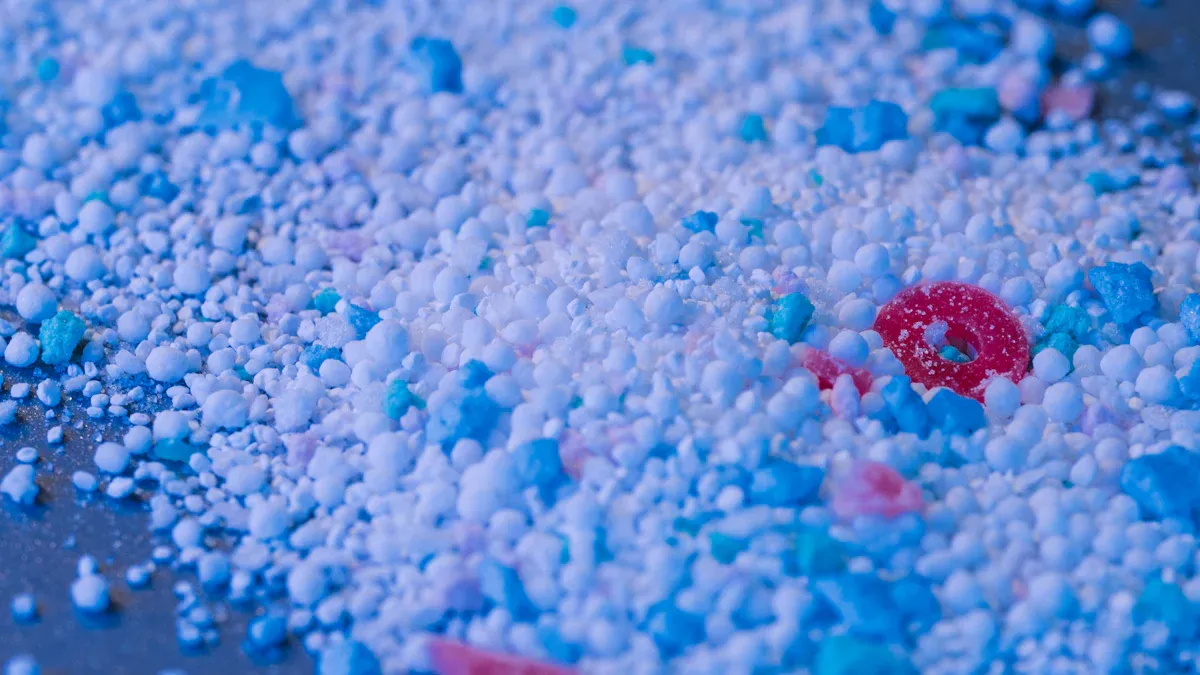
Sodium polyacrylate is a superabsorbent polymer hydrogel. Scientists use it in products that need to soak up water. It can hold a lot of water because of its special structure. In labs, sodium polyacrylate can take in 300 to 800 grams of water for each gram of polymer. This makes it very useful in many things.
Sodium polyacrylate absorbs water fast. The chains inside pull water in quickly. It swells up and reaches its limit in a short time. If there is less cross-linking, the hydrogel swells faster and holds more water. When it becomes a crosslinked gel, it acts differently. The crosslinked hydrogel takes in water more slowly. Its network inside pushes back, so swelling takes longer.
Sodium polyacrylate soaks up water fast and reaches its limit quickly.
Crosslinked polyacrylate hydrogel takes in water slower but keeps its shape better.
How much it swells depends on cross-linking and the environment.
Property | Sodium Polyacrylate | Crosslinked Gel |
|---|---|---|
High due to osmotic pressure and charge density | Slower due to elastic resistance from crosslinking | |
Equilibrium Time | Reaches quickly when osmotic pressure balances | Takes longer due to elastic retraction and crosslinking density |
How well polyacrylate hydrogels swell can change with pH, temperature, and salt. In pure water, sodium polyacrylate works best. If the water has salt or other stuff, it does not swell as much.
Retention in Saline and Pressure Conditions
Sodium polyacrylate and crosslinked polyacrylate hydrogel act differently in salty water or under pressure. Polyacrylate hydrogels do not swell as much in salty water. Sodium ions fight with the polymer for water, so it cannot hold as much. Crosslinked polyacrylate hydrogel keeps water better in salty water because its network holds on tight.
Pressure also changes swelling. If you press on the hydrogel, water can come out. Sodium polyacrylate loses water faster when squeezed. Crosslinked polyacrylate hydrogel keeps water longer because its network holds it in. Swelling slows down under pressure, and how much water it can hold changes.
Factor | Effect on Water Retention |
|---|---|
Higher pressure can force water out of the polymer network, reducing absorption efficiency. | |
Cross-linking Density | Higher cross-linking density can limit the polymer’s ability to retain water under pressure. |
Environmental Conditions | Temperature and humidity can affect the polymer’s physical state and its water retention capabilities. |
Duration of Absorption | Over time, the polymer network may relax, leading to a slight decrease in water retention. |
How well polyacrylate hydrogels work depends on both how much water they can take in and how well they keep it. Crosslinked polyacrylate hydrogel works better in hard situations. It keeps its shape and holds water even if squeezed or in salty water. Sodium polyacrylate is best in clean water and when there is not much pressure.
Note: Superabsorbent polymer hydrogels change how they swell based on the environment. Polyacrylate hydrogels with lots of cross-linking keep water better but swell slower. Sodium polyacrylate can soak up a lot of water but does not work as well in tough conditions.
Sodium polyacrylate and crosslinked polyacrylate hydrogel are used in many things. Diapers, medical pads, and farm products need their swelling and absorbing abilities. You should pick sodium polyacrylate or crosslinked hydrogel based on if you need fast swelling, high absorbency, or strong water holding.
Durability and Mechanical Stability
Strength Under Load
Sodium polyacrylate is strong when tested for load. It soaks up water and gets bigger. Regular sodium polyacrylate can lose its shape if pressed. Cross-linking makes the polymer act differently. The gel form stays in shape even when squeezed. This helps the gel work better in things like diapers and medical pads. Polyacrylate hydrogels with more cross-linking do not change shape easily. The super-absorbent polymer network keeps the material firm and stops water from leaking out.
A simple table shows how both types compare:
Material | Strength Under Load | Water Retention Under Pressure |
|---|---|---|
Sodium polyacrylate | Lower | Loses water quickly |
Sodium polyacrylate crosslinked gel | Higher | Holds water longer |
Longevity in Use
How long sodium polyacrylate lasts is important. The polymer needs to keep working over time. Polyacrylate hydrogels with cross-linking stay good for longer. The gel does not break down fast, so it works well for many uses. Regular sodium polyacrylate might stop holding water after a few uses. The gel’s network helps protect it from damage.
The weather can change how long both types last. Temperature and humidity can change how the polymer holds water. High heat can make the polymer dry out faster. Humidity helps it keep water, but too much can make it swell too much.
Temperature makes drying faster and lowers water holding.
Humidity helps keep water but can cause too much swelling.
Both types work best when it is not too hot or wet.
Polyacrylate gels with strong cross-linking last longer and keep working well. Sodium polyacrylate is good for short use but may not last in hard places. How well each one works depends on its structure and the weather around it.
Environmental Impact of Polymers
Biodegradability and Safety
Sodium polyacrylate can soak up a lot of water, but it does not break down fast in nature. Most sodium polyacrylate stays in landfills for many years. Over time, it can turn into tiny pieces called microplastics. The crosslinked gel type can break down a little faster in compost. In city compost, acrylate-based hydrogels can break down by 1% to 9% each year if there is air. This is about the same as how some natural things break down. Still, even with this speed, sodium polyacrylate crosslinked gel takes many years to go away.
Safety matters when using sodium polyacrylate. Scientists say sodium polyacrylate is not very toxic. The oral LD50 in rats is over 5,000 mg/kg, so it is safe at normal levels. Some people might get mild irritation if it touches their skin or eyes. Breathing in the powder dust can bother your nose or throat, especially if you have allergies or asthma. The gel form is mostly safe, but if someone eats it, the gel can swell and hurt their stomach. The FDA says sodium polyacrylate is okay for some food contact uses, so it meets safety rules. Workers should wear gloves and masks to keep dust away.
Tip: Always wear gloves and a mask when working with sodium polyacrylate powder to stop irritation.
Disposal and Regulations
Throwing away sodium polyacrylate and its crosslinked gel needs care. Most sodium polyacrylate goes to landfills, where it can last for many years. The polymer breaks down very slowly, only about 0.2% to 0.5% each year in landfills. This means sodium polyacrylate can stay in the ground for over 100 years. Crosslinked gels can break down a little faster in compost, but they still last a long time.
Rules help control how people use and throw away sodium polyacrylate. The FDA says sodium polyacrylate is safe for some food packaging uses. This means the polymer follows strict safety rules. Local laws may ask for special ways to throw out large amounts of sodium polyacrylate. Recycling is not common for these polymers. Most waste goes to landfills or is burned.
Polymer Type | Biodegradation Rate (Landfill) | Biodegradation Rate (Compost) | Regulatory Status |
|---|---|---|---|
Sodium polyacrylate | 0.2–0.5% per year | FDA-approved for some uses | |
Sodium polyacrylate crosslinked gel | 0.2–0.5% per year | 1–9% per year | Regulated as inert waste |
People should follow local rules for throwing these away. Safe handling and good disposal help protect people and the environment.
Cost and Application Suitability
Material and Manufacturing Costs
Sodium polyacrylate is made by joining small molecules together. This uses simple materials, so it does not cost much. Factories can make a lot of sodium polyacrylate powder fast. The crosslinked gel needs more steps to make. Workers add special chemicals to build a network inside the polymer. This makes the cost go up a bit. Both types are still cheap for most companies.
The price changes based on how pure it is, what form it is, and how much cross-linking it has. The powder is cheaper because it is easier to make. The crosslinked gel costs more but works better in hard situations. Companies pick which one to use based on what they need. For example, diaper makers often use the crosslinked gel because it holds water well.
Note: Buying a lot or using simple forms makes it cheaper, but special features or high purity make it cost more.
Best Use Cases
Sodium polyacrylate and its crosslinked gel are used in many areas. How well they work depends on what they are used for. The table below shows where each type is best:
Category | |
|---|---|
Health care | Paper/disposable diaper, Sanitary napkin, Nursing mat, Medical bandage, Wound dressings |
Animals | Pet pad, Horse urine odor absorbing, Drown-free water source for feeder insects |
Industry | Waste liquid control, Drilling fluid, Concrete protection, Quenching |
Environment | Anti-flood bag, Excreta collection |
Other products | Wire and cable water blocking, Artificial snow, Hot/cold gel pack, Urine bag, Growing toys |
In farming, sodium polyacrylate keeps water in the soil and lets it out slowly. This helps plants grow when there is not much rain. Hygiene products like diapers and pads use the crosslinked gel to keep things dry and comfy. Medical devices need to be safe, so they use the gel for pads and wound care.
Application Area | Benefits |
|---|---|
Agriculture | Holds water, stops it from drying up, and gives it to plants slowly. |
Hygiene Products | Keeps things dry and comfy in diapers and pads. |
Medical Devices | Used in pads and medical gels that must meet strict rules. |
Sodium polyacrylate soaks up water fast and works best in clean water. The crosslinked gel works better when squeezed or in salty water. Companies choose the right one by looking at what their products need.
Choosing the Right Sodium Polyacrylate Material
Performance Summary Table
It is important to compare these materials. This helps people pick the best one for their needs. The table below shows how sodium polyacrylate and sodium polyacrylate crosslinked gel work in different ways. Each one has its own good points for certain uses.
Sodium Polyacrylate | Sodium Polyacrylate Crosslinked Gel | |
|---|---|---|
Absorbency and Retention (Water vs Saline) | High absorption but may release water under load | Designed for longer-term retention |
Durability | High | Higher, especially under pressure |
Environmental Impact | Non-biodegradable, persists in the environment | Biodegradable, breaks down more readily |
Processability and Supply-Chain Practicality | Easier to integrate into formulations | May require different processing windows |
Cost and Performance Risk | Lower material cost but higher reformulation risk | Higher initial cost but potentially lower long-term risk |
The table shows sodium polyacrylate soaks up water fast and is easy to use. The crosslinked gel holds water longer and is stronger, even when pressed. They are different in how they affect the environment and how much they cost. Each material is better for certain jobs.
Sodium polyacrylate crosslinked gel is tough and holds water well. It works best when there is pressure or salt in the water. Regular sodium polyacrylate soaks up water fast and is cheaper. Each one is good for different jobs.
Use crosslinked gel if you need it to last long or work in salty water.
Use regular sodium polyacrylate if you want quick soaking in clean water and to save money.
Look at the summary table above to help you pick the right material for your project.
FAQ
What is the main difference between sodium polyacrylate and its crosslinked gel?
Sodium polyacrylate has long chains that can bend. The crosslinked gel has chains that are joined together. This makes a strong network inside the gel. The network helps the gel keep its shape. It also helps the gel hold water better when pressed.
Can sodium polyacrylate crosslinked gel be used in gardening?
Yes, gardeners use crosslinked gel to help soil keep water. The gel lets water out slowly to plant roots. This helps plants grow well when it is dry.
Is sodium polyacrylate safe for skin contact?
Most things with sodium polyacrylate are safe for skin. Some people might get a little irritation. Washing with water usually makes it better. Always use the product the way the instructions say.
Does sodium polyacrylate break down in the environment?
Sodium polyacrylate breaks down very slowly in nature. It can stay in landfills for many years. The crosslinked gel can break down a bit faster in compost. But both types stay in the environment for a long time.