You want to know which thickener is better—SAP vs Carboxymethyl Cellulose. The answer depends on what you need. Carboxymethyl Cellulose (CMC) provides thickening that is stable and clear, making it versatile for various applications. On the other hand, SAP is excellent because it absorbs water very well. CMC is predominantly used in food and drinks, especially in regions like Asia-Pacific and North America. SAP is ideal when you need to absorb a significant amount of water. Look at the table below to see their main differences. Consider factors like safety, cost, and how you will use it before making your decision.
The CMC market is projected to be worth almost $2 billion by 2025, with the food and drink sector being its largest consumer.
Asia-Pacific is the leading region for CMC usage, with China accounting for half of the global revenue.
Key Takeaways
Carboxymethyl Cellulose (CMC) is safe to use in food. Superabsorbent Polymer (SAP) is not safe for food. Pick CMC for food and drinks.
SAP takes in water fast and turns into a gel. This makes SAP good for things like diapers. CMC helps make mixtures smooth and steady.
CMC stays steady in different pH and temperature levels. SAP changes when pH or temperature changes. Use CMC for products that get hot or acidic.
Think about the environment: CMC breaks down easily and is safer for nature. SAP takes a long time to break down.
Look at what you need: Pick CMC for food safety and clear mixtures. Choose SAP if you need something to absorb a lot of water.
SAP vs Carboxymethyl Cellulose: Key Differences
Comparison Table
Feature | SAP (Superabsorbent Polymer) | Carboxymethyl Cellulose (CMC) |
|---|---|---|
Thickening Mechanism | Absorbs and locks in water, forms gel | Dissolves in water, increases viscosity |
Performance | High absorbency, forms gel quickly | Stable, clear, smooth thickening |
Stability | Sensitive to pH and salt, less stable at high temperatures | Good pH and temperature stability, maintains clarity |
Application Areas | Hygiene products, agriculture, industrial absorbents | Food, beverages, pharmaceuticals, cosmetics, paper, textiles |
Safety | Not approved for food use, safe in industrial settings | Approved for food, safe for most uses |
Cost | Moderate, depends on raw materials | Generally stable, but prices can rise |
Environmental Impact | Not biodegradable, disposal can be an issue | Biodegradable, safer for the environment |
Tip: This table helps you see how SAP and Carboxymethyl Cellulose are different. Use it to pick the right one for your needs.
Main Distinctions
When you look at SAP and Carboxymethyl Cellulose, you notice they work in different ways. SAP soaks up a lot of water and turns into a gel. This is why SAP is used in diapers, soil for plants, and cleaning up spills. Carboxymethyl Cellulose mixes with water and makes liquids thicker and smoother. You find Carboxymethyl Cellulose in foods, drinks, and medicine because it is safe and gives a clear, steady texture.
Stability is important too. Carboxymethyl Cellulose keeps working even if the pH or temperature changes. SAP does not work as well if the pH is low or there is a lot of salt. Carboxymethyl Cellulose also keeps things clear and smooth, which is good for food and drinks.
Safety is another thing to think about. SAP cannot be used in food, but Carboxymethyl Cellulose is safe and allowed in food. If you care about nature, Carboxymethyl Cellulose breaks down on its own. SAP does not break down easily and can cause problems if thrown away the wrong way.
Cost is something else to consider. Carboxymethyl Cellulose prices usually stay the same, but they can go up if the materials are hard to get. SAP prices depend on what chemicals are used to make it.
Thickening Performance
SAP Thickening Mechanism
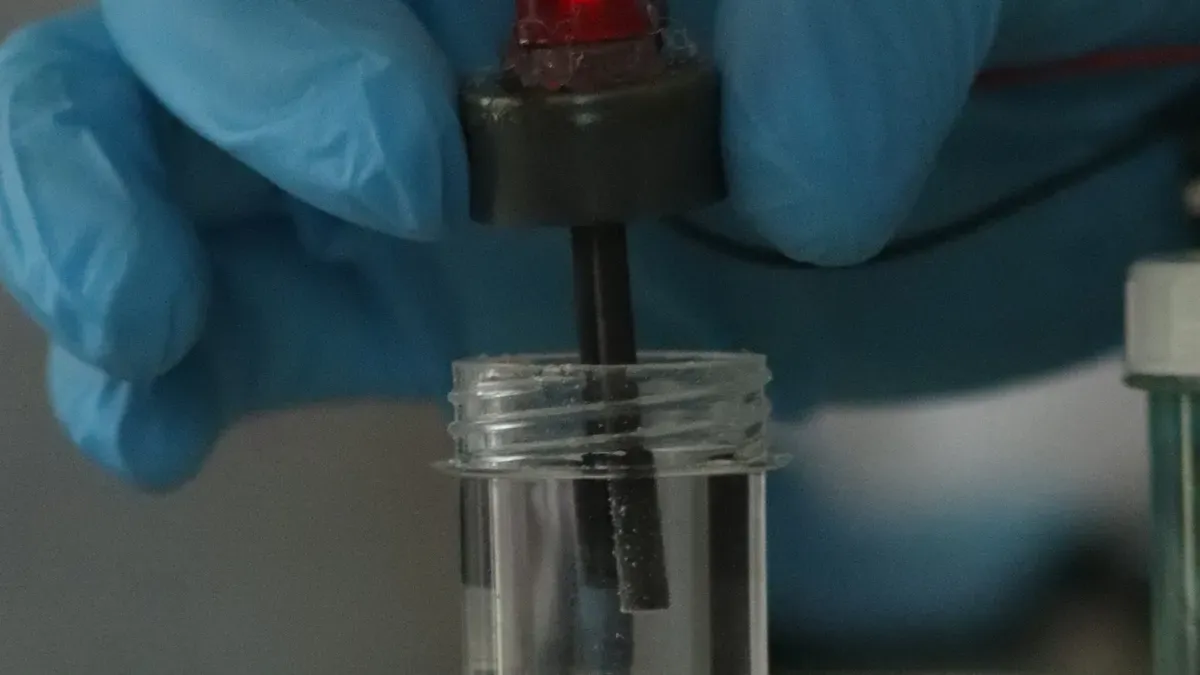
You will notice that SAP, or superabsorbent polymer, works by soaking up water and holding it inside its structure. When you add SAP to a liquid, it quickly absorbs the water and swells up. This process forms a gel-like material. The gel traps the water, so it does not flow freely anymore. You often see this in products like diapers or instant snow. SAP can absorb many times its own weight in water. This makes it very useful when you need to lock in moisture fast.
Tip: SAP works best in clean water. If you use it in salty or acidic liquids, it may not absorb as much.
CMC Thickening Mechanism
Carboxymethyl Cellulose, or CMC, thickens liquids in a different way. When you mix CMC powder into water, it dissolves and spreads out. The CMC molecules form a network that slows down the movement of water. This makes the liquid thicker and smoother. You can control how thick the mixture gets by changing how much CMC you add. CMC does not form a gel like SAP. Instead, it creates a stable, even texture. You will find CMC in foods like ice cream, sauces, and even toothpaste.
CMC gives you a clear and smooth result.
It works well in both hot and cold liquids.
Performance Comparison
When you compare SAP vs Carboxymethyl Cellulose, you see big differences in how they work. SAP is best if you need to absorb and trap a lot of water quickly. It forms a gel and keeps the liquid locked away. CMC is better if you want to make a liquid thicker without turning it into a gel. It gives you a stable, smooth, and clear texture. You can use CMC in foods and drinks, but SAP is not safe for eating. For most food and drink uses, CMC is the better choice. For absorbing spills or making products that need to hold water, SAP is the winner.
Stability and Clarity
pH and Temperature Stability
You need to know how SAP and Carboxymethyl Cellulose (CMC) react to changes in pH and temperature. These factors can change how well a thickener works.
SAP does not like big changes in pH or temperature. If you use SAP in a very acidic or salty solution, it will not absorb as much water. High temperatures can also make SAP break down or lose its thickening power. You will see SAP work best in clean, neutral water at room temperature.
CMC gives you more stability. You can use CMC in both acidic and basic solutions. It keeps its thickening ability even if the temperature goes up or down. This makes CMC a good choice for foods and drinks that need to stay thick in the fridge or when heated.
Tip: If you need a thickener for products that face heat or pH changes, CMC is usually the safer pick.
Clarity and Consistency
You want your product to look good and feel smooth. Clarity and consistency matter, especially in foods and drinks.
CMC gives you a clear and smooth result. When you mix CMC into water, it dissolves well and does not make the liquid cloudy. You get a nice, even texture. This is why you find CMC in clear drinks, sauces, and even ice cream.
SAP forms a gel that looks cloudy or opaque. You will not get a clear liquid with SAP. The gel can feel lumpy or uneven if you do not mix it well. SAP works best when you need to trap water, not when you want a smooth, clear liquid.
Thickener | Clarity | Consistency |
|---|---|---|
SAP | Cloudy | Gel, can be lumpy |
CMC | Clear | Smooth, even |
Note: For clear and smooth results, CMC is the better choice. Use SAP when you need to absorb and hold water, not for making liquids look or feel nice.
Application Areas
Food Uses
Carboxymethyl Cellulose (CMC) is used in many foods and drinks. CMC makes sauces and desserts thick and smooth. It keeps ice cream creamy and stops drinks from separating. Food companies use CMC because it is safe to eat. CMC has approval for use in food. The table below shows how CMC and SAP compare in food.
Polymer Type | Common Applications | Regulatory Approvals |
|---|---|---|
Carboxymethyl Cellulose (CMC) | Gel pack applications | |
Super Absorbent Polymers (SAP) | N/A | N/A |
SAP is not allowed in food. You will not see SAP in foods or drinks. If you need a thickener for food, CMC is the best choice.
Industrial Uses
CMC and SAP are used in many industries, but they do different things. CMC thickens and stabilizes creams, lotions, and toothpaste. It also helps in making paper, mining, oil drilling, and batteries. CMC gives products the right texture and keeps them stable. The table below shows where CMC is used and what it does.
Industrial Sector | Application of CMC | Performance Requirements |
|---|---|---|
Food and Beverage | Rheology and taste consistency | |
Personal Care and Pharma | Thickener in creams and lotions | Stability and texture |
Paper Surface Treatment | Improves paper surface properties | Surface quality |
Mining | Depressant in flotation systems | Separation and recovery |
Oil and Gas Drilling | Controls fluid loss, provides desired rheology | Fluid retention, rheological stability |
Battery Manufacturing | Improves electrode coating for better power retention | Enhanced energy delivery |
SAP is great for products that need to soak up water fast. You find SAP in diapers, pads, and spill control items. SAP is used when you want to trap moisture.
Other Applications
CMC and SAP are useful in other ways too. CMC helps soil keep water during dry weather. CMC can remove bad things like pesticides from water. It can carry and release helpful materials slowly. In batteries, CMC helps hold parts together. CMC is also in personal care products to make them feel nice.
Tip: Pick CMC for safe and steady thickening in food, industry, and the environment. Use SAP when you need to soak up and hold lots of water fast.
Safety and Regulations
Food Safety
You need to know if a thickener is safe for food. Carboxymethyl Cellulose (CMC) is approved for use in food by many health agencies. You can find CMC in ice cream, sauces, and drinks. The FDA and the European Food Safety Authority both allow CMC in food products. CMC does not change the taste or color of your food. You can use it in recipes without worrying about safety.
SAP, or Superabsorbent Polymer, is not approved for food use. You will not see SAP in foods or drinks. SAP works well in diapers and cleaning products, but you should not eat it. If you need a thickener for food, always choose CMC.
Note: Always check the label for food safety approval. CMC is safe for eating, but SAP is not.
Thickener | Food Approval | Common Food Uses |
|---|---|---|
CMC | ✅ Yes | Ice cream, sauces, drinks |
SAP | ❌ No | None |
Toxicity and Handling
You must handle thickeners safely. CMC is safe for most people. You can touch and mix CMC without special equipment. If you get CMC on your skin, you can wash it off with water. CMC does not cause allergies for most users.
SAP needs careful handling. You should not breathe in SAP powder. If you touch SAP, wash your hands after. SAP can cause irritation if you get it in your eyes or mouth. You must keep SAP away from children and pets.
Wear gloves when handling SAP in large amounts.
Store both CMC and SAP in dry places.
Tip: Always follow safety instructions on the package. CMC is safe for food and easy to handle. SAP is safe for industrial use, but you must avoid eating or inhaling it.
Cost and Value
Material Costs
You want to know how much SAP and Carboxymethyl Cellulose (CMC) cost. The price can change based on where you live and how much you buy. Usually, CMC costs a bit more than SAP. CMC comes from natural sources like wood pulp or cotton. SAP comes from chemicals made in factories. You can see the cost comparison in the table below.
Thickener | Typical Cost (per kg) | Main Source |
|---|---|---|
SAP | $2 – $4 | Synthetic polymers |
CMC | $3 – $6 | Cellulose (plants) |
Tip: If you need a lot of thickener for an industrial job, SAP may save you money. For food or personal care, you may pay more for CMC because it is safer and comes from plants.
Usage Efficiency
You should also think about how much thickener you need to get the job done. SAP can absorb hundreds of times its weight in water. You only need a small amount to soak up a lot of liquid. CMC works differently. You add CMC to water to make it thicker. The amount you use depends on how thick you want your product.
SAP: Use less material for big spills or products that need to hold water.
CMC: Use more material if you want a very thick or stable texture.
Note: SAP gives you high efficiency for absorbing water. CMC gives you better control for making smooth, stable mixtures.
When you choose a thickener, look at both the price and how much you need to use. Sometimes, a higher price means better results or safer use. Always match the thickener to your needs for the best value.
Environmental Impact

Biodegradability
You want to know if SAP and Carboxymethyl Cellulose (CMC) break down in nature. Biodegradability tells you how fast a material disappears in soil, compost, or water. CMC comes from plants, so it breaks down more easily than SAP. SAP is a synthetic polymer, so it takes much longer to degrade.
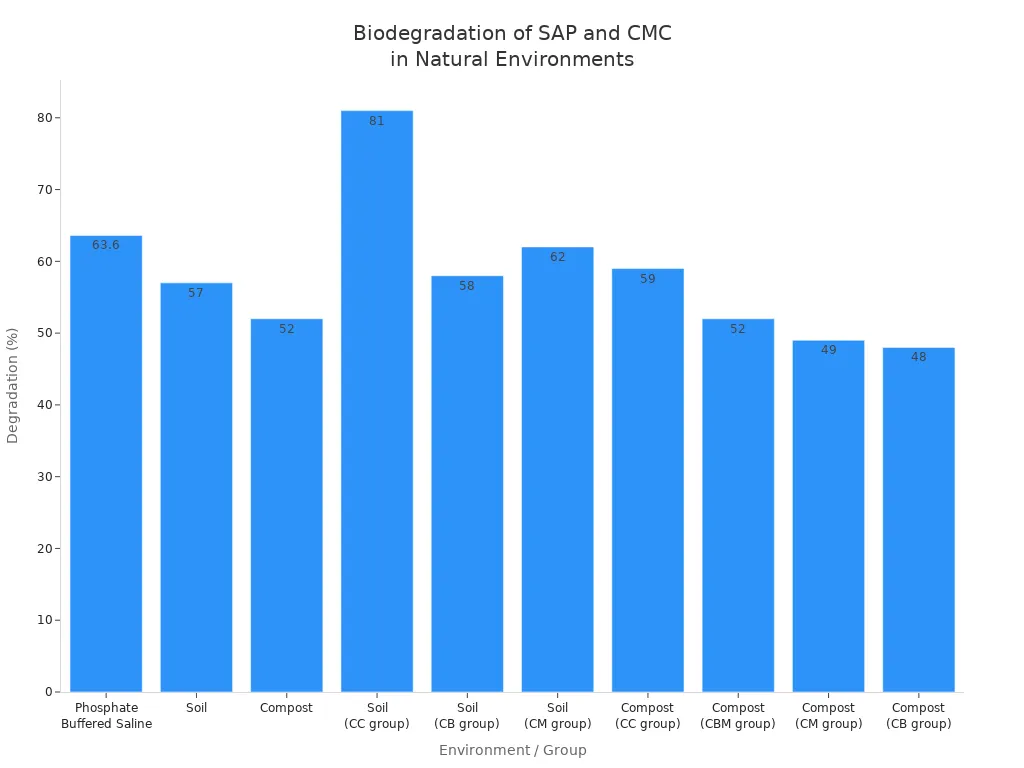
Researchers have tested how both materials break down in different environments. The table below shows how much each material degrades over time:
Environment | Degradation (%) | Time (days) |
|---|---|---|
Phosphate Buffered Saline | 63.6 ± 0.04 | 30 |
Soil | 57 ± 0.06 | 15 |
Compost | 52 ± 0.01 | 15 |
Soil (CC group) | 81 ± 0.1 | 15 |
Soil (CB group) | 58 ± 0.02 | 15 |
Soil (CM group) | 62 ± 0.07 | 15 |
Compost (CC group) | 59 ± 0.05 | 15 |
Compost (CBM group) | 52 ± 0.01 | 15 |
Compost (CM group) | 49 ± 0.02 | 15 |
Compost (CB group) | 48 ± 0.06 | 15 |
You can see that CMC breaks down faster and more completely than SAP. The chart below shows the differences in degradation rates for both materials in various environments:
Tip: If you care about the environment, CMC is the greener choice. It returns to nature faster and with less harm.
Disposal and Risks
You need to think about what happens when you throw away SAP or CMC. CMC is biodegradable, so you can compost it or let it break down in soil. It does not leave harmful residues. You can dispose of CMC with less worry about pollution.
SAP is different. It does not break down quickly. If you put SAP in a landfill, it can stay there for many years. SAP can also absorb water and swell, which may cause problems in waste systems. Some SAPs may release small amounts of chemicals as they degrade, but most are considered safe for industrial use.
CMC: Safe to compost or dispose of in regular trash.
SAP: Best to send to landfill or special waste facilities. Do not flush SAP down the drain.
Note: Always follow local rules for disposal. Choosing CMC helps reduce your impact on the planet.
Choosing the Right Thickener
Decision Factors
You want to pick the best thickener for your project. You need to look at several important factors before you decide. Each thickener works best in certain situations. Here are the main things you should think about:
Application: Ask yourself what you want to thicken. If you need a thickener for food, drinks, or medicine, Carboxymethyl Cellulose (CMC) is a safe choice. If you need to absorb and hold a lot of water, SAP works better.
Performance: Think about how you want your product to look and feel. CMC gives you a smooth and clear texture. SAP forms a gel and locks in water.
Stability: Consider if your product will face changes in pH or temperature. CMC stays stable in many conditions. SAP does not work well in salty or acidic liquids.
Safety: Check if the thickener is safe for your use. CMC is approved for food and personal care. SAP is not safe for eating but works well in industrial products.
Cost: Look at your budget. SAP usually costs less and works well when you need to absorb a lot of water. CMC may cost more, but you use it when safety and clarity matter.
Environmental Impact: Think about what happens after you use the thickener. CMC breaks down in nature and is safer for the environment. SAP does not break down quickly and can stay in landfills for a long time.
You should also know that CMC is an anionic polymer. It works well in laundry detergents because it keeps dirt from sticking back to clothes. This makes CMC a good choice for cleaning products too.
Tip: Write down your needs before you choose. This helps you match the thickener to your project.
Practical Recommendations
You can use these examples to help you decide between SAP and CMC:
Food and Beverage: You want to make ice cream smooth or keep salad dressing from separating. Choose CMC. It is safe, clear, and keeps the right texture.
Personal Care: You need a thickener for toothpaste or lotion. Pick CMC. It gives a smooth feel and is gentle on skin.
Industrial Absorbents: You want to clean up spills or make diapers. Use SAP. It absorbs water fast and holds it in a gel.
Laundry Detergent: You want to keep dirt from sticking back to clothes. Use CMC. It helps suspend soil and keeps clothes clean.
Agriculture: You want to keep soil moist for plants. Use SAP. It holds water in the soil for a long time.
Paper and Mining: You need to improve paper quality or help in mining. Choose CMC. It gives the right texture and helps with processing.
You can see that SAP vs Carboxymethyl Cellulose is not a simple choice. You need to match the thickener to your goal. If you want safety, clarity, and stability, CMC is the best pick. If you need to absorb and trap water, SAP is the right tool.
Note: Always check the rules for your industry. Some uses need special approvals for safety.
Scenario | Best Thickener | Why? |
|---|---|---|
Ice cream, sauces | CMC | Safe, clear, smooth texture |
Diapers, spill cleanup | SAP | High absorbency, forms gel |
Laundry detergent | CMC | Keeps dirt off clothes |
Soil moisture for plants | SAP | Holds water in soil |
Paper making | CMC | Improves texture and quality |
You can now choose the right thickener with confidence. Match your needs to the thickener’s strengths for the best results.
You now know SAP and Carboxymethyl Cellulose (CMC) are good for different jobs. Use CMC for food and drinks. It is safe and keeps things clear. Choose SAP if you need to soak up water quickly. Think about what you need for your project. Look at how well it works, how much it costs, and if it is good for the environment.
If you have special needs, ask an expert or read more about thickeners. This will help you pick the best one for your project.
FAQ
What is the main difference between SAP and CMC?
You will notice SAP absorbs water and forms a gel. CMC dissolves in water and makes it thicker. SAP works best for absorbing liquids. CMC works best for making smooth, stable mixtures.
Can you use SAP in food products?
You cannot use SAP in food. Food safety rules do not allow it. CMC is safe and approved for food use. Always check labels before adding any thickener to food.
Is CMC safe for people with allergies?
Most people can use CMC safely. It rarely causes allergies. If you have sensitive skin or allergies, test a small amount first. Ask your doctor if you have concerns.
Which thickener is better for the environment?
CMC is better for the environment. It comes from plants and breaks down naturally. SAP does not break down quickly and can stay in landfills for years.