
You probably hear about vitamin B6 and vitamin B12 when you think about nutrition. Both vitamins help your body stay healthy. Vitamin B6 controls hormone levels and keeps your nerves working. Vitamin B12 helps your body make red blood cells and protects your nerves. Moms need both vitamins to support their immune system and energy. Moms can become deficient in vitamin B12 more often, especially during pregnancy.
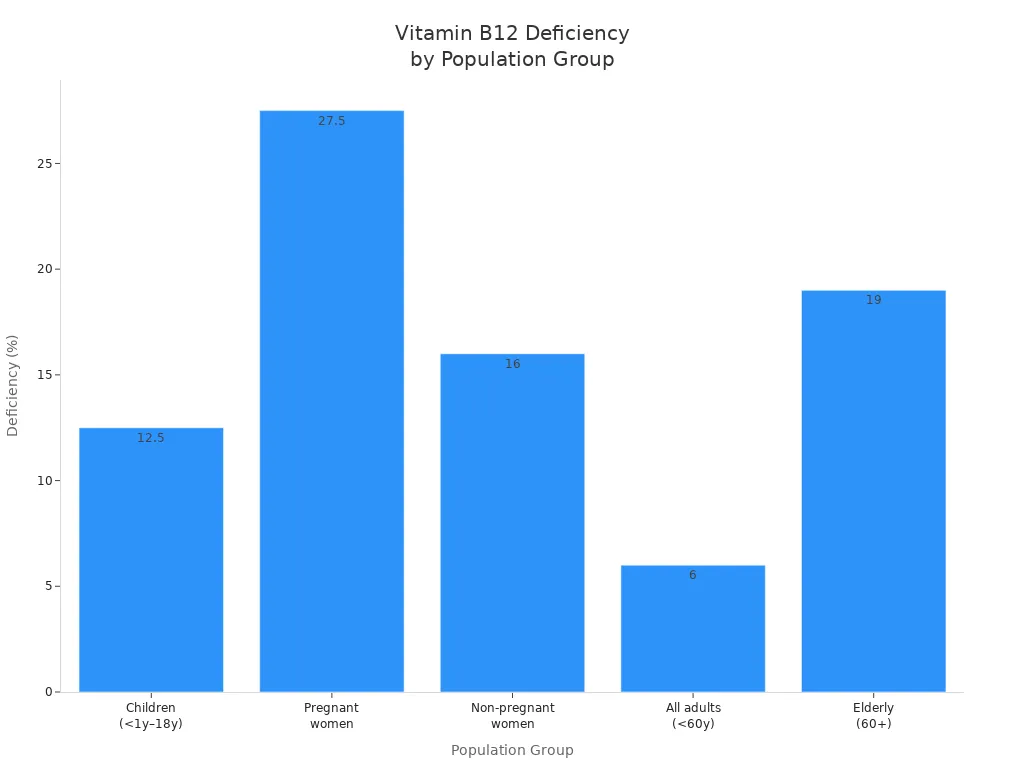
You may wonder about b6 vs b12. You do not need to pick one over the other. The vitamin you need most depends on your health, diet, and lifestyle. Moms should check their nutrition and ask a doctor if they feel tired or weak. You can easily learn which vitamin matters most for you.
Key Takeaways
Vitamin B6 helps keep hormones balanced and nerves working well. Vitamin B12 is important for making red blood cells and keeping nerves safe. Both vitamins help give you energy and keep you healthy. What you need depends on your age, what you eat, and your health. Moms, older people, and some with health problems should check their B6 and B12 levels often. This helps stop vitamin shortages. Eating animal foods gives you enough B12. You can get B6 from many fruits and vegetables. See a doctor if you feel tired or have tingling. These signs may mean you do not have enough vitamins.
B6 vs B12: Key Differences
Comparing B12 and B6 Functions
When you compare b6 vs b12, you see they are both important. Each vitamin helps your body in its own way. Looking at b12 and b6 shows which vitamin helps which body part. Here is a table with their chemical names and main jobs:
Vitamin | Chemical Name | Biological Role |
|---|---|---|
B6 | Pyridoxine | Helps enzymes work, mostly with amino acids and making neurotransmitters. |
B12 | Cobalamin | Helps your cells use carbs, proteins, and fats; needed for making blood cells and protecting nerves. |
You need both b vitamins for healthy nerves, making blood cells, and energy. B6 helps break down proteins and makes neurotransmitters. B12 helps make DNA and keeps nerves safe. Here is another table showing their main jobs:
Vitamin | |
|---|---|
B6 | Helps with protein, makes neurotransmitters, controls hormones |
B12 | Makes DNA, forms blood cells, protects nerves |
B6 is water-soluble, so your body does not keep it. You must eat foods with b6 every day. B12 needs a special process to be absorbed in your stomach and intestines. Your body stores b12 in the liver, so you do not need it as often. But you can still lack b12 if you do not eat animal foods or have trouble absorbing it.
B6 and b12 both help nerves, but in different ways. B6 helps make neurotransmitters that send messages in your brain. Too much b6 can hurt your nerves, but normal amounts help them work. B12 helps make myelin, which covers nerves and helps you think. If you do not get enough b12, you may forget things or have trouble focusing.
Unique Benefits of B6 and B12
Each vitamin has special benefits for your health. Comparing b12 and b6 shows each one helps your body in its own way.
B6 Unique Benefits:
Health Benefit | Description |
|---|---|
Diabetes | May help prevent diabetes and its problems. |
Depression | Good for women before menopause who feel depressed. |
Anxiety & Stress | More b6 can help lower stress. |
PMS | May help with PMS mood symptoms. |
Nausea & Morning Sickness | Used to treat nausea in pregnancy. |
Poor Immune Function | Can help sick people fight illness better. |
B12 Unique Benefits:
Helps make blood cells and stops anemia.
Lowers the chance of birth defects in pregnancy.
Keeps bones strong and lowers osteoporosis risk.
Protects eyes and lowers macular degeneration risk.
Helps your mood and brain work well.
Keeps hair, skin, and nails healthy.
When you look at the main differences between vitamin b6 and b12, you see b6 helps with hormones, mood, and immunity. B12 is more important for blood cells, nerve safety, and brain health.
Who Needs B6 or B12 Most
Some people need more of one vitamin than the other. The main differences between vitamin b6 and b12 are clear when you see who can lack them.
You may need more b6 if you are older, a woman eating less, or have a long-term illness like diabetes or kidney disease. People in nursing homes often have low b6, even if they eat enough. What you eat and your health can change how much b6 you get.
You may need more b12 if you are a young child, an older adult, pregnant or breastfeeding, or do not eat animal foods. People with stomach problems or surgery may not absorb b12 well. Women can lack b12 because of pregnancy, breastfeeding, or health issues.
Tip: If you feel tired, weak, or cannot think clearly, check your b vitamins. Talk to your doctor if you have symptoms or are at risk for deficiency.
When you compare b6 vs b12, you see both are needed. Your needs depend on your age, diet, and health. Knowing the main differences between vitamin b6 and b12 helps you pick the right foods and supplements.
Vitamin B6: Benefits and Deficiency
B6 for Hormone Balance and Nerves
Vitamin b6 is important for your hormones and nerves. It helps your body make neurotransmitters like GABA and serotonin. These chemicals help your brain send signals. They also keep your mood steady. Vitamin b6 controls how hormones are released. This can change how you feel each day. If you do not get enough vitamin b6, your nerves may not work right. Some babies with very low vitamin b6 can have seizures. This shows vitamin b6 is needed for your nervous system. Vitamin b6 stops too much glutamate from being released. Too much glutamate can hurt nerve cells. Vitamin b6 helps your nerves send messages and keeps hormones balanced.
B6 Deficiency Signs and Risks
You might wonder about signs of low b6 and b12. If you do not get enough vitamin b6, you can have many symptoms. Watch for these signs if you think you are low:
Skin rashes that are red, itchy, or flaky
Lips that are cracked and sore
A tongue that is sore and shiny, making eating hard
Mood changes like feeling irritable, anxious, or sad
Weak immune system and more infections
Feeling tired and having low energy from anemia
Some symptoms of low b6 and b12 are the same. It is important to find out if you have a deficiency. People who may lack vitamin b6 include older adults, people with kidney disease, and those who do not eat well. If you see these signs, you may have a b vitamin deficiency. Talk to your doctor to check for deficiency.
Best Sources of B6
You can get vitamin b6 from many foods. Eating different foods helps you avoid deficiency and get the benefits of vitamin b6. Here are some foods with lots of b6 and b12, but these focus on b6:
Food Item | Vitamin B6 per Serving | % Daily Value (DV) |
|---|---|---|
Salmon | 1.6mg | 94% |
Lean Chicken Breast | 1.6mg | 92% |
Fortified Tofu | 1.1mg | 66% |
Lean Pork Chops | 0.9mg | 54% |
Beef (Skirt Steak) | 0.8mg | 48% |
Sweet Potatoes | 0.6mg | 35% |
Bananas | 0.6mg | 32% |
Potatoes | 0.5mg | 32% |
Avocados | 0.5mg | 30% |
Pistachio Nuts | 0.5mg | 28% |
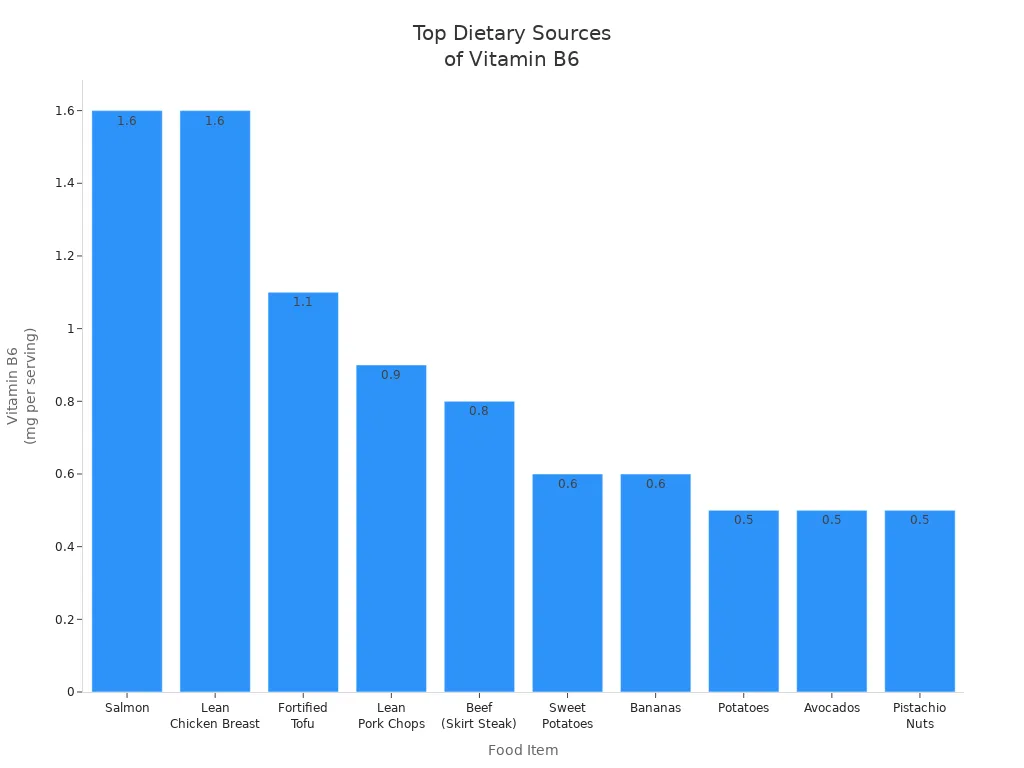
Most people can get enough vitamin b6 from food. How much you need depends on your age and gender. Adults need about 1.3 mg each day. Older adults and pregnant women need more. Eating salmon, chicken, potatoes, and bananas gives you vitamin b6. If you cannot get enough from food, you may need a supplement. Always ask your doctor first. Knowing which foods have b6 and b12 helps you stay healthy and avoid deficiency.
Vitamin B12 vs B6: Energy and Nerve Health
B12 for Energy and Nerve Protection
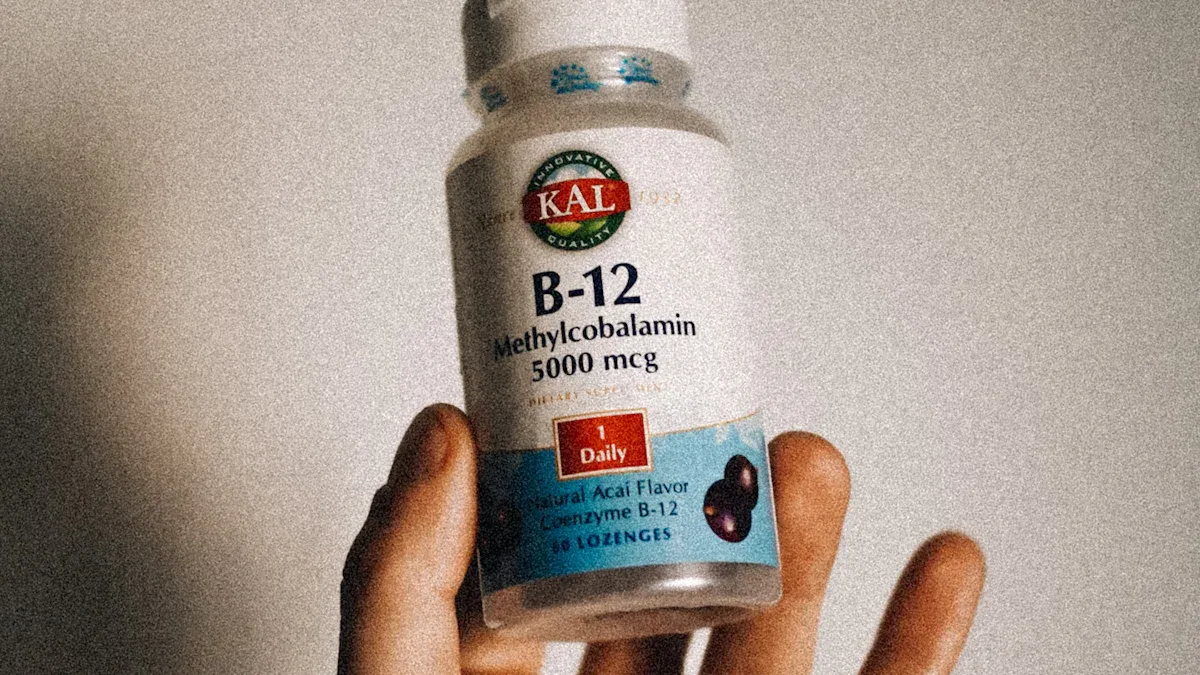
You might wonder about vitamin b12 vs b6 for energy and nerves. Both vitamins help your body, but b12 is extra important for energy and nerve growth. Your body needs b12 to turn food into energy. If you do not get enough b12, you can feel tired and weak.
Vitamin B12 is very important for energy. It helps your body change food into energy you can use. If you do not have enough, you may feel tired all the time.
B12 also keeps your nerves safe. It protects the myelin sheath. Myelin covers your nerves and helps your brain send messages.
Vitamin B12 helps make and keep myelin, which covers your nerves. If you do not get enough b12, myelin can break down. This can hurt your nerves and cause problems with your brain.
You need b12 to fix and grow nerves.
Vitamin B12 keeps myelin healthy, which helps nerve cells live and heal. It also helps new cell parts grow, which is needed for fixing nerves and keeping them safe.
When you look at vitamin b12 vs b6, you see b6 helps with brain chemicals, but b12 is needed for nerve safety and energy.
B12 Deficiency Symptoms
It is good to know the signs of low b12. Not having enough b12 can cause many problems. You might feel tired or weak. Your skin could look pale. You may feel numb or tingly in your hands or feet. Some people have trouble walking or keeping their balance. You might forget things or feel confused.
Other signs are a sore tongue, not wanting to eat, or being constipated. If you are very low in b12, you can get nerve damage, trouble walking, or even heart problems.
Here is a table that lists common signs and risks:
Symptom/Health Risk | Description |
|---|---|
Pale skin | Weak red blood cells can make your skin look pale or yellow. |
Loss of taste | Very low b12 can make you lose your sense of taste. |
Anxiety and depression | Not enough b12 can make you feel sad or worried. |
Changes in vision | Very low b12 can hurt your eyes and make it hard to see. |
Neurologic symptoms | You might feel numb, tingly, have trouble walking, or forget things. |
Gastrointestinal symptoms | Your tongue may hurt, you may not want to eat, or you may be constipated. |
Long-term risks | If you do not treat low b12, you can get nerve damage, trouble walking, anemia, heart problems, or stomach cancer. |
You could be at risk for low b12 if you do not eat animal foods, have stomach issues, or are older. When you compare vitamin b12 vs b6, you see that low b12 can cause more nerve and blood problems.
Best Sources of B12
You can get b12 from lots of foods. Animal foods have the most b12. Some plant foods have b12 if they are fortified. Here is a chart that shows foods with the most b12 per serving:
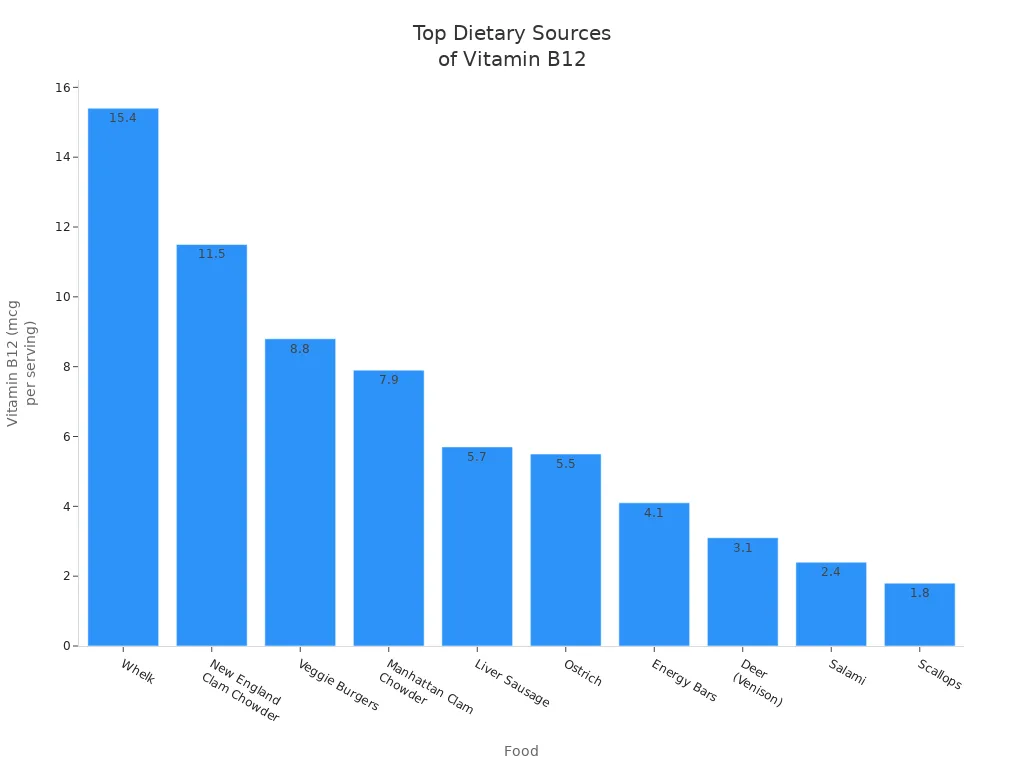
Here is a table with more details:
Food | Serving | Vitamin B12 |
|---|---|---|
Whelk | 3oz | 642% DV (15.4mcg) |
New England Clam Chowder | per cup | 478% DV (11.5mcg) |
Veggie Burgers | 1 burger pattie | 366% DV (8.8mcg) |
Manhattan Clam Chowder | 1 cup | 330% DV (7.9mcg) |
Liver Sausage | 1oz | 238% DV (5.7mcg) |
Ostrich | 3oz | 228% DV (5.5mcg) |
Energy Bars | 1 bar | 172% DV (4.1mcg) |
Deer (Venison) | 3oz | 128% DV (3.1mcg) |
Salami | per 3oz | 99% DV (2.4mcg) |
Scallops | per 3oz | 76% DV (1.8mcg) |
You can also get b12 from cereals, soymilk, and tofu if they are fortified. If you do not eat animal foods, pick fortified foods or take a supplement. Always ask your doctor before starting a new vitamin. Knowing why vitamin b12 is good for you helps you make smart choices. When you compare vitamin b12 vs b6, you see both are needed, but b12 is very important for energy and nerves.
Can You Take B6 and B12 Together?
Safety of Taking B6 and B12 Together
You might wonder if you can take b6 and b12 at the same time. Many people use both vitamins every day. You can find both in multivitamins and in many foods. Taking them together is safe for most people. B6 and b12 work together to help lower homocysteine. This may lower your risk of having a stroke. These vitamins are often put together in supplements. They help your nerves and give you energy.
Here is a table that shows what scientists learned about taking b6 and b12 together:
Evidence Type | Findings |
|---|---|
Cardiovascular Benefits | B6 and B12 may lower homocysteine levels and reduce stroke risk. |
Risks in Specific Populations | High doses can lead to reduced kidney function and higher mortality in diabetic nephropathy patients. |
General Recommendation | Continuous monitoring of B vitamin levels is suggested, especially in chronic conditions. |
You should know that taking too much can be harmful. If you have kidney disease or diabetes, talk to your doctor before using supplements. Some medicines, like carbidopa/levodopa for Parkinson’s Disease, use b6 and b12. If you do not check your levels, you could become low in these vitamins. Always ask your doctor if you take these medicines.
Note: Most foods and supplements have safe amounts of b6 and b12. If you follow the recommended dose, you will not have side effects.
Supplementation Guidelines
You need to follow rules for taking supplements. Health experts set daily amounts for b6 and b12. You can see these numbers in the table below:
Population Group | Recommended Dietary Allowance (RDA) |
|---|---|
Adult men and nonpregnant women | |
Pregnant women | 2.6 mcg per day |
Breastfeeding women | |
Ages 14 and above | 2.4 mcg per day |
Patients older than 50 years | Fortified foods or supplements recommended |
You should use supplements if you cannot get enough from food. Older people and those with low levels may need extra vitamins. Do not take too much. Too much b6 can hurt your nerves. Too much b12 is not usually harmful, but do not go over the limit. Ask your doctor if you feel sick or take medicine that changes vitamin levels.
Tip: Always read the label on your vitamins. Pick the right product for you and use the right amount.
You can take b6 and b12 together safely. Just watch your health and follow the rules for supplements. Ask your doctor if you have low levels or take medicine that affects vitamins.
Choosing the Right Vitamin for You
Factors: Diet, Lifestyle, Health
You need to think about your diet, lifestyle, and health when deciding which vitamin matters most for you. Your daily habits and food choices play a big role in your vitamin needs. Some people need more vitamin b12, while others may need more vitamin B6. You can look at your eating patterns and health risks to make the best choice.
If you eat animal foods like meat, fish, or eggs, you usually get enough b12. If you follow a vegan or vegetarian diet, you may not get enough b12 from food alone. You should consider taking a supplement or eating foods that have b12 added, such as fortified cereals or plant-based milk. Here is a table that shows how much b12 people get from different diets:
Dietary Pattern | |
|---|---|
Meat Eaters | 7.2 micrograms |
Vegans | 0.4 micrograms |
You can see that vegans get much less b12 than meat eaters. If you are vegan, you must take a regular b12 supplement. Fortified foods can help, but you need to check your intake every day. Vegetarians should also think about b12 supplements or fortified foods to stay healthy.
Your age and health also affect your vitamin needs. People over 65, those with kidney disease, or anyone with stomach or gut problems may not absorb vitamins well. If you have had stomach surgery or have a disease like Crohn’s or celiac, you may need extra help getting enough vitamins. Alcohol use, autoimmune disorders, and some medicines can also lower your vitamin levels.
Here are some groups who may need to pay extra attention to their vitamin intake:
People over 65
Vegans and vegetarians
Those with kidney disease
People with digestive problems like Crohn’s or celiac disease
Anyone who has had stomach surgery
People with autoimmune or inflammatory disorders
Those who drink alcohol often
You may notice symptoms if you do not get enough vitamins. Low vitamin B6 can cause depression, confusion, weak immunity, mouth cracks, or a swollen tongue. Low b12 can make you feel tired, weak, pale, or cause mood changes and nerve problems like tingling in your hands or feet. Moms with certain gene changes, people with digestive issues, and those on plant-based diets need to watch their vitamin levels closely.
If you eat a balanced diet and feel healthy, you may get enough vitamins from food. If you eat a special diet, have health problems, or feel tired or weak, you should check your vitamin intake. You can take b6 and b12 together in a multivitamin or as separate supplements. Many people use both together to support their health, especially if they have risk factors.
Tip: Think about your meals, your health, and your lifestyle. If you have any risk factors, you may need to take b6 and b12 together to stay healthy.
When to Seek Medical Advice
You should not guess about vitamin deficiencies. Many symptoms of low b6 or b12 look like other health problems. If you feel tired, weak, or have tingling in your hands or feet, you need to talk to a doctor. A blood test can show if you need more b6, b12, or both. Do not try to fix the problem on your own.
Here are some times when you should see a healthcare provider:
You have symptoms like tingling, numbness, or mood changes.
You feel tired all the time or have trouble thinking clearly.
You follow a vegan or vegetarian diet.
You have a health problem that affects your stomach or intestines.
You are over 60 or have had stomach surgery.
You take medicine that affects vitamin absorption.
Doctors and dietitians can help you decide if you need supplements or if you can get enough from food. They may suggest taking b6 and b12 together if you have more than one risk factor. They can also help you avoid taking too much. Too much b6 can hurt your nerves. Taking too much of either vitamin can cause other health problems.
Note: Self-diagnosing can be risky. Early symptoms of vitamin deficiency can be mild and easy to miss. If you treat yourself without a doctor’s advice, you may miss a serious health problem. Over-supplementing can also harm your nerves or bones.
If you think you need b6 and b12 together, always check with a healthcare provider first. They can help you find the right dose and make sure you stay safe. You can take both vitamins together if your doctor says it is right for you. Many people take them together in a multivitamin, but you should always follow medical advice.
Remember: Your health is unique. You and your doctor can work together to find the best way to meet your vitamin needs. Taking b6 and b12 together can help, but only if you do it safely.
You now know that vitamin B6 and B12 help your body in different ways.
Vitamin B6 helps with more than 100 enzyme jobs. It also helps control your mood and keeps your hormones steady.
Vitamin B12 helps your body make red blood cells. It keeps your nerves working and stops you from feeling tired.
Both vitamins work together to help your heart and give you energy.
Pick foods that have both vitamins. Think about your age, what you eat, and your health. Always ask your doctor before you start taking vitamins. Eating the right foods helps you stay strong and healthy.
FAQ
What happens if you take too much vitamin B6 or B12?
Too much vitamin B6 can cause nerve problems or numbness. Your body usually removes extra B12, so side effects are rare. Always follow the recommended dose. Ask your doctor if you have questions.
Can you get enough B6 and B12 from food alone?
You can get enough B6 and B12 from a balanced diet. Animal foods give you B12. Many fruits, vegetables, and meats give you B6. If you eat only plants, you may need a B12 supplement.
How do you know if you need a supplement?
You may need a supplement if you feel tired, weak, or have tingling in your hands or feet. A doctor can check your vitamin levels with a blood test. Always ask before starting any supplement.
Are B6 and B12 safe for kids and teens?
Yes, B6 and B12 are safe for kids and teens in the right amounts. Your child can get these vitamins from food. If you worry about their intake, talk to a pediatrician for advice.