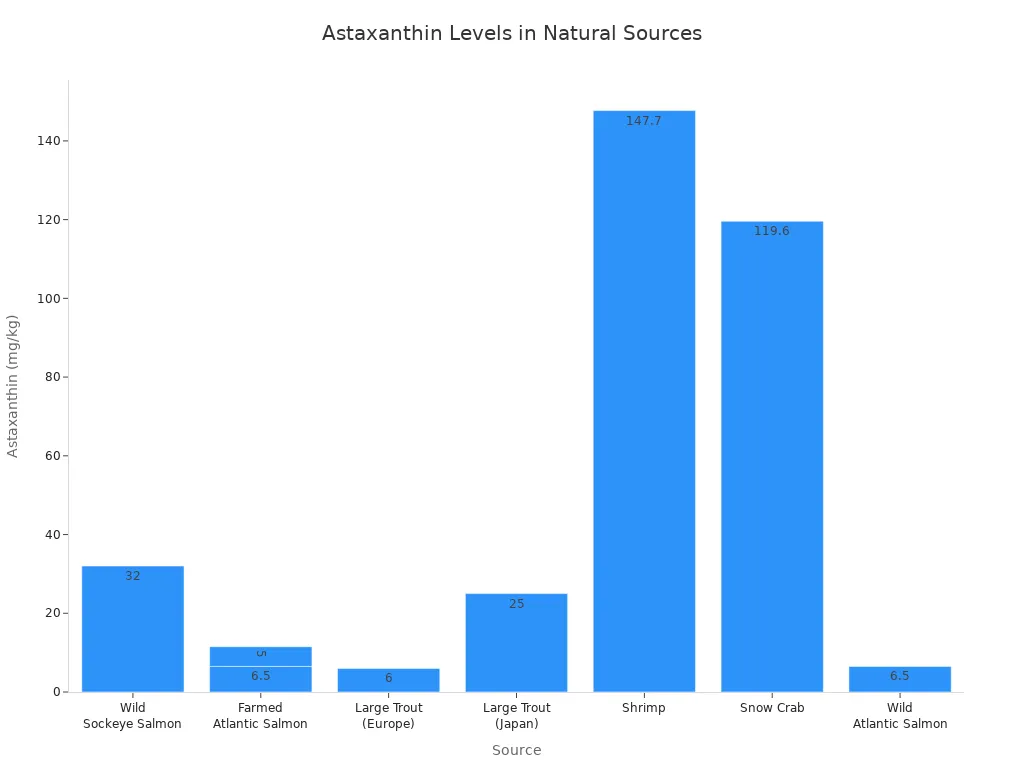
You might ask, “What is astaxanthin?” Astaxanthin is a red pigment that gives salmon, shrimp, and crab their bright colors. You can find astaxanthin in algae such as Haematococcus pluvialis, as well as in various seafood. The amount of astaxanthin varies in each type of food. Take a look at the table below:
Source | |
|---|---|
Shrimp | 147.7 |
Snow Crab | 119.6 |
Wild Sockeye Salmon | 26–38 |
Farmed Atlantic Salmon | 6–8 |
Astaxanthin acts as a powerful antioxidant, helping to reduce inflammation. Consuming astaxanthin can benefit your skin and bones, and it is also beneficial for your eyes, metabolism, and brain health.
Key Takeaways
Astaxanthin is a strong antioxidant. It is found in seafood and algae. It helps protect your cells from harm. It also lowers swelling in your body.
Eating astaxanthin can help your skin. Your skin may become more stretchy. It can also help smooth out wrinkles. Astaxanthin is good for your eyes too. It can help your eyes feel less tired.
You can get astaxanthin from salmon, shrimp, and some algae. Eating these foods gives you this helpful nutrient.
Most people can take astaxanthin every day. The usual amount is between 4 and 12 mg. The amount depends on your health needs. You should always ask your doctor before taking new supplements.
Astaxanthin can make your immune system stronger. It also helps your brain stay healthy. It may lower the chance of getting diseases like Alzheimer’s.
What Is Astaxanthin
Carotenoid Pigment
You might wonder what astaxanthin is and why it matters. Astaxanthin is a carotenoid pigment. Carotenoids are pigments that give color to plants and animals. Salmon, shrimp, and crab have a bright red color because of astaxanthin. This pigment comes from tiny algae. Marine animals eat these algae and absorb astaxanthin. The pigment spreads in their bodies. It makes their shells and flesh look reddish-orange.
Did you know? Astaxanthin is the main reason salmon and shrimp look so bright. Farmers add astaxanthin to fish food. This helps farmed seafood look like wild-caught seafood.
Astaxanthin does more than add color. It is a strong antioxidant. Its chemical structure has a polyene chain. This chain helps trap harmful radicals inside cell membranes. Astaxanthin protects cells from damage.
Astaxanthin binds inside cell membranes.
It traps radicals and keeps cells healthy.
Pure astaxanthin stays stable for a long time. Inside cells, it can break down faster.
You need good storage to keep astaxanthin stable.
You might ask how astaxanthin compares to other carotenoids. Astaxanthin is more sensitive to ultrasound processing than beta-carotene. Emulsion systems help slow down its breakdown. This keeps its antioxidant power strong.
Natural Sources
If you want to know where astaxanthin comes from, look at algae and seafood. Microalgae make most of the astaxanthin. Fish and shellfish eat these algae. They build up astaxanthin in their bodies.
Here is a table showing the main types of algae that make astaxanthin and their yields:
Algae Type | Astaxanthin Yield (mg/g) | Notes |
|---|---|---|
Haematococcus pluvialis | 38-50 | Can store up to 3.8–5.0% of dry weight as astaxanthin. |
Chlorella zofingiensis | 1 | Yield when grown without light. |
Xanthophyllomyces dendrorhous | 2 | Usually stores less than 0.1% of dry weight, with extra nutrients. |
Haematococcus pluvialis has the most astaxanthin. This microalga can store up to 5% of its dry weight as astaxanthin. Other algae like Chlorella zofingiensis and Xanthophyllomyces dendrorhous make less astaxanthin.
When you eat seafood like salmon or shrimp, you get astaxanthin from algae. This pigment gives these animals their color. It also helps them stay healthy and fight stress. If you want more astaxanthin, look for foods or supplements made from these natural sources.
How It Works
Antioxidant Action
You might wonder how astaxanthin helps your body. Astaxanthin is a strong antioxidant. It fights free radicals. Free radicals are molecules that can hurt your cells. Eating foods with astaxanthin helps your body fight oxidative stress.
Check out the table below to see how astaxanthin works in your cells:
Mechanism | Description |
|---|---|
Free Radical Scavenging Activity | Astaxanthin finds and removes DPPH and galvinoxyl free radicals. This helps stop harmful molecules. |
Singlet Oxygen Quenching | Astaxanthin stops singlet oxygen, which is a dangerous type of oxygen. It keeps your cells safe. |
Induction of Antioxidant Mechanisms | Astaxanthin boosts your body’s own defenses, like paraoxonase-1 and glutathione. |
Astaxanthin is better than many other antioxidants. It works 6000 times better than vitamin C. It is 550 times stronger than vitamin E. It is 40 times stronger than beta-carotene. Astaxanthin gives your cells more protection. It also stops lipid peroxidation much better than vitamin E. This keeps your cell membranes healthy.
Tip: Astaxanthin is not just a pigment. It is a super antioxidant that protects your cells.
Anti-Inflammatory Effects
Astaxanthin does more than fight free radicals. It also helps lower inflammation in your body. Inflammation can cause pain and swelling. It can lead to health problems. Astaxanthin lowers inflammation and helps you feel better.
Studies show astaxanthin has strong anti-inflammatory powers.
Astaxanthin has a very high ORAC. This means it can absorb and stop harmful radicals fast.
Astaxanthin helps your brain and heart by lowering inflammation. It protects your nerves and heart.
Adding astaxanthin to your diet helps your body fight inflammation. You may have less joint pain and feel more comfortable.
Cellular Protection
Astaxanthin protects your cells in many ways. It keeps your tissues safe from oxidative stress. It helps prevent diseases. The table below shows how astaxanthin helps your health:
Evidence Description | Findings |
|---|---|
Effect on inflammation-related proteins | Astaxanthin lowers COX-2, iNOS, MCP-1, and NF-κB. These are linked to inflammation. |
Protection against diabetic complications | Astaxanthin stops high-glucose ROS production. This helps protect against nerve damage. |
Neuroprotective effects | Astaxanthin lowers molecules that cause cell death in the brain. It helps memory. |
Renal protection | Astaxanthin helps kidney health. It stops fibrosis by activating the Nrf2-ARE pathway. |
Antioxidant properties | Astaxanthin lowers oxidative stress and keeps cells healthy. |
Eating astaxanthin helps your body defend itself. It helps your organs work better. It protects you from diseases like diabetes and kidney problems. Astaxanthin also helps your brain and memory.
Note: Astaxanthin works inside your cells to keep them safe. It helps your body stay healthy and strong.
Health Benefits
Skin & Eye Health
Astaxanthin helps your skin and eyes stay healthy. It protects skin from sunlight and pollution. Your skin can stay smooth and moist. Studies show astaxanthin makes skin more stretchy and reduces wrinkles. Look at the table to see results:
Study Description | Findings |
|---|---|
High-dose group | Skin became more stretchy than placebo. |
49 female subjects | Skin got moister and stretchier after six weeks. |
Human dermal fibroblasts exposed to UVA radiation | Astaxanthin lowered MMP-1, which breaks down collagen. |
30 healthy female participants | Astaxanthin taken by mouth and on skin reduced fine lines and wrinkles in eight weeks. |
Astaxanthin also helps your eyes. It protects them from strong light and lowers eye tiredness. If you use screens a lot, astaxanthin may help your eyes feel better. Studies show people who take astaxanthin see better and have less eyestrain. Here are some findings:
Astaxanthin helped computer users with tired eyes.
People over 40 saw better and focused faster.
Supplements helped with problems from macular degeneration.
Bone & Metabolic Support
Astaxanthin helps your bones and metabolism work well. It helps your body build strong bones and may lower the chance of osteoporosis. The table shows how astaxanthin helps bones:
Evidence Type | Findings |
|---|---|
Helps bones get minerals and lowers stress. | |
Mechanism of Action | Helps bone cells grow and stops cells that break bones. |
Clinical Relevance | May help older people keep strong bones. |
Astaxanthin helps your body use sugar and fat better. You may feel more energy and have lower blood sugar. Here are ways astaxanthin helps your metabolism:
Turns on the AMPK pathway in muscles for better metabolism.
Lowers blood sugar, triglycerides, and cholesterol.
Makes insulin work better and helps your body use sugar.
Brain & Immune Function
Astaxanthin protects your brain and helps your immune system. It can cross into the brain and lowers swelling there. This may lower your risk for diseases like Alzheimer’s and Parkinson’s. The table shows some brain benefits:
Evidence Description | Findings |
|---|---|
Anti-inflammatory effects | Lowered swelling chemicals in brain cells. |
Antioxidant enzyme activation | Raised catalase and SOD, which lowers cell damage. |
Neuroprotection in PC12 cells | Protected cells from harm and death. |
Astaxanthin also helps your immune system. It helps your body make more antibodies and keeps your immune system balanced. Here is how astaxanthin helps immunity:
Helps lymphocytes grow and make antibodies.
Balances cytokine levels for better immune health.
Boosts antiviral defenses and helps CD8+ T cells work.
If you want to know what astaxanthin is good for, it helps your skin, eyes, bones, metabolism, brain, and immune system. You get protection from stress and swelling, and your body stays healthier.
Safety & Side Effects
Common Side Effects
You might wonder if astaxanthin is safe to use. Most research says astaxanthin is safe for most people. People in studies did not have any serious problems. You can look at the table below to see what studies found:
Study Title | Findings |
|---|---|
Effects of Astaxanthin Supplementation on Skin Health: A Systematic Review of Clinical Studies | No serious bad events happened in any of the studies. |
Astaxanthin: A Potential Therapeutic Agent in Cardiovascular Disease | No big side effects have been seen so far in studies with people taking astaxanthin. |
Astaxanthin does not usually cause toxic effects. Most people do not feel any problems. Some people might have mild effects, like going to the bathroom more or having red poop. These effects usually stop by themselves.
Note: Scientists do not know the safest dose for pregnant women, nursing moms, young kids, or people with bad liver or kidney problems.
Who Should Avoid It
Some people need to be careful with astaxanthin. The table below shows who should avoid or be careful with astaxanthin:
Population/Condition | Reason for Avoidance |
|---|---|
Known allergy to astaxanthin or related carotenoids | Risk of allergic reaction |
Bleeding disorders or on anticoagulants | May affect bleeding and increase clotting risk |
Diabetes or hypoglycemia | May lower blood sugar levels |
Low blood pressure or on heart medication | May cause low blood pressure |
Taking drugs metabolized by cytochrome P450 | May decrease effectiveness of these drugs |
Hormone disorders (5-alpha-reductase inhibitors) | May inhibit testosterone conversion, affecting libido and other factors |
Autoimmune disorders or on immunosuppressants | May enhance immune function, interfering with therapy |
Treatment for hypocalcemia, osteoporosis, or parathyroid disorders | May lower serum calcium levels |
Pregnant women or those who might become pregnant | Potential risks to pregnancy |
If you are in any of these groups, you should talk to your doctor before using astaxanthin.
Interactions
You might want to know if astaxanthin mixes badly with other supplements or medicine. Astaxanthin does not have known problems with multivitamins or most drugs. But you should be careful if you take blood thinners like warfarin. Astaxanthin might make bleeding more likely if you use these medicines.
Astaxanthin does not have known problems with multivitamins.
No drugs are known to mix badly with astaxanthin.
Be careful if you use blood thinners, because astaxanthin may make them stronger.
Most people can take astaxanthin safely, but you should always ask your doctor if you take medicine or have health worries.
How to Take Astaxanthin
Dosage
You might wonder how much astaxanthin you should take each day. Most health experts suggest a daily dose between 4 and 8 mg for adults. The right amount depends on your health goals and age. Always talk to your doctor before starting a new supplement.
For general antioxidant support, you can take 4–6 mg daily.
For skin health and anti-aging, you may need 6–12 mg daily.
Health Benefit | Recommended Dosage |
|---|---|
General Antioxidant Support | 4–6 mg daily |
Skin Health and Anti-Aging | 6–12 mg daily |
In the European Union, the maximum allowed dose is 8 mg per day for people aged 14 and older. Children and teens have lower limits. The US FDA has strict rules for labeling and health claims on astaxanthin products.
Tip: Start with a lower dose and see how your body responds.
Supplement Forms
You can find astaxanthin in both natural and synthetic forms. Natural astaxanthin comes from algae and has a higher absorption rate. Your body uses it better, especially when you take it with healthy fats. Synthetic astaxanthin is made in labs and does not work as well. You may need a higher dose to get the same effect.
Type of Astaxanthin | Absorption Rate | Efficacy | Notes |
|---|---|---|---|
Natural | Higher | Superior | Comes from algae, works best with dietary fats. |
Synthetic | Lower | Inferior | Made in labs, less effective, needs higher doses. |
Natural astaxanthin is much stronger than many other antioxidants. It can be up to 6,000 times more powerful than vitamin C.
Dietary Sources
You can also get astaxanthin from food. Many red and pink seafoods are rich in this nutrient. Try adding these foods to your meals:
Salmon (especially sockeye and canned salmon)
Trout and rainbow trout
Arctic char
Shrimp and krill
Crab and crayfish
Lobster
Salmon roe
Red snapper, red mullet, red perch, red sea bream, red porgy, red drum
Red algae
Egg yolks
Eating these foods gives your body natural astaxanthin and other helpful nutrients. You can enjoy both the taste and the health benefits.
Astaxanthin is a very strong antioxidant. It works better than vitamin E, vitamin C, and beta-carotene. Astaxanthin can help your heart, skin, and immune system. Most research shows it does not cause bad side effects, even if you take a lot.
It helps your heart by lowering cholesterol and swelling.
It makes your skin more stretchy and keeps it moist.
It helps your immune system work better.
Tip for You | Recommendation |
|---|---|
Daily Use | Take astaxanthin with meals that have healthy fats |
Safety | Ask your doctor before you start taking it |
You should always talk to your doctor before you try new supplements.
FAQ
What is the best time to take astaxanthin?
It is best to take astaxanthin with food that has healthy fats. This helps your body use it better. Most people take it at breakfast or lunch.
Can you get enough astaxanthin from food alone?
You can get astaxanthin by eating seafood like salmon or shrimp. If you do not eat these foods much, you might need a supplement to get more.
Is astaxanthin safe for daily use?
Most people can take astaxanthin every day without trouble. If you have health problems or take medicine, ask your doctor first.
Does astaxanthin help with exercise recovery?
Astaxanthin may help your muscles heal faster after you exercise. It fights stress in your body and lowers swelling. Many athletes use it for these reasons.