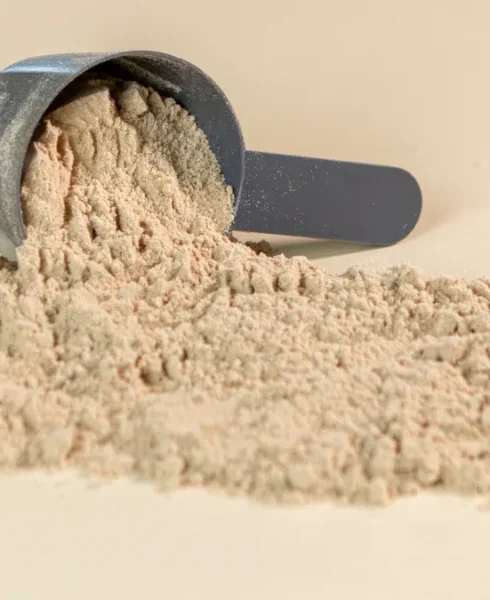
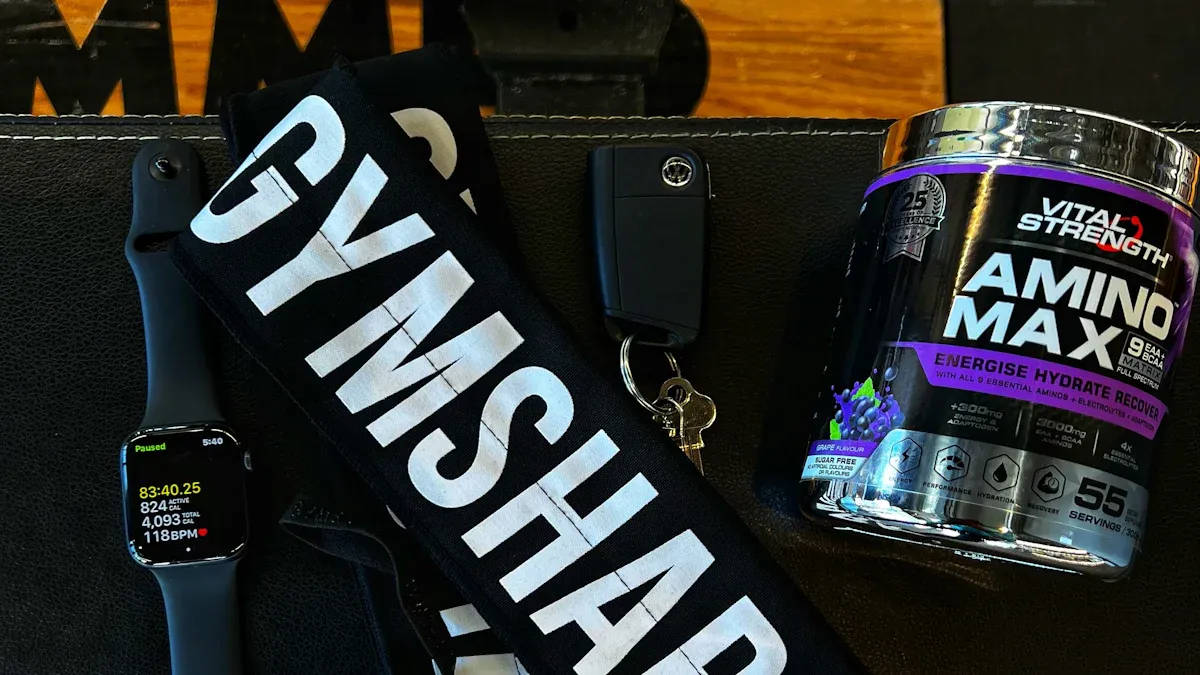
You may wonder what makes essential amino acids (EAAs) different from branched-chain amino acids (BCAAs) in the EAA vs BCAA debate. You might also ask which one is better for your goals. EAAs contain all nine amino acids that your body cannot produce, while BCAAs only include three of these nine amino acids. When you compare EAA vs BCAA, studies indicate that you need all nine EAAs to effectively build muscle protein. Relying solely on BCAAs may not yield the best results.
More people are now searching for information on EAAs and BCAAs. Many do not purchase them due to factors like price, taste, or availability.
Supplement Type | Key Benefit | Limitation |
|---|---|---|
EAAs | Help muscles grow and recover | Cost is higher |
BCAAs | Provide fast energy for workouts |
As you read, consider your own fitness or health goals. Choosing the right option in the EAA vs BCAA discussion can help you achieve the results you desire.
Key Takeaways
Essential amino acids (EAAs) have all nine amino acids your body needs. These are important for muscle growth. Branched-chain amino acids (BCAAs) only have three amino acids.
For building and fixing muscles, pick EAAs instead of BCAAs. EAAs give your muscles everything they need.
BCAAs can give you fast energy during workouts. But they do not help muscle growth as much as EAAs. Use BCAAs for short workouts or quick energy.
To help your muscles recover, take EAAs or BCAAs right after you exercise. Taking them at the right time can make them work better.
If you are on a diet or training hard, EAAs protect your muscles better than BCAAs. EAAs are important for keeping your strength when you eat fewer calories.
Amino Acids

Role in the Body
Amino acids are very important for your body. They help make proteins. Proteins build muscles, skin, and organs. Amino acids also help send signals between cells. Your body uses them to make chemicals like hormones and neurotransmitters.
Leucine and lysine help muscles grow and heal after you exercise.
Amino acids are building blocks for proteins and messengers in your body.
You must eat foods with essential amino acids because your body cannot make them.
Some amino acids help make neurotransmitters so your brain can send messages.
Eating a mix of amino acids before and after workouts helps muscles recover and grow.
Too many branched-chain amino acids (BCAAs) may cause health problems like obesity or insulin resistance.
When you are growing or your body needs to build more tissue, you need more essential amino acids.
Tip: Eat different protein-rich foods to get all the amino acids your body needs.
Types
Amino acids are sorted into three main groups: essential, non-essential, and conditionally essential. Each group helps your health in different ways.
Classification | Amino Acids | Roles in the Body |
|---|---|---|
Essential | Histidine, Isoleucine, Leucine, Lysine, Methionine, Phenylalanine, Threonine, Tryptophan, Valine | You must get these from food. They are needed for making proteins and other body jobs. |
Non-essential | Alanine, Arginine, Asparagine, Aspartate, Cysteine, Glutamate, Glutamine, Glycine, Proline, Serine, Tyrosine | Your body makes these. They help with protein building and metabolism. |
Conditionally Essential | Arginine (in certain conditions) | Sometimes you need extra, especially if you are growing or sick. |
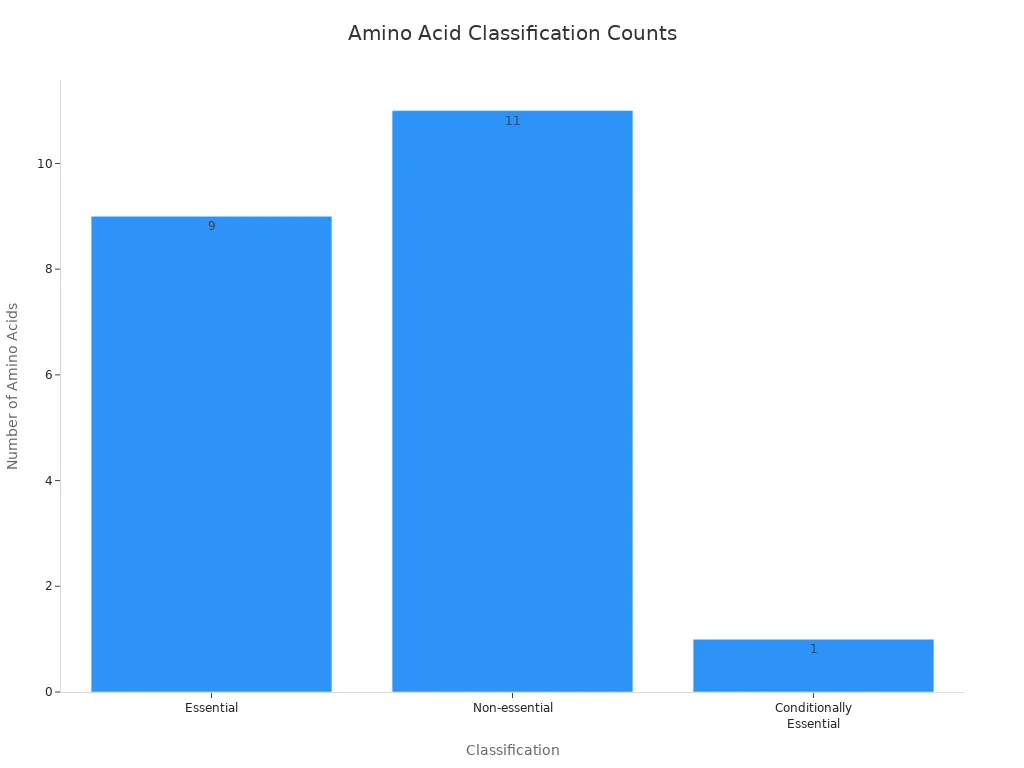
You need all three types to be healthy. Only essential amino acids must come from food. Your body makes non-essential amino acids. Sometimes, like when you are sick or growing, you need more conditionally essential amino acids.
Essential Amino Acids (EAAs)
What Are EAAs
Essential amino acids are nine amino acids your body cannot make. You need to get them from food or supplements. Each EAA helps your body in a special way. EAAs give you all the building blocks your muscles need. This is different from BCAAs, which only have three.
Here are the nine essential amino acids and what they do:
Isoleucine: Helps your muscles use energy. It also helps your immune system.
Leucine: Starts muscle protein building. It helps you recover after exercise.
Lysine: Needed for making proteins and hormones. It helps your body use calcium.
Methionine: Supports your metabolism. It helps remove toxins from your body.
Phenylalanine: Turns into chemicals that affect your mood.
Threonine: Helps your immune system. It also helps build proteins.
Tryptophan: Turns into serotonin. Serotonin helps with mood and sleep.
Valine: Helps your muscles grow. It gives you energy.
Histidine: Helps make histamine. Histamine is important for your immune system.
Tip: Eat foods like meat, eggs, dairy, beans, and nuts. These foods help you get all the EAAs.
EAA Benefits
Getting enough EAAs gives you many benefits. EAAs help your muscles grow and recover. They keep your muscles healthy. EAAs work better than just BCAAs. EAAs give your body everything it needs to build muscle protein.
Clinical studies show EAA supplements help in many ways:
Study Focus | Findings |
|---|---|
Muscle Soreness | EAA supplements lower muscle soreness. You recover faster and perform better. |
Muscle Protein Synthesis | EAAs boost muscle protein building more than regular protein. |
Long-term Benefits | Taking EAAs keeps your muscles healthy after hard workouts. |
You can use EAAs to help your muscles grow. EAAs help you recover faster. They keep your body strong. If you do not get enough protein from food, EAAs are a smart choice.
Branched-Chain Amino Acids (BCAAs)
What Are BCAAs
People talk about BCAAs a lot in fitness. BCAAs means branched-chain amino acids. They help your muscles work and heal. You can find BCAAs in foods with lots of protein and in supplements.
BCAAs are made of three main amino acids:
Leucine
Isoleucine
Valine
These amino acids have a special shape. Their side chains stick out. This makes them different from other amino acids. The shape helps your body use them fast when you exercise.
Tip: Foods like chicken, fish, eggs, and dairy have BCAAs. Athletes often take BCAA supplements for extra help.
BCAA Benefits
BCAAs are important for your muscles. Your body uses them for energy when you work out. They help your muscles heal after tough exercise. Many people take BCAA supplements to feel less tired and sore.
Studies show BCAAs can help you feel less sore after exercise. You may have less muscle damage because BCAAs lower things like creatine kinase and lactate dehydrogenase. But these effects do not last long. Studies did not find big changes in soreness after 24 or 48 hours. Scientists are still learning about the best way to use BCAAs.
Here are some ways BCAAs help:
Give you fast energy during workouts
Help muscles heal after exercise
May lower soreness soon after training
Lower some signs of muscle damage
If you look at EAA vs BCAA, BCAAs work quickly but do not give your muscles everything they need. You might pick BCAAs for short workouts or quick energy. For full muscle growth and healing, you need all nine essential amino acids.
Note: BCAAs help with energy and soreness, but you still need a balanced diet and all EAAs.
EAA vs BCAA
Key Differences
When you compare EAA and BCAA, you find big differences. EAAs have nine essential amino acids. BCAAs only have three. This changes how your body uses them for muscle growth and health.
Here is a simple table to show the amino acid content:
Type of Amino Acids | Composition |
|---|---|
9 essential amino acids: leucine, isoleucine, valine, methionine, lysine, phenylalanine, threonine, histidine, tryptophan | |
Branched-Chain Amino Acids (BCAAs) | 3 essential amino acids: leucine, isoleucine, valine |
Additional Information | EAAs give you all the building blocks for muscle growth. BCAAs only give you three. |
EAAs give your body everything it needs to build and fix muscle. BCAAs give you fast energy, but they do not help muscle growth as much as EAAs. If you want the best results for building muscle and doing well in sports, you need all nine essential amino acids.
Note: EAAs work better than BCAAs if you have not eaten or if you do not get enough protein. Your body needs all the essential amino acids to start building muscle protein.
Muscle Growth and Recovery
You want your muscles to grow and heal after you exercise. The EAA vs BCAA question is important for this. Studies show EAAs help your body build muscle protein more than BCAAs alone.
Here is what research says:
Study Title | Findings |
|---|---|
Branched-Chain Amino Acid Ingestion Stimulates Muscle Myofibrillar Protein Synthesis following Resistance Exercise in Humans | BCAA supplements alone do not give your muscles enough material to grow. You get a smaller muscle-building response compared to eating all the essential amino acids. |
Modulations of Muscle Protein Metabolism by Branched-Chain AminoAcids in Normal and Muscle-Atrophying Rats | BCAAs do not change muscle protein metabolism. EAAs help stop muscle breakdown and increase muscle protein building. |
If you take only BCAAs, your muscles get some energy and may feel less sore. But your body cannot build new muscle protein without all nine essential amino acids. EAAs start the process that helps your muscles grow and heal.
If you exercise while fasting or eat less protein, EAAs help even more. They turn on a key pathway in your body called mTORC1. This pathway tells your muscles to start building new protein. BCAAs alone cannot do this as well. EAAs give your body what it needs to heal and stay strong, especially when you do not get enough protein from food.
Tip: If you want to build muscle or heal faster, pick EAAs instead of BCAAs. EAAs give your body everything it needs for muscle growth.
The EAA vs BCAA debate is simple: EAAs give you a complete way to grow and heal muscles and stay healthy. BCAAs help with quick energy during workouts, but they do not give you all the benefits that EAAs do.
Benefits and Uses
When to Use EAAs
You can use EAAs in many situations to support your fitness and health. EAAs help your body build and repair muscle. They work well if you want to keep your muscles strong or recover after exercise. If you eat less food or follow a diet, your body needs more EAAs to protect your muscles. Older adults may also need more EAAs because their muscles do not respond as well to protein.
Here is a table to help you see when EAAs work best:
Scenario | How EAAs Help |
|---|---|
Muscle Protein Synthesis | EAAs boost muscle building and help keep muscles healthy. |
Anabolic Resistance | EAAs support muscle strength, even if your body does not respond well to exercise. |
Caloric Deficits | EAAs protect muscles when you eat fewer calories. |
Dosage | Small amounts (1.5-3.0 g) help, but benefits level off at 15-18 g. |
Leucine Sensitivity | Older adults need more leucine in their EAAs for better muscle response. |
Tip: If you want to build muscle, recover faster, or protect your muscles during weight loss, EAAs are a smart choice.
When to Use BCAAs
You might use BCAAs for quick energy or to help with muscle soreness after exercise. BCAAs can help you feel less tired during short workouts. Some athletes use BCAAs to meet their nutrition goals. However, experts do not recommend BCAAs as your main supplement for muscle growth or sports performance. Studies show that BCAAs alone do not give you all the benefits of EAAs.
BCAAs may help reduce muscle soreness and damage after exercise.
You can use BCAAs for extra energy during workouts.
BCAAs are not the best choice if you want full muscle growth.
Sports experts do not list BCAAs as a top supplement for athletes.
The EAA vs BCAA question often comes up when you choose a supplement. EAAs give you complete support for muscle growth and recovery. BCAAs may help with energy and soreness, but they do not replace the full benefits of EAAs.
Choosing the Right Supplement

For Muscle Gain
If you want to build muscle, you need to give your body the right amino acids. Essential amino acids (EAAs) play a key role in muscle growth. They help your body make new muscle protein. Branched-chain amino acids (BCAAs), especially leucine, also help start this process. Leucine acts as a signal that tells your muscles to grow. This is important for everyone, but it helps older adults even more.
You should look for a supplement that gives you all nine EAAs. If you miss even one, your body cannot build muscle as well. Long-term use of EAAs helps you keep your muscles strong. It also helps you get better results from your workouts. Men and women may respond differently to these supplements because of hormones. You may want to talk to a coach or doctor if you have special needs.
Here are some things to think about when choosing a supplement for muscle gain:
EAAs give you all the building blocks for muscle growth.
BCAAs, like leucine, help start muscle protein building.
Missing any EAA can slow down your progress.
EAAs help keep your muscles strong over time.
Men and women may need different amounts because of hormones.
Tip: Choose a supplement with a good amount of leucine and all nine EAAs for the best muscle-building results.
For Dieting or Endurance
When you diet or do endurance sports, your body needs extra support. You may eat less food or train for long periods. This can make it hard to keep your muscles strong. Both EAAs and BCAAs can help, but EAAs work better for most people.
Here is a table to help you see how EAAs and BCAAs work for dieting and endurance:
Evidence Summary | Details |
|---|---|
Role of BCAAs | BCAAs help with protein use, nerve health, and blood sugar control. |
EAA vs BCAA | EAAs with more leucine help build muscle better than BCAAs alone. |
Recommended Dosage | 0.3 g/kg protein every 3–5 hours, or about 1.2–2.0 g/kg/day for athletes. |
Limiting Amino Acids | BCAAs may be the main amino acids missing in endurance athletes’ diets. |
Performance Improvement | EAAs can help you exercise longer before getting tired. |
If you eat less or train hard, EAAs help protect your muscles. They also help you recover faster. BCAAs can give you quick energy and help with soreness, but they do not give you all the support your muscles need. EAAs work best if you want to keep your muscles while losing weight or training for long races.
Note: EAAs help you keep your muscles strong during dieting or endurance training. BCAAs can help with energy, but they are not enough on their own.
Combining EAAs and BCAAs
You may wonder if you should use both EAAs and BCAAs together. Some athletes try this to get the best of both worlds. EAAs help your body build and repair muscle. BCAAs help delay tiredness during long workouts. Both can help you recover and perform better.
Here is a table to compare how EAAs and BCAAs work:
Aspect | EAAs | BCAAs |
|---|---|---|
Composition | All nine essential amino acids | Three essential amino acids |
Muscle Growth | Helps build muscle after exercise | Supports muscle development |
Recovery | Helps you recover after workouts | Reduces tiredness during exercise |
Protein Synthesis | Increases protein building | Boosts protein building by 22% |
Usage Timing | Before and after workouts | Before, during, and after workouts |
Best For | Serious athletes | Casual athletes or high-protein diets |
Some studies show that both EAAs and BCAAs can help you perform better. They may help your body make more hormones that build muscle. BCAAs can help you feel less tired during long workouts. There are not many studies on using both together, so you may want to try each and see what works best for you.
You can choose powders, capsules, or liquids. Powders work well for recovery and are easy to mix. Capsules are good if you want something quick and easy. Liquids absorb fast but can cost more. Always pick a high-quality brand that tells you where their ingredients come from.
Tip: Try different forms and see what fits your routine. Look for products with clear labels and good reviews.
If you care about the environment, plant-based supplements usually have a lower carbon footprint than animal-based ones. New products use better delivery systems, like micronization or encapsulation, to help your body absorb the amino acids faster and with less stomach upset.
When you look at EAA vs BCAA, think about your goals. EAAs give you complete support for muscle growth and recovery. BCAAs can help with quick energy and less tiredness. You can use both, but EAAs cover more needs for most people.
How to Use
Timing
You get better results if you take EAAs and BCAAs at the right time. Research shows timing helps muscle growth and healing. Look at the table below to see what experts say:
Study | Findings | Timing Recommendation |
|---|---|---|
Fedewa et al., 2019 | Take before and after exercise | |
Kerksick et al., 2017 | Protein after exercise helps build muscle | Take after exercise |
Aragon & Schoenfeld, 2013 | Enough protein after exercise helps you recover | Take right after or up to 2 hours later |
You can use EAAs or BCAAs before your workout to help with soreness. Taking them after exercise helps muscles heal and grow. Most experts say to use these supplements right after you finish training. You can also take them up to two hours later.
Tip: Mix your supplement with water. Drink it soon after your workout for the best results.
Dosage Tips
You need the right amount of EAAs or BCAAs for your goals. Most people do well with 5–10 grams per serving. Take one serving before or after exercise. If you work out hard or eat little protein, you may need more. Always read the label and follow the directions.
Start with the lowest dose on the label.
Go up slowly if your stomach feels fine.
Drink lots of water with your supplement.
Do not take more than the label says.
Mistakes to Avoid
Some people make mistakes with amino acid supplements. These mistakes can hurt your health or slow your progress.
Too much BCAA can raise blood levels and lower serotonin. This can change your mood.
Using high doses for a long time may cause weight gain and overeating. It can even shorten your life.
Skipping other protein foods and only using supplements can slow muscle growth.
Not drinking enough water may upset your stomach.
Common Mistakes | Consequences |
|---|---|
Taking too much BCAA | Temporary muscle boost, but mood changes and more hunger |
High doses for a long time | Weight gain, bad mood, and health risks |
Note: Use EAAs and BCAAs with a balanced diet. Do not use them alone for all your nutrition.
EAAs give you all nine essential amino acids, while BCAAs only provide three. EAAs support muscle strength and help you maintain muscle as you age or when your diet lacks protein. BCAAs alone do not build muscle as well as EAAs.
Misconception | Fact |
|---|---|
BCAAs are critical for muscle growth | |
BCAAs greatly improve recovery | Effects are small and depend on your diet. |
Choose EAAs for muscle gain or if your diet is low in protein.
Talk to a dietitian or nutritionist to find what fits your needs.
You can reach your goals with the right supplement and good advice. Make choices that help you feel strong and confident!
FAQ
What is the main difference between EAAs and BCAAs?
You get all nine essential amino acids with EAAs. BCAAs only give you three. EAAs help your body build muscle better.
Tip: Choose EAAs if you want complete support for muscle growth.
Can you take EAAs and BCAAs together?
You can use both. EAAs give full support for muscle growth. BCAAs help with quick energy. Try each and see what works best for you.
EAAs | BCAAs |
|---|---|
Complete | Quick energy |
When should you take amino acid supplements?
You should take amino acid supplements before or after exercise. This helps your muscles recover and grow.
🕒 Timing matters for best results.
Are EAAs or BCAAs better for weight loss?
You get better muscle protection with EAAs during weight loss. BCAAs help with energy, but EAAs keep your muscles strong.
Note: EAAs work best if you eat less protein.