
When you pick emulsifiers for food, you make big choices that impact how stable, good, and affordable your products are. Many food manufacturers prefer natural emulsifiers, but these often come at a higher cost compared to synthetic options. You must balance consumer preferences with the right ingredients.
Nowadays, people tend to favor natural emulsifiers more, and sometimes, the labels carry more weight than the actual effectiveness of the product.
Food manufacturers recognize that public perception influences their choices, even when scientific evidence suggests otherwise.
Key Takeaways
Pick emulsifiers that fit your product. Think about texture, shelf life, and food type to keep quality good.
Learn about the HLB system. Use the correct emulsifier for oil-in-water or water-in-oil mixtures to keep them stable.
Use the right amount of emulsifier. Try small batches to find how much you need for your recipes.
Make sure ingredients work well together. Check how emulsifiers mix with other ingredients so taste and texture do not change in a bad way.
Keep up with safety rules. Follow FDA and other rules to make sure your emulsifiers are safe and allowed.
Why Food Manufacturers Need Emulsifiers
Role in Product Stability
Emulsifiers help keep food mixed and stable. Oil and water do not mix by themselves. Emulsifiers make it easier for them to stay together. This stops the oil and water from splitting apart. Your food will look and taste fresh for longer. Picking the right emulsifier helps your food stay stable during production.
Emulsifiers are important for keeping foods stable. They stop oils from splitting away, which can spoil food. This helps snacks last longer and stay fresh.
Here is a table that shows what emulsifiers do in food making:
Function | Description |
|---|---|
Emulsification | Keeps oil and water mixed by lowering tension, so they do not split. |
Texture Enhancement | Makes food feel better by spreading fat and stopping big fat lumps. |
Extended Shelf-Life | Helps food last longer by stopping parts from splitting and going bad. |
Enhancing Texture and Consistency
You want your food to feel smooth and nice. Emulsifiers help you get the right texture. They control how fats and sugars act in your food. Emulsifiers stop sugar and fat from forming hard crystals. This keeps food soft and moist.
Emulsifiers help snacks keep their texture over time.
They spread ingredients evenly, so food does not dry out.
You can keep mixtures smooth in every batch.
If you use emulsifiers, your food will not change much in taste or feel. Emulsifiers help make food better for your customers. You can count on them to work well every time you make food.
Understanding Emulsion Types
Water-in-Oil vs. Oil-in-Water
It is important to know about water-in-oil and oil-in-water emulsions. These two types are different in how they are made. In oil-in-water emulsions, oil drops are spread in water. Milk is an example of this kind. Water-in-oil emulsions have water drops inside oil. Butter is a good example of this type.
Here is a table that shows the differences:
Emulsion Type | Dispersed Phase | Continuous Phase | Example |
|---|---|---|---|
Oil-in-Water | Oil | Water | Milk |
Water-in-Oil | Water | Oil | Butter |
You need to use the right emulsifiers for each emulsion. Oil-in-water emulsions need emulsifiers with higher HLB values, from 8 to 18. Water-in-oil emulsions work best with lower HLB values, about 4 to 6. How well an emulsifier mixes with water or oil affects how it works in each emulsion.
Tip: Always check your product’s emulsion type before picking emulsifiers. This helps you stop problems with stability later.
Importance of HLB System
The Hydrophile-Lipophile Balance (HLB) system helps you pick the best emulsifiers. HLB tells you if an emulsifier likes water or oil more. You use this number to choose the right one for your food.
Here is a table that shows which HLB numbers fit different foods:
HLB Range | Emulsifier Type | Application Examples |
|---|---|---|
0-6 | Low HLB | Water-in-oil emulsions (butter, margarine) |
7-9 | Mid-range HLB | Both oil-in-water and water-in-oil systems |
10-20 | High HLB | Oil-in-water emulsions (salad dressings, milk-based beverages) |
There are many emulsifiers used in food making. For dairy and non-dairy creamers, you might use polysorbate 60 or sodium stearoyl lactylate. Baked goods often use glycerol monostearate or DATEM. Drinks use sucrose esters or lecithin. Sauces and dressings use mono- and diglycerides or polysorbate 80. Frozen desserts also use polysorbate 80 and mono- and diglycerides.
When you know how the HLB system works, you can make better choices. You help your food stay stable and taste good. You also save money by using the right emulsifiers for your needs.
Key Factors for Choosing Emulsifiers
Product Needs
When you pick emulsifiers, think about what your food needs. Each food needs a certain texture and shelf life. Some foods need to feel creamy or stay fresh longer. If you want a dessert to feel smooth, you need emulsifiers that make it creamy. Synthetic emulsifiers are used a lot because they help food taste better and last longer. These things are important if you want your food to be high quality.
You should ask yourself these questions: – What texture do you want your food to have? – How long do you want your food to stay fresh? – Will your food be a baked good, a drink, or a frozen treat?
If you pick the wrong emulsifier, your food might not look or taste right. You could see problems like oil rising or sinking, or even food separating. Here is a table that shows some common problems and why they happen:
Product Failure Type | Description |
|---|---|
Creaming or Sedimentation | Oil can float or sink, making the texture uneven. This happens if the oil and water are not balanced or if the food is too thin. |
Flocculation | Drops stick together. You can fix this by mixing more or adding more emulsifier. |
Coalescence or Separation | Drops join and split apart. This happens if you use the wrong emulsifier or not enough of it. |
You can stop these problems by picking the right emulsifier for your food. This helps your food stay fresh and stable for longer.
Ingredient Compatibility
You also need to check if your emulsifier works with your other ingredients. Not every emulsifier fits with every recipe. Some can react with other things and change how your food tastes or looks. The kind of oil or fat you use and the size of the drops matter a lot. These things can change how creamy your food feels.
Here is an easy way to check if your emulsifier fits: 1. Decide if you need water-in-oil or oil-in-water. 2. Look at all the ingredients in your recipe. 3. Pick an emulsifier that keeps your food mixed and stable. 4. Check the pH and temperature of your food. 5. Find out how much emulsifier you need. 6. Think about how you will make your food. 7. Make sure your emulsifier is safe to use. 8. Test if your food looks and feels right. 9. Watch for allergens. 10. Think about cost and if you can get enough for your needs.
If you follow these steps, your food will work better and last longer. You will also have fewer problems when you store or move your food.
Processing Conditions
How you make your food can change how emulsifiers work. You need to think about heat, pH, and how you mix things. Some emulsifiers can handle heat, which is good for baked foods. Others work better in cold or sour foods, like salad dressings or dairy drinks.
Cold can make oil separate or make emulsifiers turn solid. This can make ice cream less stable. – Heat can break down emulsifiers, making food less thick and smooth. – pH can change how proteins and emulsifiers work, which can change how stable your food is.
The table below shows how making food can change how emulsifiers work:
Requirement | Description |
|---|---|
Processing Conditions | Emulsifiers work differently with heat, pH, and mixing. Some are good for baking, others for sour foods like dressings. |
Mixing fast or using high heat can also change emulsifiers. This can make drops smaller or break down proteins, which changes how your food works. You should always test your emulsifiers the way you will really use them to make sure they work well.
Tip: Always pick an emulsifier that matches how you make your food. This helps your food stay good and high quality.
Regulatory and Safety Considerations
Compliance Requirements
You have to follow strict rules when using food emulsifiers. In the United States, the FDA makes the rules for what you can use and how you label it. In the European Union, EFSA checks and approves each ingredient. In Asia, there are similar rules, often based on Codex Alimentarius. These rules focus on food safety, allergen control, and clear labels. You must follow these rules to earn trust and sell your food in different places.
Most companies need to do a few things:
FDA rules, HACCP, and Good Manufacturing Practices (GMP) guide your work.
These rules tell you how to get, use, and track emulsifiers.
You must keep records to prove your food is safe and good quality.
These steps help you keep your food safe for the market.
You also need to check your machines. You must use equipment that is safe for food and easy to clean. To make stable emulsions, you need the right mixing speed and power. This helps you get the quality your customers want.
If you do not follow food safety rules, you can get in trouble. Old rules gave fines or punished pollution. New rules can mean criminal charges for big mistakes. Inspectors check your work more often now, so you must be careful.
Food Safety Standards
You must meet tough safety rules before using any emulsifiers in food. These rules protect your customers and your business. The table below shows two important rules:
Standard | Description |
|---|---|
ISO 22000 | This rule covers food safety systems. It helps you set up, run, and improve your safety plan. |
ISO 3728/IDF 70 | This rule tells you how to measure solids in ice cream and milk ice. It helps you check how emulsifiers change texture and mix. |
You should know that the FDA says common food emulsifiers like sodium carboxymethylcellulose and polysorbate 80 are safe at current amounts. Experts use Acceptable Daily Intake (ADI) to decide what is safe. In the last 15 years, the amount of emulsifiers in food has not changed much.
Tip: Always check the newest rules and standards before picking new emulsifiers. This helps you keep your food safe and high quality.
Cost-Effectiveness for Food Manufacturers
Balancing Performance and Price
You want your food to be good and not cost too much. When you pick food emulsifiers, you should think about how well they work and how much they cost. Some emulsifiers work best in certain foods, but they might be more expensive. You can find choices that give you both good results and fair prices.
Here is a table with ways to get the most for your money:
Strategy | Description |
|---|---|
Expand Regulatory and Compliance Readiness | Work with rule makers to get faster approval. This helps you sell to people who care about health. |
Leverage Sustainable Processing | Use green technology to make your food stand out. This helps the planet and your business. |
Broaden Application Scope | Make emulsifiers for special uses. This helps you sell more and grow your business. |
Bioemulsifiers are a smart choice for making lots of food. These natural ingredients come from tiny living things. They help keep food mixed and safe. Liposan from Candida lipolytica is one example. It works well with vegetable oils. It helps you save money and keep food safe.
You should look at prices and see how each emulsifier works in your recipes. If you use the right plan, you can spend less and keep your food the same every time.
Tip: Try new emulsifiers in small amounts first. This helps you stop waste and save money.
Supplier Selection
Picking the right food emulsifier supplier helps you keep food safe and steady. You should find suppliers who fit your needs and follow safety rules. Here are things to think about:
The emulsifier must work with your main ingredients.
The emulsifier should match how you make your food, like heat and temperature.
The supplier must follow food safety rules in your area.
Compare prices to keep costs low, especially if you make a lot of food.
You also want suppliers who help you and answer your questions. The best supplier has a good history, sells in many places, and cares about the planet. Use this table to help you pick a supplier:
Criteria | Description |
|---|---|
Product Quality & Safety | Follows food safety rules like FDA, EFSA, and ISO. |
Innovation & R&D | Can make new emulsifiers for new foods. |
Production Capacity & Scalability | Can make and send lots of emulsifiers all the time. |
Pricing & Cost-Effectiveness | Good prices that match the quality. |
Customer Support & Technical Assistance | Helps you fix problems with your recipes. |
Global Reach & Distribution | Sells in many places so you always get what you need. |
Track Record & Reputation | Has worked well with other food makers before. |
Sustainability Practices | Uses ways to make food that are good for the planet. |
If you use these ideas, you can make better choices. This helps you keep your food safe, not too expensive, and always good.
Practical Tips for Using Emulsifiers
Dosage Guidelines
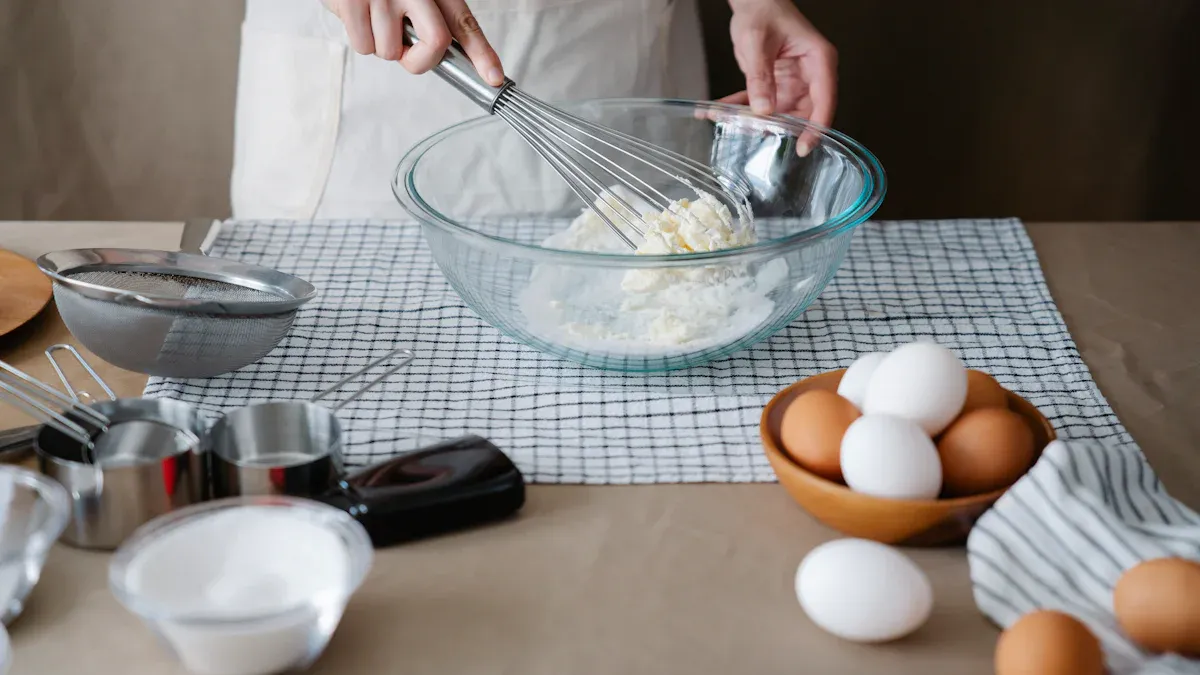
When using emulsifiers, you need to find the right amount for your recipe. Too much can make your product thick or greasy. Too little can cause separation or a short shelf life. You should always test small batches before making large amounts. Follow these best practices for using emulsifiers:
Check the oil-to-water ratio in your recipe. This helps you choose the right type and amount.
Pay attention to the pH level. Some emulsifiers work better in certain pH ranges.
Make sure the emulsifier can handle the temperature during processing.
Control the amount you use. Stick to supplier recommendations to avoid overuse or underuse.
Mix thoroughly. Use high-shear mixers to spread the emulsifier evenly.
Add the emulsifier in the correct order. This helps it dissolve fully and work better.
Test for flavor changes. Too much can add off-flavors.
Run shelf-life tests to see how your product holds up over time.
Tip: Always check the supplier’s dosage guidelines and adjust based on your own tests. This helps you avoid common mistakes when using emulsifiers.
Storage and Handling
Proper storage and handling keep emulsifiers effective. If you store them wrong, they can break down and lose their power. When using emulsifiers, you should:
Store in cool, dry places to prevent breakdown from heat or moisture.
Protect from strong light and air, which can cause oxidation.
Avoid freezing and thawing cycles. These can change how emulsifiers work in your product.
Watch for changes in texture or smell. These signs mean the emulsifier may not work well.
Use airtight containers to keep out moisture and air.
Add salts or sugars if you need to control water movement in your product.
Check for loss of active compounds, especially in products with omega-3 oils.
If you follow these steps when using emulsifiers, you help your food stay stable and safe for your customers.
If you know how emulsifiers work, you can choose better. Food makers should think about what their food needs. They should check if ingredients work well together. They need to look at how they make the food. Safety rules and cost are important too. If you check your process often, you can keep up with changes. Take time to look at your emulsifier choices now. This helps your food stay safe, steady, and good quality.
FAQ
What is the best way to start a purchasing guide for emulsifiers?
First, write down what your product needs. Look at how you want it to feel. Think about how long it should last. Check how you will make it. Use a guide to compare prices and suppliers. Always test small batches before buying a lot.
Are natural emulsifiers better for health?
You might pick natural emulsifiers for clean labels. Many people think they are safer. Some come from plants or animals. Always check if they are safe and work well before choosing.
How do monoglycerides help in food products?
Monoglycerides help oil and water mix together. You use them in baked goods, dairy, and spreads. They make food feel better and last longer. You can find them in lots of processed foods.
Can I use one emulsifier for all recipes?
You should not use just one emulsifier for every recipe. Each food needs its own kind. Match the emulsifier to your food’s emulsion and ingredients.
How do I store emulsifiers to keep them fresh?
Keep emulsifiers in cool, dry places. Use containers that close tightly. Keep them away from light and water. Check their smell and texture before using them.