Propylene Glycol is the main solvent in most e-liquids. It makes up more than 80% of the liquid with vegetable glycerin. Groups like the FDA say propylene glycol is usually safe in food and medicine. Manufacturers need to know that many people use it. Over 80 million e-cigarette users around the world use products with this ingredient. Getting good propylene glycol helps keep products safe. It also helps companies talk clearly with customers.
Key Takeaways
Propylene glycol is very important in e-liquids. It helps carry nicotine and flavors. It also gives a strong throat hit like smoking. Regulators say propylene glycol is safe in food and medicine. But its safety in vaping is still being studied. Manufacturers need to keep up with new research and rules. Using high-purity, food-grade or USP-grade propylene glycol keeps products safe and high quality. This helps customers trust the product. Manufacturers should label e-liquids with all ingredients. They should add warnings for people who are sensitive. They should include batch information too. This helps people use the product safely. Testing products carefully is important. Controlling heating levels is also important. Talking openly about safety helps lower risks. It also helps people have safer vaping experiences.
Propylene Glycol Overview
Properties
Propylene Glycol is used a lot in e-liquids. Manufacturers like it because it works well in many ways. It is a thick, clear liquid. It does not really smell. It tastes a little bit sweet. It is called a diol because it has two alcohol groups. This helps it mix with many things. The table below shows important facts about it for making e-liquids:
Property | Description/Value |
|---|---|
Physical state | Viscous, colorless liquid |
Odor | Almost odorless |
Taste | Faintly sweet |
Chemical classification | Diol (propane-1,2-diol) with two alcohol groups |
Miscibility | Miscible with water, acetone, chloroform |
Volatility | Very low |
Irritation potential | Generally non-irritating |
Viscosity | 0.042 Pa·s |
Heat capacity | 189.9 J/(mol·K) |
Propylene Glycol helps carry nicotine and flavors in e-liquids. It turns into vapor easily. This makes it act like smoke and helps deliver ingredients. Sometimes, when mixed with some flavors, it can make new chemicals. These can bother the airways. That is why it is important to make and test e-liquids carefully.
Common Uses
Propylene Glycol is used in many things besides vaping. It is helpful in lots of industries:
Pet foods and vet products use it to keep food moist, make it taste better, and add nutrients.
Medicine companies use it to help mix and keep medicine moist and even.
Beauty products like lotions and creams use it to keep skin soft and smooth.
Cigar humidors use it to keep cigars fresh.
Factories use it in antifreeze and de-icers to stop freezing and rust.
Food uses it to keep things fresh and soft for longer.
Propylene Glycol is used in food, medicine, beauty, and industry. This shows it is safe and useful. Manufacturers should know it works well when picking ingredients for e-liquids.
Regulatory Status
FDA and GRAS
The United States Food and Drug Administration (FDA) says propylene glycol is “Generally Recognized as Safe” (GRAS) for food and medicine. Experts agree it is safe when people eat it or use it in medicine. The FDA lets companies put propylene glycol in food, drinks, and medicine. The agency checks science studies before saying yes.
Other countries also let people use propylene glycol in food and medicine. The European Food Safety Authority (EFSA) and Health Canada both say it is okay. These groups set rules for how much people can have. They also make companies follow strict rules for how pure it is and how it is labeled.
Note: GRAS means it is safe to eat or put on skin. It does not mean it is safe to breathe in from vaping or e-cigarettes.
Inhalation Guidelines
Regulators do not treat breathing in propylene glycol the same as eating or touching it. The FDA has not said propylene glycol is safe to breathe in e-liquids. The agency is still studying what happens when people breathe vapor from e-cigarettes. Scientists found that breathing in propylene glycol can bother the throat and lungs for some people. This can make people cough or have a dry throat.
Groups around the world also check if breathing in propylene glycol is safe. The World Health Organization (WHO) and the European Union have not made rules for breathing it in. They want more studies to learn about long-term effects. Manufacturers need to watch for new studies and rules. They should test their products and tell customers about safety.
Regulatory Body | Status for Ingestion | Status for Inhalation | Notes |
|---|---|---|---|
FDA (USA) | GRAS | Not approved | GRAS for food/medicine, not for vaping |
EFSA (Europe) | Approved | Not specified | Safe for food, more research needed |
Health Canada | Approved | Not specified | Safe for food, no inhalation guideline |
WHO | Reviewed | Not specified | Calls for more inhalation research |
Manufacturers need to know the difference between eating and breathing in propylene glycol. They should follow all rules and keep learning from new studies. This helps keep customers safe and builds trust.
Role in E-liquids
Throat Hit
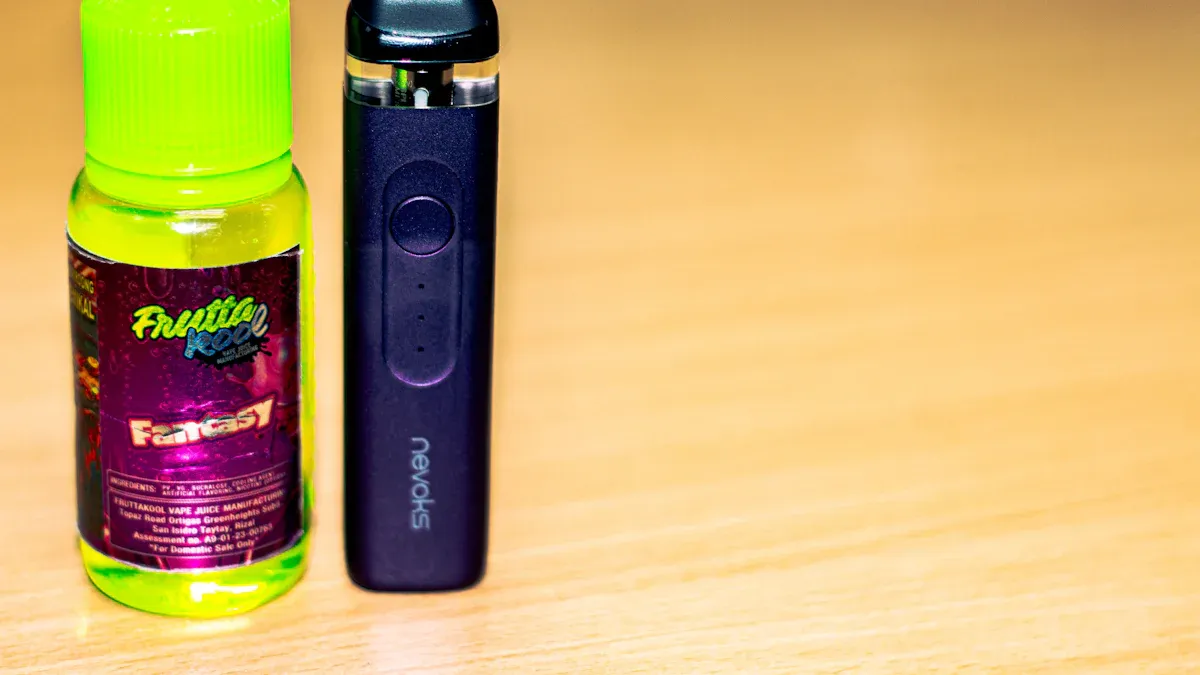
Many people pick e-liquids for how it feels in their throat. This feeling is called the “throat hit.” Propylene Glycol gives a sharper throat hit. It feels a lot like smoking a cigarette. People who stop smoking often like this feeling. PG is not as thick as other things in e-liquids. It moves fast through the vape and gives a strong hit.
PG helps flavors taste clear and strong in every puff.
More PG in the mix means a stronger throat hit.
Vegetable glycerin (VG) makes the throat feel smoother and softer.
Most of the throat hit comes from PG, not VG or other things.
Solvent Function
Propylene Glycol is the main solvent in e-liquids. It mixes with nicotine and flavors to help them blend well. PG makes it easier for nicotine to dissolve. Scientists learned that PG and VG together make tiny particles. These particles carry nicotine and flavors deep into the lungs. PG also keeps flavors strong, like menthol and citrus.
Tip: Manufacturers should use PG to keep flavors clear and nicotine mixed well in their products.
Aspect | Propylene Glycol (PG) | Vegetable Glycerin (VG) |
|---|---|---|
Nicotine Solubilization | Effective, supports nicotine mixing | Less effective |
Flavor Enhancement | Superior for many flavors | Can reduce flavor intensity |
Aerosol Particle Size | Smaller, better delivery | Not specified |
PG vs VG
Manufacturers pick between PG and VG when making e-liquids. Each one changes how vaping feels.
Aspect | Propylene Glycol (PG) | Vegetable Glycerin (VG) |
|---|---|---|
Consistency | Thinner, runs easily | Thicker, more viscous |
Flavor impact | Tasteless, keeps flavors strong | Slightly sweet, can mask flavors |
Throat hit | Stronger, sharper | Milder, smoother |
Vapor production | Less vapor | More vapor, thicker clouds |
Allergic reactions | Can cause irritation for some | Less likely to cause irritation |
User preference | Chosen for throat hit and flavor clarity | Chosen for thick vapor clouds and sweetness |
PG gives a strong throat hit and clear flavors. VG makes bigger clouds and a smoother taste. Some people may react to PG, so companies should give choices. The best mix depends on what customers want.
Health Effects
Short-term Effects
Vaping can bother your mouth, throat, and airways. Many people say they cough or get a dry throat after vaping. Some feel a little discomfort when they breathe in the vapor. Scientists did a study with healthy adults who used e-cigarettes. These e-cigarettes had both propylene glycol and vegetable glycerin. The study showed no big changes in lung swelling between people who vaped and those who did not. But, people with more propylene glycol in their bodies had a small increase in swelling signs. These signs were still in the normal range. The scientists said the study was short and had only a few people. They think longer studies with more ingredients are needed to learn more.
Note: Some people may feel a little irritation even after using e-cigarettes for a short time. Most of these problems go away fast when people stop vaping.
Long-term Concerns
Breathing in heated e-liquids again and again can cause bigger health problems. When the liquid gets hot, it can make harmful chemicals like formaldehyde and acetaldehyde. These chemicals can hurt the lungs and cause swelling over time. Breathing these chemicals for a long time may raise the chance of lung sickness and trouble breathing. Big schools found that the main parts of e-cigarettes, like vegetable glycerin, can be bad for cells. The risk is higher when people breathe in many ingredients together. E-cigarettes also make chemicals like acrolein, which can hurt the lungs and heart.
Chemical Byproduct | Source (Heating) | Health Risk |
|---|---|---|
Formaldehyde | Thermal breakdown | Carcinogenic, lung damage |
Acetaldehyde | Thermal breakdown | Respiratory irritation |
Acrolein | Thermal breakdown | Linked to lung disease |
Sensitive Groups
Some people have a higher chance of getting sick from vaping. Kids, teens, and people with asthma or lung sickness may have stronger reactions to vapor. Older people and those with heart problems should stay away from vaping. Some people have allergies or are sensitive, so their symptoms can get worse. People who already have trouble breathing may cough more or have more swelling in their airways. Health experts say these groups should not use e-cigarettes.
⚠️ Tip: Manufacturers should put warnings for sensitive groups on product labels.
Studies show that most of the vapor from e-cigarettes ends up in the lungs. Where and how much stays depends on how people vape and the product design. Heating the liquid makes byproducts like volatile organic compounds and metals. These chemicals are lower than in cigarette smoke, but they can still be harmful. Scientists are still learning about long-term effects and say everyone should be careful.
Manufacturing Quality
Sourcing Standards
Manufacturers need to pick only the best ingredients for e-liquids. Food grade and USP grade materials are very safe and pure. Food grade is used in foods like teas and baking mixes. USP grade is even cleaner and is needed for medicines in the U.S. Both grades must follow strict rules.
Grade Type | Description and Use Cases | Regulatory/Quality Standard |
|---|---|---|
Food Grade | Used in food products like seasonings, soups, teas, soft drinks, and baking mixes. | Considered safe by the FDA for food applications. |
USP Grade | High purity grade suitable for food, drugs, and medicines. Used as a stabilizer, solvent, moisturizer. | Must meet United States Pharmacopeia (USP) standards, required for drugs sold in the U.S. |
Tip: Picking USP grade gives the most safety for people.
Purity and Testing
Testing helps make sure products are safe and always the same. Labs use gas chromatography to check that purity is over 99.9%. They weigh each ingredient with special scales to keep the recipe right. Homogeneity tests make sure nicotine and flavors mix evenly. Stability tests put samples through hot and cold and watch color changes. Metal checks use special tools to find even tiny bits of metal. High-performance liquid chromatography checks if nicotine levels are correct.
Testing Protocol | Description | Purpose/Outcome |
|---|---|---|
Purity Testing | Gas Chromatography (GC) ensures >99.9% purity. | Meets high purity standards for safety and quality. |
Gravimetric Preparation | Analytical micro-scale balance for precise weighing. | Achieves accurate concentrations and ratios. |
Homogeneity Tests | Rotation and interval testing for uniform distribution. | Confirms even mixing; homogeneity after 1 hour for 1:1 PG/Gly ratio. |
Stability Tests | Thermocycling and color absorbance over months. | Detects degradation and ensures stability. |
Metal Contaminant Detection | ICP-OES measures eight metals at 1 ppb detection limit. | Verifies absence of harmful metal impurities. |
Nicotine Concentration | HPLC-UV with calibration curve. | Ensures accurate nicotine dosing and consistency. |
Documentation
Good records help keep products safe and follow the rules. Manufacturers should write down where ingredients come from, batch numbers, and test results. These records help find problems and show they follow the rules. Factories should also care for the environment. They must throw away waste safely and treat dirty water the right way. Using recycling and plant-based methods can help the planet. Groups like the FDA, EPA, and EU make rules for safe use and disposal. Good records and safe handling protect people and nature.
Consumer Information
Labeling
Manufacturers have to put clear labels on e-liquids and vape products. Labels help people know what they are breathing in. Companies write down every ingredient, like propylene glycol, nicotine, and flavors. They also show how much of each thing is inside. Some states, like Colorado, want certificates of analysis for extra ingredients. These papers show that the ingredients are safe.
A good label should have:
The product’s name and batch number
A full list of ingredients with exact amounts
Warnings for people who are sensitive
The maker’s contact information
Safety seals or marks that show it is certified
Label Element | Purpose |
|---|---|
Ingredient List | Tells what is inside the product |
Batch Number | Helps track the product if there is a recall |
Warning Statements | Warns users about health risks |
Certification Marks | Shows the product meets safety rules |
When manufacturers use good labels, people trust them more. Labels also help teach people about the risks and good things about each ingredient.
Risk Communication
People often worry if breathing in propylene glycol is safe. Many know it is safe to eat, but they are not sure about breathing it. Some are scared that heating propylene glycol can make bad chemicals, like formaldehyde. Others worry about breathing problems, asthma, or allergies. Bad labels make these worries worse.
Manufacturers help by:
Doing safety tests on how people really use vapes
Keeping the heat low to stop bad chemicals from forming
Using safer parts, like glass or ceramic cartridges
Using fewer fake additives and more natural ones
Helping with studies about how people use vapes and health effects
🛡️ Tip: Companies earn trust when they share test results and safety facts with people.
Industry leaders say being open is very important. When companies tell what is in their products and how they check for safety, people feel safer. Good risk communication helps people make smart choices and keeps everyone healthier.
Manufacturers help keep e-liquids safe. They need to:
Choose ingredients that are approved and very pure from good suppliers.
Watch for new studies about breathing risks and rule changes.
Change recipes to make products less harsh for sensitive people.
Use clear labels and talk openly with customers.
Staying careful with quality, rules, and honesty helps people trust them and keeps everyone healthy.
FAQ
Is propylene glycol safe for everyone to inhale?
Propylene glycol can bother the throat or lungs for some people. Kids and people with asthma may have stronger reactions. Manufacturers should put warnings for these groups on labels.
Can propylene glycol cause allergic reactions?
A few people might get a mild allergy, like a rash or itching. Most people do not have allergies. If someone gets symptoms, they should stop using it and talk to a doctor.
How does propylene glycol affect the flavor of e-liquids?
Propylene glycol helps flavors stay strong and clear. It does not taste much by itself. This helps manufacturers make e-liquids with good flavor.
What grade of propylene glycol should manufacturers use?
Manufacturers should pick USP grade propylene glycol. This grade is very pure and keeps products safe for people.
Does heating propylene glycol create harmful chemicals?
Heating propylene glycol too much can make chemicals like formaldehyde. Manufacturers should make devices that stay at safe temperatures and test their products to lower these risks.