
When comparing Non‑Dairy vs Dairy Creamer, you may notice that non-dairy creamers tend to last longer and stay smooth in hot drinks, while dairy creamers can sometimes curdle. Non‑Dairy vs Dairy Creamer also shows that non-dairy options usually cost less and offer a wider range of flavors. Always check the labels, since some non-dairy creamers still contain milk-based ingredients. Many people choose non-dairy creamers for health reasons, convenience, or to try new flavors, and others select them because they are lactose intolerant. In the Non‑Dairy vs Dairy Creamer debate, non-dairy creamers are generally more stable and provide more variety, but it’s important to read labels for health and allergy safety.
Health awareness influences many decisions in the Non‑Dairy vs Dairy Creamer choice. People look for creamers that are quick and easy to use. The rise in plant-based diets and lactose intolerance has increased demand for non-dairy options. Unique flavors also encourage people to try different creamers.
Key Takeaways
Non-dairy creamers stay fresh longer. They do not curdle in hot drinks. This makes them more stable than dairy creamers.
Non-dairy creamers come in more flavors. They often cost more because of special ingredients. Eco-friendly packaging can also raise the price.
Always read the labels on non-dairy creamers. Some may still have milk-based ingredients like casein.
Non-dairy creamers taste sweeter and feel lighter. Dairy creamers are richer and creamier. They have a mild taste.
Non-dairy creamers can have extra sugar and trans fats. Think about your health when picking a creamer.
Non‑Dairy vs Dairy Creamer: Stability
Shelf Life
When you look at Non‑Dairy vs Dairy Creamer, shelf life is important. Non-dairy creamers last longer than dairy creamers. You can keep many non-dairy creamers in your cupboard until you open them. Dairy creamers need to go in the fridge right away. Non-dairy creamers stay fresh longer because of how they are made. Makers use plant oils and special steps to help them last. You can store non-dairy creamers for weeks or months. Dairy creamers spoil faster since they have real milk or cream. If you want a creamer that lasts, non-dairy is a good choice.
Curdling Resistance
Curdling can make your coffee or tea taste bad. Dairy creamers can curdle in hot drinks or sour coffee. This happens because milk proteins react to heat and acid. Non-dairy creamers do not curdle as much. They use plant fats and do not have milk proteins. Your drink stays smooth and even. Non-dairy creamers also have stabilizers and emulsifiers. These help the creamer mix well and stay smooth. You do not get lumps or bits in your drink.
Hot vs Cold Drinks
You may wonder how each creamer works in hot and cold drinks. Non-dairy creamers are stable in both. In hot drinks, they keep their texture and do not split. In cold drinks like iced coffee, they work well too. Makers use special ways to help non-dairy creamers blend smoothly. They add plant proteins, healthy fats, and sometimes calcium. This helps the creamer stay mixed and creamy, even when cold.
Here is a table that shows how non-dairy creamers stay stable:
Factor | Non-Dairy Creamers |
|---|---|
Emulsification | Uses plant-based fats (e.g., coconut oil, almond oil) |
Stability Factors | Homogenization pressure (150-200 bar), temperature (60-70°C) |
Texture | Achieves smooth, consistent texture through precise control of emulsion stability |
Dairy creamers can sometimes clump or separate in cold drinks. You might see this if you pour dairy creamer into iced coffee. Non-dairy creamers are made to be more stable and smooth. You get a creamy drink every time.
Tip: If you want a creamer that works in both hot and cold drinks, non-dairy creamers are more reliable.
The Non‑Dairy vs Dairy Creamer debate is often about stability. Non-dairy creamers win in shelf life, curdling resistance, and work well in all drinks.
Cost Comparison
Price Overview
If you look at prices, non-dairy creamers usually cost more. They can be 40-60% higher than dairy creamers. This is because they use special ingredients and need more steps to make. Some plant-based creamers use oats, almonds, or coconut. These can be expensive to get and process. The kind of packaging also changes the price. Some brands use containers that are better for the planet. These can cost more but give you extra value.
Value Factors
You may ask why non-dairy creamers are pricier and if they are worth it. There are a few reasons for the higher price:
Non-dairy creamers last longer, so you can keep them out until opened.
Companies spend money to make creamers smooth and tasty.
Some use organic or fair-trade ingredients to help farmers and workers.
Many use packaging that can be recycled, which helps the earth.
Some, like Coffee Mate Natural Bliss Brown Sugar Oat Creamer, have more nutrition and easy-to-use packs, but might have more sugar or special ingredients.
Others, like Elmhurst Plant Based Unsweetened Oat Creamer, use simple ingredients and eco-friendly packs, but may cost more and feel lighter.
You get more than just a creamer. You also get easy use, help for the planet, and sometimes extra nutrients.
Market Trends
Non-dairy creamers are getting more popular. You can find more kinds in stores and online. The market is growing from $3.8 billion in 2025 to $6.2 billion by 2034. That is a 5.8% growth each year.
Year | Market Size (in billion USD) | CAGR (%) |
|---|---|---|
2025 | 3.8 | N/A |
2034 | 6.2 | 5.8 |
Prices can change if there are not enough ingredients or if the weather is bad. For example, soybeans and almonds can cost more if there are problems. Brands compete, which also changes prices and what you can buy. When you compare Non‑Dairy vs Dairy Creamer, you will see non-dairy creamers are getting more popular, even with these problems.
Labeling & Ingredients
Non‑Dairy Label Confusion
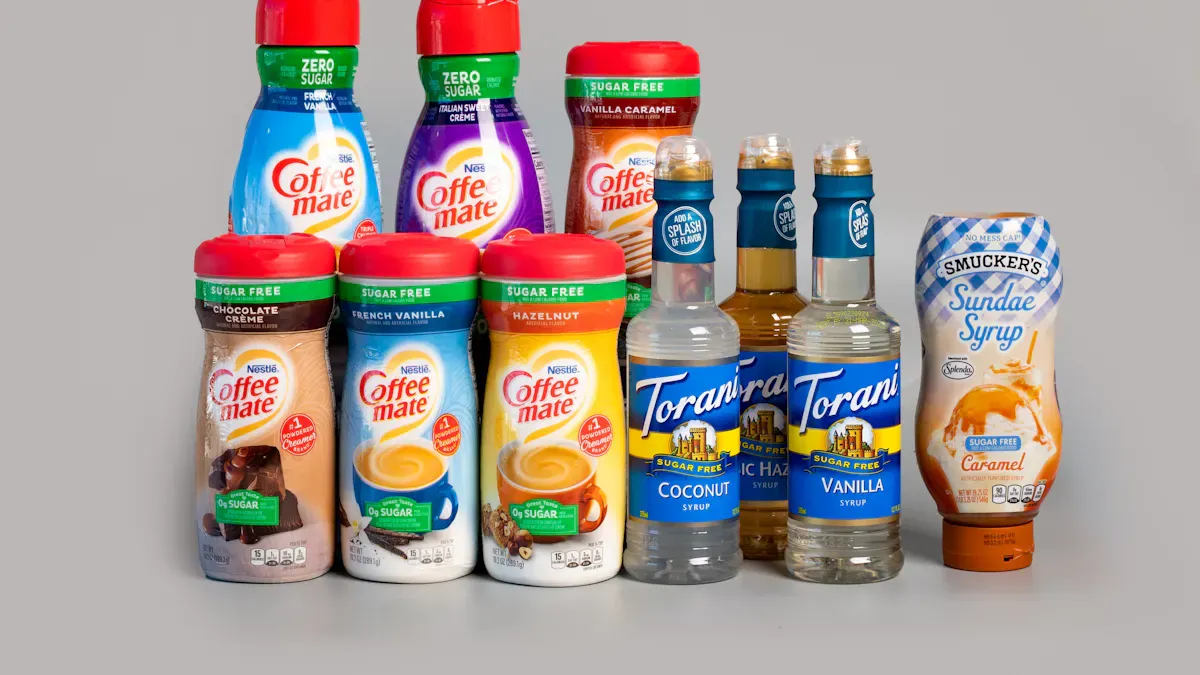
Some people think non-dairy creamers have no milk. This is not always true. Some non-dairy creamers use things from cow’s milk. They may have casein or sodium caseinate. The FDA says companies must list these on the label. You might see “caseinate (a milk derivative)” in the ingredients. This can be confusing if you want no dairy at all. Always check the ingredient list before you buy a creamer. This is important if you have allergies or want to avoid milk.
Tip: If you see “caseinate” or “milk derivative” on a non-dairy creamer, it still has milk protein.
Allergen Info
You need to know about allergens in creamers. Many non-dairy creamers still have milk proteins. Some also have soy, almonds, or coconut. These are common allergens. The law says companies must list big allergens by their usual names. You will find them in the ingredient list or in a “contains” statement. Sometimes, you may see a warning like “may contain” for possible cross-contact. This warning is not required by law.
Here is a table to help you understand allergen labeling:
Allergen Type | Disclosure Requirement |
|---|---|
Must be labeled by common name, included in ingredients or ‘contains’ statement. | |
Precautionary Labels | Voluntary, not regulated (e.g., ‘may contain’). |
Non-dairy creamers can have sodium caseinate even if labeled as non-dairy.
Coffee whiteners and powdered creamers often include these ingredients.
Ingredient Transparency
You want to know what is in your creamer. Companies use many kinds of ingredients in non-dairy creamers. The most common are soy, almond, coconut, and oat. Each type has its own benefits. Soy-based creamers give you protein and all nine essential amino acids. Almond creamers have fewer calories and lots of vitamin E. Oat-based creamers have beta-glucan, which can help lower cholesterol.
Here is a chart showing the market share of different non-dairy creamer ingredients:
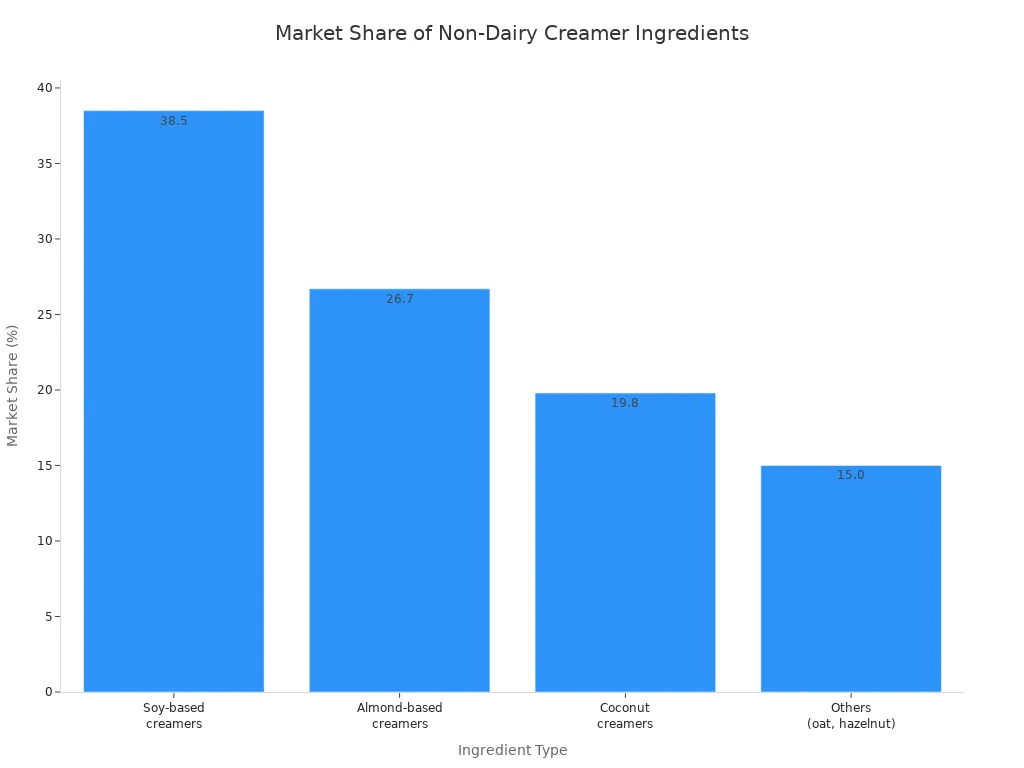
Soy-based creamers are the most popular. Almond and coconut creamers are next. Oat and other types are growing fast. Companies list these ingredients on the label. You should always read carefully. In the Non‑Dairy vs Dairy Creamer debate, ingredient transparency helps you pick the best creamer for your health and taste.
Sensory Experience
Taste & Flavor
There is a clear difference in taste between the two creamers. Dairy creamers taste mild and creamy. They mix well with coffee or tea. Non-dairy creamers taste sweeter and come in more flavors. You can find brown sugar, maple syrup, coconut sugar, and syrups like vanilla or caramel in non-dairy creamers. Some brands use stevia or monk fruit to make them sweet without adding calories.
Brown sugar gives a sweet taste like molasses.
Maple syrup adds a deep, earthy flavor.
Coconut sugar has its own special taste.
Vanilla and caramel syrups make drinks taste different.
Stevia and monk fruit are sweet but have no calories.
Non-dairy creamers use oils, sugars, and fake flavors to copy dairy cream. This makes them taste sweeter and gives you more choices. Sometimes, you might taste hidden flavors like pineapple or chocolate in special blends. These extra flavors make each creamer stand out.
“When I share my flavors, people may not notice a pineapple taste or that Irish cream has a chocolate flavor. These hidden flavors make each one special,” Barrera says. People who do not know much about flavor chemistry might miss these notes, but they are important for the final taste.
Texture & Mouthfeel
Texture is important when picking a creamer. Dairy creamers feel rich and smooth because of milk fat. Many people like the creamy feeling in their mouth. Non-dairy creamers use plant oils and emulsifiers to get a similar texture. You will notice non-dairy creamers feel silky and mix well in drinks. Some brands use coconut or soy oil to make them creamier.
Sometimes, non-dairy creamers feel lighter or thinner than dairy ones. Companies add stabilizers to help with texture. This gives you the same mouthfeel in hot and cold drinks. Some non-dairy creamers feel almost as rich as dairy, but others are lighter and less creamy.
Aroma & Appearance
Smell and look help you pick a creamer. Dairy creamers have a soft, milky smell and look pale. Non-dairy creamers often smell stronger because of added flavors. You might smell vanilla, caramel, or coconut when you open the container.
Sensory testers checked non-dairy creamers for how well they dissolve, their color, and any strange smells. They rated flavor and color strength on a 9-point scale. Testers found some non-dairy creamers smelled like beans, eggs, or old oil. Non-dairy creamers can look more yellow or darker. Most testers liked the taste and look of non-dairy creamers, but some noticed odd flavors.
Testers checked how well creamers dissolved and their color.
They looked for strange smells and tastes.
Most non-dairy creamers got good scores for taste and look.
Health Considerations
You should think about health when choosing a creamer. Non-dairy creamers often use partially hydrogenated oils. These oils have trans fats, which are bad for your heart. Trans fats raise bad cholesterol and lower good cholesterol. This can lead to heart disease and stroke. Fake colors and flavors are safe in small amounts, but they do not give you nutrients. Some ingredients, like carrageenan and certain emulsifiers, might upset your stomach and cause swelling.
Extra sugar can cause weight gain and diabetes.
Some emulsifiers and additives can bother your stomach.
Eating a lot of omega-6 fats, like linoleic acid, can cause long-term health problems.
Linoleic acid can stress your body and harm your cells.
Partially hydrogenated oils in non-dairy creamers have trans fats. These fats raise bad cholesterol (LDL) and lower good cholesterol (HDL). This makes heart attacks and strokes more likely. Fake colors, flavors, and preservatives are safe in small amounts, but they do not help your health and could cause problems over time.
You can also compare nutrition in non-dairy and dairy creamers. Here is a table that shows the differences:
Nutrient | Non-Dairy Creamer (per tbsp) | Dairy Creamer (Half-and-Half, per tbsp) |
|---|---|---|
Calories | 20-35 | 20 |
Total Fat | 1-2 grams | 1.5 grams |
Saturated Fat | 0.5-1 grams | N/A |
Sugar | 1-3 grams | N/A |
Protein | 0 grams | 0.5 grams |
Non-dairy creamers usually have more sugar and less protein. Dairy creamers give you a little protein and fewer fake ingredients. When you compare Non‑Dairy vs Dairy Creamer, you should think about taste, texture, smell, and health. Pick the creamer that works best for you.
You learned about Non‑Dairy vs Dairy Creamer in stability, cost, labeling, and taste. Non-dairy creamers stay fresh longer and have more flavors. They can cost more and may have extra sugar. Dairy creamers taste rich and plain. If you want to skip hidden ingredients, make your own non-dairy creamer at home. Always look at the nutrition facts and ingredient list. Pick what matches your health, money, and taste. For more info, check guides on milk alternatives and healthy coffee habits.
FAQ
Can you store non-dairy creamer without refrigeration?
Most non-dairy creamers can stay in your pantry. You need to put them in the fridge after opening. Always look at the label for storage rules.
Do non-dairy creamers contain any allergens?
Many non-dairy creamers have soy, almond, or coconut. Some also include milk proteins like casein. Always check the ingredient list and allergen statement before using any creamer.
Are non-dairy creamers healthier than dairy creamers?
Non-dairy creamers usually have more sugar and processed oils. Dairy creamers have fewer additives and a bit of protein. Check nutrition labels to find the best choice for your health.
Will non-dairy creamers taste like real cream?
Non-dairy creamers are sweeter and have many flavors. You might notice they taste different from real cream. Some brands use flavors and oils to copy dairy, but taste and texture change from brand to brand.