To keep natural colors stable in acidic beverages, match the pigment to the finished pH, then control heat, oxygen, and light. Finished-product testing determines whether that combination supports your intended shelf life.
A color that performs in water may behave differently after acidification, vitamin addition, pasteurization, or filling. Start with the beverage specification, then compare color preparations under the conditions your product will experience.
Key Takeaways
- Choose a natural color preparation based on the beverage’s finished pH, target shade, full formulation, processing conditions, and package.
- Test the complete drink for ingredient compatibility, physical uniformity, and color changes during acidification and heating.
- Assess oxygen, light, and temperature as separate causes of color loss under the intended packaging and storage conditions.
- Run controlled shelf-life trials with consistent CIELAB measurements and sensory checks; set acceptance limits for the specific beverage because no universal E limit applies.
Match the Color to the Beverage
Color selection starts with measured acidity, target shade, clarity, processing conditions, and packaging. Record these conditions before comparing samples. For energy drinks, use the complete formulation and process to guide color selection.
These application groups provide a starting point, not guaranteed performance ranges.
| Beverage System | Color Starting Point | Main Trial Question |
|---|---|---|
| Fruit drinks near pH 3 | Anthocyanin preparations | Does the red shade survive processing and storage? |
| Fruit drinks at higher pH | Source-specific anthocyanins | Is the purple shift acceptable? |
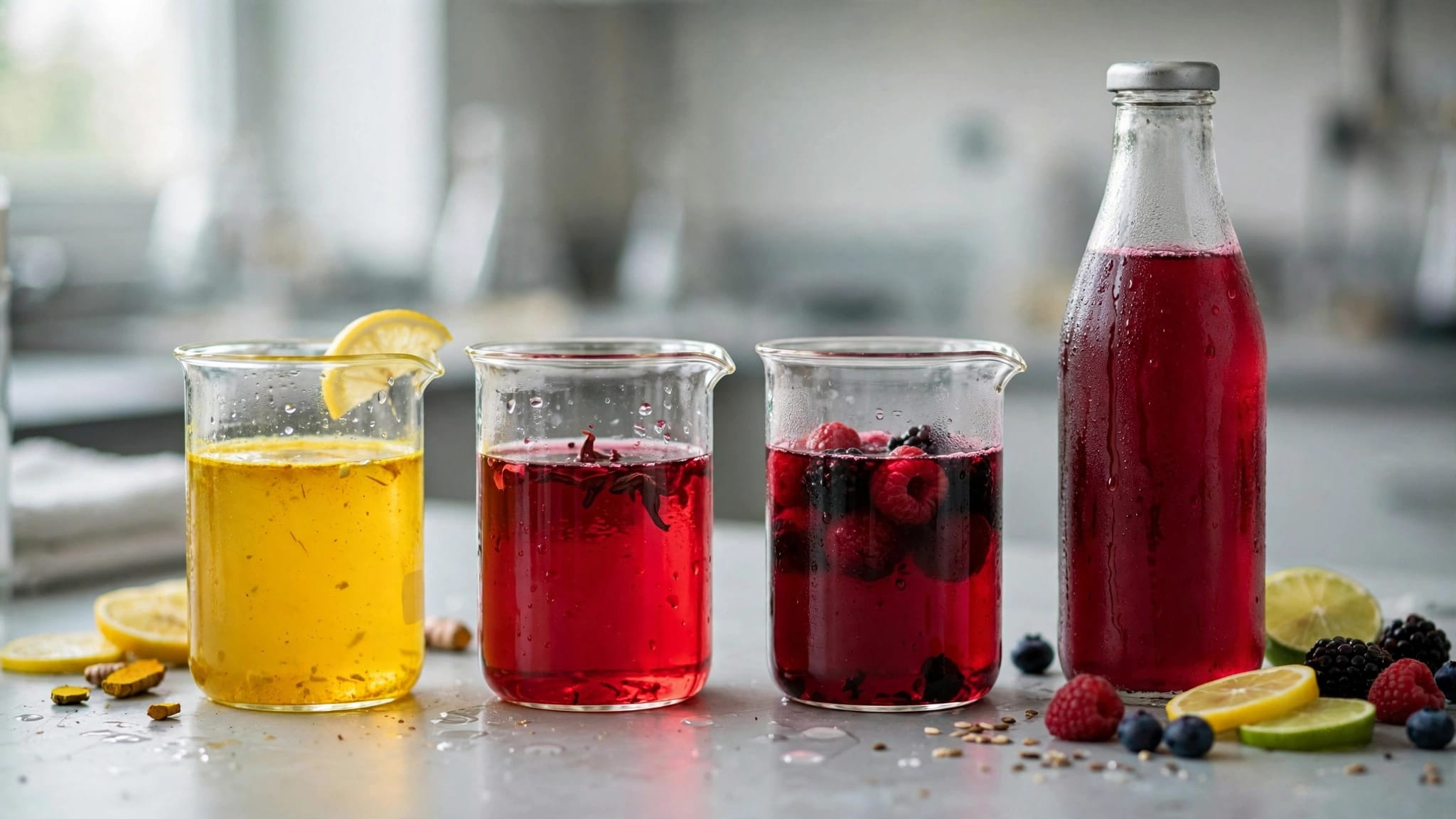
| Yellow or orange acidic drinks | Beverage-grade carotenoid preparations, annatto, or turmeric | Does the color remain uniform? |
| Chilled red or pink drinks | Beet red or carmine preparations, tested in the formulation | Are heat, oxygen, and light losses acceptable? |
| Blue beverage concepts | Butterfly pea or spirulina, assessed separately | Does each preparation retain the required shade at the intended pH? |
| Brown drinks | Caramel | Does the shade suit the product after processing and storage? |
Pigment identity alone does not define suitability. Extract composition, color strength, carrier, emulsifier system, and protective formulation affect performance. Assess concentrates or syrups in the form in which they’ll be used, then test them in the diluted drink.
Amaize red, for example, has a reported application range of pH 2.5 to 4.5. Its hue moves toward purple as acidity decreases. Treat that range as product guidance, not a specification for every anthocyanin.
Our natural colorants for beverages include several pigment families. Compare preparations against the application rather than selecting by color name alone.
Understand How pH Changes Each Pigment
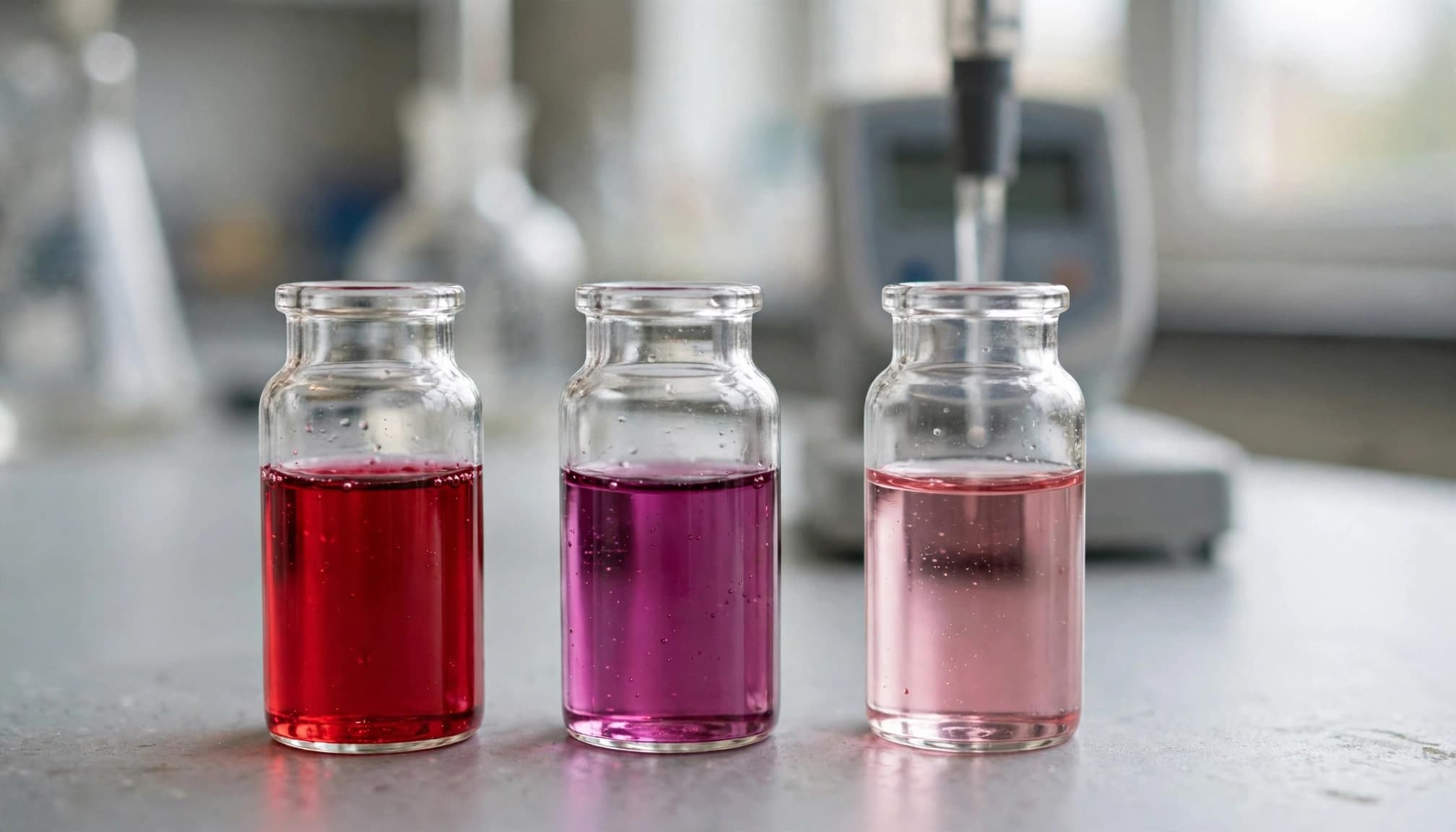
Acidity can change a pigment’s molecular form, visible shade, or resistance to degradation. A review of natural pigment stability examines these differences across anthocyanins, betalains, carotenoids, and chlorophylls.
Anthocyanins and Betalains
Anthocyanins from purple sweet potato and other botanical sources generally favor red shades at low acidity. Around pH 3, suitable preparations can produce a bright red.
As acidity rises, the balance between molecular forms changes. The color may shift toward purple and lose intensity. Source and molecular structure affect this color shift, so compare black carrot preparations rather than assuming they follow the same shade curve.
Betalains, including beetroot betanin, require a different assessment. Their failure may appear as fading or browning rather than a useful, predictable hue shift. Assess acid stability alongside temperature, oxygen, and storage time.
Carotenoids and Chlorophylls
Carotenoids such as beta-carotene and paprika pigments generally show less direct acidity-driven shade change than anthocyanins. Their practical limits often involve oxidation, light exposure, and the stability of the beverage preparation.
A pigment that tolerates acid can still separate or fade. Inspect both color retention and physical uniformity.
Native chlorophyll is a poor starting point for strong acid exposure. Acid can replace its central magnesium, producing dull olive-brown derivatives. Modified chlorophyll preparations have different properties and regulatory conditions; they are not interchangeable with leafy-green extracts.
Build Stability Into the Formulation
Control Acidification and Ingredient Interactions
Measure pH after the complete formulation has equilibrated. Include juice, minerals, proteins, preservatives, vitamins, and flavor preparations before establishing the reference value. This is especially important for dairy alternative beverages, where proteins, minerals, and other components can affect color performance.
Buffering capacity also matters. Two drinks with the same finished-product acidity may respond differently to ingredient variation or dilution. Your acidulant selection for beverage formulation affects taste and acid balance, so compare color in the complete acid system.
Vitamin C is not a universal color protector. The review of anthocyanin degradation factors identifies ascorbic acid, oxygen, sulfites, and enzymes among relevant influences. For fortified drinks, include the intended vitamin level in every stability trial.
Match the Preparation to the Matrix
Water-soluble pigments and water-dispersible preparations require different handling. Oil-soluble carotenoids need a beverage-compatible delivery system, such as an emulsion, rather than direct addition as an untreated oil extract.
Assess haze, precipitation, surface separation, and sediment after dilution. Check carmine compatibility in the finished drink, especially in beverages with complex ingredient systems. Some systems can develop precipitation or other physical instability. A dispersion suitable for a cloudy drink may not meet a clear beverage specification.
Compare encapsulated or otherwise protected preparations when standard grades fail. Protection can affect clarity, flavor, and cost, so compare those outcomes alongside color retention.
Avoid choosing dosage by powder weight alone. Compare standardized color strength and finished-beverage shade. Extract concentration and carrier content can differ substantially between commercial preparations.
Control Heat Exposure and Addition Order
Heat stability depends on temperature, holding time, pH, and the surrounding formulation. A short treatment and an extended hot hold can cause different color losses at similar peak temperatures.
Reproduce the Full Thermal History
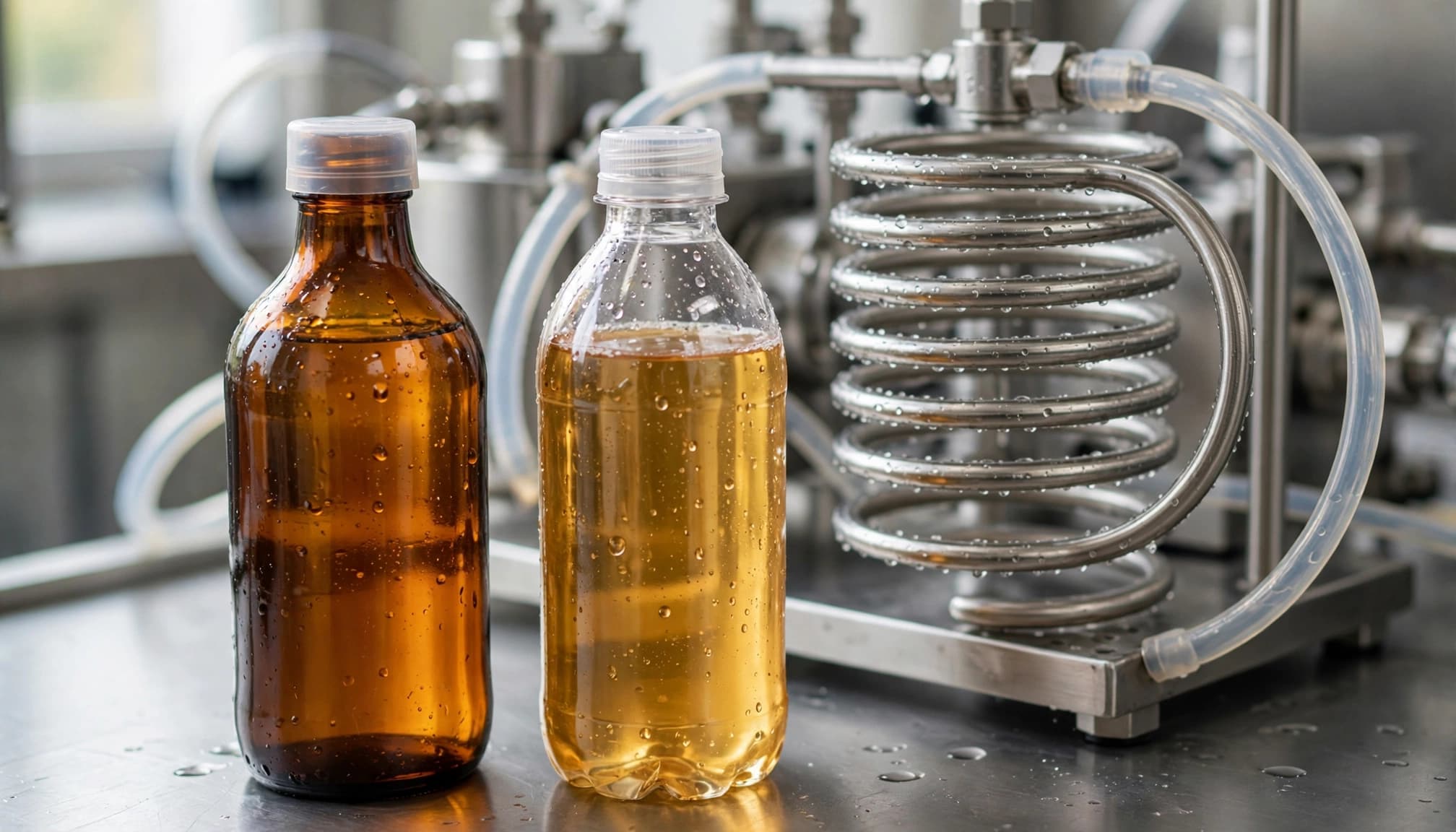
Include mixing temperature, pasteurization, hot holding, filling, and cooling in the trial. Record actual product temperatures rather than relying only on equipment settings. Record spirulina results separately, since its response to heat and acid can differ from other blue preparations.
Standard spirulina is sensitive to heat and acid. A cold-chain format may reduce thermal stress, but refrigeration doesn’t remove acid sensitivity.
Gardenia blue needs a grade-specific process assessment. Don’t assume any preparation is heat stable based on a general description; test it under your actual thermal history. Compare color before processing, after cooling, and during storage.
Choose the Addition Point Deliberately
Late addition can reduce a pigment’s heat exposure when the validated manufacturing process allows it. It can’t justify bypassing microbial controls or adding an untreated ingredient after the final preservation step.
Prepare color stocks according to their handling requirements. Compare addition order when concentrated acid, minerals, or protein ingredients could contact the color before full dilution.
For concentrates, evaluate both the stored concentrate and the diluted finished drink. A stable concentrate doesn’t establish diluted-beverage performance.
Reduce Oxygen and Light Exposure
Dissolved oxygen, headspace oxygen, and package oxygen transmission belong in the same stability assessment. Measuring only the finished liquid at mixing overlooks oxygen introduced during transfer and filling.
Reduce unnecessary splashing and air incorporation. Where suitable, compare deaeration or controlled headspace management against the existing process. Record dissolved oxygen at defined manufacturing points.
Trace iron or copper can accelerate oxidation. Include process water and mineral premixes when investigating unexplained fading.
Clear glass and PET expose beverages to retail lighting. To assess light stability, compare the intended package with a light-protected control under representative lighting and temperature conditions.
Light protection may involve an opaque container, an appropriate sleeve, or a package with suitable barrier properties. Package appearance alone doesn’t establish protection across relevant wavelengths.
Antioxidants require a controlled trial. Their effect depends on the pigment and matrix, and a system that protects a carotenoid preparation may not protect an anthocyanin drink.
Lower oxygen at filling won’t resolve continued light-driven fading in a transparent package. Test oxygen control and light protection as separate variables.
Run a Controlled Shelf-Life Trial
A useful trial separates immediate acidity effects, processing damage, and storage losses. Keep one reference formulation and change one factor at a time.
- Establish the pH response. Prepare samples at the lower specification limit, nominal pH, and upper specification limit. Keep color concentration and other ingredients constant, then record shade after equilibration.
- Apply representative processing. Run the intended thermal treatment, addition order, filling conditions, and cooling profile. Compare processed samples with an unprocessed reference to identify immediate losses.
- Store in the intended package. Include a light-protected control and temperatures representing distribution and storage. Measure shade stability at release and predefined intervals through the proposed shelf life.
When syrups or concentrates are part of the product system, evaluate both the stored form and the diluted finished drink.
Use CIELAB measurements to record lightness and color coordinates: L*, a*, and b*. Calculate color difference, ΔE, against the agreed reference.
Keep the instrument, measurement geometry, sample temperature, container, and optical path consistent. For carbonated beverages, reproduce the intended carbonation because bubbles and turbidity can distort optical comparisons.
A beverage may lose intensity without a large change in hue. Where appropriate, track absorbance alongside CIELAB measurements.
Pair instrument readings with appearance, acidity, haze, sediment, separation, and flavor observations. Define acceptable limits before reviewing results.
There is no universal ΔE limit for every beverage. The acceptance threshold depends on the target shade, packaging, product positioning, and sensory assessment.
Accelerated storage helps rank candidates. It does not replace real-time testing, especially when elevated temperature changes the degradation pathway.
Questions Before You Trial
Can Butterfly Pea Deliver Stable Blue in an Acidic Drink?
Butterfly pea flower extract contains anthocyanins, so its shade remains pH-dependent. A blue appearance in one formulation does not establish blue stability after acidification.
The FDA lists butterfly pea flower extract within its color-additive regulatory framework. Permission covers specified applications under defined conditions, not unrestricted use of every botanical extract.
Treat regulatory suitability and technical stability as separate requirements. Approval does not establish the intended hue, process tolerance, or shelf life.
What Should You Change When the Color Fails?
Identify the failure first. An immediate shift after acid addition points toward a response to acidity; losses after heating suggest process sensitivity.
Progressive fading during storage calls for separate oxygen, light, and temperature comparisons. Separation requires investigation of the delivery system and ingredient compatibility.
Change the pigment source, preparation, process, or package according to the observed failure. Increasing dosage alone may deepen the starting shade without correcting the cause.
Set the Color Specification Before Scale-Up
Stable natural color requires a defined combination of pigment, finished pH, processing conditions, and packaging. Select the preparation that meets your finished-beverage acceptance limits, rather than the sample with the strongest initial shade.
Share your target shade, complete formulation, heat process, package, and intended shelf life with our team for application-focused sample selection. Use those same conditions to evaluate natural colours in a controlled trial and set the production specification.