You can find spirulina powder and phycocyanin used as natural blue coloring. These two choices give different color strength, makeup, and how long they last. People want natural colors in food and drinks. The market for these colors keeps getting bigger.
The natural blue food coloring market was worth USD 450 million in 2025. It may reach USD 856 million by 2034.
Spirulina powder and phycocyanin are growing fast in the market. Phycocyanin may grow at a CAGR of 18.7% from 2026 to 2036.
You can pick the best one for you if you know these differences.
Key Takeaways
Spirulina powder gives color and nutrition. It is a whole food. You can use it to color smoothies and snacks.
Phycocyanin, called blue spirulina, makes a bright blue color. It does not like heat. It works best in cold foods.
Pick spirulina powder for a soft green-blue color. It also adds nutrients. Choose phycocyanin for a strong blue color in recipes.
Spirulina powder and phycocyanin are both popular natural colorings. Spirulina powder costs less and has more nutrients.
Think about what you need and your budget. This helps you pick spirulina powder or phycocyanin for home or business use.
What Is Spirulina Powder?
Source and Composition
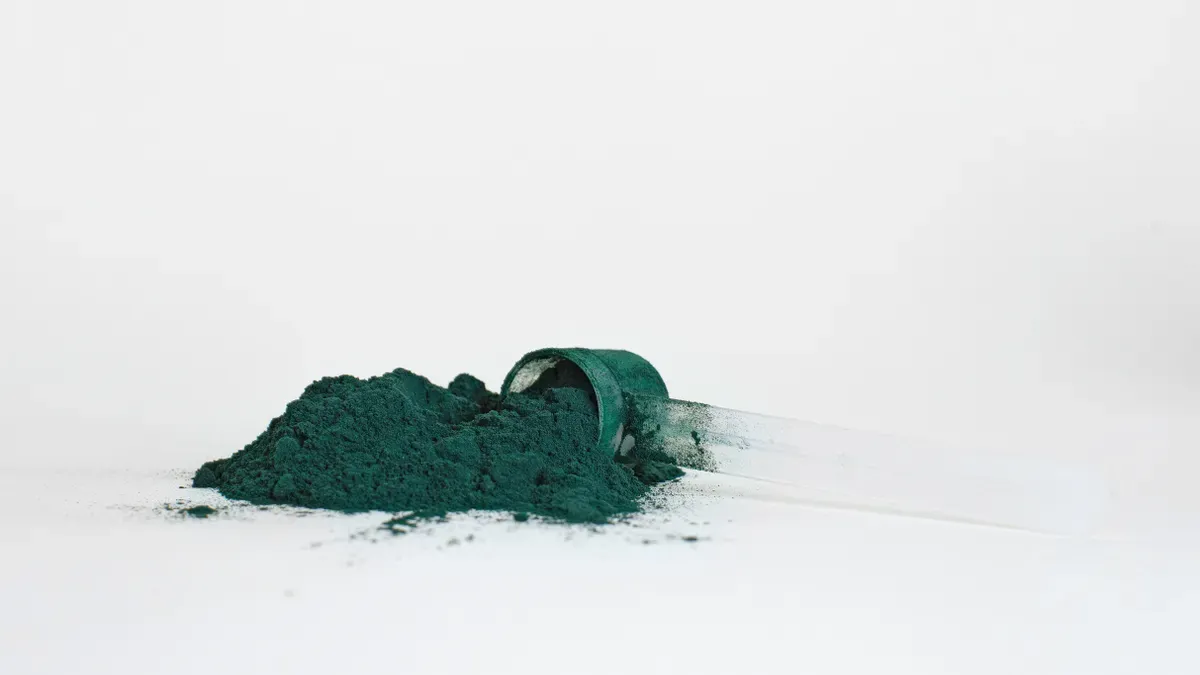
Spirulina powder comes from blue-green algae. Most spirulina grows in China and the United States. These two countries make over half of the world’s spirulina. The main type is spirulina platensis. Farmers like this type because it grows fast and has lots of protein.
Spirulina powder has two main pigments. Chlorophyll makes it green. Phycocyanin gives it a little blue color. Spirulina powder also has many nutrients. It gives you protein, iron, B vitamins, and carotenoids. Other natural colorants do not have as many nutrients as spirulina powder.
Spirulina powder is special because it is a whole food. It gives you both color and nutrition in one ingredient.
Here is a table that shows the nutrients and how they affect color:
Nutrient | Type | Effect on Coloring Properties |
|---|---|---|
Chlorophyll | Green pigment | Makes spirulina green |
Phycocyanin | Blue pigment | Adds blue color, mostly in blue spirulina |
Carotenoids | Nutrient | Good for health, but does not change color |
Protein | Nutrient | High in green spirulina, does not change color |
Coloring Properties
Spirulina powder gives a soft green-blue color. Chlorophyll is stronger, so the powder looks more green. The color is not as bright as pure phycocyanin. The color strength depends on the pigments inside. Green spirulina has more chlorophyll. Blue spirulina has more phycocyanin.
Spirulina powder is good for coloring foods like candy, ice cream, and yogurt.
The color stays bright in light but fades with heat. It works best in cold foods or drinks.
The color changes with pH. The color is strongest when pH is above 5.
You can also use spirulina powder as a supplement. You can add it to smoothies, juices, salads, or yogurt. Studies show spirulina may help with swelling, cholesterol, and gum problems. Royal Spirulina uses freeze-drying to keep the nutrients safe.
Tip: Mix 1 to 2 teaspoons of spirulina powder into your smoothie. This hides the taste and adds more nutrition.
What Is Phycocyanin (Blue Spirulina)?
Extraction Process
Phycocyanin is a bright blue pigment from spirulina. When you see “blue spirulina,” it means the product has a lot of phycocyanin. To get phycocyanin, people use a few steps. Here is how it usually happens:
Water Extraction: You mix dried spirulina powder with water. This helps phycocyanin dissolve.
Filtration: You filter the mix to take out solid pieces. This leaves a blue liquid.
Concentration: You use special ways to make the phycocyanin stronger.
Drying: You dry the blue liquid with spray drying or freeze-drying.
Direct Extraction from Cultures: You can also grow spirulina, collect it, break the cells, filter, make it stronger, and dry the pigment.
How you get phycocyanin changes how pure and bright it is. For example:
Freeze/thaw and sonication give higher purity than ultrasonication.
Water works better than phosphate buffer for getting more pigment.
Scientists check purity with the absorbance ratio A620/A280. A bigger number means it is more pure.
Freeze/thaw can give a purity of 0.46. Ultrasonication gives a lower purity of 0.35.
If you want a strong blue color, the way you get phycocyanin is important.
Pigment Characteristics
Phycocyanin is special because it is a bright blue color. It takes in and gives off light at certain wavelengths. This makes it different from other blue pigments. Here is a table that shows how phycocyanin is different from other pigments:
Pigment Type | Absorption Maxima (nm) | Emission Maxima (nm) |
|---|---|---|
C-Phycocyanin | ~621 | ~642 |
R-Phycocyanin | 533, 544 | 646 |
Allophycocyanin | Longer than phycocyanin | Longer than phycocyanin |
C-phycocyanin gives the brightest blue color. This is why food makers like to use it for natural blue coloring.
Phycocyanin is not just for color. It is also a strong antioxidant. This pigment helps your body fight bad molecules called reactive oxygen species. Scientists use tests like DPPH and ABTS to see how well phycocyanin stops free radicals. A lower IC50 value means it works better to protect your cells.
When you pick phycocyanin, you get a bright blue color and antioxidant benefits.
Key Differences for Blue Coloring
Color Intensity
You may wonder how blue your food will look. The answer depends on what you use. Phycocyanin, called blue spirulina, makes a stronger blue color. Spirulina Powder gives a softer blue-green color. Phycocyanin is a concentrated pigment. Spirulina Powder has less phycocyanin and more chlorophyll. This makes the color look more greenish-blue.
Here is a table that shows how much phycocyanin is in each:
Substance | Whole Spirulina Concentration | |
|---|---|---|
Blue Spirulina | 30 to 40% | N/A |
Green Spirulina | N/A | 10 to 20% |
If you want a bright blue, use phycocyanin. If you want a softer color, Spirulina Powder is better.
Purity & Application
Purity means how much blue pigment is in your color. Phycocyanin in foods usually has purity from 0.1 to 1.0. Sometimes, you see purity around 0.407. High purity makes phycocyanin good for clear, bright blue products.
Phycocyanin works in many foods and drinks. You can use it in smoothies, ice cream, candy, and baked goods. Spirulina Powder is also used, but it gives a softer color and extra nutrients. You might use it in yogurt, energy bars, or green smoothies.
Note: Both colorants work in foods and drinks. Phycocyanin gives a cleaner blue. Spirulina Powder adds nutrition and a more natural look.
Stability Issues
Stability means how long the color lasts in food. Phycocyanin gives a nice blue, but it is not very stable. Heat can break the pigment down. If you heat phycocyanin above 40 °C, the color fades. At 60-70 °C, the blue color disappears fast. Phycocyanin does not like strong acids or bases. It stays most stable at pH 6 to 7 and cold temperatures (4 °C to -20 °C).
Spirulina Powder is a bit more stable. It has other pigments and nutrients. It still loses color with heat, but it handles light and mild temperature changes better than phycocyanin.
Phycocyanin works best in cold foods and drinks.
Do not use phycocyanin in recipes that need baking or boiling.
Spirulina Powder can handle more light and mild heat, but the color is not as blue.
Tip: For a bright blue in a cold smoothie, use phycocyanin. For a green-blue in a snack bar, Spirulina Powder is a good choice.
Choosing the Right Option
Home vs. Commercial Use
You need to think about your goals before picking a natural blue colorant. If you want to use these ingredients at home, you should look at what you want in your final product, what tools you have, and how much you want to spend. The table below can help you compare important factors:
Factor | Description |
|---|---|
End-Product Requirements | Decide if you need a strong blue color or extra nutrition. |
Available Infrastructure | Check if you have the right tools for mixing or processing. |
Cost Considerations | Think about your budget for buying ingredients. |
Market Demands | See if you or your family prefer natural, stable, or bright colors. |
If you use Spirulina Powder at home, you get more nutrients and a mild blue-green color. You can add it to smoothies or snacks. If you want a bright blue for cakes or drinks, phycocyanin works better.
For commercial food makers, the choice depends on the product. Here are some main points:
Green spirulina works best as a supplement or in smoothie blends because it has protein, iron, and B-vitamins.
Blue spirulina (phycocyanin) gives a strong blue color without changing the taste.
Many companies use blue spirulina to replace synthetic dyes in foods and drinks.
Cost & Availability
You can find Spirulina Powder in many forms, such as powder, tablets, and flakes. It is easy to buy for home or business use. Phycocyanin is also popular, especially for making foods and drinks look bright blue. Both are in high demand as people want natural options instead of artificial colors.
When you think about cost, Spirulina Powder is usually more affordable. It also keeps more nutrients if it is freeze-dried. You get better value because you need less for the same effect. Phycocyanin costs more because it is harder to make and is very pure. If you want a strong blue color and do not mind paying more, phycocyanin is a good choice.
Tip: Look for freeze-dried products and check for clean sources. This helps you get the best quality and color.
You should pick the ingredient that matches your needs, budget, and the look you want for your food.
You can see how spirulina powder and phycocyanin are different. The table below shows their features:
Feature | Spirulina Powder | Phycocyanin |
|---|---|---|
Color Profile | Bright blue to turquoise | Vibrant blue |
Application | Drinks, dairy, snacks | Foods, beverages, candies |
Stability | Moderate pH, heat sensitive | Fragile above 45°C |
Shelf Life | Depends on moisture, packaging | Fades quickly with heat |
Phycocyanin makes cold foods look bright blue. Spirulina powder gives more nutrients and a softer color. Both help your health with antioxidants and support your immune system. 🌱 People like natural colors for health and to help the planet.
FAQ
What is the main difference between spirulina powder and phycocyanin?
Spirulina powder is a whole algae product. Phycocyanin is a blue pigment extracted from spirulina. You get a softer color with spirulina powder. Phycocyanin gives you a bright blue shade.
Can I use phycocyanin in hot foods?
You should avoid using phycocyanin in hot foods. Heat breaks down the blue pigment. The color fades quickly above 45°C. Use it in cold recipes for the best results.
Is spirulina powder safe for kids?
Yes, spirulina powder is safe for most kids. You should check with your doctor if your child has allergies or health issues. Start with a small amount to see how your child reacts.
Does spirulina powder taste strong?
Spirulina powder has a mild, earthy taste. You can hide the flavor in smoothies, juices, or snacks. Phycocyanin has almost no taste, so it works well in foods where you want only color.
Where can I buy spirulina powder and phycocyanin?
You can find both at health food stores, online shops, and some supermarkets. Look for products labeled as pure and free from additives. Check reviews to make sure you get good quality.