If you can’t have lactose, you may ask if Whey Protein is okay. Most whey protein isolate has only a little lactose. But it is not totally dairy-free. Many people avoid dairy because it upsets their stomach. Lactose intolerance is very common in the world.
In America, about half of people have it.
In Asia, about 70% of people have it.
Almost everyone in Africa has it.
You still have good choices. Animal proteins like egg white or beef, and plant proteins like pea or soy, help you get enough protein without dairy.
Key Takeaways
Whey Protein Isolate has very little lactose. It is not dairy-free. Read labels if you have a milk allergy.
Lactose-free whey protein is sold in stores. It is better for people with lactose intolerance. It has almost no lactose.
You can try animal-based options like egg white or beef protein. These give you complete protein without dairy.
Plant-based proteins like pea, soy, and hemp are good choices. They do not have dairy. They give you important amino acids. They are often easier to digest.
Always check ingredient labels to avoid hidden dairy. Look for labels that say ‘dairy-free’ or ‘lactose-free.’ This helps you pick safe products.
Whey Protein and Lactose Intolerance
What Is Whey Protein Isolate
You may notice Whey Protein isolate in stores and wonder why it is different. Whey Protein isolate comes from milk. It goes through special steps to take out most fat and lactose. Companies use cold processing and micro-filtering to keep the protein strong. Here is a simple table that shows how it is made:
Step | Description |
|---|---|
Cold Processing | Keeps the protein structure strong and fresh. |
Micro-Filtering | Separates protein from fat and lactose, so you get more pure protein. |
Protein Composition | Ends up with about 90% protein and very little lactose. |
Conjugation with Lactose | Changes how your body digests the protein and may make it easier to absorb. |
Digestibility | Makes the protein easier for your body to use. |
The powder mixes well in drinks and food. Many athletes and people who want more protein pick Whey Protein isolate. It is easy to digest and gives a lot of protein in each scoop.
Lactose Content in Whey Protein
If you cannot have much lactose, you may want to know how much is in your protein powder. Whey Protein isolate has less lactose than other kinds. Here is a simple list:
Whey Protein isolate: Up to 1 gram of lactose per serving.
Whey Protein concentrate: Up to 3.5 grams of lactose per serving.
Most people with lactose intolerance can use Whey Protein isolate. Some people who are very sensitive may still feel sick. Always check the label to see how much lactose is in your powder.
Tip: If you feel bloated or your stomach hurts after a shake, try using isolate or look for a lactose-free choice.
Is It Dairy-Free
You may think Whey Protein isolate is dairy-free because it has little lactose. That is not true. Whey Protein isolate comes from milk, so it is still a dairy product. If you have a milk allergy or want to avoid all dairy, do not use Whey Protein. Try egg white or plant-based protein powders instead.
Type | Dairy-Free? | Lactose Content per Serving |
|---|---|---|
No | ||
Whey Protein Concentrate | No | Up to 3.5 grams |
Egg White Protein | Yes | 0 grams |
Pea Protein | Yes | 0 grams |
You can see Whey Protein isolate is not dairy-free, but it is low in lactose. If you only need to avoid lactose, isolate could be a good choice. If you must avoid all dairy, pick another protein source.
Lactose-Free Whey Protein Options
Standard Isolate vs. Lactose-Free Whey
You may see both standard whey protein isolate and lactose-free whey protein in stores. They look alike, but they are not the same thing. Standard whey protein isolate goes through steps to take out most of the lactose. This helps many people with lactose intolerance drink it. But it still has a little lactose left.
Lactose-free whey protein goes even further. Companies use more steps to take out almost all the lactose. Some brands call this “clear whey protein.” If you have mild lactose problems, this kind can help you avoid stomach aches.
Here is a simple table that shows the difference:
Type of Whey Protein | Lactose Content |
|---|---|
Standard Whey Protein Isolate | |
Lactose-Free Whey Protein |
Standard whey protein isolate works for many people who cannot have much lactose.
Lactose-free whey protein is best if you want almost no lactose.
Tip: If you are not sure how much lactose you can handle, try a small amount first and see how you feel.
Who Should Use Lactose-Free Whey
You might wonder if you need lactose-free whey protein. This kind helps many people. If you have lactose intolerance, you can use it to get protein without feeling sick. Some babies need special formulas with hydrolyzed whey protein because it is easy to digest and less likely to cause allergies. Older people sometimes have trouble digesting regular protein, so lactose-free choices help them get nutrients. Athletes like lactose-free whey protein because it gives them lots of protein for muscle growth and recovery. People who care about health pick it because they want clean nutrition without extra stuff.
Here is a table to show who gets the most help:
Consumer Group | Benefit Description |
|---|---|
Lactose Sensitive | Good for people with lactose intolerance because it has very little lactose. |
Infants | Hydrolysates in baby formula are easy to digest and less likely to cause allergies. |
Elderly | Hydrolysates help older people absorb protein better. |
Athletes | High protein in isolates helps build and fix muscles. |
Health-Conscious Individuals | More people want lactose-free options for better nutrition. |
If you want to avoid stomach pain, gas, or bloating, lactose-free whey protein can help you. You get protein without worrying about feeling sick. Always read the label to make sure the product is right for you.
Animal-Based Alternatives
Egg White Protein
If you want a protein powder that is completely free of lactose, egg white protein is a smart choice. You get it from the whites of eggs, so there is no dairy at all. Many people like it because it mixes well and tastes mild. You might wonder how much protein you get compared to Whey Protein. Egg white protein powder gives you about 23 to 25 grams of protein in each serving. That is almost the same as most whey powders, which offer 24 to 30 grams per scoop. You can see both give you plenty of protein for building muscle or staying healthy.
Product | Protein Content (per serving) |
|---|---|
Whey Protein | 24-30 g |
Egg White Protein | 23-25 g |
Egg white protein is also a complete protein. This means it has all the amino acids your body needs. You do not have to worry about missing anything important for your muscles or recovery. If you have allergies to dairy or just want to avoid it, egg white protein is a safe and effective option.
Tip: Egg white protein works well in shakes, pancakes, and even baking. You can use it in many recipes without changing the taste much.
Beef Protein
Beef protein powder comes from beef, but it does not taste like steak. Companies make it by removing the fat and drying the protein. You get a powder that is easy to mix and digest. Beef protein is naturally free of lactose, so you do not have to worry about stomach problems.
You might ask how beef protein compares to other choices. Beef protein has a different amino acid profile. It gives you more glycine and proline, which help your joints, skin, and connective tissues stay strong. You also get hydroxyproline, which supports collagen in your body. While beef protein does not have as many branched-chain amino acids as Whey Protein, it still helps you recover after exercise and build muscle.
Beef protein is good for people who want to avoid dairy and eggs.
It supports joint health and skin.
You can use it in shakes or mix it with water.
Note: Some people use collagen powder for extra protein, but collagen is not a complete protein. It does not have all the amino acids your body needs for muscle growth.
Plant-Based Protein Options
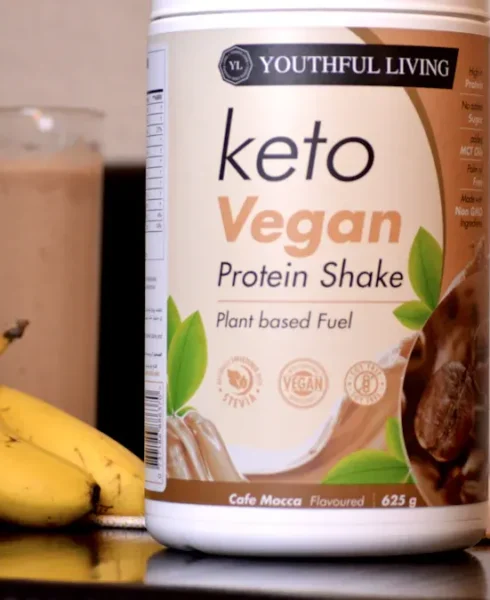
If you want to skip dairy, you have many plant-based protein powders to choose from. These options are all naturally free of lactose and dairy. You can find one that fits your taste, diet, and health goals.
Pea Protein
Pea protein comes from yellow split peas. It is a favorite for people who want a simple, allergy-friendly protein. You get about 25 grams of protein per serving, which is close to what you find in Whey Protein. Pea protein gives you all nine essential amino acids, so it helps your muscles grow and recover. It also has more histidine and phenylalanine than some other proteins. If you want a mild taste and easy mixing, pea protein is a great pick.
Pea protein is a complete protein.
It is good for vegans, vegetarians, and people with food allergies.
Hemp Protein
Hemp protein comes from hemp seeds. It has a nutty flavor and gives you fiber, healthy fats, and minerals. Hemp protein is not as easy to digest as pea or soy protein. Here is a table to show the digestibility scores:
Protein Source | Digestibility Score |
|---|---|
Soy | 0.91 |
Pea Protein | 0.893 |
Hemp | 0.66 |
You can see hemp protein is a bit harder for your body to use, but it still works well in smoothies and baking. It is a good choice if you want extra fiber and omega-3 fats.
Brown Rice Protein
Brown rice protein is gentle on your stomach. It is hypoallergenic and easy to mix into drinks or food. Brown rice protein is not a complete protein because it is low in lysine. You can pair it with pea protein to get all the amino acids you need. This powder is a smart choice if you have allergies or want a simple, plant-based option.
Soy Protein
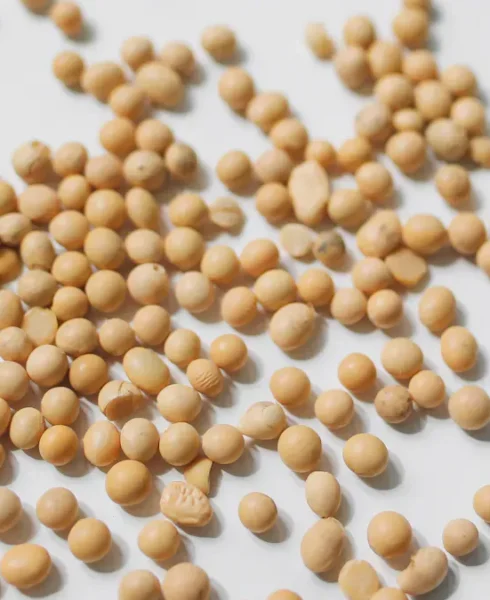
Soy protein is one of the most popular plant-based proteins. It is a complete protein, so you get all the amino acids your body needs. Soy protein has a high digestibility score and works well for building muscle. Some people have soy allergies, so check before you try it. Here is a table that shows the difference between soy allergy and lactose intolerance:
Condition | Immune Response | Symptoms |
|---|---|---|
Soy Allergy | Yes | Hives, itching, swelling, eczema, vomiting, diarrhea, nausea, anaphylaxis |
Lactose Intolerance | No | Bloating, wind, diarrhea, nausea, indigestion, aggravation of eczema or asthma |
Soy protein fits vegan and vegetarian diets. It is also good for people who want a complete protein without dairy.
Almond Protein
Almond protein powder comes from ground almonds. It gives you protein, healthy fats, and a little fiber. Almond protein has less protein per serving than soy or pea protein, but it is still a good choice if you want a nutty flavor and extra nutrients. Here is a chart that compares almond protein to other plant-based options:
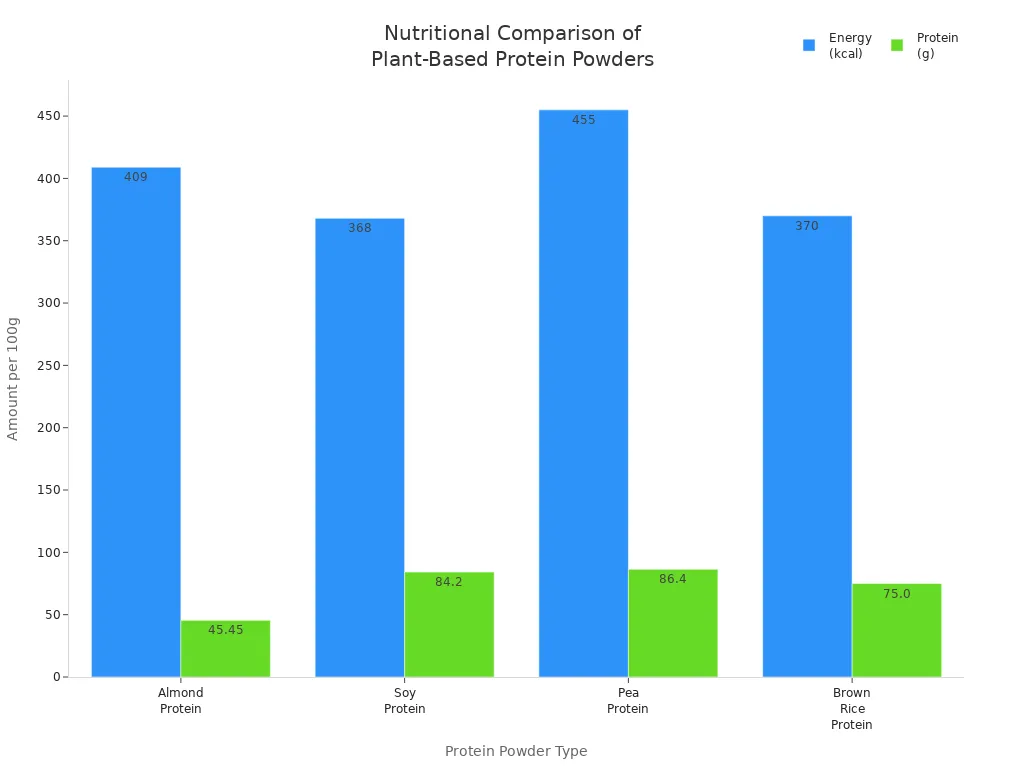
Almond protein works well for people who want a plant-based powder with healthy fats.
Pumpkin Seed Protein
Pumpkin seed protein is made from pumpkin seeds. It is rich in magnesium, zinc, and iron. This powder is not a complete protein because it is low in lysine and threonine. You can mix it with other plant proteins to get all the amino acids you need. Pumpkin seed protein is a good pick if you want extra minerals and a mild, earthy taste.
Tip: You can blend different plant proteins to make sure you get all the nutrients your body needs.
All these plant-based proteins are naturally dairy- and lactose-free. You can find one that matches your taste, health needs, and lifestyle.
Comparing Protein Alternatives
Digestibility
You want a protein powder that is gentle on your stomach. Some powders can make you feel bloated or gassy. This happens more if you have lactose intolerance. Whey Protein comes from milk, so it can be hard to digest. Isolates and hydrolysates have less lactose, so they might be easier for you. Concentrates have more lactose and may upset your stomach.
Plant-based proteins like pea or rice protein are usually easier to digest. They do not have lactose, so you avoid stomach aches. Here’s a simple table to show the difference:
Protein Type | |
|---|---|
Whey Protein | Might cause problems because of lactose |
Plant-Based Proteins | Easier to digest, usually lactose-free |
Whey Protein can bother your stomach if you are sensitive to lactose.
Plant-based powders are often gentle and safe for most people.
If you get bloated after a shake, try a plant-based protein instead.
Nutrition
You want to know what is in your protein powder. Animal-based powders usually have more protein in each scoop. They also give you all the important amino acids your muscles need. Plant-based powders may have less protein, but they give you more fiber and minerals like potassium or iron. Some plant proteins need to be mixed together to give you all the amino acids.
Aspect | Plant-Based Protein Powders | |
|---|---|---|
Protein Content | Usually has more protein | Often has less protein |
Micronutrient Availability | More likely to have calcium | May have more potassium or iron |
Digestibility | Easier for some people | Easier for others, but can cause gas |
Animal protein powders help your muscles recover and grow.
Plant protein powders are good for vegans and may be easier to digest.
Taste and Texture
Taste is important when you drink shakes every day. Animal-based powders often taste richer and smoother. They mix well and feel soft in your mouth. Plant-based powders try to taste the same, but they can taste less rich. Some have a nutty or earthy flavor. The texture can be more gritty or thick, but many brands try to make it smoother.
Protein Type | Texture Characteristics | |
|---|---|---|
Animal-Based | Richer taste, sometimes from fat | Softer and smooth when mixed |
Plant-Based | Mild or earthy, not as rich | Can be gritty or thick, sometimes juicy |
Animal-based powders taste creamy and mix easily.
Plant-based powders may taste mild or earthy and feel thicker.
Try small packs first to see which taste and texture you like best.
Choosing the Right Protein
Reading Labels
You should pick a protein powder that works for you. Always read the label before you buy anything. Some words on the label mean the powder has dairy. Watch for these words:
Casein and caseinates
Whey
Hydrolysates
Lactose
Lactalbumin
Lactoglobulin
Lactulose
Lactoferrin
Lactitol monohydrate
Lactate solids
Lactic acid starter culture
Rennet
Colostrum
Galactose
If you see any of these, the powder has dairy in it. Skip it if you want to stay away from lactose.
Ingredients to Avoid
You need to be careful about some ingredients. Dairy-based proteins like Whey Protein and casein come from cow’s milk. They have lactose in them. These can make you feel bloated or gassy if you cannot handle lactose. Some powders also have extra things that might upset your stomach. Pick lactose-free protein powders to help your stomach feel better.
Tip: If you feel sick after trying a new powder, check the label for hidden dairy or other things.
Certifications
Certifications help you know what you are getting. Look for labels like “dairy-free,” “vegan,” or “lactose-free.” These labels mean the powder does not have dairy or lactose. Some powders are tested by other companies for safety and purity. You can trust these more because they follow strict rules.
Certification | What It Means |
|---|---|
Dairy-Free | No milk ingredients |
Vegan | No animal products |
Lactose-Free | No lactose |
Professional Advice
You might not know which protein powder is best for you. A registered dietitian can help you choose. They give advice that fits your needs. Dietitians know which proteins are easy to digest and safe for you. They help you pick a powder that matches your goals and keeps your stomach happy.
If you are not sure, ask a dietitian for help. You will get answers that are right for you.
Using Dairy-Free Protein
How to Use
You want to use your dairy-free protein powder the right way. First, look at the serving size on the label. Most people need 20 to 40 grams of protein in a meal. You can put 1 or 2 tablespoons of powder in your shake or smoothie. This gives you enough protein and keeps your drink from getting too thick.
Here are some simple ways to use dairy-free protein powder:
Mix it into oatmeal for a creamy breakfast.
Stir it into non-dairy yogurt for a snack.
Blend it with fruit and dairy-free milk for a quick shake.
Add it to pancake or muffin batter for extra nutrition.
Tip: Always check the label before using a new powder. Some brands add things that might not be good for you.
Recipes
Want some tasty ideas? You can make yummy shakes and snacks with dairy-free protein powder. Try these easy recipes:
Chocolate Raspberry Protein Shake
Blend frozen bananas, raspberries, cacao powder, nut butter, hemp hearts, flaxseed, chia seeds, dates, dairy-free milk, and a scoop of protein powder.Berry Cobbler Protein Shake
Mix frozen banana, blueberries, non-dairy milk, oats, flaxseed, maple syrup, vanilla, cinnamon, nutmeg, and protein powder.Vanilla Bean Protein Shake
Combine unsweetened vanilla almond milk, silken tofu, almond butter, maple syrup, and vanilla extract with your protein powder.Coffee and Coconut Protein Shake
Blend brewed coffee, coconut cream, almond butter, maple syrup, vanilla, and protein powder.Apple Cinnamon Protein Shake
Mix unsweetened dairy-free milk, applesauce, almond butter, maple syrup, cinnamon, vanilla, and protein powder.
You can change the ingredients to fit your taste or diet.
Mistakes to Avoid
You want to feel good after drinking your shake. Some people make mistakes when picking protein powders. Watch out for these problems:
Picking powders that still have lactose. Even filtered whey can upset your stomach if you are sensitive.
Not checking for hidden dairy on the label.
Having trouble with bioactive peptides in whey, which can upset your stomach.
About 65% of adults have trouble with lactose. If you feel bloated or gassy, try a real dairy-free powder. Always check the label and start with a small amount.
Note: If your stomach hurts, try a different brand or ask a dietitian for help.
You have many choices if you need to avoid lactose. Whey protein isolate works for some people, but it still comes from dairy. You can try animal-based powders like egg white or beef for a strong amino acid profile. Plant-based options like soy, pea, rice, and hemp also help you meet your protein needs.
Almond, oat, and coconut drinks have less protein.
Before you buy, follow these steps:
Check the label for lactose.
Look for plant-based options.
If you pick whey isolate, test a small amount first.
You can ask a dietitian for advice. Try sample sizes from trusted brands to find what works best for you.
FAQ
Can you use whey protein isolate if you have lactose intolerance?
Most people with lactose intolerance can use whey protein isolate. It has very little lactose. If you feel sick after using it, try a plant-based or egg white protein instead.
What is the best dairy-free protein powder for muscle building?
Pea protein and soy protein work great for building muscle. Both give you all the amino acids your body needs. Egg white protein is also a strong choice if you eat animal products.
How do you know if a protein powder is truly dairy-free?
Always check the label for words like “dairy-free” or “vegan.” Look for hidden dairy ingredients in the ingredient list. If you see “whey,” “casein,” or “milk,” the powder is not dairy-free.
Can you mix plant-based protein powders for better nutrition?
Yes! You can blend pea, rice, and pumpkin seed proteins. Mixing them helps you get all the amino acids your body needs. This makes your shake more balanced and healthy.
Does plant-based protein taste different from whey protein?
Plant-based protein often tastes more earthy or nutty. Some brands add flavors to make it taste better. Try a sample pack to see which one you like best.