
If you want a stronger vanilla taste or a smell that lasts longer, ethyl vanillin is better. It is about three times stronger than vanillin. It also smells sweeter and creamier than vanillin. Ethyl vanillin is best for fancy chocolates, perfumes, and high-end products. Vanillin is good for foods like ice cream and baked treats. The table below shows how they are different.
Aspect | Ethyl Vanillin | Vanillin |
|---|---|---|
Potency | Milder | |
Aroma | Sweet, intense, creamy | Familiar, light |
Typical Uses | Chocolates, fragrances, pharmaceuticals | Bakery, dairy, general food |
You should choose based on how much flavor or smell you want and what you are making.
Key Takeaways
Ethyl vanillin is much stronger and sweeter than vanillin. It is about 3 to 4 times stronger. This makes it good for rich flavors. It also works well for long-lasting smells in chocolates and perfumes.
Vanillin has a softer and more familiar vanilla taste. Its smell is gentle too. It is great for foods we eat every day. You can find it in ice cream, baked goods, and dairy foods.
Most vanillin and ethyl vanillin are made in labs. They do not come from real vanilla beans. You should check labels to see what is inside.
Ethyl vanillin costs more for each kilogram. But you only need to use a little bit. This can help save money. It also gives a stronger taste or smell.
People with fragrance allergies should be careful. Both vanillin and ethyl vanillin can cause skin or breathing problems. Always read product labels before using them.
Overview
Vanillin
Vanillin is the main flavor in vanilla. It gives foods and perfumes a creamy vanilla smell. The vanillin molecule is always the same. It does not matter if it comes from beans, wood, rice, or oil. The source only changes how it is labeled and what people think about it.
Almost all vanillin does not come from vanilla beans. Less than 1% is from real vanilla pods. These pods mostly grow in Indonesia, Madagascar, and China. Getting vanillin from beans takes a lot of work and money. That is why it is rare and costs more. Most vanillin in foods and perfumes is made in factories. Factories use wood leftovers or oil chemicals to make it. Some companies use new ways, like microbes or enzymes, to make vanillin from plants. These ways help follow food safety rules. In some places, this is called “bio-vanillin.”
Vanillin smells smooth, sweet, and like vanilla. You find it in ice cream, cookies, cakes, and other snacks. People who make perfumes use it to add warmth and creaminess.
Ethyl Vanillin
Ethyl vanillin is very close to vanillin. It has a small chemical change. An ethoxy group takes the place of a methoxy group. This small change makes a big difference. Ethyl vanillin is three to four times stronger than vanillin. Its smell is sweeter, stronger, and lasts longer. It does not feel heavy like vanillin sometimes does.
Ethyl vanillin is used in fancy chocolates, perfumes, and some medicines. People who make perfumes mix it with vanillin for both strength and creaminess. Ethyl vanillin does not break down as fast, so it stays fresh longer. It costs more for each kilogram, but you need less because it is strong. So, the total cost is about the same as vanillin.
Tip: If you want a strong vanilla smell or taste that lasts, ethyl vanillin is a good pick.
Chemistry
Structure
When you look at vanillin and ethyl vanillin, you see that both have a similar base structure. Each molecule has an aromatic ring, which is a ring of carbon atoms. This ring gives both compounds their strong scent. The main difference sits in the side group attached to the ring.
Vanillin has a methoxy group, which you can think of as a small chain made of one carbon atom and three hydrogen atoms, written as -OCH₃. Ethyl vanillin, on the other hand, has an ethoxy group, which is a bit longer. This group has two carbon atoms and five hydrogen atoms, written as -OCH₂CH₃. That extra carbon atom in ethyl vanillin changes more than just the name. It makes ethyl vanillin three to four times stronger in smell and taste than vanillin. You notice this difference right away if you compare the two side by side.
Tip: Even a small change in a molecule can make a big difference in how it smells or tastes. The extra carbon in ethyl vanillin’s ethoxy group boosts its power.
Here’s a quick comparison:
Molecule | Side Group | Potency |
|---|---|---|
Vanillin | Methoxy (-OCH₃) | Mild |
Ethyl Vanillin | Ethoxy (-OCH₂CH₃) | Strong (3-4x) |
Origins
You might wonder where these molecules come from. Vanillin can come from natural vanilla beans, but most of the time, factories make it from wood pulp, rice bran, or even oil byproducts. This process helps keep costs low and supplies steady. Some companies use special microbes or enzymes to turn plant materials into vanillin. These methods create what you see labeled as “bio-vanillin.”
Ethyl vanillin does not come from vanilla beans at all. Factories make it by changing other plant-based chemicals, often from lignin or guaiacol, which are found in wood and other plants. The process adds the ethoxy group to the molecule, making it stronger and longer-lasting. You find ethyl vanillin in products that need a powerful vanilla note, like gourmet chocolate or fine perfumes.
Note: If you see “vanillin” or “ethyl vanillin” on a label, you know it likely came from a lab, not a vanilla orchid. This does not mean it is unsafe. It just means the source is different.
Ethyl Vanillin vs Vanillin
Potency
Ethyl vanillin is much stronger than vanillin. It is about three to four times more powerful. You only need a little ethyl vanillin for the same taste or smell. Scientists learned that ethyl vanillin affects a sensory channel called TRPV3. This channel helps you notice flavors and smells. Ethyl vanillin works five to ten times better at this level. This matches what happens in foods and perfumes. If you want a strong vanilla flavor, use less ethyl vanillin. You still get a bold taste.
Tip: Using ethyl vanillin saves money and gives more flavor. It is great for recipes or products that need a strong vanilla taste.
Flavor
Flavor is not just about strength. It is also about how something tastes in real foods. Vanillin gives a smooth and round vanilla flavor. Many people say it tastes familiar and nice. Tests with cocoa show vanillin makes a smell that people like. Ethyl vanillin has a much stronger flavor. It tastes sweeter and more intense. You might taste a creamy or caramel note, especially in chocolate or baked treats. Ethyl vanillin costs more, but you use less because it is strong. If you want a classic vanilla taste, vanillin is a good pick. If you want a richer and bolder flavor, ethyl vanillin is better.
Feature | Vanillin | Ethyl Vanillin |
|---|---|---|
Flavor Strength | Mild, round | Strong, sweet, creamy |
Consumer Appeal | Familiar, comforting | Intense, bold |
Usage Amount | More needed | Less needed |
Aroma
Aroma is important for food and fragrance. Ethyl vanillin gives a sweeter and stronger vanilla smell. It is used in perfumes and scented things because it blends well and lasts longer. In food, ethyl vanillin makes a creamy caramel smell, like white chocolate. Vanillin has a lighter smell. It is smooth and warm, which is good for ice cream, cookies, and cakes. Both work better than natural vanilla in baking. But natural vanilla is still best for cold desserts because it smells deep and complex.
Note: Ethyl vanillin mixes in water better than vanillin. This helps it blend in drinks, syrups, and liquid perfumes.
If you want a strong vanilla smell, ethyl vanillin is best. If you like a gentle and familiar scent, vanillin is a good choice.
Uses
Food
Vanillin is in many foods you eat every day. It gives cakes, cookies, and pastries a sweet vanilla taste. Ice cream, yogurt, and flavored milk use vanillin to taste better. Drinks like sodas, teas, and coffees often have vanillin for a smooth flavor. Chocolates, candies, and gum use vanillin for their classic taste. Most companies pick synthetic vanillin because it is cheaper and works well in big batches. Natural vanilla is used in fancy foods, but it is rare and costs more.
Food Industry Uses of Vanillin | Market Insights and Trends |
|---|---|
Baked goods (cakes, cookies, pastries) | Synthetic vanillin widely used for cost-effectiveness; natural vanilla preferred for premium products |
Dairy products (ice cream, yogurts, flavored milk) | Vanilla complements dairy flavors, significant market segment |
Beverages (soft drinks, alcoholic drinks, flavored teas/coffees) | Natural vanilla demand rising for clean-label products; synthetic vanillin popular in mass-market |
Confectionery (chocolates, candies, gums) | Natural vanilla demand growing for premium flavors; synthetic vanillin remains staple |
Tip: Want a strong vanilla taste at home? Check if your food uses vanillin or real vanilla.
Fragrance
Ethyl vanillin is in many perfumes and care products. It gives a sweet, creamy, and long-lasting vanilla smell. Makers use it to make perfumes, lotions, soaps, and air sprays smell warm and nice. Ethyl vanillin helps mix floral, woody, and spicy smells together. This makes scents feel richer and smoother. You can find it in both fancy and everyday items. Most companies use the synthetic kind because it is cheap and easy to mix. Natural ethyl vanillin is in expensive perfumes for a special touch.
Gives perfumes and lotions a warm, creamy vanilla smell
Makes floral and woody scents in care products better
Used in soaps, cleaners, and air sprays for a sweet, lasting scent
Note: Makers often mix ethyl vanillin with other things to make new and special smells.
Other Applications
Vanillin and ethyl vanillin do more than add flavor or scent. They are in medicines to hide bitter tastes and sometimes help antibiotics work better. Some companies use vanillin in metal work, farm sprays, and to stop foam in factories. You also find vanillin in deodorants, air sprays, and floor cleaners. In science, vanillin helps carry medicine in tiny particles called nanoparticles. These uses show how useful these compounds are in many jobs.
Industry/Application Area | Documented Benefits |
|---|---|
Pharmaceuticals | Masks bitter taste, boosts antibiotic effects |
Metal Plating | Used in industrial processes |
Herbicides/Ripening Agents | Helps in agriculture |
Antifoaming Agents | Reduces foam in products |
Personal/Home Care | Adds scent to deodorants, air fresheners, cleaners |
Nanotechnology | Improves delivery and stability of medicines |
Callout: Vanillin and ethyl vanillin help make foods tastier, homes smell better, and even improve some medicines.
Cost & Availability
Price
When you compare prices, you see a big difference. Ethyl vanillin costs more than vanillin. This is because it is harder to make. Not many factories make ethyl vanillin. This means there is less of it to buy. When more people want it, the price goes up. This happens a lot in places where markets are growing fast.
Vanillin is cheaper and easy to find. Many companies make vanillin from wood, oil, or rice bran. You can buy a lot of vanillin for baking and candy. Ethyl vanillin costs more for each kilogram. But you only need a little because it is strong. Sometimes, the total cost is about the same if you use ethyl vanillin instead of vanillin.
💡 Tip: Want to save money and still get a strong vanilla flavor? Try using a small amount of ethyl vanillin. It might make up for the higher price.
Product | Average Price (per kg) | Usage Amount Needed |
|---|---|---|
Vanillin | Lower | More |
Ethyl Vanillin | Higher | Less |
Market
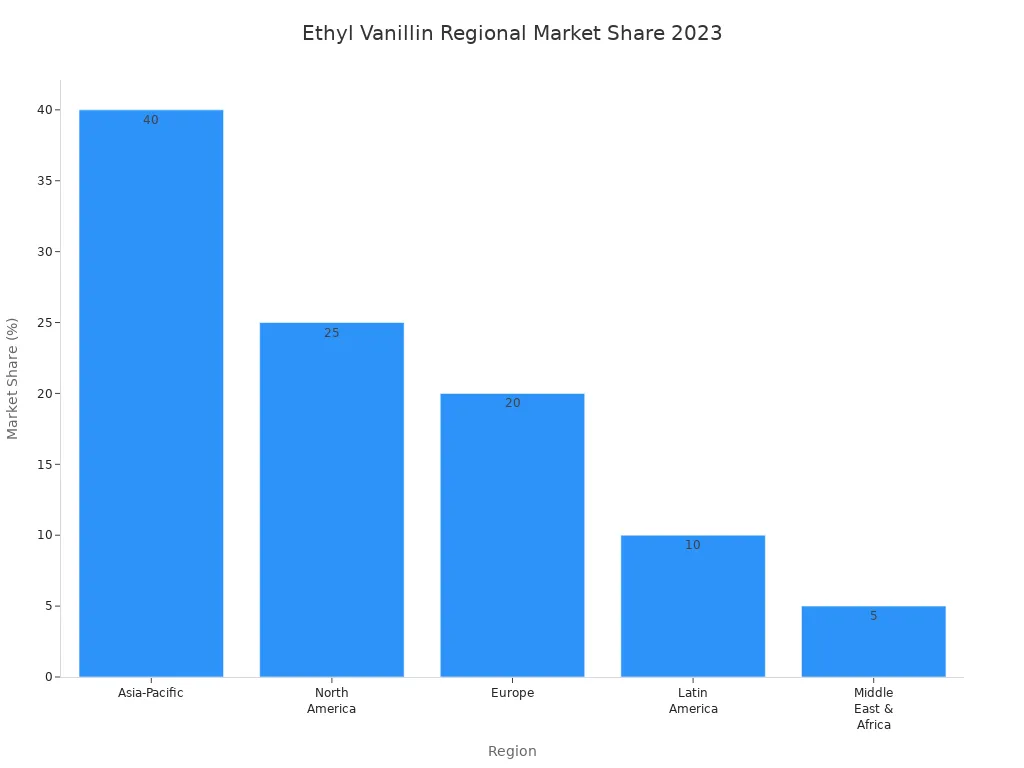
It is not always easy to find both flavors everywhere. In North America, you can find vanillin and ethyl vanillin easily. The food and drink industry is big there. Rules allow both natural and synthetic vanilla flavors. Companies keep working on better and greener vanillin products.
Europe also has a good supply. People in Europe like organic and natural things. Ethyl vanillin is getting more popular there. Food factories help keep the market steady.
Asia-Pacific is growing fast, with countries like China and India. More people want sweet and creamy flavors. The food and drink industry is getting bigger every year. But ethyl vanillin is harder to find in this region. It costs a lot to make, and not many factories produce it. This causes shortages and price changes. It can be hard for companies to meet demand.
Vanillin is easier to get almost everywhere. More factories make it, so there is plenty. Ethyl vanillin has more supply problems. But new factories are being built. You might see more ethyl vanillin in stores soon, especially in Asia.
Note: If you live in a place that is growing fast, you may see ethyl vanillin prices change a lot. This is because there is not always enough to meet demand.
Labels
Identifying Ethyl Vanillin
You can find ethyl vanillin on labels if you know what to check. Most food and perfume labels list ingredients by how much is used. If you see “ethyl vanillin” or “vanillin,” the product uses a lab-made vanilla flavor. Sometimes, the label just says “artificial flavor.” This means the vanilla taste does not come from real vanilla beans. Sometimes, both vanillin and ethyl vanillin are listed together. Companies do this to make the vanilla flavor stronger or last longer.
If you want to skip lab-made flavors, look for words like “vanilla bean,” “natural vanilla,” or “vanilla extract.” These words mean the product uses real vanilla. Real vanilla products usually cost more. They may also have labels like “organic” or “fair-trade.” These labels mean the vanilla comes from farms with special rules for quality and fairness.
Tip: Always check the ingredient list. If you see “vanillin” or “ethyl vanillin,” the flavor is made in a lab, not from a vanilla orchid.
Consumer Tips
You can make good choices if you know what the label words mean. Here are some tips to help you:
Pick “vanilla bean,” “natural vanilla,” or “vanilla extract” for real vanilla flavor.
Watch for “vanillin,” “ethyl vanillin,” or “artificial flavor” to spot lab-made vanilla.
Real vanilla extract gives a richer and more complex flavor because it has many aroma parts, not just vanillin.
Lab-made vanilla flavors, like ethyl vanillin, taste strong but do not have the deep flavor of real vanilla.
Products with “organic” or “fair-trade” labels often use real vanilla and help fair farming.
Real vanilla extract may have antioxidants and health benefits that lab-made versions do not.
Choosing real vanilla helps farmers and supports better farming for the planet.
Note: If you want the full flavor and health perks of vanilla, pick products with real vanilla extract. If you want a strong, sweet vanilla taste for less money, lab-made options like ethyl vanillin work well.
Safety
Allergies
Some people can have allergies to vanillin or ethyl vanillin. These allergies happen more in people who are sensitive to smells. Doctors have seen skin problems like hives and fast reactions from these ingredients. You might get red, itchy, or irritated skin after using things with vanillin or ethyl vanillin. Some people also have trouble breathing, a runny nose, or asthma when they smell these fragrances.
Adverse Effect | Fragrances Implicated |
|---|---|
Contact urticaria and immediate-type reaction | Ethyl vanillin, Vanillin, and other fragrance components |
Airway irritability, rhinitis/asthma, and other systemic adverse effects | Vanillin and other fragrance components |
Many people have allergies to fragrances. Patch tests show that about 16% of people with eczema react to fragrance mixes. Vanillin is found in balsam of Peru, which has many things that cause allergies. This makes it easier for people to have cross-reactions. Women say they have fragrance allergies more often, but men and kids can have them too. There are no exact numbers for vanillin or ethyl vanillin allergies. If you have sensitive skin or breathing problems, be careful.
Tip: If you have eczema or allergies to fragrances, always check labels for vanillin or ethyl vanillin before using a product.
Regulations
Vanillin and ethyl vanillin are safe if you use them the right way. Groups like JECFA (WHO/FAO) have checked vanillin and made strict rules for quality. The United States, Europe, and China let people use vanillin in foods and set safe limits. These rules are based on many years of safety studies. If you use the right amount, vanillin will not hurt you.
Ethyl vanillin has also been tested for safety. Animal tests show that too much or using it for a long time can cause problems like anemia, diarrhea, or liver changes. In people, high amounts can cause mild skin irritation. Ethyl vanillin can change how your liver handles medicine. Scientists say to use only small, safe amounts to avoid problems.
Note: Always use vanillin and ethyl vanillin within the safety limits for food and fragrances. This keeps you safe and helps you avoid side effects.
Choosing Ethyl Vanillin or Vanillin
For Home Use
When you buy vanilla flavor, you have many options. If you want a classic and creamy taste for baking, vanillin is a good pick. It gives the flavor you know from ice cream and cookies. Vanillin helps your treats stay fresh for longer because it acts as a mild preservative.
If you want a stronger and sweeter vanilla taste, use ethyl vanillin. You only need a little because it is much more powerful. This makes it great for recipes where you want the vanilla flavor to stand out, like homemade chocolate or rich cakes. Ethyl vanillin also lasts longer in perfumes and lotions, so your homemade scents keep their smell.
Tip: Always look at the label. If you see “vanillin,” “ethyl vanillin,” or “artificial flavor,” the vanilla taste comes from a lab, not real vanilla beans. If you want natural vanilla, look for “vanilla extract” or “vanilla bean.”
Labels can sometimes be confusing. Many products use words like “fragrance” or “parfum,” which can hide what is really inside. If you care about natural ingredients, pick products with clear labels.
For Industry
If you work in food or fragrance factories, your choice depends on a few things:
Ethyl vanillin gives stronger flavor, better stability, and costs less per use than natural vanilla. It is best for fancy chocolates, luxury perfumes, and products that need a scent that lasts.
Vanillin is good because it can come from renewable sources and helps keep foods fresh. You can use it as a preservative in foods and drinks, and it fits with green chemistry ideas.
More companies want bio-based and sustainable ingredients. Many now use new ways to make vanillin from renewable materials, which helps the environment.
Rules like ISO and HACCP need high-quality and traceable ingredients. You must pick compounds that follow these rules.
Where you live matters. North America likes new technology, Europe wants green and safe ingredients, and Asia-Pacific cares about cost and how much is made.
Factor | Vanillin | Ethyl Vanillin |
|---|---|---|
Potency | Standard | 3-4x stronger |
Sustainability | Can be bio-based | Mostly synthetic |
Cost per Use | Lower, but more needed | Higher, but less needed |
Stability | Less stable in perfumes | More stable, longer-lasting |
Labeling | Often generic | Often generic |
Note: If you want an ingredient that is good for the planet and works in many ways, vanillin is a strong pick. If you need a powerful flavor or smell and want to use less product, ethyl vanillin is best.
You can tell vanillin and ethyl vanillin are not the same. Vanillin gives a smooth vanilla taste. It is good for natural or clean-label foods. Ethyl vanillin smells stronger and sweeter. It works well in perfumes and big food factories. If you want a strong flavor or a smell that lasts, pick ethyl vanillin. If you want something natural or for fancy foods, choose vanillin. Always read labels. Pick what fits your budget, taste, and if you care about the planet.
Need | Best Choice |
|---|---|
Strong flavor | Ethyl Vanillin |
Natural label | Vanillin |
Cost savings | Ethyl Vanillin |
Clean-label | Vanillin |
Tip: What matters most to you helps you choose. Check ingredient lists. Think about taste, price, and helping the environment.
FAQ
What is the main difference between vanillin and ethyl vanillin?
Vanillin gives a normal vanilla taste. Ethyl vanillin tastes much stronger and sweeter. You only need a little ethyl vanillin for the same flavor. Both are made in labs, not from vanilla beans.
Can you use ethyl vanillin instead of vanillin in recipes?
Yes, you can use ethyl vanillin instead of vanillin. Use about one-third as much ethyl vanillin as vanillin. Ethyl vanillin makes food taste stronger. Start with a small amount and add more if you want.
Is ethyl vanillin safe to eat?
Yes, food safety groups say ethyl vanillin is safe in small amounts. Always follow the rules on food labels.
How do you spot vanillin or ethyl vanillin on labels?
Check the ingredient list for “vanillin,” “ethyl vanillin,” or “artificial flavor.” If you want real vanilla, pick products with “vanilla extract” or “vanilla bean” on the label.
Does vanillin or ethyl vanillin cause allergies?
Some people can have reactions to these ingredients. You might get itchy skin or trouble breathing if you have fragrance allergies. Always read labels if you have allergies or sensitive skin.