
You might know fructose as fruit sugar. It is found in many fruits, vegetables, and honey. Crystalline fructose is a pure kind of this fruit sugar. It has over 99% fructose. As a monosaccharide, it is much more pure than other sweeteners. You can see it has more fructose than other sweeteners in the chart above.
Manufacturers use corn and other plants to make crystalline fructose. They make a lot of it every year. Companies produce thousands of metric tons each year. You often find this sweetener in foods and drinks. It is used for its strong sweetness and clean taste.
Key Takeaways
Crystalline fructose is a very pure fruit sugar. It is made mostly from corn starch. It has over 99% fructose in it. It is sweeter than regular sugar. You can use less to get the same sweetness. This helps you lower calories. Manufacturers make crystalline fructose from corn starch. They turn it into fructose syrup. Then they crystallize and dry it with care. This sweetener mixes well in foods. It helps keep foods moist. It gives a clean, fresh taste to drinks, baked goods, and candies. Eating small amounts of crystalline fructose is safe. It may help control blood sugar. But eating too much can cause health problems.
Crystalline Fructose
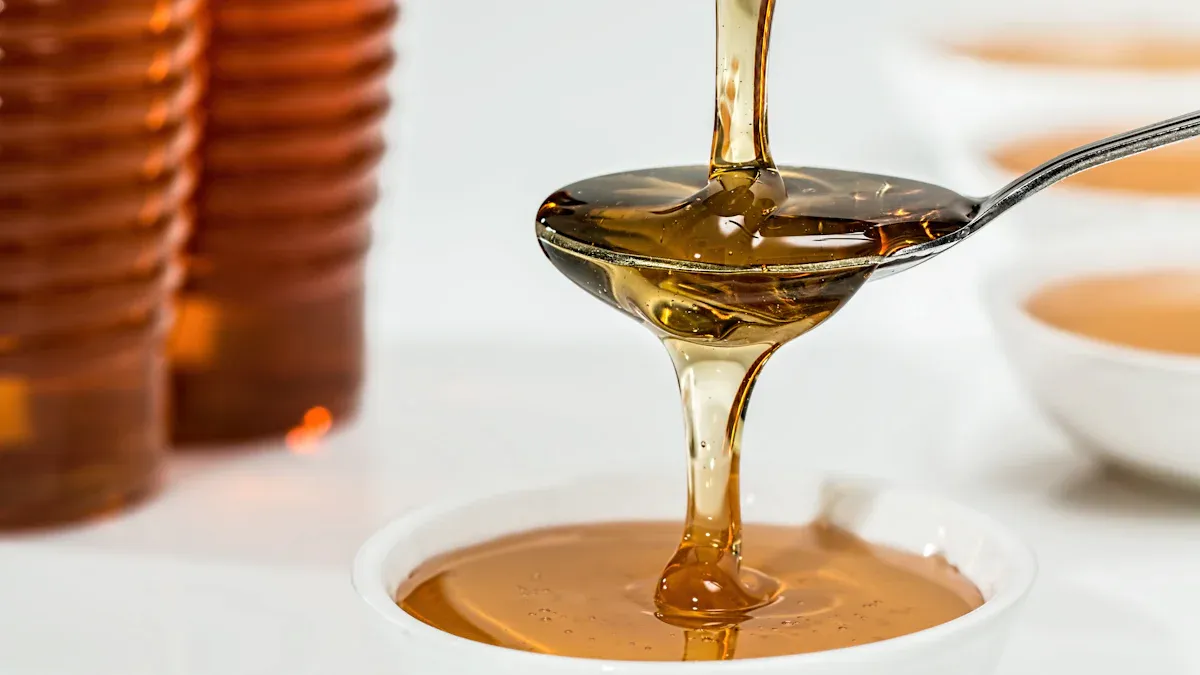
What It Is
Crystalline fructose is a very pure fruit sugar. It comes from things like fruits, honey, and vegetables. This sweetener is almost all fructose, with more than 99% purity. It looks like a white powder. It does not have any smell. It mixes well with water.
Fructose is a kind of sugar called a monosaccharide. It has a special shape in its chemical structure. Glucose and galactose have an aldehyde group. Fructose has a ketone group instead. This makes fructose a ketohexose. In water, fructose can change its shape. It switches between ring shapes and a small open-chain shape. This change is called mutarotation. The ring shapes are called alpha and beta anomers. These shapes help explain why fructose tastes so sweet. They also show why it acts differently from other sugars.
Tip: If you want a sweetener that is fruit sugar and very pure, crystalline fructose is a good pick.
Key Properties
Crystalline fructose has some important features. You can see these in the table below:
Property | Details |
|---|---|
Appearance | |
Melting Point | About 103-105 °C (with decomposition) |
Density | Around 1.6 g/cm³ |
Solubility | Very soluble in water, methanol, ethanol |
Optical Rotation | α-type: -63.6°; β-type: -135.5°; equilibrium: -92.3° |
Crystalline Forms | Alpha and beta types |
Crystalline fructose melts at a lower temperature than many sugars. It mixes fast with water and makes a clear liquid. This helps when making drinks and soft candies. It can pull water from the air, so you should keep it dry. When you heat it, it can make something called hydroxymethylfurfural.
Crystalline fructose comes in two main forms: alpha and beta. These forms have atoms in different places, but both taste sweet. Its chemical shape gives foods a softer feel and a clean, sweet taste. You often see it in foods where you want strong sweetness but no extra flavors.
How is it Made
Source Materials
You might wonder where crystalline fructose comes from. Most of the time, manufacturers use corn as the main source. They pick genetically modified corn starch, often from Bt corn, because it is easy to get. The corn wet milling process helps pull out the starch from corn kernels. After this, the starch is changed into glucose. Some companies use sugar cane or sugar beets, but almost all commercial crystalline fructose comes from corn. High fructose corn syrup is the starting point for making this pure fructose.
Note: Sugar from sugar beets or sugarcane has about 50% fructose. The process for crystalline fructose uses corn starch because it gives more product and better purity.
Production Steps
You may ask how it is made from corn starch. The process has several steps to turn corn starch into crystalline fructose. Here is a simple breakdown:
Enzymatic Conversion:
First, you start with corn starch. Enzymes break the starch into glucose. Then, another enzyme called glucose isomerase changes glucose into fructose. This step is important because it makes the syrup have more fructose.Concentration:
The syrup now has a lot of fructose, usually over 90%. You concentrate this syrup under vacuum at controlled temperatures (about 35°-55°C). This step removes water and keeps the syrup from turning dark. This helps with later crystallization.Crystallization:
Next, you mix the concentrated syrup with ethanol. Ethanol helps the fructose form crystals. You stir the mixture and sometimes add a little crystalline fructose to help start the crystals. The mixture sits for hours, and crystals begin to form.Harvesting and Washing:
After enough crystals form, you separate them from the liquid using filtration or centrifugation. You wash the crystals with alcohol to remove any leftover syrup.Drying:
Finally, you dry the crystals under vacuum. This step gives you free-flowing crystalline fructose with even particle size.
Tip: Temperature control is very important during these steps. If the temperature goes above 104°C, the crystals may not form well.
Purity and Crystallization
You want crystalline fructose to be as pure as possible. The process uses special ways to reach at least 98% purity, often over 99%. Here are some ways you get such high purity:
Chromatographic Separation:
You pass the fructose solution through special columns with resin or zeolite. This step raises the fructose content to above 95-97% and removes other sugars.Ion Exchange and Nanofiltration:
These steps remove tiny impurities that could affect the crystals.Evaporation:
You use evaporators to make the fructose solution thicker without overheating it. This keeps the fructose from breaking down.Crystallization with Ethanol:
Mixing with ethanol helps the fructose come out of the solution as pure crystals.Final Processing:
You collect, wash, and dry the crystals. The result is a white, odorless powder with almost no glucose left.
Step | Purpose |
|---|---|
Chromatographic separation | Raises fructose content, removes other sugars |
Ion exchange/nanofiltration | Removes impurities |
Evaporation | Concentrates solution, prevents breakdown |
Crystallization | Forms pure fructose crystals |
Drying | Gives free-flowing, pure crystalline fructose |
Alert: Chemical ways to make fructose exist, but they are slow and cost a lot. Industrial production uses enzymatic and chromatographic methods because they work better for large amounts.
When you look at the final product, you see that crystalline fructose has a purity of at least 98%. Most of the time, it is even higher. You will find almost no glucose or other sugars left. This high purity makes crystalline fructose a popular choice for foods and drinks that need a strong, clean sweetness.
Crystalline Fructose vs. Other Sweeteners
Vs. Table Sugar
Crystalline fructose and table sugar are not the same. Table sugar is called sucrose. Sucrose has two sugars: glucose and fructose. Crystalline fructose is almost all fructose. This makes crystalline fructose much sweeter than table sugar. The table below shows how sweet they are:
Sugar | Relative Sweetness (Approximate) | Comparison to Sucrose |
|---|---|---|
Fructose | 20% to 70% sweeter | |
Sucrose | 1.0 | Standard reference |
You need less crystalline fructose to get the same sweetness. Both sugars give you about 4 calories for each gram. This means they have the same energy. Because crystalline fructose is sweeter, you can use a smaller amount. You still get the taste you want.
Tip: Try crystalline fructose if you want less sugar but the same sweetness in your recipes.
Vs. High Fructose Corn Syrup
High fructose corn syrup is another sweetener. It comes from corn and has both glucose and fructose. Crystalline fructose is almost pure fructose. High fructose corn syrup has less fructose. The table below shows the difference:
Sweetener Type | Fructose Content (%) |
|---|---|
High Fructose Corn Syrup (HFCS 42) | 42 |
High Fructose Corn Syrup (HFCS 55) | 55 |
Crystalline Fructose |
You find high fructose corn syrup in sodas and many foods. It is a liquid, so it mixes well in drinks. Crystalline fructose is a powder. You can use it in dry mixes and baked goods. Crystalline fructose is purer. It gives a stronger and cleaner sweetness.
Sweetness and Function
Crystalline fructose is special because it is very sweet. It has some helpful features in foods:
You use less because it is sweeter.
It mixes fast in water and other liquids.
It makes fruit flavors taste brighter and fresher.
It works well in foods for people with diabetes or low-calorie diets because it has a lower glycemic response than table sugar.
Crystalline fructose helps foods last longer by keeping moisture in. It stays stable in hot and cold temperatures. You see it in soft drinks, baked snacks, dairy foods, and sugar-free candies. Its special features make it a favorite for many food companies.
Uses
Food and Beverage Applications
You find fruit sugar in lots of foods and drinks. Crystalline fructose is a pure kind of fruit sugar. It makes these foods taste sweet and fresh. You can spot it in many drinks, like:
Aloe’ha Drink Products
Function Drinks
Huracan Energy Drink
Iron Energy
Juici Sparkling Beverage
Multi-Vitamin Enhanced Water (Kiwi-Strawberry)
Snapple Red Tea
Speedo Sportswater
Trek Hydrator
Wild Waters
Cal-C
Manufacturers add fruit sugar to many foods too. You see it in:
Confections such as candies, chocolates, and gums
Dairy products, jams, preserves, and cereals
Crystalline fructose does more than just make things sweet. It helps baked goods stay soft and moist. It makes candies and gums feel better to eat. In drinks, it mixes fast and gives a clean, sweet flavor. This special fruit sugar helps foods last longer and taste better.
Tip: If you want foods that stay fresh and taste sweet, check for crystalline fructose on the label.
Why Manufacturers Use It
Manufacturers pick crystalline fructose for many reasons. The table below shows some main benefits:
Reason | Explanation |
|---|---|
You need less to get the same sweetness as sugar. | |
Superior Solubility | It mixes well in drinks and foods, making products smooth and tasty. |
Natural Origin | It comes from corn or sugar cane, which appeals to people who want natural ingredients. |
Versatility | You can use it in many products, from drinks to baked goods. |
Clean Taste | It gives a pleasant flavor without strange aftertastes. |
Moisture Retention | It keeps foods like bars and cakes soft for longer. |
Supports Browning | It helps baked goods and caramel products get a golden color. |
Manufacturers also like crystalline fructose because it works with other sweeteners. When you mix it with sugar, you get a stronger sweet taste. This means you can use less sweetener. It helps companies save money and make foods people want.
But crystalline fructose costs more than regular sugar or high-fructose corn syrup. Making it is harder and needs special machines. Even though it costs more, many companies use it. They like the better texture, taste, and shelf life it gives.
Health and Safety
Benefits and Risks
You might wonder if fructose is good or bad for you. Scientists say using a little can have some benefits. The table below lists some health benefits:
Health Benefit | Explanation | Supporting Authority/Source |
|---|---|---|
Raises blood sugar slowly, so less insulin is needed. This helps people with type 2 diabetes and obesity. | European Food Safety Authority (EFSA) claim (2011) | |
Dental Friendly | Mouth bacteria do not turn it into acid. This lowers the chance of getting cavities. | Scientific understanding of oral bacteria metabolism |
Suitable for Diabetics | Fructose does not go straight into your blood. It has little effect on blood sugar. | Metabolic studies on fructose vs glucose metabolism |
Lower Calorie Intake | It is sweeter, so you use less. This means you eat fewer calories. | Comparative sweetness data vs sucrose and HFCS |
Slower Glucose Release | It raises blood pressure less than other sugars. | Metabolic and clinical observations |
Eating too much fructose can be harmful. Scientists found that large amounts may cause problems like:
Metabolic syndrome, which means belly fat, high blood pressure, high blood sugar, and bad cholesterol.
Non-alcoholic fatty liver disease (NAFLD), which can hurt your liver.
Insulin resistance, so your body cannot control blood sugar well.
More uric acid, which can lead to gout and kidney stones.
Stomach problems like bloating, gas, and diarrhea, especially if you cannot handle fructose.
⚠️ Only use a small amount of fructose to stay healthy.
Diabetic Considerations
If you have diabetes, you may want sweeteners that do not raise blood sugar fast. Fructose makes blood sugar go up slower than glucose or sucrose. Your body takes in fructose and sends it to your liver. The liver turns it into glucose before your body uses it. This means fructose does not make insulin go up as much as glucose.
Diabetes groups say fructose is safe if you eat a balanced diet. You should watch your total calories. Studies show fructose can help control blood sugar if you eat it with fiber and keep fat low. Do not eat a lot of fructose, or your LDL cholesterol and triglycerides may go up. Fructose from fruits and vegetables is safe.
🩺 If you have diabetes, you can use fructose, but only a little and as part of a healthy diet.
Regulatory Status
You may want to know if fructose is allowed in your country. The table below shows the rules in big markets:
Region | Regulatory Status & Market Context |
|---|---|
United States | FDA says it is safe, so companies use it a lot. Labels must follow strict rules. |
European Union | EFSA allows health claims about fructose’s lower glycemic effect. Novel Food rules let companies use it. |
Japan | Crystalline fructose is common. People want high-quality products with it. |
You see fructose in many foods and drinks because food safety groups in the United States, Europe, and Japan say it is safe. These places have strong rules to protect you.
You now know fructose is a sugar from fruits and corn. It is much sweeter than glucose or high-fructose corn syrup. Fructose also has a lower glycemic index. People use it in drinks, baked goods, and medicine. It gives foods a clean taste and nice texture. Experts say eating a little is fine in a healthy diet. Eating too much can lead to health issues.
If you want to make healthy choices, read labels and use fructose carefully.
FAQ
What makes crystalline fructose different from regular sugar?
Crystalline fructose is almost all fructose. Regular sugar has half fructose and half glucose. Crystalline fructose tastes sweeter than regular sugar. You can use less of it in recipes.
Can you use crystalline fructose for baking?
You can use crystalline fructose when you bake. It mixes easily and keeps baked goods moist. It also helps them turn brown. You might need to use a smaller amount because it is sweeter.
Is crystalline fructose safe for children?
Crystalline fructose is safe for kids in small amounts. Health experts say a little is okay. Eating too much sugar, even fructose, is not good for anyone.
Does crystalline fructose have calories?
Crystalline fructose has about 4 calories in each gram. This is the same as table sugar. Because it is sweeter, you might use less and eat fewer calories.