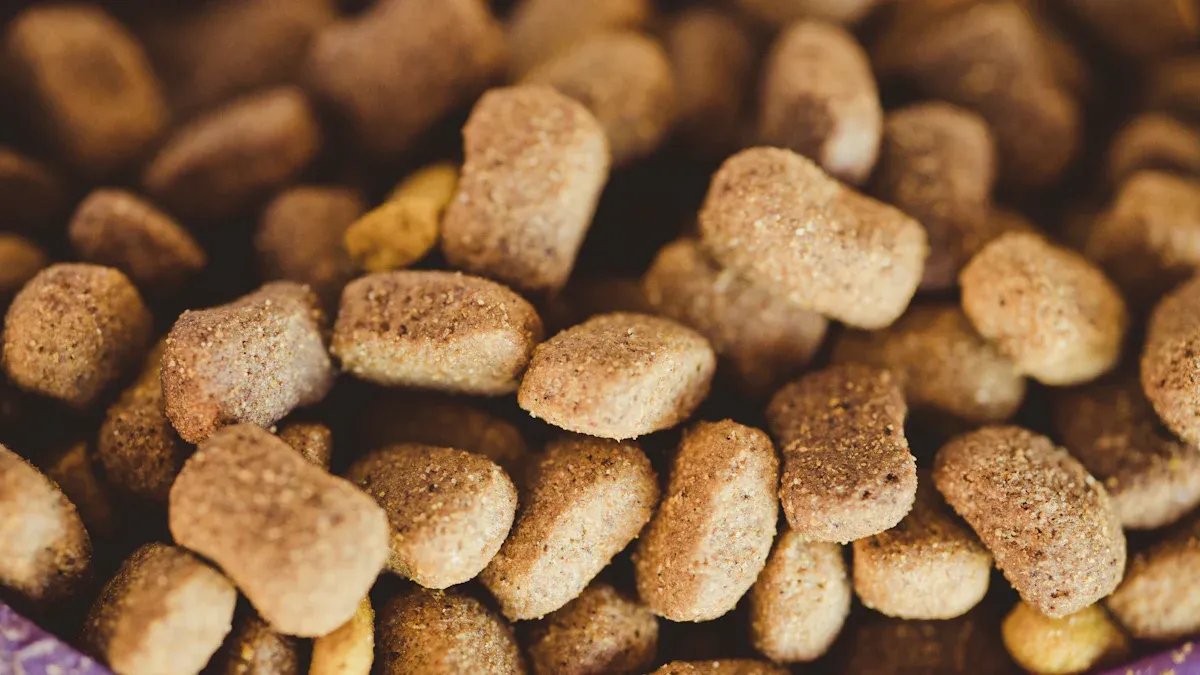
You see Calcium Propionate in animal feed a lot. It helps keep food fresh and safe for animals. This compound stops mold and bacteria from growing. Animals get better feed because of it. You can use it as a preservative. It also helps animals grow and keeps their gut healthy. Some people use it to help control appetite. It can also give animals more calcium.
Key Takeaways
Calcium Propionate helps keep animal feed fresh. It stops mold and bacteria from growing. This makes food safer for animals.
Using Calcium Propionate makes feed better. It keeps nutrients and taste in the feed. This helps animals eat well. It helps them grow strong.
This additive helps animals stay healthy. It gives animals energy. It helps them digest food. It is good for dairy cows after they have calves.
Calcium Propionate makes feed last longer. It helps farmers waste less feed. Farmers can store feed for more time. This saves money for farmers.
Always use the right amount of Calcium Propionate. Too much can hurt animals’ stomachs. The right amount keeps animals safe.
How Calcium Propionate Works

Mold and Bacteria Control
You want your animal feed to be safe. Calcium Propionate helps with this job. This compound stops mold and bacteria in feed. Mold can ruin food and make animals sick. Bacteria can also cause trouble in feed. Adding Calcium Propionate blocks these bad microbes. The chemical slows down mold and bacteria growth. It does not change yeast, so fermentation still happens in bread. This special action protects feed from spoilage. Helpful processes keep working.
Tip: Using Calcium Propionate lowers the chance of mold toxins in feed. Animals eat safer food and stay healthy.
Feed Quality Impact
You want good feed for your animals. Calcium Propionate keeps feed fresh longer. Stopping mold and bacteria saves nutrients in feed. Animals get more vitamins and minerals. You avoid bad smells and taste changes. Feed stays tasty, so animals eat well. If you store feed for weeks, Calcium Propionate keeps its value. You waste less feed and see animals grow better.
Here is a simple table that shows how Calcium Propionate helps feed quality:
Benefit | What You Notice |
|---|---|
Stops spoilage | Feed stays fresh |
Keeps nutrients | Animals get more energy |
Prevents bad odors | Feed smells clean |
Maintains taste | Animals eat more |
Benefits of Calcium Propionate
Spoilage Prevention
You want your animals to have safe feed. Calcium Propionate helps stop mold and bad bacteria in feed. When you add it, the feed stays good longer. Mold can make toxins that hurt animals. Bacteria can break down nutrients and make animals sick. Using Calcium Propionate keeps feed clean and full of nutrients. Your animals get better food and you waste less feed. This is very helpful for farms that store feed for a long time.
Note: Keeping feed free from mold and bacteria saves money and keeps animals healthy.
Animal Health Support
Calcium Propionate helps animals stay healthy. It does more than just stop spoilage. Animals can take it in through their digestive system. It gives energy because it turns into glucose in the body. This is important for animals, like dairy cows, when they need more energy. After calving, cows often have low calcium and energy. Calcium Propionate helps balance these needs.
You can see how it helps from research:
Study | Findings |
|---|---|
Goff et al. (1996) | Giving calcium propionate lowered milk fever and low calcium. |
Liu et al. (2010) | Adding it helped cows digest food and get more energy. |
Martins et al. (2019) | Feeding it made cows give more milk early on. |
Zhang et al. (2022) | Giving it raised milk and feed intake, best at 350 g/day. |
It also helps animals grow well. Calcium Propionate can help good gut bacteria. This helps animals digest food and use nutrients. Some studies show it can help control appetite. This is good for managing animal weight.
Shelf Life Extension
You want feed to last longer. Calcium Propionate helps with this. It stops spoilage and makes feed last longer. You can store feed for weeks or months and it stays good. This saves you money and time. You do not have to buy feed as often or worry about it going bad. Animals get good nutrition every day.
Longer shelf life means less feed is wasted.
You can plan when to buy feed better.
Animals always have safe, high-quality feed.
Tip: Calcium Propionate keeps feed fresh, even when it is hot or humid.
Species Applications

Ruminants
You want your cattle, sheep, or goats to grow well and stay healthy. Calcium propionate helps you reach this goal. It keeps feed fresh and safe, so your animals eat more and waste less. You can also use it to support energy balance, especially when animals need extra energy. Some studies show that adding 30 grams per kilogram of dry matter increases average daily gain and raises propionate levels in the rumen. Lower rates, like 10 or 20 grams, do not show the same effect.
Inclusion Rate (g/kg DM) | Effect on Average Daily Gain | Effect on Rumen Propionate Concentration |
|---|---|---|
30 | Increased | Increased |
10 | No effect | Not specified |
20 | No effect | Not specified |
Tip: Use the right amount to get the best results for your herd.
Poultry
You want your chickens and turkeys to eat safe, high-quality feed. Calcium propionate stops mold and bacteria in poultry feed. This keeps the feed fresh and helps birds grow strong. You can use it to prevent spoilage, especially in warm or humid places. Birds get more nutrients, and you see better egg production and healthy flocks.
Swine
You want your pigs to gain weight and stay healthy. Calcium propionate keeps swine feed from spoiling. It protects the feed from mold and harmful bacteria. Young pigs, like piglets, benefit from clean feed because they have sensitive stomachs. You can also use it to help pigs digest food better and get more energy from each meal.
Other Livestock
You may raise rabbits, horses, or fish. Calcium propionate works for these animals too. It keeps feed fresh and safe for many types of livestock. You can use it to reduce waste and support healthy growth in different species.
Calcium Propionate in Dairy Cows
You want your dairy cows to produce more milk and stay healthy after calving. Calcium propionate gives cows extra calcium and energy. This helps prevent milk fever, a problem when cows have low calcium. It also supports the balance of good bacteria in the rumen, which helps cows digest feed and make more milk. You can see better health and higher milk yields when you use it at the right time.
Practical Use
Dosage
You must use the right amount in animal feed. The amount depends on the animal and the feed. Most companies say to add 0.1% to 0.3% of calcium propionate. This amount works for cattle, poultry, and swine. If you use too little, it may not help. If you use too much, you waste money. Too much can also upset the animals’ stomachs.
Tip: Always read the label or ask a nutritionist before you add calcium propionate.
Safety
You want your animals to stay safe and healthy. Calcium propionate is safe when used at the right levels. The FDA and EFSA set clear safety rules for animal feed. You can see these rules in the table below:
Regulatory Agency | Safety Limit (Concentration) |
|---|---|
FDA | |
EFSA | 0.1% to 0.3% of total formulation |
Most animals do fine with calcium propionate. Do not give more than the recommended amount. Too much may cause mild stomach problems. If you follow the rules, your animals stay safe and healthy.
Compatibility
You can mix calcium propionate with many feed ingredients. It works with grains, silage, and commercial blends. You do not need special tools to add it. Calcium propionate does not react with most vitamins or minerals. This makes it easy to use in many feeding plans. You can add it during feed making or sprinkle it on stored feed. This helps keep feed fresh and safe for animals.
Note: Keep calcium propionate in a dry, cool place so it works well.
Challenges and Questions
Side Effects
You want to keep your animals safe. Calcium propionate is safe for most animals when you use the right amount. Some animals may get mild stomach upset if you use too much. You might see softer stools or less feed intake. These signs usually go away when you lower the dose. Young animals and sensitive species may react more. Always watch your animals after you add something new to their feed.
Tip: Start with the lowest recommended dose. Watch your animals for any changes in eating or behavior.
Cost
You want to save money on your farm. Calcium propionate costs more than some other feed additives. The price depends on how much you use and the size of your farm. You may pay more at first, but you save money by wasting less feed. Fresh feed means healthier animals and better growth. This can help you earn more in the long run.
Here is a simple table to help you compare costs:
Additive | Average Cost per Ton | Shelf Life Benefit |
|---|---|---|
$$ | High | |
Organic Acids | $ | Medium |
No Preservative | $0 | Low |
Note: Spending a little more now can help you avoid bigger losses later.
Alternatives
You have choices if you do not want to use calcium propionate. Some farmers use organic acids, like propionic acid or sorbic acid. Others try natural options, such as essential oils or plant extracts. These can help control mold and bacteria, but they may not work as well or last as long. You should check if these options fit your animals and your budget.
Organic acids: Work well but may have a strong smell.
Essential oils: Natural, but can be costly.
No preservative: Risk of spoilage goes up.
Always talk to a feed expert before you switch to a new additive. Your animals’ health comes first.
You can add Calcium Propionate to animal feed to keep it fresh. This additive helps stop mold and bacteria from growing. It keeps animals safe from getting sick. Using the right feed helps animals grow strong and healthy. Many farmers use this for different kinds of animals. If you want better feed and less waste, you should think about using it.
FAQ
What animals can eat feed with calcium propionate?
You can feed calcium propionate to cows, chickens, pigs, goats, sheep, horses, and rabbits. Most farm animals can eat it without problems. Always check how much to use for each animal.
Is calcium propionate safe for my animals?
Yes, calcium propionate is safe if you use the right amount. Most animals do not get sick from it. Too much can cause mild stomach upset. Watch your animals for any changes.
Can calcium propionate replace other preservatives?
You can use calcium propionate instead of many other feed preservatives. It works well to stop mold and bacteria. Some natural choices are out there, but they may not last as long or may cost more.
How do I store calcium propionate?
Keep calcium propionate in a cool, dry place. Close the container tightly after using it. This keeps it fresh and helps it work well in feed.
Does calcium propionate change the taste of feed?
Most animals do not notice any taste change. Calcium propionate does not have a strong flavor. Animals will keep eating their feed like normal.