You may ask if propylene glycol in skin care is safe. Some people use these products and have no problems. Other people worry about having skin reactions.
Some people are concerned that propylene glycol can cause allergic contact dermatitis. It can also cause skin sensitisation, especially for people with skin problems.
Let’s look at the real risks and benefits. This will help you make good choices.
Key Takeaways
Propylene glycol is a humectant. It helps your skin keep water by taking moisture from the air.
You should always do a patch test before using new products with propylene glycol. This helps you see if your skin reacts.
If you have sensitive skin or problems like eczema, talk to a doctor first. Do this before using products with propylene glycol.
What Is Propylene Glycol?
Propylene glycol is in many things you use every day. You can find it in lotions, creams, and even some foods. This ingredient is a clear liquid with no smell. Scientists make propylene glycol from natural gas, oil, or plants. Sometimes, they use glycerin and hydrogen with heat and pressure to make it. If you want to compare, look at this table:
Property | Description |
|---|---|
Chemical Structure | Synthetic, bifunctional alcohol classified as a vicinal diol. |
Hydroxyl Groups | Contains two hydroxyl groups (-OH) that provide hygroscopic properties. |
Synthesis Method | Industrially synthesized from propylene oxide through non-catalytic hydrolysis. |
Origin | |
Sustainability | A renewable route via glycerol is under development for improved sustainability. |
Uses in Skin Care
You might wonder how propylene glycol is used in your skin care. It acts as a humectant, which means it helps your skin keep water. You can find it in moisturizers, face washes, and serums. Propylene glycol also works as a solvent. It helps mix other ingredients so your skin can take them in. Creams and lotions feel smoother because of propylene glycol. It also helps food last longer and stay fresh.
Solvent (helps mix ingredients)
Penetration enhancer (boosts absorption)
Viscosity controller (improves texture)
How It Works
Propylene glycol works with your skin on a tiny level. It gathers on the top layer of your skin, called the stratum corneum. This helps propylene glycol in food and skin care work better. It changes how the fats in your skin are lined up. This makes it easier for other things to get through your skin. That is why propylene glycol is in so many products. It helps your skin feel soft and lets other ingredients work well.
Benefits of Propylene Glycol
Moisturizing Effect
You want your skin to feel soft and not dry. Propylene glycol helps with this. It acts as a humectant. It pulls water from the air to your skin. You find propylene glycol in lots of products. It keeps your skin moist and smooth.
Propylene glycol brings water to your skin and helps keep it there.
Many skin care products use propylene glycol to help your skin stay hydrated.
Its strong pull for water helps your skin look fresh.
Studies show propylene glycol helps moisturizers work better. It helps other ingredients get water for your skin. You notice propylene glycol when your skin feels less dry and more comfy.
Enhances Absorption
Propylene glycol does more than keep skin moist. It helps your skin take in other ingredients. You get better results from your products because propylene glycol changes how your skin lets things in.
Propylene glycol helps mix ingredients and lets them go deeper into your skin.
It makes your skin easier for vitamins and antioxidants to get in.
Products with propylene glycol help ingredients work better than those without it.
You see propylene glycol working when your skin looks brighter and healthier. This ingredient helps your favorite products do their job.
Preservative Role
You want your products to last and stay safe. Propylene glycol helps with that, too. It fights germs and fungus.
Propylene glycol works as a preservative in many products.
It stops germs and keeps your products fresh.
Some experts say propylene glycol can replace other preservatives because it protects against fungi and bacteria.
You feel good knowing your products stay safe and work well. Propylene glycol helps you get the best from your skin care.
Is Propylene Glycol Safe?
General Safety
You may wonder if propylene glycol is safe for skin. Most people use products with propylene glycol and have no issues. This ingredient has been used in skin care for a long time. You can find it in lotions, creams, and some foods. Many experts have checked if it is safe.
The FDA says propylene glycol is safe for some uses, like animal food.
The FDA does not let companies put propylene glycol in cat food because it is not safe for cats.
The EU’s safety group looks at cosmetic ingredients, but they do not warn most people about propylene glycol.
Most skin care products have only a little propylene glycol. You do not need to worry about getting sick from normal use. If you use products the right way, you should not have health problems. Some people still want to know if propylene glycol can cause trouble. It depends on your skin and how you use the product.
Tip: Always use skin care products as the directions say. Using too much of anything, even safe stuff, can make your skin hurt.
Sensitive Groups
Some people worry more about propylene glycol. You may have sensitive skin or a skin problem. If you do, you might react to this ingredient. People with eczema, psoriasis, or hurt skin can feel more irritation. You may see redness or feel itchy.
People with weak skin are more likely to react to propylene glycol.
If you have allergic contact dermatitis or irritant contact dermatitis, you may react more.
Sensitization rates are between 0.8% and 3.5%. This means a few people can have a reaction.
You may ask if propylene glycol is safe for everyone. The answer is no. Some people need to be careful. Babies, people with broken skin, and those with allergies should watch for signs of irritation. If you feel burning, stinging, or get a rash, stop using the product. You should talk to a doctor if you worry about your skin.
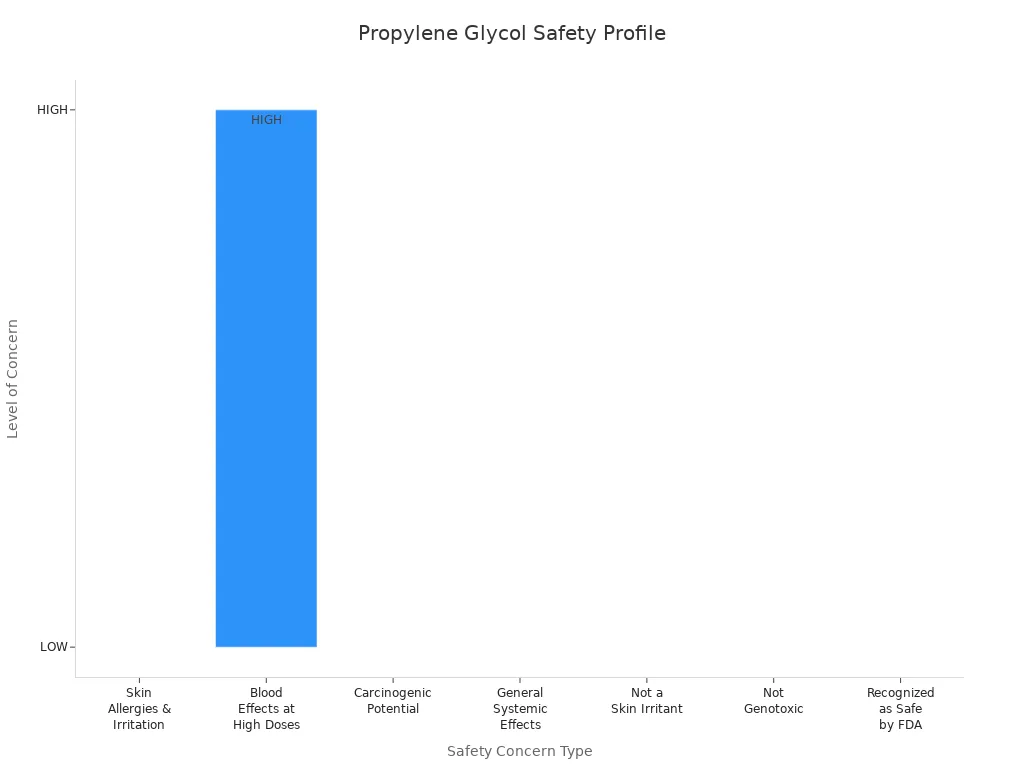
Propylene glycol toxicity is rare in skin care, but it can happen if you use too much or have very sensitive skin. You should always read the label and test a small spot before using a new product. This helps you avoid problems and keeps your skin safe.
Note: If you have allergies or skin problems, ask your doctor before using new products with propylene glycol. Your health and comfort matter most.
Health Risks of Propylene Glycol
You may wonder if propylene glycol can harm your skin or health. Most people use it and do not have problems. Some people do have issues. It is important to know the health risks. This helps you stay safe.
Irritation and Allergies
Some people’s skin does not like propylene glycol. You might see red skin, feel itchy, or get a rash. Doctors say propylene glycol can cause allergies. It can cause contact and irritant reactions. The American Contact Dermatitis Society called it Allergen of the Year in 2018.
Here are some symptoms you might notice:
Your skin gets red or itchy
You see swelling or puffiness
You get hives or welts
You see eczema-like spots on your face, neck, or hands
Some people have these problems for a long time. One person had itchy, red skin for two months. The rash came back after eating foods with propylene glycol. If you have eczema, you may react more. About 12.5% of eczema cases tested reacted to propylene glycol.
Allergy rates can be from 10% to 30%. In one big study, only 21 out of 6,761 people had a reaction. That is about 0.31%. Less than half of those had reactions that were serious. Most people do not react, but some do.
If you feel burning, stinging, or get a rash, stop using the product and talk to your doctor.
Propylene Glycol Toxicity
You may hear about propylene glycol toxicity and worry. For most people, the risk is low if you use products the right way. Healthy skin does not let much propylene glycol in. Problems can happen if you use a lot, have broken skin, or are very young.
Let’s look at what studies found:
Evidence Description | Source | Year |
|---|---|---|
Healthy skin does not absorb much, but babies with skin problems can absorb more. | Fligner et al. | 1985 |
Local irritation and allergic reactions can happen. | Fisher; Adams & Maibach | 1978, 1985 |
Systemic effects are rare but can happen after using a lot. | Fligner et al. | 1985 |
Mild lactic acidosis happened in a baby treated with a cream for burns. | Yu et al. | 1985 |
High blood osmolality can happen after skin absorption. | Kulich et al.; Bekeris et al.; Fligner et al. | 1980, 1979, 1985 |
Babies and young kids have higher risks. Their bodies cannot break down propylene glycol well. The enzyme needed to process it grows slowly. It can take up to four years. Experts say do not use propylene glycol on babies or kids under four. Pregnant women should avoid it too. Their bodies may not handle it well.
Babies cannot break down propylene glycol easily.
Kids under four have low levels of the enzyme needed.
Pregnant women also have lower enzyme levels and should avoid it.
If you use a lot on broken skin or burns, you could have dangerous side effects. These include lactic acidosis or changes in blood chemistry. These cases are rare but show why you need to be careful, especially with babies and pregnant women.
Concerns About Toxin Penetration
Propylene glycol helps other things get into your skin. This can help vitamins get in. It can also let in things you do not want. Some studies show propylene glycol can increase the absorption of toxins.
Study | Findings |
|---|---|
Dugard et al., 1984; Larese Filon et al., 1999; Wilkinson and Williams, 2002 | Some types of propylene glycol showed high absorption through human skin. |
Riviere and Brooks, 2011 | Mixtures with propylene glycol can change how much your skin absorbs. |
Barry et al., 1985 | Skin absorption can change depending on what else is in the product. |
Larese Filon et al., 1999 | The skin absorbed 23% of one type and 9% of another. |
Larese Filon et al., 1999 | The absorption rates were higher than expected, showing more penetration. |
If you use products with propylene glycol and other chemicals, your skin might let in more than you want. This is a health risk you should know about. The risk is higher if you have broken skin or use many products at once.
Tip: Always check the ingredient list and use only what you need. If you have sensitive skin or health worries, talk to your doctor before trying new products.
Now you know the main health risks of propylene glycol. Most people use it safely. You should watch for signs of irritation, allergy, or toxicity. Babies, pregnant women, and people with skin problems need to be extra careful. Knowing these risks helps you make better choices for your skin.
Who Should Use or Avoid?
Suitable Skin Types
You may wonder if propylene glycol is good for your skin. Some skin types get more help from it than others. If your skin is dry, you often need more moisture. Propylene glycol helps your skin keep water. This means your skin feels less tight and less flaky. People with acne-prone skin can use this ingredient too. It does not make your skin oily or block your pores. You do not have to worry about breakouts.
Propylene glycol helps dry skin by holding in moisture.
It is good for acne-prone skin because it is not greasy.
If you want soft and hydrated skin, you might like products with propylene glycol. Many creams and serums use it for this reason.
At-Risk Groups
Some people should be careful with propylene glycol. If you have sensitive skin or a skin problem like eczema, you may react to it. If your skin gets sore or red easily, you could have a problem with this ingredient.
Propylene Glycol can cause irritation and allergies, especially for people with sensitive or damaged skin. People with these skin problems are more likely to react and should avoid products with propylene glycol.
More than 10% of people with Allergic Contact Dermatitis (ACD) may react to Propylene Glycol.
Babies, young kids, and pregnant women should not use propylene glycol. Their skin and bodies handle chemicals in a different way. If your skin is broken or hurt, you should not use products with this ingredient.
Spotting Reactions
You want to know if your skin has a problem with propylene glycol. Watch for signs like redness, itching, or a rash. Sometimes, you may see swelling or feel burning. Doctors have studied these reactions in real people.
Number of Patients | Patch Test Results | Reactions Observed | |
|---|---|---|---|
University of Oregon | 84 | 12 positive | 5 allergic, 7 irritant |
Gentofte Hospital | 248 | 5 positive | 2 itchy eczematous eruptions after oral provocation |
If you see any of these signs, stop using the product. You can ask a doctor for help. Always test a small spot first when you try something new with propylene glycol.
Making an Informed Choice
Reading Labels
You want to know what goes on your skin. Reading labels helps you spot propylene glycol in your products. Many brands use buzzwords like “paraben-free” or “BPA-free,” but these don’t always mean the product is safe. You should look at the full ingredient list. Scan the label with apps like Clearya, Think Dirty, or EWG Skin Deep. These tools help you find toxic chemicals, including propylene glycol.
Check for certifications to make sure the product passed quality control.
Watch for words like “Fragrance,” “Parabens,” “Polyethylene Glycol,” and “Propylene Glycol.”
Avoid products with color additives and dyes if you have sensitive skin.
If you see propylene glycol listed, think about your skin type and any past reactions. You can make smarter choices when you know what’s inside your products.
Patch Testing
Trying new products can be exciting, but your skin needs a test first. Patch testing helps you see if propylene glycol causes irritation. Here’s a simple way to do it:
Put a small amount of the product on your forearm.
Wait at least 24 hours.
Check for redness, itching, or swelling.
If your skin stays calm, you can use the product on your face or body. If you notice a reaction, stop using it right away. Patch testing keeps your skin safe and helps you avoid surprises.
Consulting a Professional
Sometimes, you need expert advice. If you think you have sensitivity to propylene glycol, talk to a dermatologist or pharmacist. They can help you learn about education and avoidance. You may need special treatments like emollients or topical steroids if you have dermatitis. Ask for products with clear labels that do not list propylene glycol. Professionals know which products work best for your skin. They help you avoid hidden sources of propylene glycol and keep your skin healthy.
Tip: If you have high sensitivity, always check with a doctor before trying new products.
Propylene glycol helps your skin stay moist and strong. Most people use it without problems. If you have eczema or allergies, you might react. Experts say propylene glycol is safe for most people. You should always check the label before using a product. Try a patch test to see if your skin reacts. If your skin is sensitive, ask a dermatologist for advice.
FAQ
Can you use propylene glycol every day?
Yes, you can use propylene glycol daily if your skin does not react. Always check for redness or itching before regular use.
Does propylene glycol clog pores?
No, propylene glycol does not clog pores. You can use it on acne-prone skin without worrying about breakouts.
What should you do if you react to propylene glycol?
Stop using the product right away. Wash your skin with water. If you still feel itchy or see a rash, talk to your doctor.