You can find astaxanthin rich foods such as marine algae, sockeye salmon, red trout, shrimp, and crab. These astaxanthin rich foods help your body combat damage and are beneficial for your skin and eyes. They also assist in reducing swelling. Check the table below to see the astaxanthin concentration in these foods. Incorporating these astaxanthin rich foods into your diet can lead to better health.
Species | Astaxanthin Concentration |
|---|---|
Marine Algae | 2.7%–3.8% dry weight |
Sockeye Salmon | 26–38 mg/kg flesh |
Red Trout | 6–25 mg/kg flesh |
Shrimp | 0.015–0.12 mg/kg |
Crab | Not specified |
Key Takeaways
Add astaxanthin rich foods like marine algae, sockeye salmon, and red trout to your meals. These foods help your skin and eyes stay healthy.
Eating them can lower swelling in your body. They also help your heart and make your immune system stronger.
Try cooking new recipes every week. This helps you get the good things from astaxanthin. You can find your favorite ways to eat these foods.
Marine Algae
Astaxanthin Content in Algae
Marine algae have the most astaxanthin. Haematococcus pluvialis is a microalga with very high astaxanthin. It can have up to 4% astaxanthin by dry weight. When stressed, it may reach 5%. Most carotenoids in H. pluvialis are pure astaxanthin. This makes it the best natural source. Other sources like crustaceans and yeast have much less. They usually have between 0.15% and 0.40%. If you want more astaxanthin, choose marine algae.
Haematococcus pluvialis: up to 5% astaxanthin dry weight
Other algae and crustaceans: 0.15%–0.40% astaxanthin dry weight
Health Benefits of Algae
Eating marine algae is good for your health. Astaxanthin from algae protects your cells. It lowers triglycerides and raises good cholesterol. Astaxanthin helps your skin stay healthy. It may help slow down aging. People with diabetes have better glucose control. They also have lower blood pressure after eating astaxanthin rich foods. Marine algae fight bacteria and viruses. This helps your body stay strong.
Health Benefit | How It Helps You |
|---|---|
Protects cells | Reduces damage from oxidation |
Improves cholesterol | Raises HDL, lowers triglycerides |
Supports skin health | Reduces signs of aging |
Boosts immune defense | Fights bacteria and viruses |
Helps glucose control | Supports healthy blood sugar levels |
How to Eat Marine Algae
You can eat marine algae in many ways. Mix algae powder into smoothies or soups. Add it to sauces for more nutrition. Use dried algae in seasoning blends. Sprinkle it on salads for extra taste. Toasted or pan-fried algae make crispy snacks. You can use algae as a spread. Some people add it to desserts like meringues. Algae can be found in meat products too. Spirulina adds color and flavor to foods. These ideas help you eat astaxanthin rich foods every day.
Tip: Try small amounts of algae first. This helps you get used to the taste and texture.
Sockeye Salmon
Astaxanthin in Sockeye Salmon
Sockeye salmon is one of the top astaxanthin rich foods. Four ounces of sockeye salmon gives you about 4.5 milligrams of astaxanthin. This helps your body fight damage from free radicals. The red color in sockeye salmon comes from astaxanthin. Wild-caught salmon has more astaxanthin than farmed salmon.
Four ounces of sockeye salmon has about 4.5 milligrams of astaxanthin.
Wild-caught salmon has more astaxanthin than farmed salmon.
Wellness Benefits of Salmon
Eating sockeye salmon is good for your health. It helps your heart, brain, joints, and eyes. Salmon has omega-3 fatty acids. These help lower swelling and blood pressure. Salmon also helps your memory and thinking. Eating salmon often may lower your risk for some cancers.
Health Benefit | How Sockeye Salmon Helps You |
|---|---|
Heart Health | Omega-3s lower blood clot risk and help your heart |
Brain Health | DHA helps your memory and slows down brain problems |
Joint Health | EPA lowers swelling and helps your joints feel better |
Eye Health | Omega-3s lower your risk of eye problems |
Cancer Risk Reduction | Eating salmon may lower your risk for some cancers |
Tip: Try eating salmon two times a week for the best results.
Adding Salmon to Meals
You can eat sockeye salmon in many easy ways. Grill salmon for dinner. Put cooked salmon on salads for lunch. Make tacos with salmon and veggies. Bake salmon with lemon and herbs for a fast meal. Use canned salmon in sandwiches or pasta. These ideas help you eat astaxanthin rich foods easily.
Grill, bake, or broil salmon for simple dinners.
Add salmon to salads, tacos, or pasta.
Use canned salmon for quick lunches.
Red Trout
Astaxanthin in Red Trout
Red trout is a bright and healthy fish. Its pink-red color comes from astaxanthin. Astaxanthin is a strong antioxidant. You get 6 to 25 milligrams of astaxanthin in each kilogram of red trout. This makes red trout one of the best astaxanthin rich foods. The pigment gives the fish its color. It also helps protect your cells from harm.
Health Benefits of Red Trout
Eating red trout helps your heart and body. Red trout has lean protein and omega-3 fatty acids. It also has vitamin B12, selenium, and potassium. These nutrients help your heart and brain work well. They help your muscles heal after exercise. Eating trout may lower your risk of heart attack. It can help with high blood pressure, obesity, and diabetes. Red trout has little saturated fat and few calories. This makes it a good choice for healthy diets.
Tip: Eating red trout often can help you avoid health problems and keep your body strong.
Serving Ideas for Red Trout
You can cook red trout in many ways and keep its nutrients. Some cooking styles keep more astaxanthin than others:
Cooking Method | Effect on Astaxanthin |
|---|---|
Smoking | Keeps lots of astaxanthin. |
Grilling | Cedar plank grilling keeps more astaxanthin. |
Pan-searing | Keeps astaxanthin when cooked at low heat. |
Baking | Baking with grains and veggies makes a healthy meal. |
Microwaving | Keeps more astaxanthin than boiling. |
Canning | Lowers astaxanthin by about 20%. |
Cook at low heat for less time to keep more astaxanthin.
Microwaving is better than boiling for keeping nutrients.
Do not soak or wash the fish for too long before cooking.
Try red trout grilled, baked, or pan-seared for a tasty and healthy meal.
Shrimp
Astaxanthin in Shrimp
Shrimp are bright and healthy seafood. Wild shrimp have about 26.3 parts per million of carotenoids in 100 grams. Most of these carotenoids are astaxanthin. Astaxanthin makes shrimp turn red when cooked. Healthy shrimp store astaxanthin well if they eat it in their food. Shrimp with Blue Disease have less astaxanthin. These shrimp look pale after cooking. Eating shrimp gives you astaxanthin, especially if you pick wild and healthy shrimp.
Benefits of Eating Shrimp
Shrimp are good for your health. They have few calories and carbs. This helps you manage your weight. Shrimp have antioxidants like astaxanthin. Antioxidants protect your cells and may help your skin look younger. Shrimp give you selenium. Selenium helps your immune system and may lower cancer risk. Shrimp also have omega-3 fatty acids. Omega-3s help your heart and improve cholesterol.
Health Benefit | Description |
|---|---|
Low in Carbs and Calories | Helps with weight control |
Antioxidants | Astaxanthin protects cells and may reduce wrinkles |
Rich in Selenium | Supports immune health and may lower cancer risk |
Heart Health | Omega-3s may reduce heart disease risk and improve cholesterol |
Tip: Eating shrimp helps your heart and keeps your body strong.
Ways to Enjoy Shrimp
You can eat shrimp in many meals. Boiling shrimp keeps the most astaxanthin and omega-3s. Do not fry shrimp because it lowers carotenoids. Put shrimp in salads, tacos, or pasta. You can steam or grill shrimp for a fast meal. Shrimp are tasty in stir-fries and soups. Adding shrimp to your diet is an easy way to get astaxanthin rich foods.
Crab
Astaxanthin in Crab
Crab stands out as one of the best sources of astaxanthin among shellfish. Brown crab (Cancer pagurus) contains about 1023 micrograms of astaxanthin per gram of dry extract. This level is higher than what you find in shrimp or lobster. You get more astaxanthin from crab than from most other shellfish. If you want to add more astaxanthin to your diet, crab makes a smart choice.
Brown crab: 1023 µg/g dry extract
Lobster: About half the astaxanthin found in crab
Shrimp: Lower astaxanthin than both crab and lobster
Health Benefits of Crab
Eating crab gives your body important nutrients. You get vitamin B12, which keeps your blood and nerves healthy. Crab also provides selenium, a mineral that acts as an antioxidant and supports your immune system. Zinc in crab helps your immune system work well. Omega-3 fatty acids in crab may lower triglycerides and help your heart beat regularly. You also get nutrients like folate and vitamin B12, which help prevent anemia. Regularly eating crab may lower your risk of dementia and Alzheimer’s disease because of its omega-3 content.
Nutrient | Benefit |
|---|---|
Vitamin B12 | Supports blood and nerve health |
Selenium | Acts as an antioxidant |
Zinc | Boosts immune function |
Omega-3s | Supports heart and brain health |
Folate | Helps prevent anemia |
How to Use Crab in Meals
You can enjoy crab in many ways. Add crab meat to salads for a protein boost. Make crab cakes for a tasty meal. Stir crab into pasta or rice dishes. Use crab in sushi rolls or wraps. You can also add crab to soups or stews for extra flavor. Crab fits well into a variety of astaxanthin rich foods, making it easy to support your wellness goals.
Tip: Choose fresh or pasteurized crab meat for the best taste and nutrition.
Astaxanthin Rich Foods Comparison
Astaxanthin Levels in Top Foods
You can see big differences in astaxanthin levels when you compare these foods side by side. Marine algae, especially Haematococcus pluvialis, have the highest concentration. Shrimp also contain a lot of astaxanthin. Sockeye salmon and red trout have much less, but they still give you a good amount. Crab stores astaxanthin mostly in its shell, so you get less from the meat.
Source | |
|---|---|
Haematococcus pluvialis (algae) | ~40,000 |
Arctic shrimp | ~1,200 |
Sockeye salmon and red trout | ~5 |
Crab | N/A (mostly in shells) |
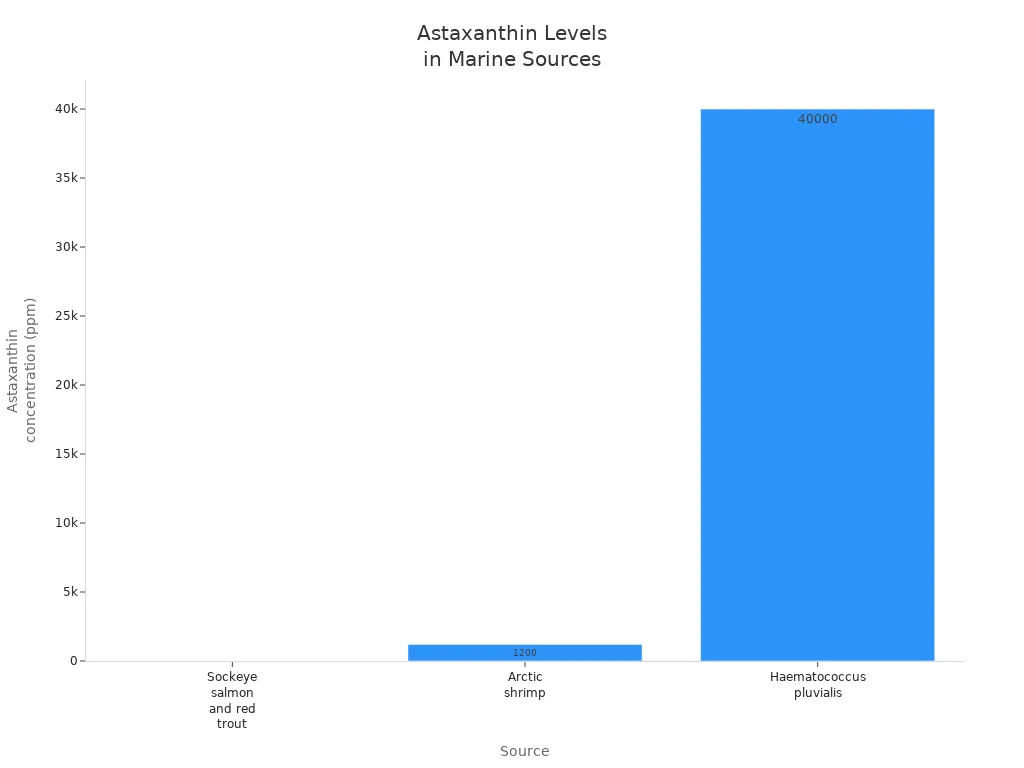
Note: You get the most astaxanthin from marine algae. Shrimp also give you a strong boost. Salmon and trout are good choices for regular meals.
Key Wellness Benefits Overview
Each of these astaxanthin rich foods helps your body in different ways. You can choose the food that fits your needs best.
Marine algae protect your cells and support your immune system.
Sockeye salmon and red trout help your heart, brain, and joints.
Shrimp support healthy skin and help you manage your weight.
Crab gives you important vitamins and minerals for blood and nerve health.
Tip: Try adding a mix of these foods to your meals. You get a wider range of nutrients and wellness benefits.
Tips for Adding Astaxanthin Rich Foods
Simple Meal Ideas
You can add astaxanthin rich foods to your meals in easy ways. Try these ideas:
Make a salmon and quinoa salad. Add your favorite vegetables for more color and taste.
Blend an astaxanthin smoothie. Use frozen berries, spinach, and a scoop of astaxanthin powder for a healthy drink.
Cook a shrimp and veggie stir-fry. Add bright vegetables and a sprinkle of astaxanthin powder if you like.
Tip: Try one new recipe each week. This helps you discover what you enjoy most.
Shopping and Prep Tips
When you shop for astaxanthin rich foods, look for fresh or frozen options. Choose wild-caught salmon and shrimp for higher astaxanthin levels. Pick marine algae powder from trusted brands.
To keep the most astaxanthin, use gentle cooking methods. Avoid long cooking times. Quick grilling, steaming, or microwaving works best. Some companies use encapsulation or spray-drying to protect astaxanthin in powders. These methods help keep the nutrients strong. If you use astaxanthin powder, mix it with foods that have a little fat, like yogurt or smoothies. This helps your body use the nutrient better.
Balancing Astaxanthin Foods
You can balance your meals by mixing different astaxanthin rich foods. Try seafood two or three times a week. Add algae powder to drinks or snacks. Rotate between salmon, shrimp, trout, and crab for variety.
Note: Eating a mix of these foods gives you more nutrients and supports your health in many ways.
You can feel better by eating astaxanthin rich foods. Some examples are marine algae, sockeye salmon, red trout, shrimp, and crab. These foods are good for your eyes and skin. They also help your body after you exercise.
Benefit | Description |
|---|---|
Healthy eyes and brain | Helps your eyes and memory work well. |
Inflammatory response | Makes your immune system stronger. |
Skin health | Shields your skin from the sun. |
Exercise recovery | Helps your muscles feel better after activity. |
Try a new food this week. You will help your body and the planet.
FAQ
What is astaxanthin and why do you need it?
Astaxanthin is a red pigment found in some seafood and algae. You need it because it helps protect your cells and supports your eyes, skin, and heart.
Can you get enough astaxanthin from food?
You can get enough astaxanthin by eating salmon, trout, shrimp, crab, and marine algae often. Try to include these foods in your meals two or three times a week.
Is astaxanthin safe for everyone?
Most people can eat astaxanthin rich foods safely. If you have a seafood allergy, you should avoid shellfish and fish. Ask your doctor if you have health concerns.