
Understanding non dairy coffee creamer ingredients is important for anyone looking to make informed choices about their coffee. Non dairy coffee creamer ingredients often include plant oils and various additives, which play a key role in shaping the taste and texture of the creamer. These products are made with a range of non dairy coffee creamer ingredients, some derived from plants and others as processed additives. Being aware of the specific non dairy coffee creamer ingredients in your creamer can help you select a product that fits your preferences, health goals, and dietary needs.
More people are seeking out non-dairy creamers today.
Region/Country
Market Share / Revenue Share
CAGR (2025-2035)
Key Drivers
Global
Non-dairy creamers >53.8% (2022)
~7.3% globally
Health, dietary needs, environment, innovation
USA
56.7% of U.S. market revenue (2024)
5.8%
Lactose intolerance, plant-based diets, clean-label products
China
7-8% market share
9.7%
Urbanization, coffee culture, convenience
Germany
Leading European market
6.5%
Health trends, vegan demand, organic products
Key Takeaways
Plant oils like coconut and palm kernel oil make creamers creamy. They also help creamers stay fresh longer.
Additives like emulsifiers and stabilizers keep creamers smooth. They stop creamers from separating. They help creamers last longer too.
Reading ingredient labels helps you find hidden milk proteins. It helps you spot unwanted additives. This is important for allergies or vegan diets.
Picking creamers with simple, natural ingredients is better for health. Less sugar is good for many diets.
Making your own non-dairy creamer at home gives you control. You can skip artificial additives. You get fresh and tasty choices.
Plant Oils
Common Types
Non-dairy coffee creamers use plant oils for creaminess. Palm oil and coconut oil are the most popular choices. These two oils make up almost 87% of all non-dairy creamers. Soybean oil is another common vegetable oil in creamers. Lauric oils, like palm kernel oil and coconut oil, help powdered creamers last longer. They keep the product stable on shelves. Special fats from palm kernel, coconut, sunflower, and canola oil are found in many foods. Creamers often include these specialty fats.
Tip:
Palm kernel oil makes up 34.9% of powdered fats sales. It is important for creamers that need to last a long time.
Why Plant Oils
Companies pick plant oils for many reasons. Some people avoid dairy because it can upset their stomach. Others worry about hormones or additives in milk. Plant oils work well instead of animal fats. Coconut oil melts fast and tastes buttery. It does not leave a waxy feeling. Plant oils fit vegan, kosher, and halal diets. They have nutrients like omega-3 fatty acids and antioxidants. Medium-chain triglycerides are also found in these oils. Plant oils help brands make healthy and clean-label products.
Flavor & Nutrition
Plant oils change the taste and nutrition of creamers. Creamers with whole plant ingredients, like oats or hemp, keep more nutrients. They do not need extra additives. These creamers usually have fewer calories and less sugar. Some brands use coconut, almond, or oat milk bases. This helps nutrition and avoids seed oils. Homemade creamers let people choose their own ingredients. They can skip unhealthy oils. Oat, almond, and pea protein creamers are healthy and taste good. People like their creamy texture and flavor. Some plant-based creamers need extra nutrients to match dairy milk.
Oil Type | Role in Creamers | Market Share / Notes |
|---|---|---|
Palm Kernel Oil | Stability, shelf life | 34.9% in powdered fats market |
Coconut Oil | Lactose-free, plant-based, creamy texture | Growing demand, 5.5% CAGR |
Soybean Oil | Vegetable oil source | Used, but no specific market share |
Canola Oil | Specialty fat, functional benefits | Used, but no specific market share |
Additives
Emulsifiers
Non-dairy coffee creamers need emulsifiers to mix oil and water. Without them, the creamer would split apart in your coffee. This would look strange and not taste good. Some common emulsifiers are:
Sodium stearoyl lactylate
Lecithin (from soy, sunflower, or canola)
Sodium caseinate
Emulsifiers make the creamer smooth and creamy. They stop lumps from forming and help the creamer last longer. Lecithin also works as an antioxidant. Sodium caseinate comes from milk but helps make creamers thick and stable.
Stabilizers & Thickeners
Stabilizers and thickeners help creamers feel rich and smooth. Carrageenan, guar gum, gellan gum, and xanthan gum are used a lot. These ingredients keep oil and water from splitting up. They also make the creamer thicker. Starches like rice or corn starch help with texture and shelf life. Most of these are safe and help creamers mix well with coffee. They also help creamers stay fresh and handle changes in temperature.
Sweeteners & Flavors
Sweeteners and flavors decide how creamers taste. Many creamers use sugar, but some use stevia or monkfruit to cut calories. Artificial sweeteners like sucralose and sugar alcohols are also used. These can change the taste and sometimes leave a weird aftertaste. Some sweeteners can affect blood sugar or your stomach. Flavors, both natural and artificial, hide the missing dairy taste and make creamers sweeter. Popular flavors include pumpkin spice and vanilla.
Colorants & Preservatives
Colorants and preservatives help creamers look nice and last longer. Artificial colors like Red No. 40 and Yellow No. 5 make creamers look better. But they can cause allergies or stomach problems for some people. Preservatives like dipotassium phosphate and sodium benzoate stop spoilage and keep creamers safe. Carrageenan is used to thicken and preserve but can upset some people’s stomachs. Most additives are safe in small amounts. Still, some people want to avoid artificial colors and preservatives because of health worries.
Non Dairy Coffee Creamer Ingredients
Label Reading
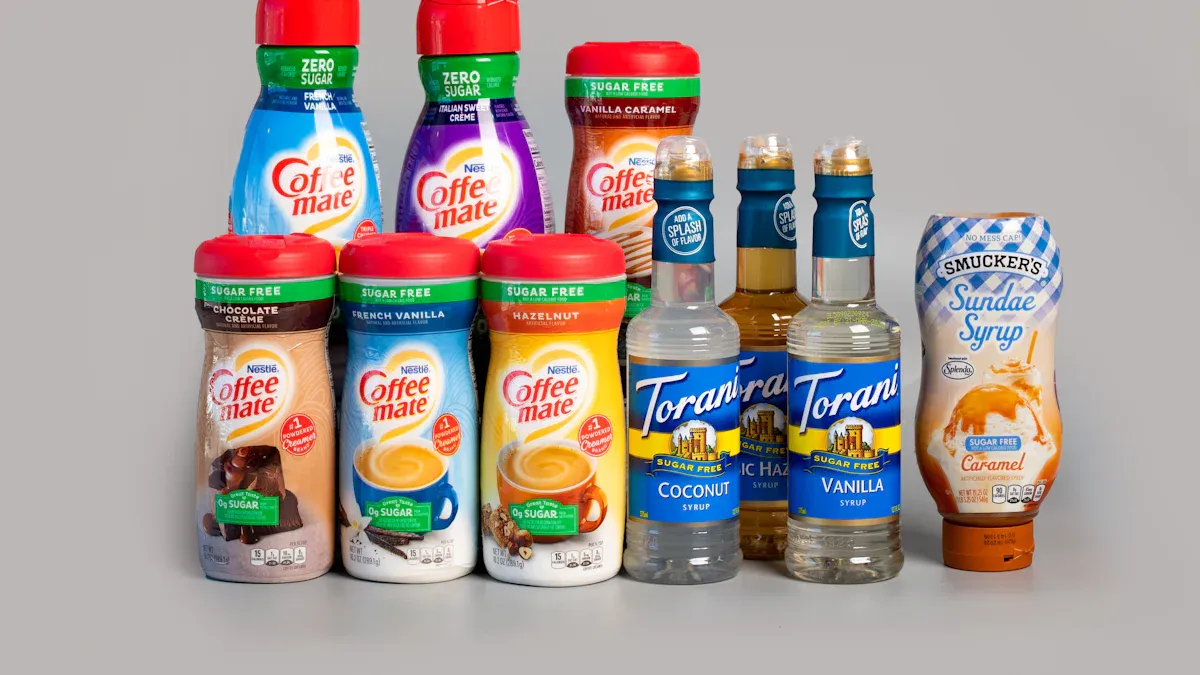
Reading labels helps people pick safe creamers. “Non-dairy” does not always mean no milk. Some non dairy coffee creamer ingredients, like sodium caseinate, come from milk. Sodium caseinate makes creamers smooth and stable. It is not good for vegans or people with milk allergies. The FDA lets “non-dairy” products have milk proteins. These proteins can be casein, whey, or sodium caseinate. You might see “sodium caseinate (a milk derivative)” on the label. People with allergies or strict diets should check every ingredient, not just the front.
Some ingredients, like lactic acid, lecithin, or glycerin, can come from plants or animals. Labels do not always say where they come from. This makes it hard for vegans or people with allergies to know if it is safe. Vegan certifications help, but are not always on the package. People should look for clear labels or ask the company if they are unsure.
Tip:
Always read the whole ingredient list. Do not trust only “non-dairy” or “dairy-free” words. These can be confusing.
Common non dairy coffee creamer ingredients in top brands are:
Thickeners and stabilizers: guar gum, xanthan gum, carrageenan
Sweeteners: cane sugar, coconut sugar, stevia, monk fruit extract
Oils: sunflower oil, coconut oil, canola oil
Some additives, like sucralose, acesulfame potassium, titanium dioxide, and carrageenan, may worry some people. Checking labels helps you avoid these ingredients.
Dietary Concerns
Non dairy coffee creamer ingredients can change health and fit different diets. Regular non-dairy creamers often have milk proteins, hydrogenated oils, and artificial additives. These are not safe for vegans or people with milk allergies. Vegan and plant-based creamers use only plant sources. They use almond, soy, coconut, oat, or cashew. They skip animal ingredients and use natural oils, plant proteins, and natural sweeteners.
People with diet needs should watch for these things:
Hydrogenated vegetable oils can have trans fats. These are not healthy in big amounts.
Sweeteners, natural or artificial, can add calories or upset your stomach.
Sodium caseinate and other milk proteins make some creamers unsafe for vegans and people with milk allergies.
Stabilizers and emulsifiers, like lecithin and mono- and diglycerides, help texture but may worry people who want less processed food.
Artificial flavors, colors, and preservatives add more ingredients and may cause health worries.
Some creamers have extra vitamins and minerals. These can help but also make the ingredient list longer.
People should compare ingredient lists to find what fits their needs. Plant-based creamers usually have less cholesterol and saturated fat than regular creamers. Some still have added sugars or artificial additives. Reading labels helps you avoid unwanted ingredients and allergens.
Vegan, Plant-Based, and Standard Creamers
Standard non-dairy creamers may have dairy proteins and more processed additives. Vegan and plant-based creamers use whole-food plant ingredients. They often add vitamins and minerals to replace those in dairy. Plant-based creamers use almond, soy, coconut, or oat milk bases. They skip animal products and use natural oils and sweeteners. This matches the trend for clean-label and less processed foods.
Homemade Alternatives and Healthier Choices
Homemade non-dairy coffee creamers let you control ingredients. You can use simple foods like canned coconut milk, almond milk, or pumpkin puree. Natural sweeteners like maple syrup or dates add flavor without extra additives. Homemade creamers skip refined oils, artificial flavors, and added sugars found in store creamers. You can change the flavor and nutrition as you like.
Aspect | Homemade Non-Dairy Creamers | Commercial Non-Dairy Creamers |
|---|---|---|
Added Sugars | None or controlled by user (e.g., maple syrup, dates) | Varies; some have added sugars, others use sugar alcohols |
Fats | Whole-food fats like coconut milk, almond milk, pumpkin | May contain refined oils and additives |
Calories | Lower or controlled by chosen ingredients | Varies widely; some low, others higher |
Ingredient Quality | Simple, whole-food, no artificial additives | Often contain additives, preservatives, artificial flavors |
Control over Ingredients | Full control, avoid unwanted additives and sugars | Limited control; must read labels carefully |
Homemade creamers help you eat better fats and less sugar. Store creamers are easy and have many choices but may have less healthy non dairy coffee creamer ingredients.
Note:
Plant-based creamers help the environment. They use fewer resources and make less greenhouse gas than dairy creamers.
How Ingredients Work Together
Creamy Texture
Plant oils and additives mix to make creamers feel creamy. Coconut milk, coconut cream, and coconut oil have lots of fat. This fat makes the creamer thick and rich. Almond milk and hemp cream also help with texture. MCT oil from coconut gives a smooth feel. Companies add pea protein, acacia gum, gellan gum, sunflower lecithin, and tapioca maltodextrin. These help creamers feel thick and creamy like dairy cream. Lipids, proteins, and emulsifiers work together. They shape the texture and keep creamers stable. Emulsifiers and salts help creamers stay smooth in hot coffee.
The right mix of plant oils and additives helps non-dairy creamers copy the creamy feel of dairy cream.
Taste & Stability
Taste and stability matter as much as texture. Makers blend oats, almonds, and coconuts for better flavor. They use stabilizers and emulsifiers so creamers do not separate in hot drinks. Lecithin, gum arabic, xanthan gum, and carrageenan keep oil and water mixed. These additives also help creamers last longer on shelves. Makers control pH, temperature, and droplet size when making creamers. This stops creamers from breaking apart in coffee. They use high-pressure homogenization to keep creamers stable. Some companies pick oat or pea protein bases for people with allergies. Clean-label and organic choices are getting popular. These can be harder to make stable and tasty.
Important things for taste, texture, and shelf life:
Pick plant oils and proteins carefully
Use stabilizers and emulsifiers
Control how creamers are made
Think about what customers want
Non dairy coffee creamer ingredients must work together. This makes creamers creamy, tasty, and stable in every cup.
Plant oils and additives change how non dairy coffee creamer ingredients taste and feel. They also affect how healthy the creamer is. Some creamers have hydrogenated oils, artificial flavors, and lots of sugar. These can be bad for your health. Picking creamers with simple, natural ingredients is better for you.
Key points to remember:
Creamers with lots of sugar and trans fats can hurt your heart and make you gain weight.
Artificial additives might cause health problems over time.
You can make creamers at home with almond, oat, or coconut milk and natural sweeteners for a healthier choice.
Practical advice for selecting creamers:
Check labels for dairy-free claims and stay away from milk protein derivatives.
Pick creamers that have less sugar and good fats.
Choose plant-based creamers that fit your diet and taste.
Look for products with fewer additives and more whole-food ingredients.
Try different brands to see which one you like best.
Tip: Pick creamers with simple ingredients and watch your serving size to help keep your diet healthy.
FAQ
What plant oils do most non-dairy coffee creamers use?
Most non-dairy creamers use coconut oil, palm kernel oil, soybean oil, or canola oil. These oils help make creamers creamy. They also help creamers last longer on the shelf.
Tip: Coconut oil makes creamers taste rich and feel smooth.
Are non-dairy creamers always vegan?
Not all non-dairy creamers are vegan. Some have milk proteins like sodium caseinate. These make them unsafe for vegans and people with milk allergies.
Creamer Type | Vegan-Friendly? |
|---|---|
Plant-Based | Yes |
Standard Non-Dairy | No |
Do additives in creamers affect health?
Some additives, like hydrogenated oils and artificial sweeteners, can be bad for health. People should check labels and pick creamers with fewer fake ingredients.
Note: Natural thickeners like guar gum and xanthan gum are usually safe.
Can homemade non-dairy creamers taste as good as store-bought ones?
Homemade creamers can taste just as good as store ones. You can use almond milk, coconut milk, or oat milk. You can add natural sweeteners for flavor.
Homemade creamers let you control taste and what goes in.
Store-bought creamers are easy to use and come in many flavors.