
You often get better results with xanthan gum in gluten-free baking and sauces because it stays stable under heat and acid. Guar gum works best for cold foods like ice cream and drinks, and it helps lower fat in desserts.
Use guar gum for cold sweets, juices, and budget-friendly thickening.
Choose xanthan gum for bakery items, sauces, and vegan recipes.
You will find advice for gluten-free baking, sauces, and special diets. Look for the decision guide at the end to help you pick the right gum for your recipe.
Key Takeaways
Use xanthan gum when you bake or make sauces. It works well with heat and acid. It helps food stay moist and stretchy.
Pick guar gum for cold foods like ice cream or smoothies. It thickens fast and costs less money.
You can mix guar gum and xanthan gum together. This makes desserts creamy and bread stretchy. It also saves money.
Always measure gums with care. Using too much can make food tough or slimy. Start with a small amount to help your stomach.
Check if you have allergies before using gums. This is important if you are sensitive to legumes. Choose gums that match your diet and recipes.
Quick Comparison
Key Differences
You may ask how guar gum and xanthan gum are different. Guar gum comes from seeds of a plant found in India and Pakistan. It is a natural thickener for cold foods and drinks. Xanthan gum is made by using bacteria to ferment sugars. This makes a gum that works in both hot and cold recipes.
Guar gum mixes fast in cold water. You can use it to thicken ice cream, puddings, and smoothies. It costs less and gives a thick, jelly-like feel. But it does not work well with heat or acid.
Xanthan gum gives a smooth and creamy feel. It works best in sauces, dressings, and gluten-free baking. It keeps its texture when you cook or freeze food. You can use it to make bread dough stretchy and keep baked goods moist.
Tip: Use guar gum for cold desserts or drinks. Use xanthan gum for baking, sauces, or recipes with heat or acid.
Summary Table
Here is a simple table to help you compare guar gum and xanthan gum for your recipes:
Category | Guar Gum | Xanthan Gum |
|---|---|---|
Source | Extracted from guar plant seeds | Produced by bacterial fermentation of sugars |
Chemical Structure | Plant polysaccharide (galactomannan) | Microbial polysaccharide (cellulose backbone with side chains) |
Hydration | Rapid in cold water | Rapid in cold and hot water |
Temperature Stability | Less stable at high temperatures | Stable over a wide temperature range |
pH Stability | Best in slightly acidic conditions | Stable over a wide pH range |
Texture | Thick, gel-like, highly viscous | Smooth, creamy, stable, coats the tongue evenly |
Best Uses | Ice cream, puddings, smoothies, cold foods, dairy, baked goods | Sauces, dressings, gluten-free baking, dips, hot foods, vegan recipes |
Cost | More expensive ($8–$12/kg) | |
Health | High fiber, helps digestion, may cause gas or bloating | May help blood sugar control, can cause gas or laxative effects if used too much |
Substitution | Good for thickening, less binding in gluten-free baking | Superior binding and elasticity in gluten-free baking |
Which Gum Is Better for Your Recipe Type?
Baking: Xanthan gum works better because it keeps dough stretchy and bread moist.
Sauces & Dressings: Xanthan gum gives a creamy, stable feel that does not break down.
Cold & Frozen Foods: Guar gum is best for thickening ice cream, smoothies, and puddings.
Gluten-Free Cooking: Xanthan gum helps you make gluten-free bread and cakes with better texture and strength.
Note: Studies show xanthan gum works better for recipes that need to freeze and thaw, like baked goods and sauces. Guar gum is best for cold foods and drinks.
Recipe Uses

Baking
You want your gluten-free baked goods to have the right texture and structure. Xanthan gum works best for most baking, especially for yeast breads, rolls, and sandwich loaves. It gives dough elasticity and helps trap air, which makes bread rise and stay soft. Xanthan gum keeps its thickening power even when you bake at high temperatures or use acidic ingredients like buttermilk or lemon juice. This gum also helps your bread stay moist after freezing and thawing.
Guar gum can work in baking, but it does not give the same stretch or hold as xanthan gum. If you use only guar gum, your bread may turn out dry or collapse after baking. You can use guar gum in cakes, muffins, or cookies, but measure carefully. Too much guar gum can make baked goods bulky or stringy. For best results, use about 1 teaspoon per cup of gluten-free flour for bread, and less for cakes or cookies.
Tip: For the best gluten-free bread, use xanthan gum. If you want to save money or add fiber, try a mix of guar gum and xanthan gum. This combination can improve texture and shape.
Sauces & Dressings
When you make sauces or salad dressings, you want a smooth, creamy texture that does not separate. Xanthan gum is the top choice for both hot and cold sauces. It dissolves in any temperature and keeps sauces thick and stable. It also acts as an emulsifier, so oil and vinegar do not separate in dressings. You get a velvety mouthfeel and a sauce that stays together, even after sitting in the fridge.
Guar gum thickens sauces quickly at room temperature and works well for cold, creamy dips. It does not change the flavor and is cost-effective. However, it does not hold up as well in hot sauces or acidic dressings. If you use guar gum in a hot sauce, it may lose its thickening power.
Note: Use xanthan gum for hot sauces, gravies, and creamy dressings. Use guar gum for cold dips or when you want a thick, creamy texture without changing the taste.
Cold & Frozen Foods
Guar gum shines in cold and frozen foods. It hydrates quickly in cold water and gives ice cream, smoothies, and puddings a thick, creamy feel. It prevents ice crystals from forming in frozen desserts, so your ice cream stays smooth. Guar gum also works well in dairy products and cold drinks.
Xanthan gum can also thicken cold foods, but guar gum is usually the better choice for frozen treats. If you want to improve texture even more, you can use both gums together. This combination can create a gel-like texture that is smooth and stable.
Tip: Use guar gum for ice cream, milkshakes, and cold desserts. If you want extra stability, try adding a small amount of xanthan gum as well.
Gluten-Free Cooking
Gluten-free recipes need help to hold together and stay moist. Xanthan gum is the best choice for gluten-free yeast breads, rolls, and sandwich bread. It gives the dough the stretch and stickiness that gluten would provide. You get bread that rises well and does not fall apart.
Guar gum can work in gluten-free cakes, muffins, and cookies. It adds fiber and helps keep baked goods moist. Measure carefully, because too much guar gum can make your food dense or gummy. For best results, mix guar gum with your dry ingredients before adding liquids.
For gluten-free bread: Use xanthan gum for the best rise and texture.
For cakes and cookies: Use guar gum, or a mix of both gums, for softness and moisture.
For pizza dough or pasta: Try combining both gums to get a chewy, flexible dough.
Reminder: Always check for food sensitivities before using guar gum, especially if you have legume allergies.
Texture & Stability
Texture Results
When you add guar gum to your baked goods, you notice a soft and fluffy texture. Guar gum helps bread and pastries stay moist and less crumbly. You get cakes and muffins that feel light and tender. This gum also helps your bread keep its shape and freshness for longer.
Xanthan gum works as a strong binder and thickener. It gives your dough more stretch and helps it hold together. Sometimes, if you use too much xanthan gum, your baked goods can turn out firmer or even a bit doughy. You need to measure carefully to get the best results.
Guar gum adds moistness and reduces crumbliness, making bread and cakes soft.
Xanthan gum provides reliable binding and elasticity, but can make textures firmer if overused.
Substituting xanthan gum for guar gum in recipes like brownies may give you a doughier texture instead of a cakey or fudgy one.
Tip: For soft, fluffy cakes and pastries, try guar gum. For chewy, stretchy bread, use xanthan gum.
Stability in Recipes
You want your sauces, dressings, and desserts to stay smooth and not separate. Both guar gum and xanthan gum help you achieve this, but they work in different ways.
Xanthan gum thickens liquids and makes sauces cling to food. It keeps particles suspended, so your vinaigrettes and purees do not settle or separate. When you stir xanthan gum, it flows easily, but when you let it rest, it holds its shape. This makes your sauces stable but still pourable.
Guar gum acts as a thickener and stabilizer. It prevents water from separating out of your sauces or ice creams. You get a creamy, smooth texture that lasts. Guar gum also helps suspend small bits in liquids, making your recipes look and taste better.
Xanthan gum strengthens emulsions, increases viscosity, and keeps flavors evenly spread.
Guar gum prevents phase separation and water migration, improving shelf life and quality.
Both gums help you create stable, appealing foods that do not spoil quickly.
Note: Use xanthan gum for sauces that need to cling and stay mixed. Use guar gum for creamy, stable desserts and drinks that need to stay smooth over time.
Health & Dietary Notes
Allergies & Sensitivities
Some people worry about allergies from guar gum or xanthan gum. Most people can eat xanthan gum without problems. A few people might feel sensitive to it. It is rare to have a real allergy to xanthan gum. Doctors check for this by watching your symptoms and using special diets. There are no regular allergy tests for xanthan gum. Xanthan gum is in many foods like ice cream, yogurt, gluten-free bread, dressings, and sauces. If you feel sensitive, eat simple foods or try other thickeners like gelatin or pectin.
Guar gum comes from guar seeds. These seeds are part of the legume family. If you are allergic to legumes, you might react to guar gum. You could get itching, swelling in your mouth or throat, hives, or stomach problems. Serious reactions like anaphylaxis are very rare but can happen. People who work with guar gum powder might get asthma or a runny nose. If you have any symptoms, stop eating guar gum and talk to a doctor.
Tip: If you have legume allergies or atopic conditions, read food labels for guar gum and pick other options if you can.
Digestive Effects
Both gums can change how your stomach feels. Guar gum has fiber that helps with constipation and feeds good gut bacteria. Most people can eat a little without trouble. Eating too much can cause gas, bloating, or diarrhea. Very high amounts, like in some diet pills, can block your intestines. The FDA makes sure foods only have safe amounts of guar gum.
Xanthan gum can also upset your stomach. You might get gas, softer poop, or need to go to the bathroom more if you eat a lot. Some people get stomach aches like IBS. Xanthan gum pulls water into your gut, so it acts like a mild laxative. Most foods have less than 1 gram per serving, which is safe for most people.
Gum Type | Positive Effects | Negative Effects at High Doses | Typical Intake Safety |
|---|---|---|---|
Guar Gum | Helps with constipation, prebiotic | Gas, bloating, intestinal blockage | Safe at regulated levels |
Xanthan Gum | May help gut bacteria | Gas, diarrhea, IBS-like symptoms | Safe at low daily intake |
Special Diets
You might eat vegan, keto, or paleo foods. Xanthan gum is good for vegans because it is made by bacteria and has no animal parts. You can use it in gluten-free and keto baking to make things stick together and get thick. Guar gum is also okay for keto and works well in cold foods.
If you eat paleo, you may not want to use guar gum or xanthan gum. Some people say these gums are too processed for paleo diets. Others think they are fine because they come from plants and help recipes work. Nutrition experts sometimes suggest using gelatin or arrowroot powder instead.
Note: Both gums are good for vegan and keto diets. If you eat paleo, be careful and try natural thickeners if you want to avoid processed foods.
Cost & Availability
Price
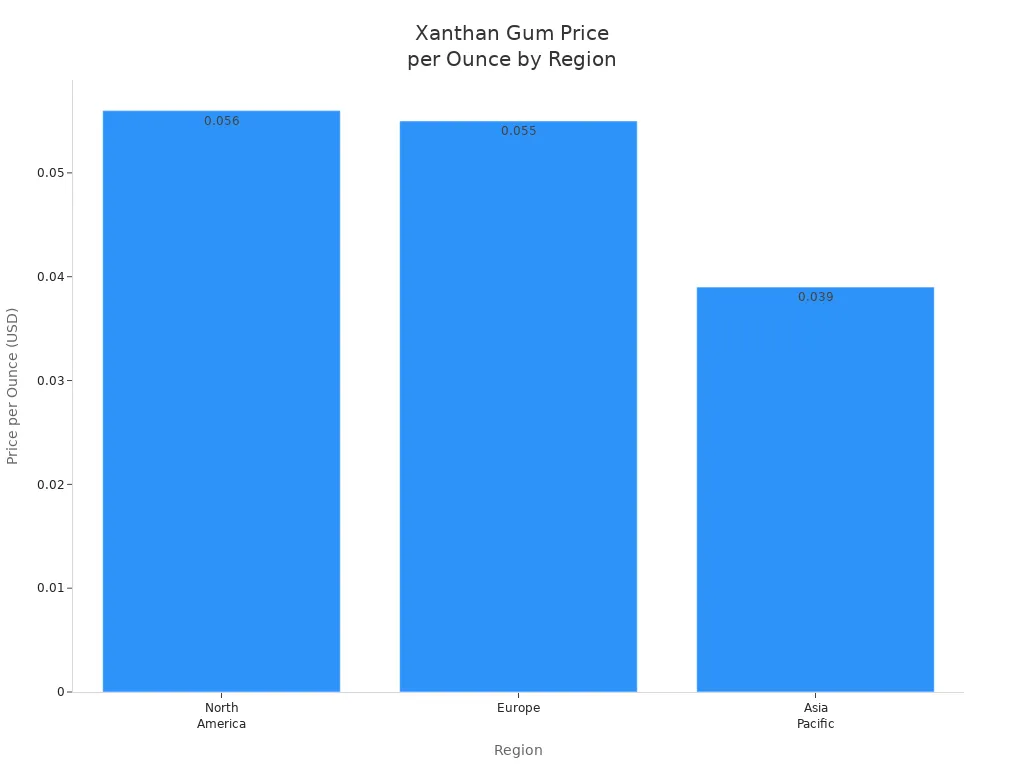
You might notice a big difference in price between guar gum and xanthan gum. Guar gum costs much less than xanthan gum in most markets. You can see the average prices in the table below:
Region | Guar Gum Price per Ounce (USD) | Xanthan Gum Price per Ounce (USD) |
|---|---|---|
North America | 0.056 | 0.53 – 0.65 |
Europe | 0.055 | 0.53 – 0.65 |
Asia Pacific | 0.039 | 0.53 – 0.65 |
Guar gum usually sells for about $0.04 to $0.06 per ounce. Xanthan gum costs much more, often 20 to 40 times higher, at $0.53 to $0.65 per ounce in the United States. Even though xanthan gum is more expensive, you only need a small amount for most recipes. Many people find that a single package lasts for months.
Tip: If you want to save money, guar gum is the better choice for thickening cold foods or drinks.
Where to Buy
You can find both guar gum and xanthan gum in many places. Most large grocery stores carry xanthan gum. Stores like Whole Foods, Kroger, and Wegmans keep it in the baking or gluten-free section. Health food stores such as Vitamin Cottage and GNC also stock both gums.
Online retailers like Instacart and Amazon offer many brands and sizes.
Specialty spice websites, such as My Spice Sage, sell both gums.
Health food stores often list guar gum as a substitute for xanthan gum.
Small packages are common, and they last a long time because you use so little.
Xanthan gum is easy to buy online. You can order it for same-day delivery or pickup from local stores. Guar gum is also available online and in health food stores, though you may not see it in every regular grocery store.
Note: Both gums are flavorless and versatile. You can use them in gluten-free baking, sauces, and desserts. Most customers find that one small bag will last through many recipes.
Tips & Substitution
How to Use
You want your recipes to turn out just right. Start by measuring guar gum and xanthan gum carefully. Use a digital scale for accuracy. For xanthan gum, add between 0.5% and 1% of the flour weight. Begin with small amounts and adjust as needed. Mix xanthan gum well so it spreads evenly in your dough or batter. Think about the temperature and acidity of your recipe because these can affect how the gum works.
Follow these steps for guar gum:
Weigh guar gum instead of using a spoon.
Use between 0.25% and 0.5% of the flour or dry ingredient weight.
Sift guar gum with other dry ingredients before adding liquids.
Mix guar gum with a little liquid first to avoid lumps.
Avoid using too much, which can make food tough or slimy.
If your recipe does not turn out as expected, check the amount of gum you used. Too much guar gum can make ice cream slimy. Too little can make bread crumbly. Always start with a small batch and adjust the gum ratio until you get the texture you want.
Issue | What You Should Do |
|---|---|
Dense or tough texture | |
Crumbly or fragile texture | Use a bit more gum |
Odd flavor or texture | Check gum quality and adjust recipe |
Tip: Always mix gums with dry ingredients first. This helps prevent lumps and gives you a smooth texture.
Substituting xanthan gum
You can swap xanthan gum and guar gum in many recipes. Use a 1:1 ratio by weight for most baked goods. For chewier foods like tortillas, use 1.5 times more guar gum than xanthan gum. If you want to replace xanthan gum with guar gum, blend guar gum with oil before adding it to liquids. This helps it mix better.
Guar gum works well in cold foods and drinks. Xanthan gum is better for recipes that need heat or acidity, like sauces and gluten-free bread. If you avoid gums, try psyllium husk or powder, but expect changes in texture and rise.
Use xanthan gum for hot sauces, gluten-free bread, and recipes with acid.
Use guar gum for ice cream, smoothies, and cold desserts.
For pizza dough or bread, you can use either gum, but adjust the amount for best results.
Using Both Together
Combining guar gum and xanthan gum gives you the best of both worlds. Use about 60% guar gum and 40% xanthan gum for a balance of creaminess and structure. This mix helps you use less of each gum, saving money and improving texture. You get creamy desserts and stretchy bread without slimy or tough results.
The combination works well in gluten-free baking and dairy-free recipes.
Guar gum adds smoothness and prevents slimy textures.
Xanthan gum gives strength and elasticity.
Mixing both gums improves stability and mouthfeel.
Note: Try using both gums together in your next gluten-free bread or ice cream recipe. You may notice better texture and longer shelf life.
You can use either guar gum or xanthan gum to improve texture and stability in your recipes. Both work well as thickeners and emulsifiers, especially in gluten-free baking. Here is a quick checklist to help you decide:
Choose guar gum for cold foods, drinks, and when you want a budget-friendly option.
Pick xanthan gum for hot recipes, sauces, and gluten-free bread.
Always start with small amounts to avoid digestive issues.
Try both gums in different recipes. You may discover new textures and flavors that make your cooking even better!
FAQ
Can you use guar gum and xanthan gum in the same recipe?
Yes, you can use both gums together. This mix often gives you better texture and stability. Try using 60% guar gum and 40% xanthan gum for gluten-free bread or ice cream.
Tip: Mixing both gums can help you get softer bread and creamier desserts.
Do guar gum and xanthan gum change the taste of food?
No, both gums are tasteless. You will not notice any flavor change in your recipes. They only change the texture and thickness of your food.
How much guar gum or xanthan gum should you use?
Start with a small amount. Use about 1/2 teaspoon per cup of flour for xanthan gum. Use a little less for guar gum. Too much can make food gummy or slimy.
Always measure carefully.
Adjust as needed for your recipe.
Are guar gum and xanthan gum safe for kids?
Yes, both gums are safe for most kids when used in small amounts. Some children may get gas or bloating if they eat too much. If your child has food allergies, check with your doctor first.
Can you use these gums in hot and cold recipes?
You can use xanthan gum in both hot and cold recipes. Guar gum works best in cold foods. It may lose its thickening power in hot or acidic dishes.
Note: For soups and sauces, choose xanthan gum for the best results.