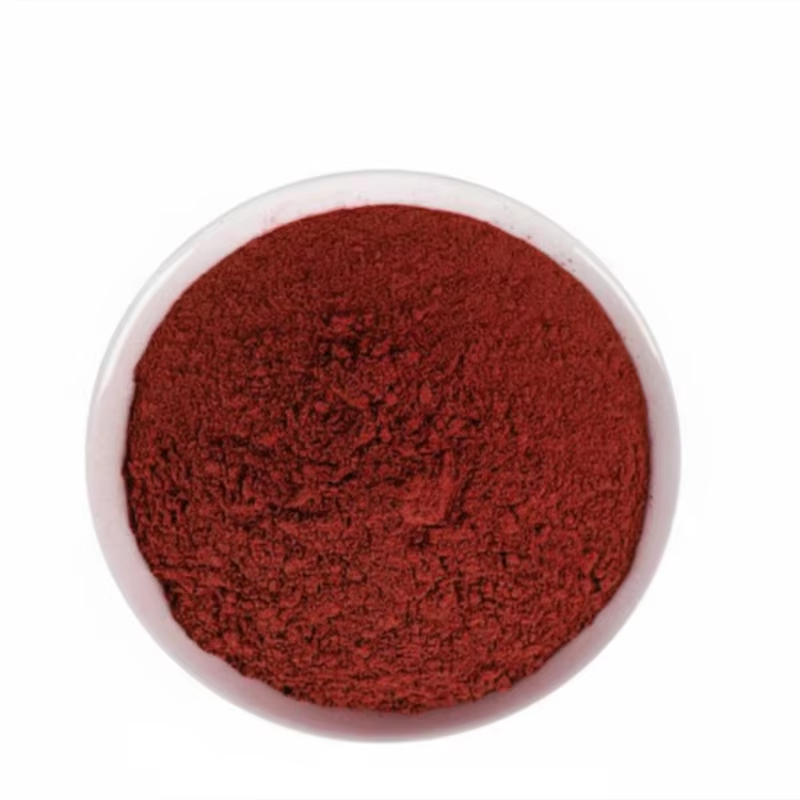
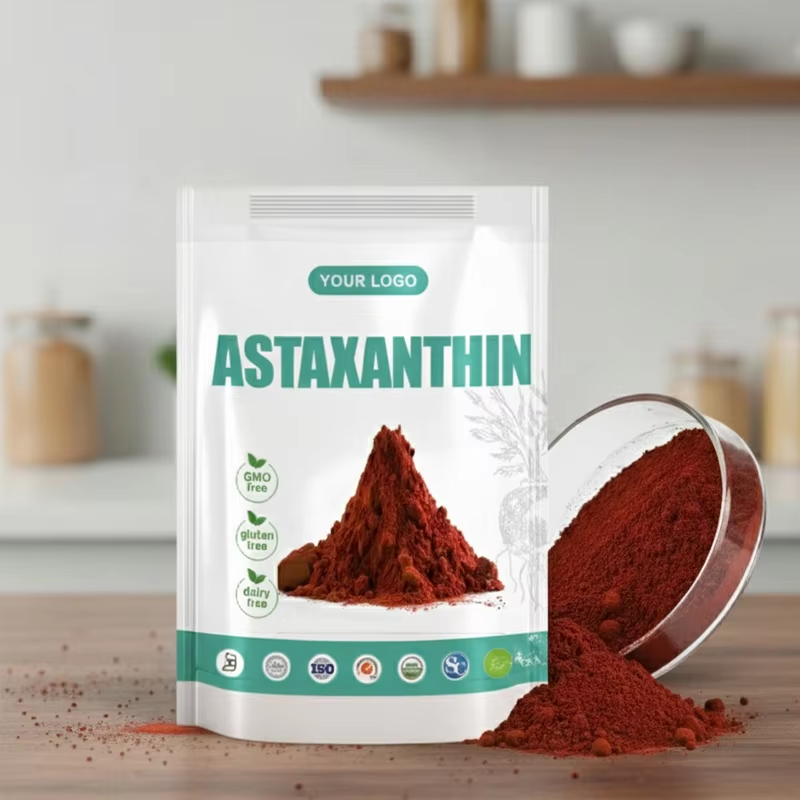
What is Astaxanthin?
Astaxanthin is a naturally occurring carotenoid pigment known for its powerful antioxidant properties. It is widely used in dietary supplements, cosmetics, functional foods, and aquaculture feed. It provides strong free-radical scavenging capacity, supports cellular protection, enhances skin health, and contributes to the red-orange coloration found in salmon, shrimp, and krill.
How is Astaxanthin made?
(Below describes the process for natural Haematococcus pluvialis algae astaxanthin — the most common and premium source.)
| Step No. |
Production Stage |
Key Action |
Control Point & Note |
| 1 |
Algae Cultivation |
Grow Haematococcus pluvialis under optimized light, nutrient, and aeration conditions. |
Strain identity and purity are critical. Strict contamination control is required to avoid bacteria or unwanted algae. |
| 2 |
Induction / Stress Phase |
Expose algae to controlled stress (light, salinity, nutrient limitation) to trigger astaxanthin accumulation. |
Light intensity and stress timing directly influence astaxanthin yield. Over-stress can reduce biomass. |
| 3 |
Harvesting |
Collect the mature algae biomass once astaxanthin content reaches target levels. |
Harvest timing determines pigment concentration. Moisture levels must be controlled to avoid spoilage. |
| 4 |
Drying |
Dry the harvested algae using spray-drying or freeze-drying to preserve active carotenoids. |
Low-temperature drying is essential to prevent oxidation of astaxanthin. Oxygen exposure must be minimized. |
| 5 |
Cell Wall Disruption |
Break the tough algal cell wall to release astaxanthin. |
Mechanical or CO₂-assisted disruption methods improve extraction efficiency. Cell wall breakage rate must be >90%. |
| 6 |
Solvent Extraction |
Extract astaxanthin using food-grade solvents (e.g., ethanol, supercritical CO₂). |
Solvent purity, pressure, and temperature define extraction yield and carotenoid profile. |
| 7 |
Filtration & Concentration |
Remove solids and concentrate the astaxanthin extract. |
Vacuum concentration prevents thermal degradation. Clarity and viscosity indicate proper processing. |
| 8 |
Purification & Standardization |
Refine and blend the extract to reach standardized astaxanthin content (e.g., 5%, 10%). |
HPLC ensures carotenoid composition accuracy. Antioxidants may be added to enhance stability. |
| 9 |
Final Quality Control & Packaging |
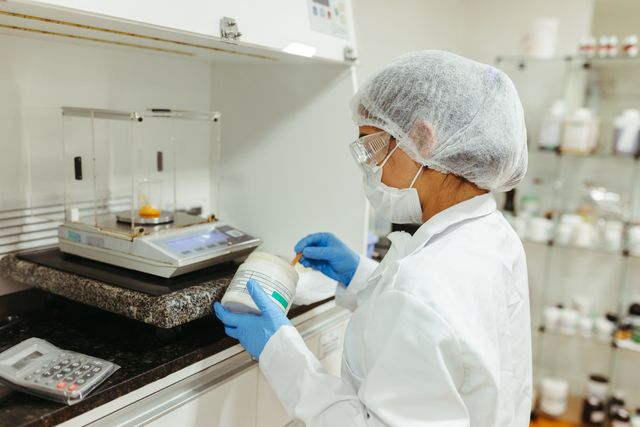
Test for potency, identity, microbial limits, heavy metals, and oxidation markers; package finished product. |
Use oxygen-proof, light-resistant containers. Stability depends heavily on low-oxygen packaging and proper storage conditions. |