
If you want to keep your blood sugar low, allulose may work better than stevia. Studies show that allulose lowers blood sugar after you eat, while stevia does not change blood sugar levels. You can see the FDA approval for both sweeteners in the table below:
Substance | FDA Approval Status | Notes |
|---|---|---|
Allulose | Recognized as Generally Recognized As Safe (GRAS) under certain conditions | GRAS notices checked and accepted by the FDA. |
Stevia | Whole-leaf and crude extracts not allowed as sweeteners in the U.S. | Highly purified steviol glycosides have GRAS notices accepted by the FDA. |
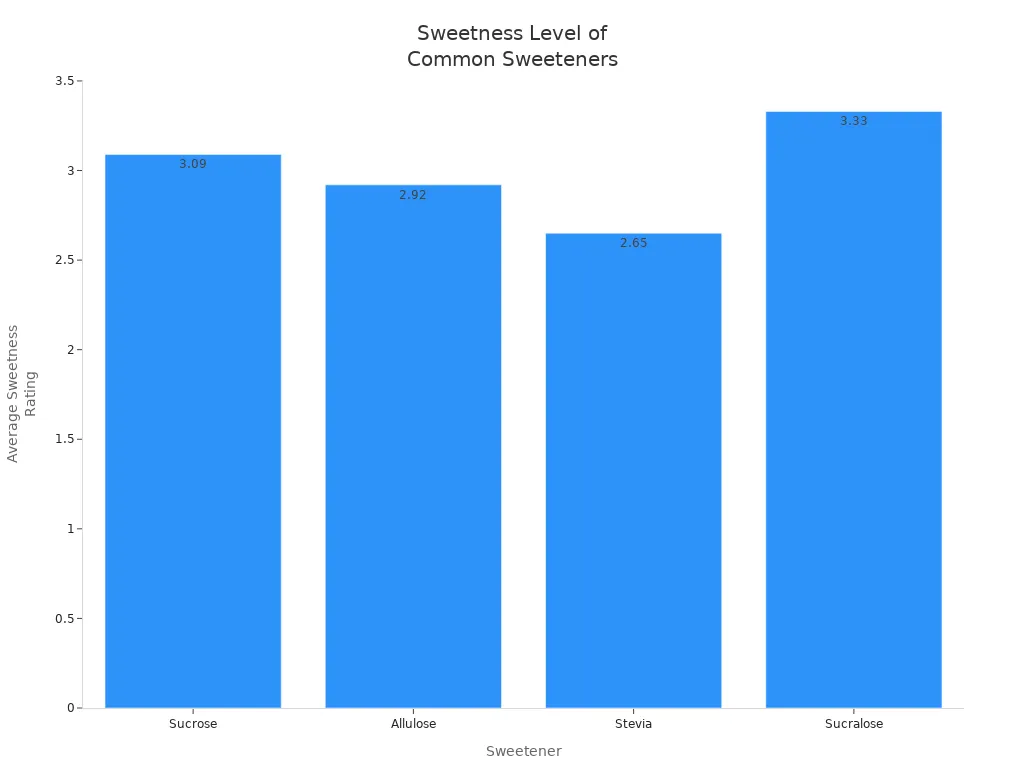
You may see big differences in sweetness, taste, and texture when comparing allulose vs stevia. Allulose tastes sweet like sugar and has almost no aftertaste, while stevia is less sweet and can taste bitter. Look at the chart to compare how sweet each one is:
Blood sugar control is important if you have diabetes or metabolic syndrome, and many people in the U.S. face these health problems. You need simple facts to pick between allulose and stevia. You want the right sweetness for baking or drinks, and you need a sweetener that matches your health needs. Sweetness affects taste, texture, and how much you enjoy your food. Sweetness makes food fun to eat and helps you use less sugar. Sweetness can change your recipes and is crucial for blood sugar management.
Sweetness is not the same in every sweetener; it is stronger in allulose and weaker in stevia. Additionally, sweetness can taste bitter in stevia, while sweetness in allulose is smooth. Sweetness in stevia can taste chemical-like, whereas sweetness in allulose works well for baking. Sweetness in stevia is better suited for drinks, and while sweetness stays the same in allulose, it changes with heat in stevia. Sweetness is important for your choice, helping you enjoy your food, and is the main difference between allulose and stevia.
Key Takeaways
Allulose can help lower blood sugar after eating. This makes it a good choice for people with diabetes. Stevia has no calories and does not make blood sugar go up. This helps people who want to stop sugar spikes. Allulose tastes smooth and like sugar. It is great for baking. Stevia is good in drinks but can taste bitter. Both sweeteners come from plants and help control blood sugar. They work in different ways. Think about what taste you like and your health goals. This will help you pick allulose or stevia for your recipes.
Allulose vs Stevia Overview

Allulose
Allulose is different from other sugar substitutes. It comes from plants like wheat, figs, raisins, and maple syrup. Allulose is also called D-allulose or D-psicose. It has the same formula as fructose. Allulose tastes sweet but does not raise your blood sugar. It is rare in nature, so you usually buy it online or in special stores.
Allulose has many good points as a sugar alternative. Studies say allulose can help with weight and health. You can use allulose in baking, drinks, and sauces. It tastes smooth and feels like regular sugar. Allulose costs more than table sugar. But it is low in calories and helps control blood sugar.
Here is a quick look at allulose’s nutrition:
Sweetener | Glycemic Index | |
|---|---|---|
Allulose | Low |
Allulose is getting more popular in the U.S. and South Korea. But it is harder to find than other sugar substitutes. You can pick allulose for recipes that need a mild, plant-based sweetener.
Allulose costs more than table sugar.
You mostly find allulose online or in some stores.
Allulose is a plant-based sweetener with a smooth taste.
Stevia
Stevia is another sweetener from plants. It comes from the leaves of the Stevia rebaudiana plant. Stevia is easy to find and is sold in many stores. It is part of a big global market, so you have lots of choices.
Stevia has steviol glycosides. These give sweetness without any calories. Stevia does not taste just like sugar and can taste bitter. It works well in drinks and cold foods. You can use stevia if you want no calories and no effect on blood sugar.
Here is a look at stevia’s nutrition:
Sweetener | Caloric Content (per gram) | Glycemic Index |
|---|---|---|
Stevia | 0 | Zero |
Stevia is a plant-based sugar substitute that is easy to find. You can use stevia in drinks or recipes that need a natural sweetener. New ways to make stevia, like Reb M fermentation, help the environment. Stevia uses less land and water than sugarcane, so it is better for the planet.
Stevia is easier to find and more people know about it.
You can buy stevia in most stores.
Stevia is a plant-based sweetener with zero calories.
You may want to compare allulose and stevia when picking a sugar substitute. Both come from plants and are natural. But they taste different, are not always easy to find, and affect your body in different ways. You can use allulose or stevia in different recipes, depending on what you need.
Blood Sugar Management

Allulose and Blood Sugar
You might wonder how allulose helps with blood sugar. Allulose does more than just stop sugar spikes. When you eat allulose, your body reacts in many ways. These reactions help control blood sugar and support diabetes management. Research shows allulose can lower blood sugar after meals. This happens even if you have insulin resistance or diabetes.
Here is a table that shows how allulose works:
Mechanism | Description |
|---|---|
Allulose raises glucagon-like peptide 1, which helps regulate blood sugar. | |
Changes in hepatic glucokinase | Allulose helps your liver handle sugar better, making it easier to manage blood sugar. |
Inhibition of intestinal α-glycosidase | Allulose slows down how fast your body absorbs sugar, so you avoid sugar spikes. |
Suppression of hepatic lipogenic enzyme activity | Allulose helps reduce belly fat, which can help with insulin resistance. |
Independence from insulin | Allulose works even if your insulin is low, so it helps people with diabetes. |
Allulose helps blood sugar by working in different parts of your body. It does not just swap out sugar; it helps you avoid sugar spikes and supports your body’s natural systems. Studies show allulose lowers blood sugar after meals for people with diabetes. Allulose has a low glycaemic index, so it does not cause sugar spikes. You can use allulose to help manage blood sugar and support your health if you have diabetes or want to avoid insulin resistance.
Allulose also helps you avoid the ups and downs from regular sugar. You can use it in recipes and not worry about your blood sugar getting too high. If you want to focus on blood sugar management, allulose is a strong choice for supporting blood sugar and managing diabetes.
Stevia and Blood Sugar
Stevia is another sweetener that helps with blood sugar, but it works differently. Stevia comes from a plant and has a glycaemic index of zero. This means it does not raise your blood sugar at all. You can use stevia if you want to avoid sugar spikes and keep your blood sugar steady.
Clinical trials show stevia does not change blood sugar in healthy people or most people with diabetes. Some studies found stevia can help your body use insulin better. This is important for managing diabetes and fighting insulin resistance. Stevia may also help your pancreas make more insulin, which can help lower blood sugar in some cases.
Here is a table with findings from recent studies on stevia:
Study | Findings |
|---|---|
Genus et al. (2007) | No effect on blood sugar levels after one year in healthy people. |
Current Study | No big changes in blood sugar with stevia-sweetened tea in people with diabetes. |
Awney et al. (2011) | Lower blood sugar with high doses of stevia in some people. |
You can see stevia does not always lower blood sugar, but it can help your body respond better to insulin. Some studies show stevia can improve insulin sensitivity and may help with insulin resistance. Stevia can also help you avoid sugar spikes, which is important for managing diabetes.
Stevia helps animals use insulin better.
Some people see lower blood sugar after using stevia.
Stevia may help your pancreas make more insulin.
Stevia has a glycaemic index of zero, so it does not cause sugar spikes.
If you want to manage blood sugar, stevia can be a good choice, especially if you want to avoid calories and sugar spikes. Stevia works best for people who want to improve insulin sensitivity and avoid the ups and downs of regular sugar. You can use stevia in drinks or foods to help with blood sugar and support your health if you have diabetes.
Note: Allulose may lower blood sugar after meals, while stevia may help your body use insulin better. Both sweeteners help you avoid sugar spikes and support blood sugar management, but they work in different ways. You can pick the one that fits your needs for managing diabetes and supporting blood sugar.
Pros and Cons
Allulose Pros and Cons
You might wonder why allulose is a good pick or what problems it has. Allulose has many benefits for people who care about blood sugar and health. You can use allulose in baking, drinks, or sauces. It tastes sweet and smooth, almost like sugar. You do not have to worry about blood sugar spikes with allulose. Many studies show allulose does not raise blood glucose or insulin. Allulose can help if you have diabetes or want to avoid sugar.
Here are some good things about allulose:
Allulose does not change blood sugar or insulin.
People with diabetes can use allulose.
Allulose may lower blood sugar after eating.
Allulose might help with swelling in the body.
Allulose could help stop weight gain and lower disease risk.
Animal studies show allulose helps with insulin sensitivity.
Early studies in people say allulose helps control blood sugar.
Allulose may protect how your pancreas makes insulin.
You might feel less hungry after eating allulose.
You should also know about the bad sides of allulose:
Some people get bloating or gas from allulose.
There is not much long-term safety info on allulose.
The FDA’s GRAS status does not mean allulose had tough testing.
More studies are needed to make sure allulose is safe.
Allulose costs more than sugar and is harder to find.
Tip: Try a little allulose first to see how you feel. If you do not have tummy problems, you can use more later.
Here is a table that shows side effects and safety:
Sweetener | Common Side Effects | Benefits | Drawbacks |
|---|---|---|---|
Allulose | Bloating, Gas | Safe by FDA, does not raise blood sugar, good for cooking | Mild tummy issues if you eat a lot, not much long-term safety info |
Stevia Pros and Cons
You might like stevia if you want a sweetener with no calories and from plants. Stevia comes from the leaves of the stevia plant. You can find stevia in most stores, and it works well in drinks and cold foods. Stevia does not raise blood sugar, so it is good for people with diabetes or those who want to avoid sugar spikes.
Here are some good things about stevia:
Stevia has very few calories.
You can use stevia on a keto or low-calorie diet.
Stevia may help keep blood sugar steady.
Some studies say stevia lowers insulin and glucose.
You might feel full after eating stevia, even with less food.
Stevia leaf powder may help with cholesterol, lowering LDL and raising HDL.
Stevia works in hot or cold recipes.
Stevia comes from a natural plant.
Stevia may have antioxidants.
Stevia is easy to buy and use.
You should also think about the bad sides of stevia:
Raw stevia is not FDA-approved; only purified extracts are safe.
Stevia may upset your gut bacteria, causing gas and bloating.
Some people taste bitterness with stevia.
Stevia could mix badly with some medicines for blood sugar.
It may make blood pressure too low for some people.
Mixing stevia with erythritol may raise heart or stroke risk.
Stevia may cause tummy problems for some people.
You might need time to get used to stevia’s taste.
There are not many long-term studies on stevia.
Whole stevia leaves or crude extracts may hurt your kidneys, heart, or blood vessels.
Note: Pick highly purified stevia extracts to stay safe. Do not use raw stevia leaves or crude extracts.
Here is a table that shows side effects and safety:
Sweetener | Common Side Effects | Benefits | Drawbacks |
|---|---|---|---|
Stevia | Bitter aftertaste, Effects on gut microbiome | Comes from a plant, works in heat, may have antioxidants | Not many long-term studies, may cause tummy issues, strong taste |
Taste and Use
Taste and Texture
Taste is very important when you pick a sweetener. Most people want their food and drinks to taste like sugar. Allulose tastes sweet and smooth, just like sugar. It does not leave a bitter or chemical aftertaste. People say allulose tastes natural and sugar-like.
Stevia comes from a plant, so you might think it tastes natural. But stevia often tastes like liquorice. Some people notice bitterness or a strong aftertaste with stevia. Stevia may not give you the sugar-like taste you want. Many studies show people like sweeteners that taste like sugar and have no aftertaste.
Here is what people say about taste:
Allulose tastes like sugar and feels smooth.
Stevia is natural but can taste bitter or like liquorice.
Most people want sweeteners that taste like sugar and have no aftertaste.
Allulose is popular because it tastes like sugar and does not change blood sugar.
Stevia may need mixing with other things to hide its aftertaste.
If you want a sweetener that feels like sugar, allulose is a good choice. Stevia works for some people, but you may need time to get used to its taste.
Baking vs Beverages
You might wonder how allulose and stevia work in baking or drinks. Allulose is about 70% as sweet as sugar. You can use allulose in baking, and it gives a sugar-like texture. Cookies, cakes, and sauces made with allulose taste almost like those made with sugar. There is no bitter aftertaste, so your baked goods keep their sugar-like flavor.
Stevia is much sweeter than sugar. You only need a little bit. Stevia works well in drinks, but you may taste liquorice or bitterness. If you use stevia in baking, you might notice the aftertaste. You can mix stevia with other things to help reduce bitterness. Many people use stevia in cold drinks, teas, or smoothies. You may like stevia in drinks if you want zero calories and a natural sweetener.
Here is a table to help you compare:
Sweetener | Baking Use | Beverage Use | Aftertaste | Sugar-like Texture |
|---|---|---|---|---|
Allulose | Good | Good | None | Yes |
Stevia | Fair | Good | Bitter | No |
Tip: If you want baked goods to taste like sugar, pick allulose. If you want a sweetener for drinks, stevia may work, but you might notice a different flavor.
Using Allulose and Stevia
Safety and Dosage
When you use allulose or stevia, you need to know how much is safe. The FDA says allulose is safe for most people. You can eat up to 0.4 grams per kilogram of your weight in one meal. You can have up to 0.9 grams per kilogram each day. For example, if you weigh 132 pounds (60 kilograms), you can eat 24 grams of allulose at once. You can have 54 grams of allulose in a whole day. Stevia is safe if you use purified extracts. Many people pick stevia because it has zero calories. It helps people control blood sugar and calories.
Here is a table to show the best amounts to use:
Substance | Effective Dosage Range | Safety Dosage Range |
|---|---|---|
Allulose | 5 g or more per meal | |
Stevia | As needed for taste | Use purified extracts only |
You should not use raw stevia leaves or crude extracts. These are not allowed as sweeteners in the U.S. Always check the label before using allulose or stevia. This is important if you have health problems.
Tip: Try a small amount of allulose or stevia first. This helps you avoid stomach aches and lets you find the taste you like best.
Recipe Tips
You can use allulose and stevia in lots of recipes. Allulose works well in baked goods, frozen treats, and sauces. It makes cakes soft and helps them brown faster than sugar. Lower the oven heat when baking with allulose. Bake cookies at 300°F, not 350°F. Bake cakes at 325°F. Cover cakes with parchment paper so they do not get too brown.
Stevia is a zero-calorie sweetener that is good in cold drinks and smoothies. You only need a little bit because it is very sweet. If you want to bake with stevia, use a blend with bulking agents for better texture. You can add applesauce or yogurt to keep baked goods soft.
When you use allulose or stevia, change the liquids in your recipe. This keeps your food from getting too dry. Allulose is a good low-calorie choice for frozen desserts. Stevia is great for zero-calorie and diabetic-friendly foods.
Note: Mixing allulose and stevia can give you the best taste and texture. You can enjoy sweet foods without raising your blood sugar.
You want to pick the best sweetener for your blood sugar. Allulose can help lower blood sugar after you eat. Stevia may help your body use insulin better. Here are some things to think about:
Factor | Allulose | Stevia |
|---|---|---|
Glycemic Impact | No effect on blood sugar | |
Taste | Sugar-like, smooth | Herbal, may taste bitter |
Best Use | Drinks, cold foods | |
Health Benefit | May lower HbA1C |
Nutrition experts say allulose helps stop blood sugar spikes. Stevia can help you keep your blood sugar steady. Pick the one that matches your health goals, taste, and what you want to make.
You can feel sure when you choose the sweetener that works for your life and helps you stay healthy.
FAQ
Can you use allulose and stevia together?
Yes, you can mix allulose and stevia in recipes. This helps you get a sweeter taste and better texture. You may notice less aftertaste when you blend them. Try small amounts first to see what you like.
Does allulose or stevia cause stomach problems?
Some people feel bloating or gas after eating allulose. Stevia may upset your stomach if you use too much. Start with a small dose. If you feel fine, you can use more next time.
Is allulose safe for children?
You can give allulose to children in small amounts. The FDA says allulose is safe. Watch for stomach aches. Ask your doctor if you have questions about using sweeteners for kids.
Can you bake with stevia?
You can bake with stevia, but it may taste bitter. Use a blend with bulking agents for better texture. Stevia works best in drinks or cold foods. Try different recipes to find what tastes best.
Which sweetener is better for diabetes?
Allulose may lower blood sugar after meals. Stevia helps your body use insulin better. Both sweeteners do not cause sugar spikes. You can choose the one that fits your taste and health needs.