
To get the best results, you should use magnesium glycinate powder safely. Magnesium glycinate powder supports healthy nerve and muscle function, and it can improve sleep quality while helping to prevent muscle cramps. Many people choose magnesium glycinate powder for sleep because it helps your body produce melatonin and soothes the nervous system. If your body is low in magnesium, you might experience sleep issues or muscle soreness. Magnesium glycinate powder is a popular choice since it’s gentle on the stomach and aids in muscle recovery. Always consult your doctor before starting magnesium glycinate powder, especially if you have existing health conditions or are taking other supplements.
Key Takeaways
Magnesium glycinate powder helps your nerves, muscles, and sleep. It is easier on your stomach than other types of magnesium.
Most adults need 250 to 350 mg of elemental magnesium each day. Some people may need 400-500 mg for sleep or anxiety, but a doctor must say it is okay.
Take magnesium glycinate powder with food. Use room temperature or warm drinks to help your body use it better and to stop your stomach from hurting.
Begin with a small amount and slowly take more. This helps you avoid problems like diarrhea or cramps. Always follow the dose instructions and talk to your doctor if you have health problems.
Tell your doctor about all the medicines and supplements you take. This helps you stay safe, especially if you have kidney problems or take other drugs.
What Is Magnesium Glycinate Powder?
Magnesium glycinate powder is a supplement. It has magnesium and glycine together. Glycine is an amino acid that helps calm your body. This powder gives your body magnesium that absorbs easily. It is also gentle on your stomach. Many people use it to sleep better. It can help lower anxiety. It also helps your muscles work well.
Benefits
Magnesium is important for your body. It helps nerves and muscles work right. It keeps your bones strong. It helps control blood sugar levels. If you do not have enough magnesium, you may feel tired. You might get muscle cramps. You could have trouble sleeping. Magnesium glycinate powder can help with these problems. It is good for people with sensitive stomachs. It does not usually cause diarrhea like some other supplements.
Tip: If you have trouble sleeping or get muscle cramps, magnesium glycinate powder can help you relax at night. It can also help you recover after exercise.
Doctors suggest magnesium supplements for people who do not have enough magnesium. They recommend it if you have muscle pain or sleep problems. Many people say it helps them. More research is needed to know all the health effects.
Comparison to Other Forms
There are many types of magnesium supplements. Each type works a bit differently in your body. Here is a simple comparison:
Magnesium Form | Absorption | Digestive Comfort | Best For |
|---|---|---|---|
Magnesium Glycinate | High | Gentle on stomach | Sleep, anxiety, muscle recovery |
High | May cause diarrhea | Constipation, short-term use | |
Magnesium Oxide | Low | May cause stomach upset | Budget-friendly, less effective |
Magnesium glycinate powder absorbs well. It does not often cause stomach problems. It is a good choice if you need more magnesium or want healthy muscles. Magnesium citrate also absorbs well. It may upset your stomach. Magnesium oxide costs less. It does not absorb as well. It can cause digestive problems.
Dosage
General Recommendations
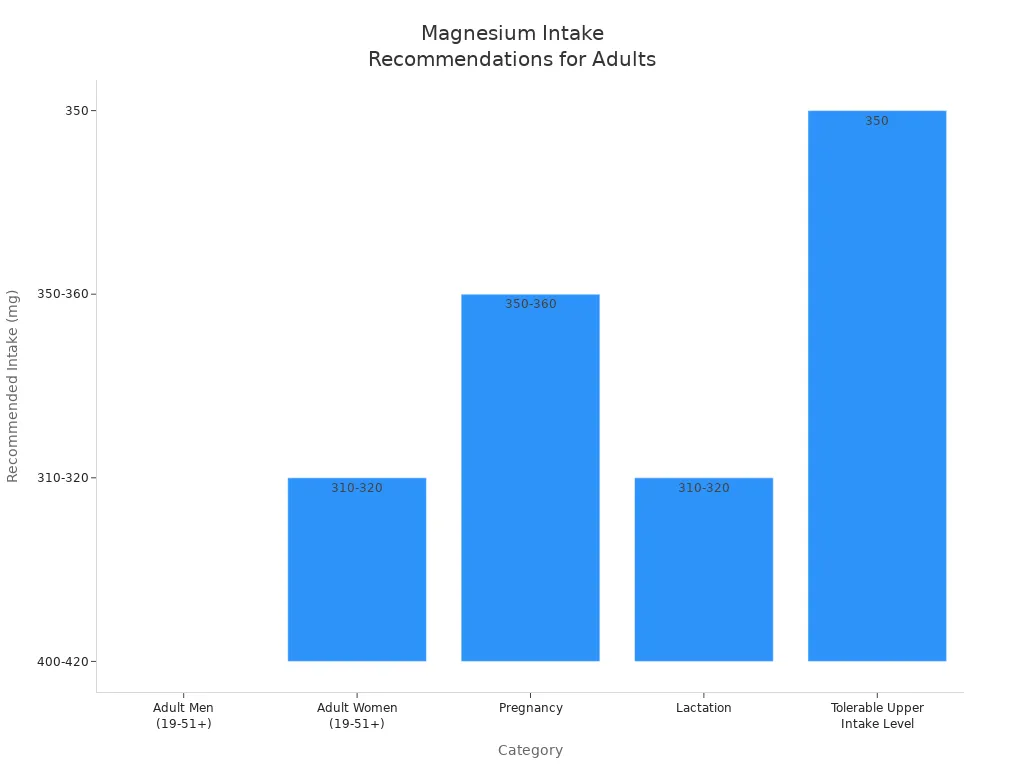
It is important to know how much magnesium glycinate powder you should take. Most health experts say adults need 310 to 420 mg of elemental magnesium each day. Men should get 400 to 420 mg daily. Women should get 310 to 320 mg daily. Pregnant women need 350 to 360 mg each day. If you are breastfeeding, you should get 310 to 320 mg. These numbers include all magnesium supplements you use.
Begin with a small amount of magnesium glycinate powder. This helps your body get used to it. It also lowers the chance of side effects like diarrhea or stomach cramps. You can slowly take more if you do not have problems. Most people do well with 250 to 350 mg each day. If you want to use magnesium for sleep or anxiety, some studies say 400 to 500 mg daily may help. Do not take more than 350 mg from supplements unless your doctor says it is okay. Taking too much can upset your stomach or cause other problems.
Tip: Take magnesium glycinate powder with food. This helps your body absorb it better and can make your stomach feel better.
Adjustments by Age and Health
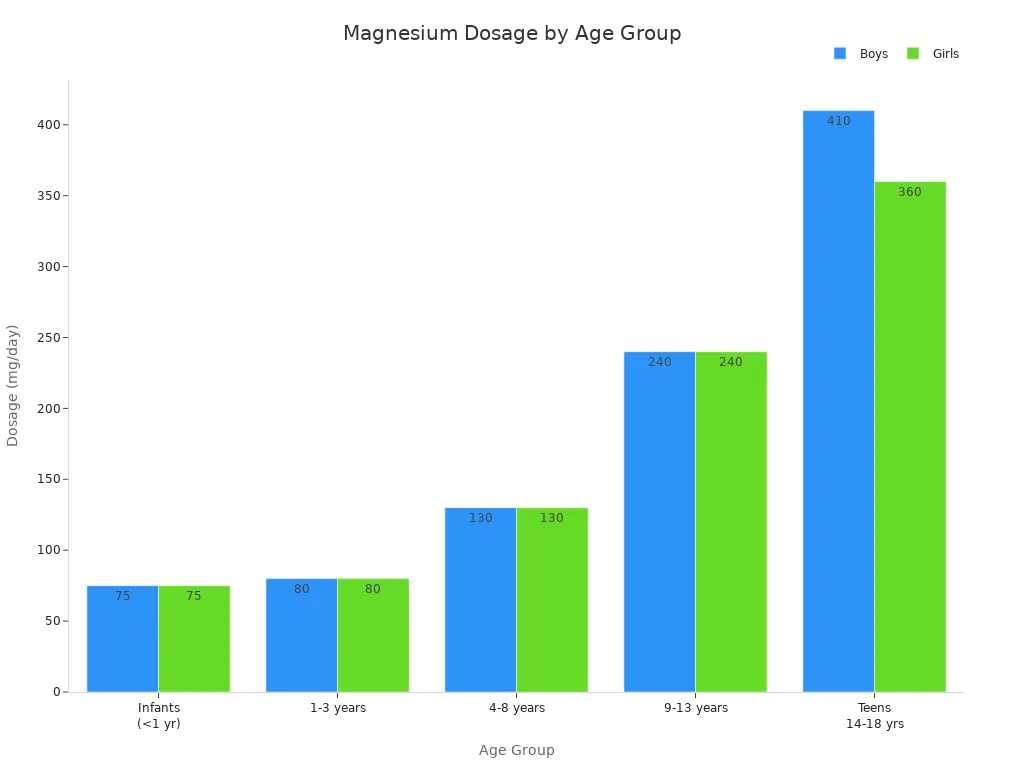
How much magnesium you need can change with your age, health, or life stage. Kids need less magnesium than grown-ups. Older people should watch for side effects because their bodies handle magnesium differently. If you have kidney disease, you should not use magnesium supplements or should take a much smaller amount. Your kidneys help remove extra magnesium. If they do not work well, magnesium can build up and cause big problems.
Pregnant and breastfeeding women need more magnesium. The daily amount for pregnancy is 350 to 360 mg. For breastfeeding, aim for 310 to 320 mg. Always talk to your doctor before using magnesium supplements if you are pregnant or breastfeeding. Kids should only use magnesium supplements if a doctor says it is safe.
Here is a table that shows how much magnesium you need at different ages and health stages:
Population Group | Dosage Recommendations (mg per day) | Safety and Adjustment Notes |
|---|---|---|
Infants (<1 yr) | 30-75 (via breast milk/formula) | Start with lowest dose; adjust under healthcare provider supervision. |
1-3 years | 80 | Monitor for side effects like diarrhea, nausea, abdominal cramps. |
4-8 years | 130 | Watch for medication interactions; kidney issues require extra caution. |
9-13 years | 240 | Signs of excess magnesium include lethargy, appetite loss, heart rate changes; consult healthcare provider if observed. |
Teens 14-18 years | Boys 410, Girls 360 | |
Adults | Men 400-420, Women 310-320 | Dose adjustments may be necessary; monitor magnesium levels and side effects closely. |
Pregnancy | 350-360 | Consult healthcare provider before supplementing. |
Lactation | 310-320 | Consult healthcare provider before supplementing. |
Kidney Disease | Dose reduction or avoidance | Close medical supervision and monitoring are essential to prevent toxicity. |
Dosage Table
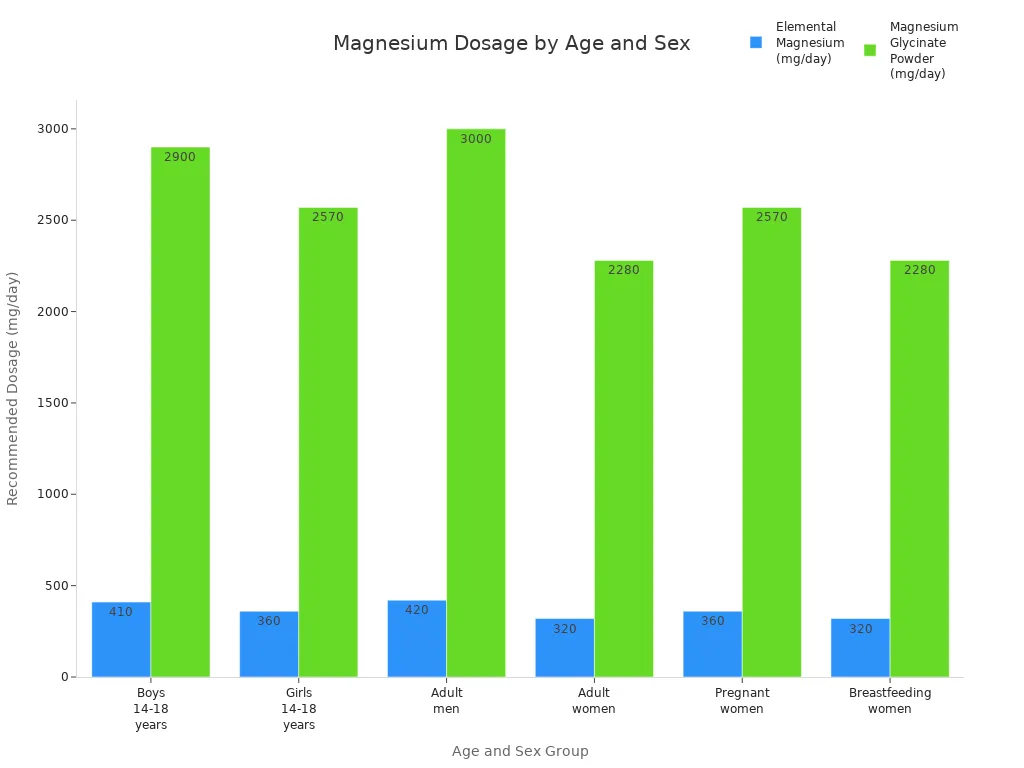
You can use this table to find out how much magnesium glycinate powder you should take. The table shows both elemental magnesium and the amount of powder you need. Magnesium glycinate powder has about 14% elemental magnesium. For example, 1 gram of powder gives you about 140 mg of elemental magnesium.
Age/Sex Group | Elemental Magnesium (mg/day) | Magnesium Glycinate Powder (mg/day) |
|---|---|---|
Infants 1-3 years | 80 | N/A |
Children 4-8 years | 130 | N/A |
Children 9-13 years | 240 | N/A |
Boys 14-18 years | 410 | 2900 |
Girls 14-18 years | 360 | 2570 |
Adult men | 400-420 | Up to 3000 |
Adult women | 310-320 | Up to 2280 |
Pregnant women | 350-360 | Up to 2570 |
Breastfeeding women | 310-320 | Up to 2280 |
Note: Always ask your doctor before giving magnesium supplements to kids or using high doses for special health needs.
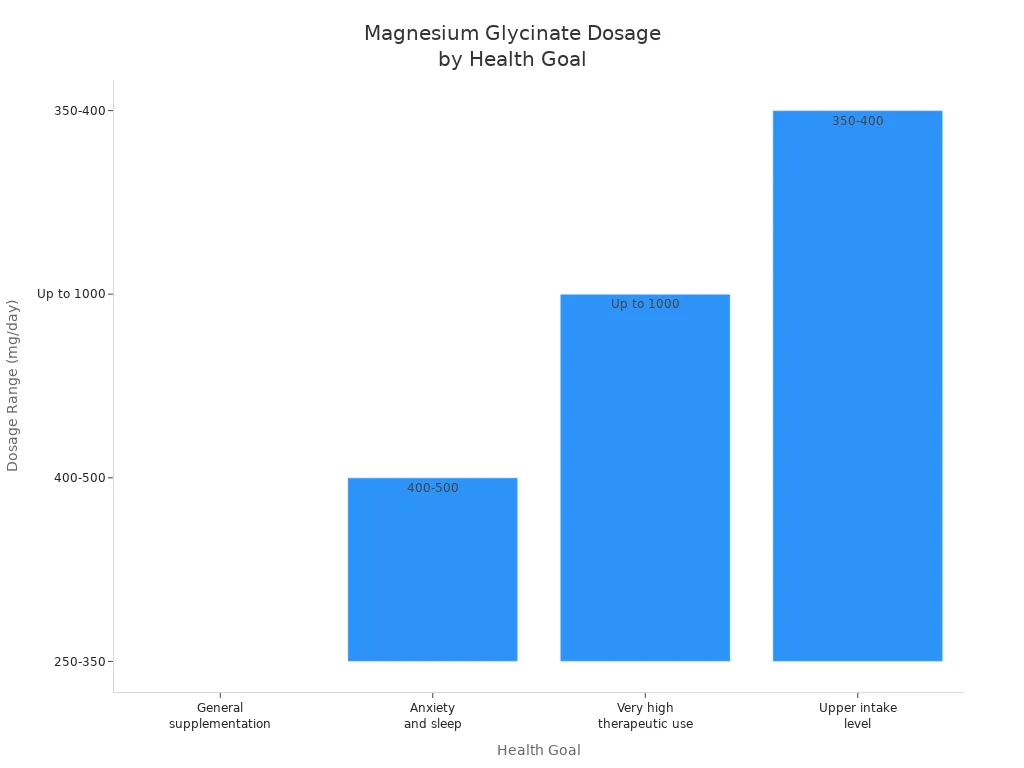
If you use magnesium supplements for general health, 250 to 350 mg each day works for most adults. For sleep or anxiety, you may need 400 to 500 mg daily. Only use higher amounts if your doctor says it is safe. The highest safe amount for magnesium supplements is 350 mg per day. Taking more than this can cause diarrhea, nausea, or stomach pain. If you notice any side effects, take less or stop using the supplement.
Health Goal | Practical Dosage Range (mg/day) | Notes |
|---|---|---|
General supplementation | 250 – 350 | Good for cramps, headaches, restlessness; matches RDA for adults |
Anxiety and sleep support | 400 – 500 | Higher amounts may help with anxiety and sleep |
Very high therapeutic use | Up to 1000 | Only use this much with a doctor’s help |
Upper intake level | 350 – 400 | This is the highest safe amount for most adults |
Callout: If you have kidney problems, always talk to your doctor before using magnesium supplements. Your body may not get rid of extra magnesium well, which can cause serious health problems.
How to Take Magnesium Glycinate Powder

Mixing Instructions
You might wonder how to take magnesium glycinate powder the right way. Start by measuring the powder with the scoop that comes in the container or use a precise measuring spoon. Pour about 4 to 6 ounces (120 to 180 ml) of water into a glass. You can also use juice, a smoothie, or herbal tea. Avoid milk or other calcium-rich drinks because calcium can make it harder for your body to absorb magnesium.
Follow these steps for the best results:
Add the measured powder to your chosen liquid.
Stir the mixture well. You can use a spoon, a shaker bottle, or a blender. Make sure the powder dissolves completely.
Drink the mixture right away. If you wait too long, the powder may settle at the bottom.
Use room temperature or warm water to help the powder dissolve. Do not use very hot water, as it can affect the supplement.
If you want to improve the taste, add a splash of lemon juice, a little honey, or a natural sweetener. Keep an eye on your sugar intake if you add sweeteners.
Tip: Always measure your dose carefully. Consistent dosing helps you get the most benefit from your supplement.
With Food or Drink
You should take magnesium with food, especially if you use higher doses. Taking magnesium glycinate powder with a meal helps your body absorb it better. It also lowers the chance of stomach upset, nausea, or diarrhea. Many people find that breakfast or dinner works well for them. If you have a sensitive stomach, try a small snack with your supplement.
Here are some simple ideas:
Mix the powder into a smoothie with fruit and yogurt.
Stir it into a glass of juice with your breakfast.
Add it to herbal tea after dinner.
Note: If you ever feel stomach discomfort, try changing the time you take magnesium or the type of food you eat with it.
Timing for Magnesium for Sleep
If you want to use magnesium for sleep, timing matters. Most experts recommend that you take magnesium glycinate powder in the evening. The best time is about 30 to 60 minutes before you go to bed. This timing gives your body enough time to absorb the magnesium and start feeling its calming effects. The glycine in the powder helps relax your mind and muscles, making it easier to fall asleep and stay asleep.
Take your supplement at the same time every night. This routine helps your body get used to the effects.
Keep your magnesium powder near your bed or in the kitchen, so you remember when to take magnesium.
Some people notice better sleep after a few days of regular use. Others may need a week or two to see results.
Callout: Consistency is key. When you take magnesium at the same time each day, you give your body the best chance to benefit from it.
If you have trouble sleeping, try taking your magnesium glycinate powder about one hour before bedtime. This simple step can help you relax and improve your sleep quality.
Safety
Side Effects
Some people get side effects when they use magnesium supplements. Most side effects are mild if you take the right amount. You might get diarrhea, nausea, or stomach cramps. Some people feel tired or have headaches. If you take magnesium on an empty stomach, you may feel worse. Eating food with your supplement can help you feel better.
Strategy for Minimizing Side Effects | Explanation |
|---|---|
Take magnesium supplements with meals | This lowers the chance of diarrhea, nausea, and stomach pain. |
Stay within recommended dosage limits | Women should not take more than 350 mg each day. Men should stay under 400 to 420 mg daily. |
Choose high-quality supplements | Good magnesium glycinate supplements cause fewer stomach problems than other types. |
Space out magnesium and medications | Wait 1 to 2 hours between magnesium and some medicines to avoid problems. |
Other types of magnesium can cause constipation, but magnesium glycinate does not usually do this. If you feel bad, try taking less or switch to another supplement.
Tip: Begin with a small dose and go up slowly. This helps your body get used to it and lowers side effects.
Overdose Signs
Taking too much magnesium glycinate powder can be dangerous. Overdose is rare for healthy people, but it can happen if you have kidney problems or take a lot. Look for these signs:
Diarrhea
Nausea
Vomiting
Stomach cramps
Irregular heartbeat
Facial flushing
Dizziness
Lethargy
Depression
Urine retention
Trouble breathing
Low blood pressure
Confusion
Loss of appetite
Headache
Shock signs (fast pulse, shallow breathing, cool skin)
Cardiac arrest (in very bad cases)
If you notice any of these, stop taking magnesium and get help fast. People with kidney disease have a higher risk because their bodies cannot remove extra magnesium. A bad overdose can be life-threatening.
Callout: Always check how much magnesium is in your supplement. Only take what your doctor says is safe.
When to Consult a Doctor
Talk to your doctor before using magnesium supplements if you have health problems or take other medicines. Here are some things to think about:
You have kidney or heart problems.
You take medicines that interact with magnesium, like antibiotics or diuretics.
You have stomach problems like inflammatory bowel disease or drink a lot of alcohol.
You want to use magnesium for constipation, sleep, or muscle cramps.
You want to check your magnesium levels before starting.
You have allergies to ingredients in your supplement.
Your doctor can help you pick the right supplement and dose. They can also watch for side effects. If you get constipation, diarrhea, or stomach pain, your doctor may suggest another type of magnesium. Always buy magnesium from trusted places and check the label for elemental magnesium.
Note: Most people do not need regular blood tests for magnesium. Your doctor may order tests if you have symptoms or health risks.
Interactions
Medications
Magnesium glycinate powder can mix with many medicines. Some mixes are very serious and need a lot of care. Others are not as risky but still need you to be careful. Here are some medicines that can mix with magnesium glycinate powder:
Adderall
Aspirin
Benadryl
Claritin
CoQ10
Cymbalta
D3
Eliquis
Fish Oil
Flonase
Lexapro
Metoprolol
MiraLAX
NAC
Omega-3
Synthroid
Tylenol
Vitamins (B complex, B6, B12, C, D3, K2)
Vyvanse
Zinc
Zyrtec
Some mixes are very bad and can hurt your health. You should not use these together. Other mixes are not as bad but need your doctor’s help. Small mixes are not as risky but you still need to watch for side effects. If you have kidney problems, you are at higher risk because your body cannot get rid of extra magnesium.
Tip: Always tell your doctor or pharmacist about all the medicines and supplements you use. This helps you stay safe and avoid problems.
Other Supplements
Magnesium glycinate powder can also mix with other supplements. Some mixes can change how your body uses nutrients or how your medicine works. Here is a table that shows some common mixes with supplements and drugs:
Supplement or Drug Class | Interaction with Magnesium Glycinate | Potential Risks |
|---|---|---|
Zinc-containing products | May interact with magnesium supplements | Changed absorption, which can affect safety |
Bisphosphonates (e.g., alendronate) | Interaction possible | Reduced absorption of magnesium or the drug |
Tetracyclines (e.g., doxycycline) | Interaction possible | Lower absorption, less effective medicine |
Fluoroquinolones (e.g., ciprofloxacin) | Interaction possible | Reduced absorption and lower drug effectiveness |
Diuretics (water pills) | Interaction possible | Changes in magnesium levels, which affect drug action |
You might get diarrhea, stomach cramps, or feel sick if you mix supplements. Bad allergic reactions do not happen often but are possible. Always tell your healthcare provider about every supplement and medicine you use. This helps you avoid problems and get the best results for your health.
You can help your sleep and muscles by using magnesium glycinate powder the right way.
Always ask your doctor before you start, especially if you have kidney issues or take other medicine.
Take only 200-400 mg each day to avoid problems like feeling sick or having a strange heartbeat.
Pay attention to how your muscles and stomach feel as time goes on.
Common Questions | Quick Answers |
|---|---|
Is it safe for everyone? | Yes, if you follow the rules and talk to your doctor. |
Can it help with muscle cramps? | Many people say it helps. |
What about long-term use? | Some people may see changes in how their stomach works or how relaxed their muscles feel. |
Tip: Using magnesium glycinate powder the right way helps you sleep better and keeps your muscles healthy.
FAQ
How long does it take for magnesium glycinate powder to work?
You may start to feel benefits within a few days. Some people notice better sleep or less muscle cramping after one week. Your results can depend on your body and how much magnesium you need.
Can you mix magnesium glycinate powder with hot drinks?
You should use room temperature or warm liquids. Very hot drinks can change the supplement’s quality. Stir the powder well to help it dissolve. Avoid boiling water.
Is it safe to take magnesium glycinate powder every day?
Yes, you can take it daily if you follow the recommended dose. Most adults do well with 250–350 mg per day. Always talk to your doctor before starting any new supplement.
What should you do if you miss a dose?
You can take the missed dose when you remember. If it is almost time for your next dose, skip the missed one. Do not double up. Stay on your regular schedule.
Can children use magnesium glycinate powder?
Children can use magnesium glycinate powder, but only if a doctor says it is safe. The dose for kids is much lower than for adults. Always check with your healthcare provider first